As an Amazon Associate I earn from qualifying purchases. This page contains affiliate links, and I may earn a commission at no extra cost to you.
The Hidden Danger of Dash Cam Parking Mode on Modern EVs and Hybrids
Plugging a multi-channel dash cam directly into your fuse box for overnight surveillance is standard practice on older combustion cars. Try that on a modern electric vehicle or high-voltage hybrid, and you risk waking up to a bricked vehicle, persistent "12V Battery System Fault" dashboard warnings, or an expensive dealer diagnostic fee that won't be covered under warranty.
EVs and hybrids rely on standard lead-acid or compact auxiliary lithium 12V batteries to boot the high-voltage contactors and run primary vehicle computers. Unlike traditional alternators that recharge a starter battery continuously while the engine revs, an EV's DC-DC converter only wakes up periodically or when the vehicle is in a ready state. Siphoning continuous parasitic draw for 24-hour parking surveillance pulls the auxiliary battery below critical thresholds quickly. The car's internal power management detects unexpected current draw, throws fault codes, and in some cases cuts accessory power entirely to prevent complete system discharge.
A dedicated Lithium Iron Phosphate (LiFePO4) dash cam battery pack isolates your parking surveillance from the vehicle's onboard electrical system. The pack charges rapidly only when the car is switched on, then powers the dash cam completely off-grid when parked. Here is how the top dedicated options compare and what you need to know before installing one.
Top Dedicated Dash Cam Battery Packs Compared
| Product | Capacity | Chemistry | Fast Charge Time | Best For | Link |
|---|---|---|---|---|---|
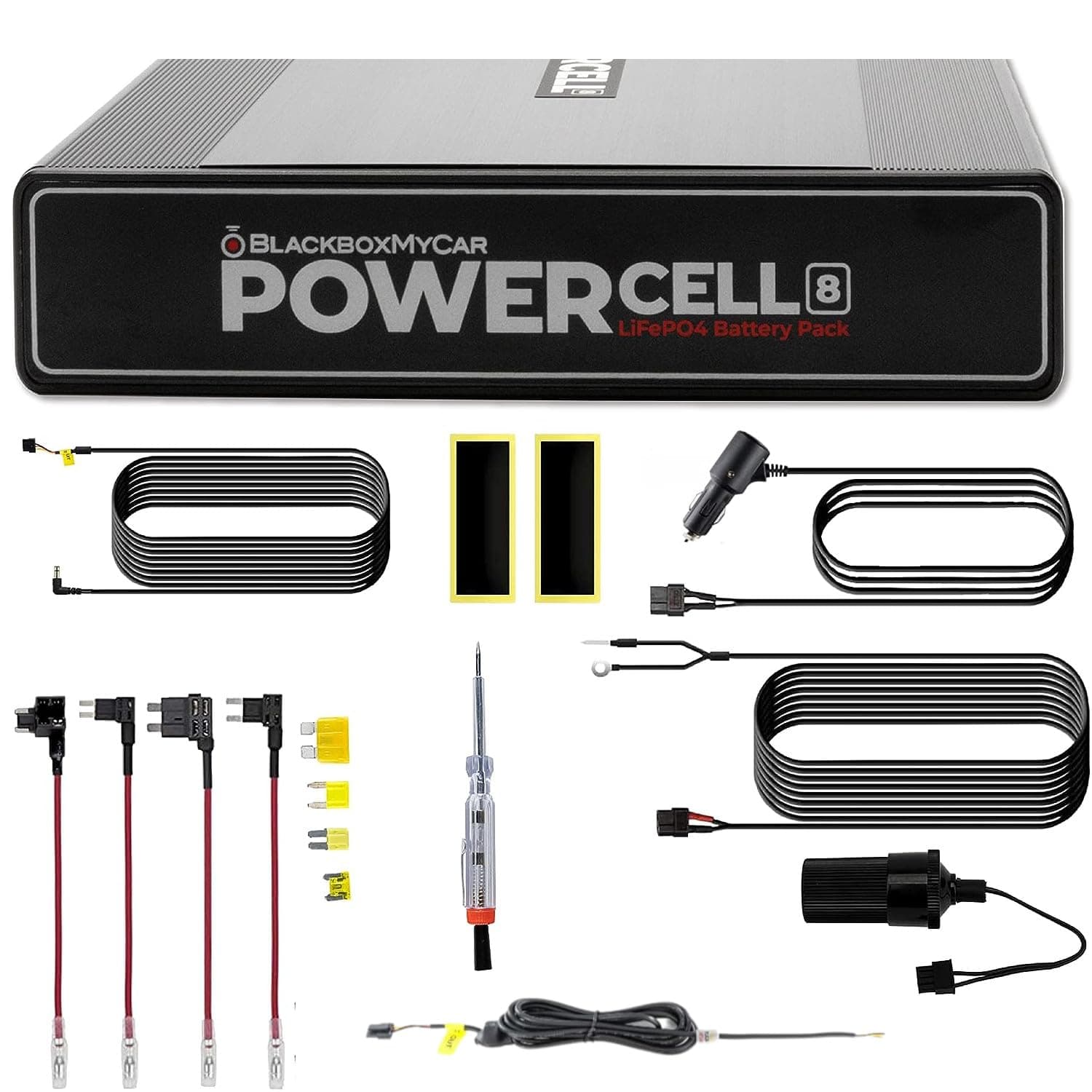
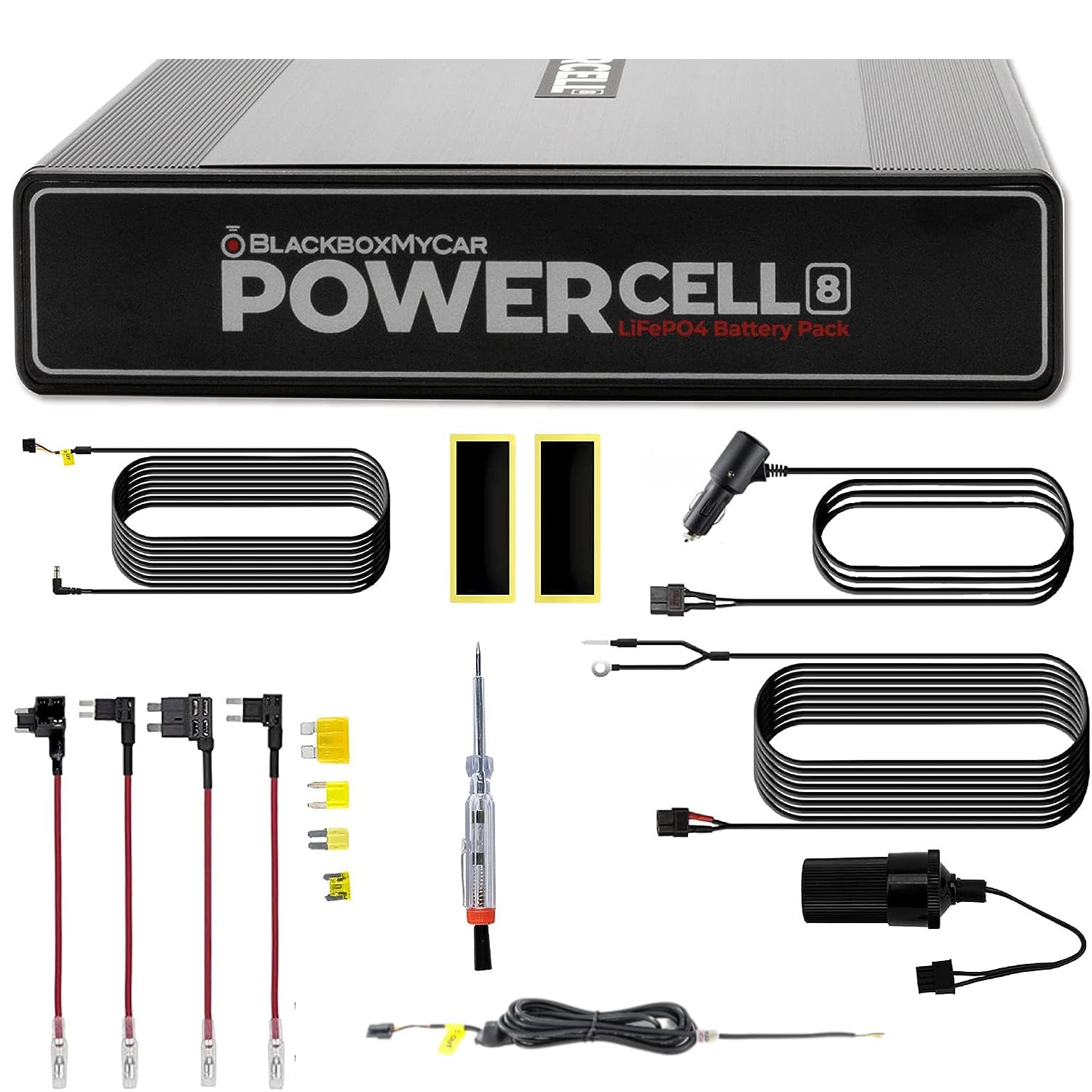
| BlackboxMyCar PowerCell 8 Dash Cam Battery Pack | 96Wh / 7500mAh | LiFePO4 | ~50 min (hardwired) | Turnkey dash cam integration & app monitoring | View on Amazon |
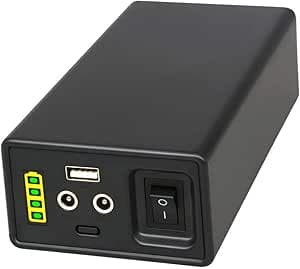
| TalentCell PB120B1 LiFePO4 Battery Pack | 38400mAh (nominal cell rating) | LiFePO4 | ~4-5 hrs (AC/DC) | Budget standalone backup & DIY setups | View on Amazon |
Top Pick: BlackboxMyCar PowerCell 8 Dash Cam Battery Pack
If you want a purpose-built dash cam power solution that eliminates guesswork, the BlackboxMyCar PowerCell 8 Dash Cam Battery Pack is the benchmark. Built specifically for high-draw 2-channel and 3-channel dash cams, it delivers 96Wh (7500mAh at 12.8V) of high-stability power—a 25% capacity increase over older industry-standard units like the Cellink NEO.
Why LiFePO4 Matters in a Hot Cabin
Standard lithium-ion power banks swell and degrade rapidly inside a sun-baked car. The PowerCell 8 uses Lithium Iron Phosphate chemistry, which handles extreme thermal fluctuations significantly better than conventional cobalt-based lithium cells. It provides thousands of recharge cycles without drastic capacity loss, which is essential when a battery charges and discharges every single day.
Charging Speed and Installation Flexibility
The standout feature of the PowerCell 8 is charge throughput. When hardwired to an ignition-switched fuse, it pulls up to 9A and charges from zero to 100% in roughly 50 minutes of driving. For shorter commutes or leased vehicles where tapping the fuse box is undesirable, the included 12V cigarette lighter adapter charges the unit at a safer 5A rate in roughly 80 to 90 minutes. In either scenario, the pack completely disconnects from your car's 12V circuit the instant you power off the ignition, guaranteeing zero standby drain on your vehicle.
Smart Monitoring and Connectivity
The integrated smartphone app connects via Bluetooth to display real-time charge percentage, current voltage output, incoming amperage, and estimated runtime remaining based on your dash cam's current draw. The chassis also features a 5V USB 3.0 output port to charge secondary devices, though note that the USB port is intended for mobile devices rather than dash cams due to parking mode triggering mechanisms.
Pros:
- True rapid charging: reaches 100% in roughly 50 minutes when hardwired.
- Robust LiFePO4 chemistry safely tolerates summer vehicle cabin temperatures.
- Bluetooth app provides granular telemetry on battery health and remaining runtime.
- Includes complete wiring harnesses for both hardwire and 12V socket power.
Cons:
- Higher upfront cost than DIY battery alternatives.
- Physical footprint requires deliberate placement under a front seat or trunk floor liner.
Budget Alternative: TalentCell PB120B1 LiFePO4 Battery Pack
For DIY enthusiasts or drivers who want parking protection without paying premium integration prices, the TalentCell PB120B1 LiFePO4 Battery Pack provides dependable, basic backup power. While not engineered as an automated automotive-switched solution, it delivers resilient LiFePO4 cell chemistry at a fraction of the cost.
High Capacity for Multi-Day Standby
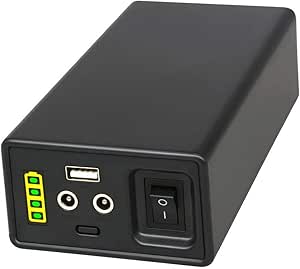
The PB120B1 features a large 38400mAh cell capacity with multi-voltage outputs, including standard 12V DC barrel connections and 5V USB ports. Integrated circuitry protects against over-charging, deep discharge, over-voltage, and short circuits. Four LED indicators on the casing give a quick visual status of remaining reserve power.
The Trade-Offs: Manual Management
Unlike automotive-specific packs, the TalentCell does not feature an automatic high-amperage rapid-charging circuit tied to an ignition signal. Recharging is handled via the included 12.6V/2A AC/DC wall charger or a compatible DC regulator, which takes several hours to replenish. It does not automatically switch between charge and discharge modes via vehicle ignition logic out of the box, meaning you will need a basic manual switch or DC relay setup to prevent backfeeding. But if you park for extended stretches at airport lots or need a stable power supply for long-term recording, the capacity-per-dollar ratio is compelling.
Pros:
- Significantly lower price point for genuine LiFePO4 battery chemistry.
- Versatile dual 12V DC and 5V USB outputs.
- Substantial capacity for prolonged low-draw recording setups.
Cons:
- Lacks automotive smart switching; requires manual intervention or DIY relay wiring.
- Slow 2A recharge rate is impractical for short daily commutes.
- No smartphone app or precise percentage monitoring.
What to Look for in an EV-Compatible Dash Cam Battery
1. Genuine LiFePO4 Chemistry
Never place standard lithium-ion or lithium-polymer power banks under your vehicle's seats for continuous charging. Automotive cabins easily exceed 130°F (54°C) in direct summer sun. LiFePO4 cells have higher thermal runaway thresholds and handle the continuous micro-cycling demands of daily driving far better than typical consumer power banks.
2. Automotive Hardwire and ACC Sensing
A true dash cam battery pack uses an accessory (ACC) detection wire. When the car starts, the pack draws power from an ignition-switched fuse to recharge. When the car shuts down, the pack instantly cuts input draw and routes internal power through the dash cam's constant and ACC leads, signaling the camera to cleanly enter its low-power parking mode (radar, time-lapse, or motion detection).
3. Recharge Throughput vs. Daily Commute Time
Calculate your daily driving habits before choosing a pack. If your one-way commute is 25 minutes, a standard slow-charging battery will chronically sit at a partial state of charge. A dedicated rapid-charging unit capable of taking 9A to 10A input will restore full parking capacity during a standard commute, ensuring maximum overnight runtime.
The Bottom Line
Modern electric vehicles and hybrids manage their auxiliary electrical systems aggressively. Bypassing your car's 12V auxiliary battery with a dedicated, isolated pack is the single most effective way to run continuous parking surveillance without error codes or reliability issues.
For a complete, automated installation with rapid recharge times and real-time Bluetooth monitoring, get the BlackboxMyCar PowerCell 8 Dash Cam Battery Pack. If you prefer a budget DIY setup and don't mind manual recharging or custom wiring, the TalentCell PB120B1 LiFePO4 Battery Pack provides dependable LiFePO4 power at a fraction of the investment.