As an Amazon Associate I earn from qualifying purchases. This page contains affiliate links, and I may earn a commission at no extra cost to you.
Why Most Educational Board Games Fall Short
Most games labelled 'educational' suffer from a fatal flaw: they prioritise rote memorisation over entertaining gameplay. If a title feels like a laminated maths worksheet disguised behind plastic spinners and primary-coloured cardboard, children lose interest in ten minutes flat. The best tabletop experiences flip this dynamic completely. They build engaging tactical mechanics, spatial puzzles, or resource-management challenges where learning occurs as an organic byproduct of trying to win.
Whether you want to sharpen a child's spatial problem-solving, demystify arithmetic without tears, or introduce the household to national geography and route-planning, finding the right title saves money and shelf space. Based on comprehensive analysis of game mechanics, component quality, and verified owner feedback, we have broken down three of the most well-regarded learning board games on the market.
Quick Comparison Table
| Game | Primary Learning Focus | Player Count & Age | Price Band | Amazon Listing |
|---|---|---|---|---|
| ThinkFun Gravity Maze | Spatial reasoning, logic, gravity mechanics | 1 Player (Ages 5+) | Budget (Under $35) | Check today's price on Amazon |
| Math for Love Prime Climb | Prime numbers, multiplication, division | 2–4 Players (Ages 10+) | Mid-range ($35–$45) | Check today's price on Amazon |
| Underdog Games Trekking the National Parks | US geography, park history, route planning | 1–5 Players (Ages 12+) | Mid-to-Premium ($45–$55) | Check today's price on Amazon |
1. ThinkFun Gravity Maze Marble Run Brain Game – Best for Solo STEM Logic
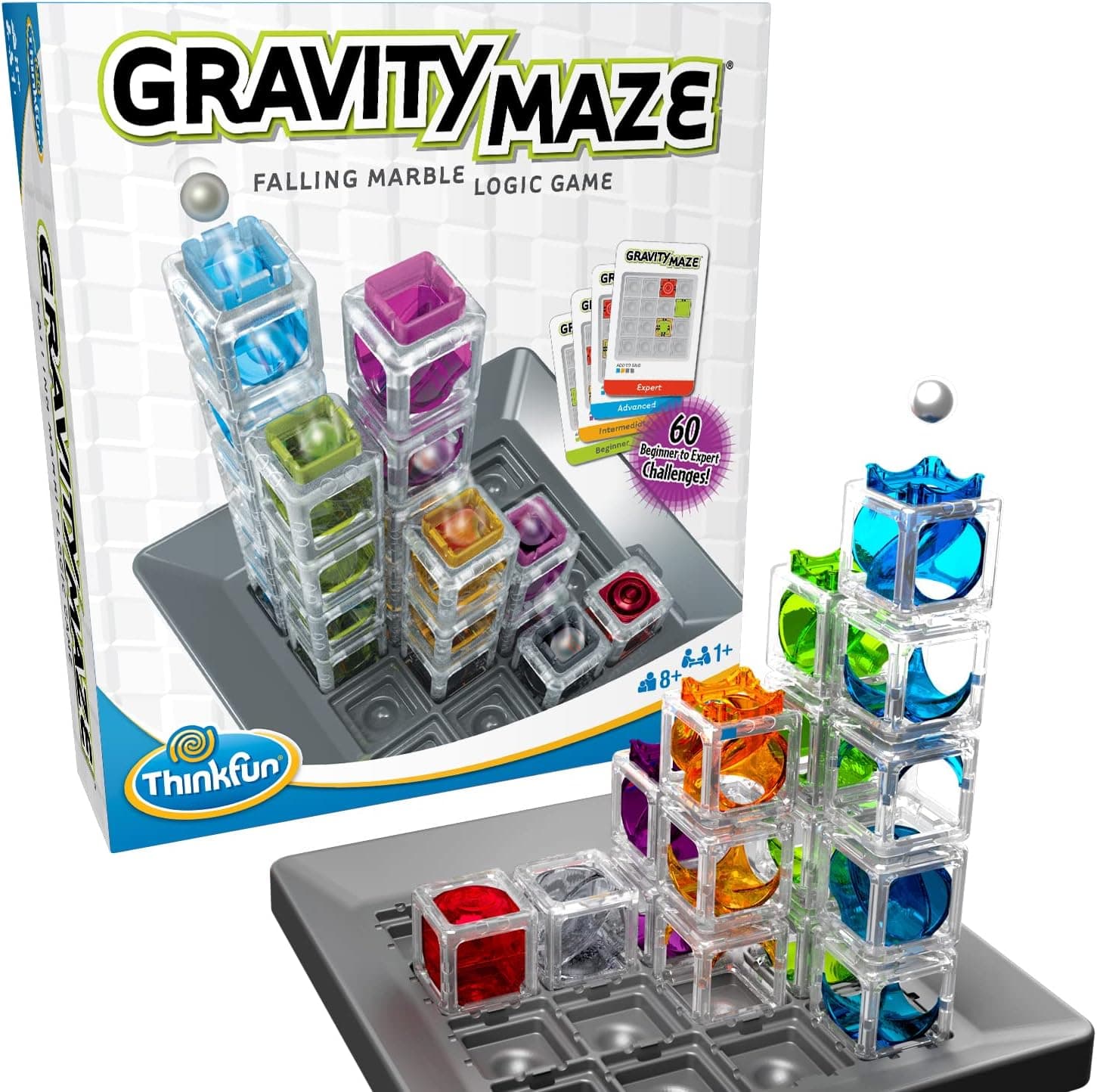
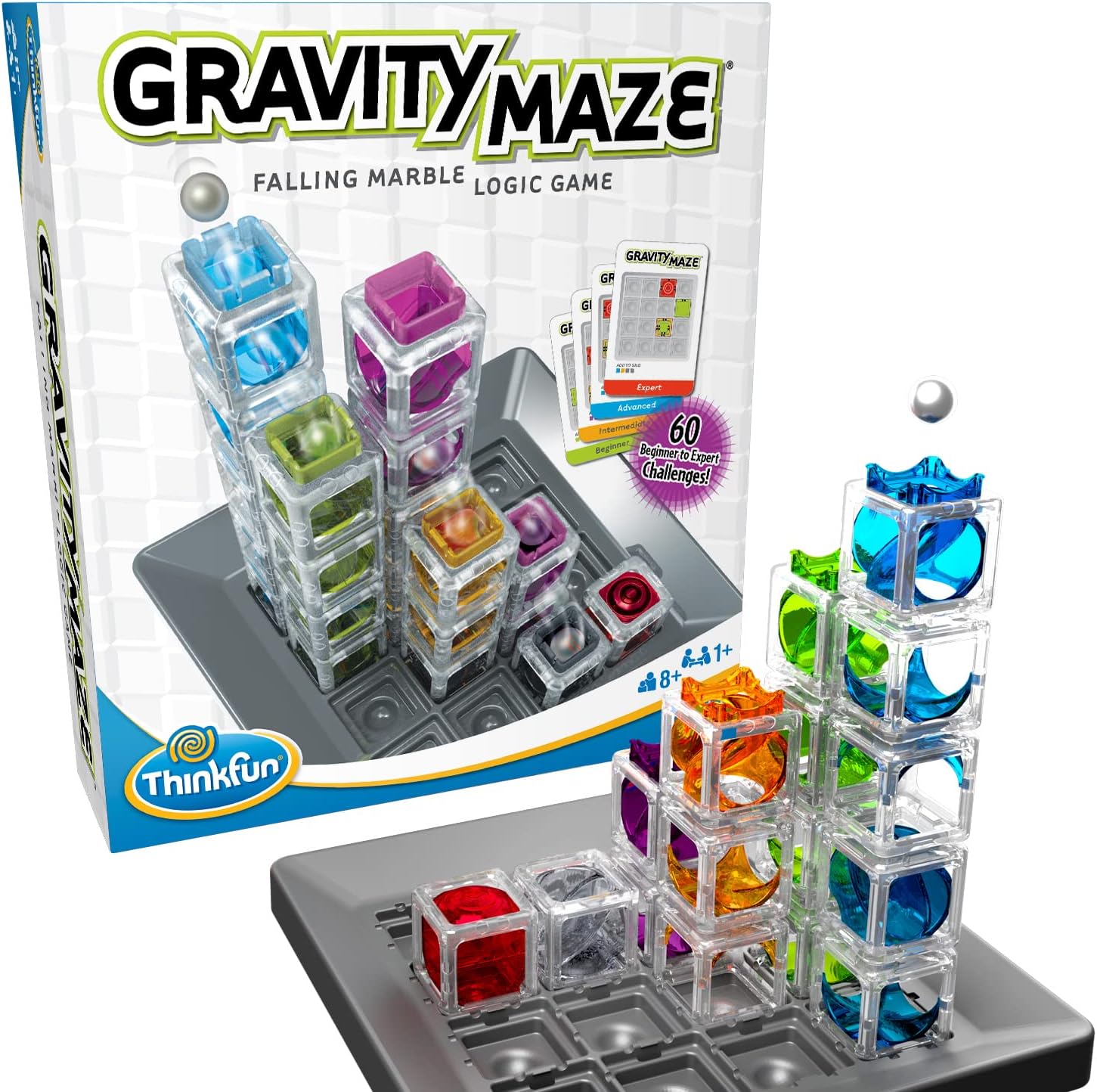
The ThinkFun Gravity Maze Marble Run Brain Game takes the hypnotic appeal of a physical marble run and integrates it into a structured, single-player logic puzzle. Rather than dropping marbles at random, the player draws a challenge card specifying the start position, end target, and a limited set of colourful, translucent acrylic towers to construct the path between them.
Design and Component Quality
ThinkFun built this set with sturdy, drop-resistant plastic that withstands regular classroom and playroom use. The primary grid holds the towers firmly upright, while each tower features internal ramps, chutes, and angled walls designed to direct the steel ball bearing towards the red goal block. The physical feedback is instantaneous: if your spatial calculations are correct, the marble rolls smoothly into the goal; if not, it drops out mid-grid or stalls.
Core Mechanics and Learning Value
Gravity Maze is MESH accredited (Mental, Emotional, and Social Health) and targets foundational engineering principles. Players must visualise three-dimensional trajectories before snapping pieces together. Because the challenge deck scales from beginner to expert, children as young as 5 learn trial-and-error problem-solving without adult intervention. Older kids and adults will find the advanced tier genuinely taxing, requiring multi-directional drop planning and vertical clearance management.
What Could Be Better
Because it is strictly a single-player puzzle game, it does not serve standard multi-person family game nights unless players take turns attempting puzzles against a timer. Additionally, the small steel balls present a choking hazard for younger siblings under age 3.
2. Math for Love Prime Climb Board Game – Best for Arithmetic Mastery
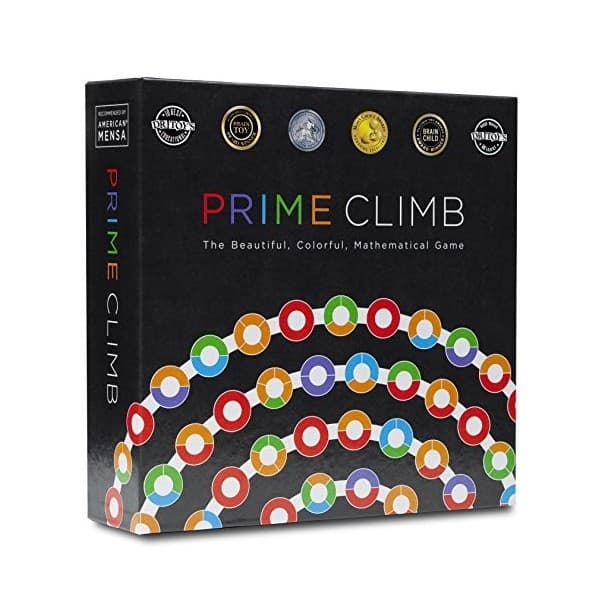
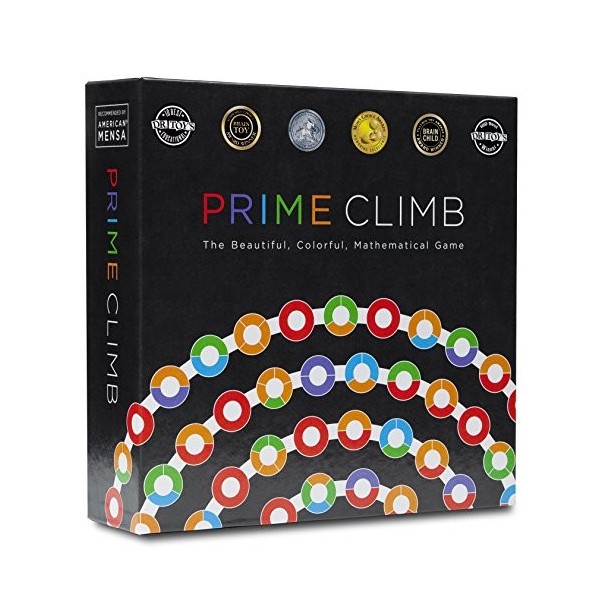
Arithmetic games frequently feel dry, but the Math for Love Prime Climb Board Game transforms multiplication, division, and prime numbers into a dynamic race to the centre of a spiral board. Created by mathematicians and educators, it eliminates the anxiety of calculation through a clever visual trick: prime-factor colour coding.
Design and Component Quality
The game board features a numbered spiral from 0 to 101. Each number is partitioned into colourful segments corresponding to its prime factors: orange for 2, green for 3, blue for 5, and purple for 7. When you multiply your pawn's current position by rolling a 3, you do not just calculate numbers in your head—you physically combine colours. A yellow prime card deck adds card-drafting strategy, while the pawns and custom 10-sided dice provide reliable tactile durability.
Gameplay and Educational Depth
Designed for 2 to 4 players aged 10 and above (or 8+ with supportive adults), Prime Climb balances arithmetic strategy with competitive interaction. If your pawn lands exactly on another player's space, you bump them back to start. The colour-coded prime mechanic allows struggling students to check their own calculations visually: multiplying by 2 always adds an orange segment, while dividing strips that colour away. This visual feedback bridges abstract arithmetic into concrete logic.
Drawbacks to Consider
The bump-back mechanic can lengthen games unexpectedly, occasionally leading to frustration for younger or sensitive players if competition becomes aggressive. Sessions typically last 30 to 45 minutes, but a string of defensive plays can stretch a match past the one-hour mark.
3. Underdog Games Trekking the National Parks – Best Overall Family Strategy Game
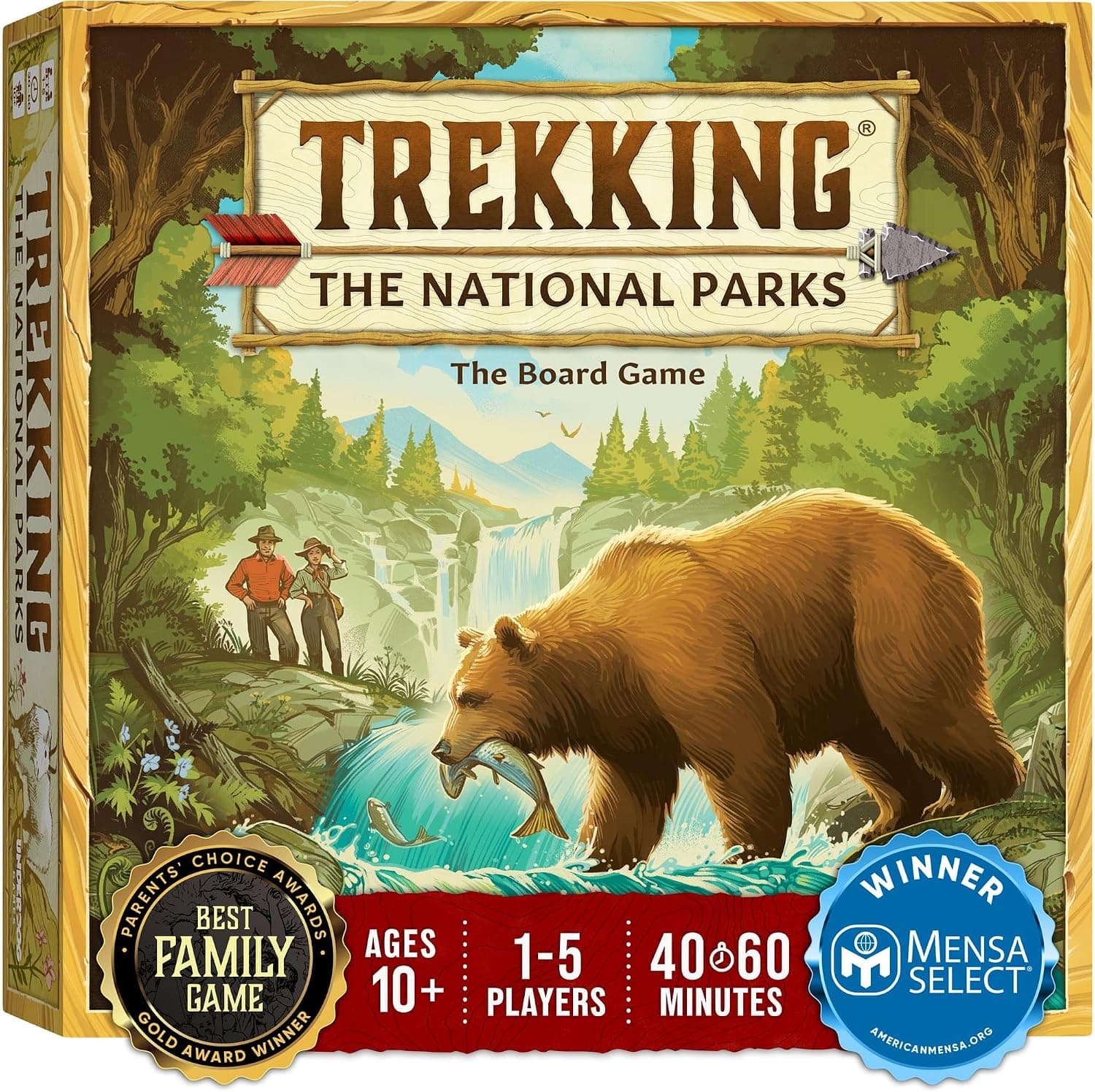
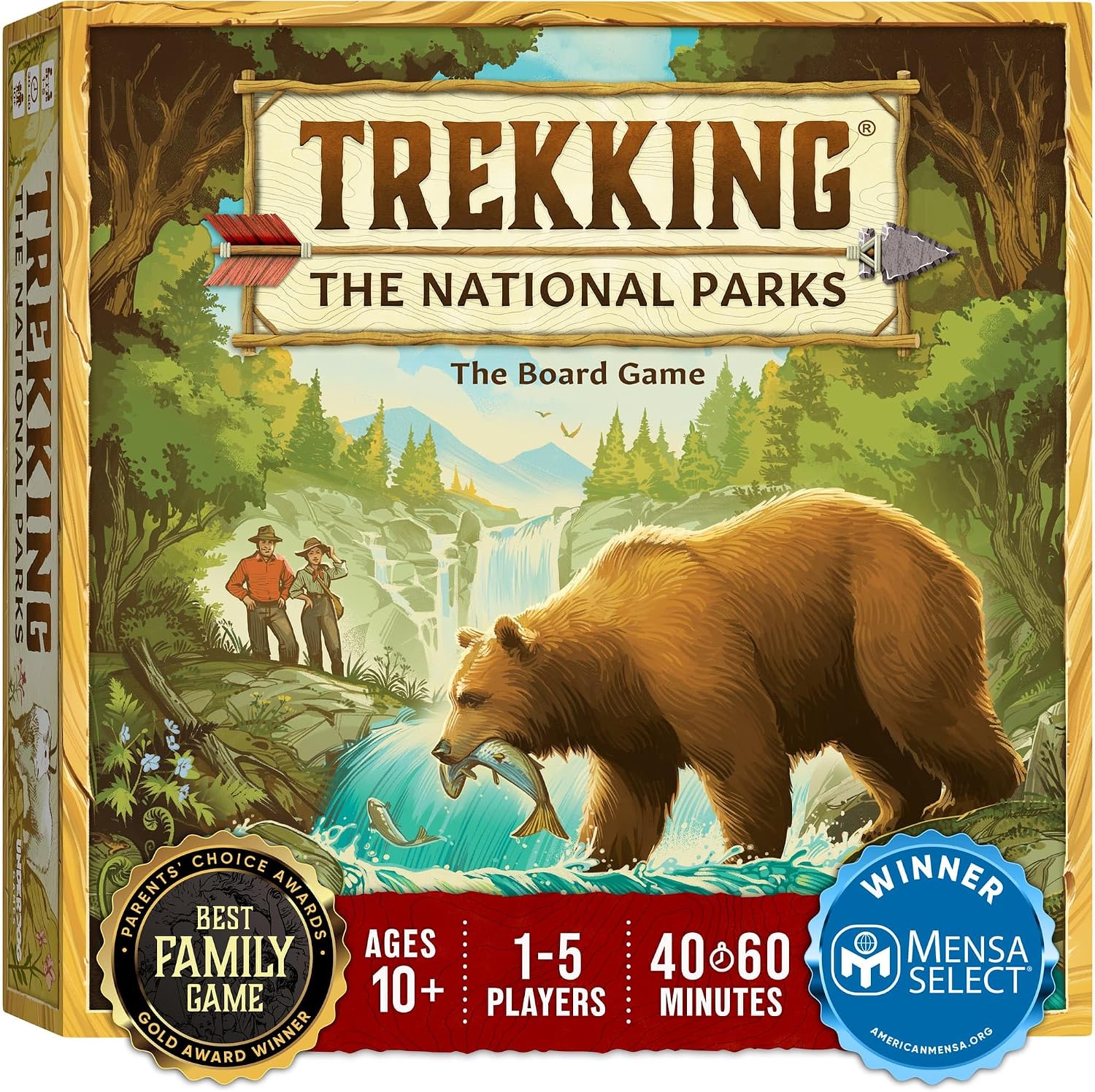
If you want a title that rivals modern euro-style hobby games while delivering rich geographical knowledge, Underdog Games Trekking the National Parks stands in a league of its own. Awarded Mensa Select and Parents' Choice honours, this 3rd Edition release includes upgraded artwork, custom wooden park ranger pawns, and a dedicated solo mode.
Design and Theme Integration
The oversized map board represents the entire United States, dotted with major National Parks connected by travel trails. Each park features a beautifully illustrated card packed with authentic photographs, historical milestones, and ecological facts. Component quality is top-tier: thick cardstock, tactile wooden campsite tokens, and vibrant coloured park stones that make the board feel alive during play.
Strategic Depth and Family Playability
Supporting 1 to 5 players aged 12 and up (though accessible to keen 8-to-10-year-olds with guidance), gameplay revolves around card drafting, hand management, and route planning. Players draw gear cards to move across the map, establish campsites on iconic landmarks, and collect major park badges. Because public goals shift every session, no two matches use the exact same strategy. It teaches national geography, logistical budgeting, and spatial awareness naturally without ever interrupting the competitive flow with trivia quizzes.
Potential Limitations
The physical box footprint and game board require a sizeable kitchen or dining table. While the rules are intuitive, younger players under 10 may need assistance navigating the multi-step victory point scoring at the end of each 30-to-60-minute game.
Alternatives to Consider
If none of these three matches your specific household dynamic, consider how your learning goals align:
- For solo engineering and spatial puzzle fans on a tighter budget: Stick with the ThinkFun Gravity Maze Marble Run Brain Game, which requires zero setup time and provides 60 graded difficulty cards.
- For dedicated classroom or homeschool numeracy: The colour-coded prime system in Math for Love Prime Climb offers the fastest path to mental arithmetic confidence without resorting to repetitive flashcards.
Final Buyer's Verdict
For an engaging family tabletop night that balances genuine tactical depth with educational value, the Underdog Games Trekking the National Parks is our clear top recommendation. It avoids the preachy tone of traditional educational games while delivering outstanding component quality, balanced mechanics, and natural geographical learning.