As an Amazon Associate I earn from qualifying purchases. This page contains affiliate links, and I may earn a commission at no extra cost to you.
The End of Dangling Wires on Your Windscreen
Tucking a USB power cable behind the windscreen weatherstripping, wrestling with plastic pry tools around the A-pillar airbag, and losing your 12V accessory socket to a bulky adapter is an automotive rite of passage. It is also completely unnecessary. The modern automotive interior is packed with powered sensors, rain monitors, and auto-dimming rearview mirrors sitting right where a dash camera needs to go.
OEM-integrated dash cams—popularised by brands like Fitcamx and Mangoal—replace the plastic shroud behind your vehicle's rearview mirror. Instead of running a wire halfway across the cabin to the fuse box or centre console, these units tap directly into the mirror's existing wiring loom using a plug-and-play Y-splitter harness. The finished result looks identical to a factory-fitted driver assistance module.
However, going the bespoke OEM route introduces unique trade-offs. You trade universal portability between cars for factory aesthetics, and standard parking surveillance requires extra harness adapters. This guide examines the leading mirror-tap systems on the market, assessing camera optics, heat tolerance, and vehicle compatibility to help you decide whether an integrated camera fits your vehicle setup.
Quick Comparison: Leading Mirror-Harness Dash Cams
| Product | Video Resolution | Power Source | Price Band | Buy |
|---|---|---|---|---|
| Fitcamx 4K OEM Dash Cam | 4K 2160p (Front) + 1080p (Rear) | Mirror Y-Splitter Harness | Mid-range | Check today's price on Amazon |
| Mangoal 4K OEM Style Dash Cam | 4K 2160p / 30fps (Sony IMX335) | Mirror Plug / OBD Adapter | Mid-range | Check today's price on Amazon |
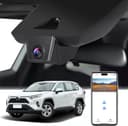
| Fitcamx Dash Cam for Toyota RAV4 | 4K 2160p / 30fps (f/1.6) | Mirror Sensor T-Harness | Budget / Mid-range | Check today's price on Amazon |
| Fitcamx Dash Cam for Ford F-150 | 1440p 2K (Front) + 1080p (Rear) | Rain Sensor Splitter | Mid-range | Check today's price on Amazon |
| Wolfbox G900 4K Mirror Dash Cam | 4K 2160p (Sony IMX678) + 2.5K | 12V / Hardwire Kit (Strapped Mirror) | Premium | Check today's price on Amazon |
How Rearview Mirror Harness Power Actually Works
To understand why these cameras have gained such momentum, you have to look at the engineering behind the rearview mirror housing. Modern vehicles featuring auto-dimming glass, auto high-beam cameras, or rain-sensing wipers already supply switched 12V ignition power straight to the upper windscreen.
Instead of splicing factory copper or tampering with delicate safety systems, an OEM-fit camera integrates a piggyback T-harness. You unclip the factory power connector from the back of the mirror or rain sensor, plug the manufacturer's custom Y-cable in-line, and route the secondary lead into the custom camera housing. When the vehicle ignition turns on, the camera boots instantly; turn the car off, and the camera shuts down gracefully after saving the current clip.
Because the unit draws minimal power (typically under 500mA), it operates well within the current tolerances of the mirror circuit without tripping sensor faults or draining your 12V starter battery. The trade-off? Without an auxiliary continuous-power cable or OBD plug, standard mirror taps do not support 24/7 parking impact recording while the ignition is switched off.
Top OEM-Integrated & Mirror-Mount Dash Cams Examined
1. Fitcamx 4K OEM Dash Cam — The Benchmark Factory Look
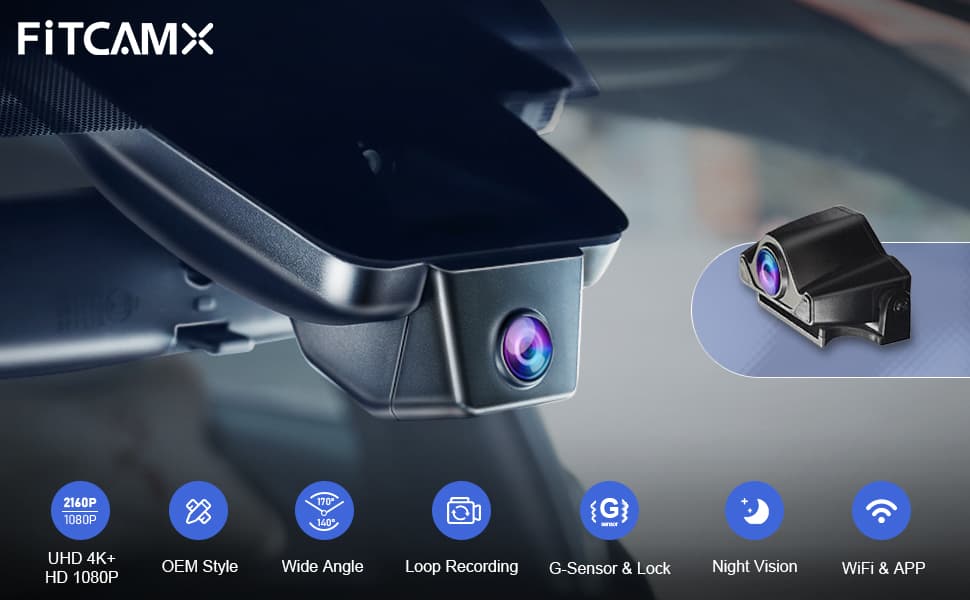
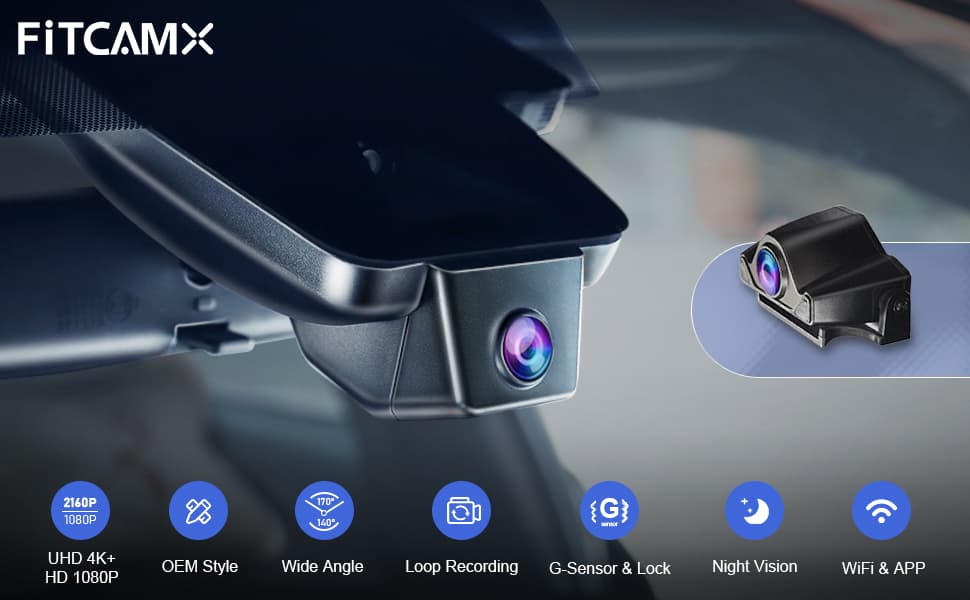
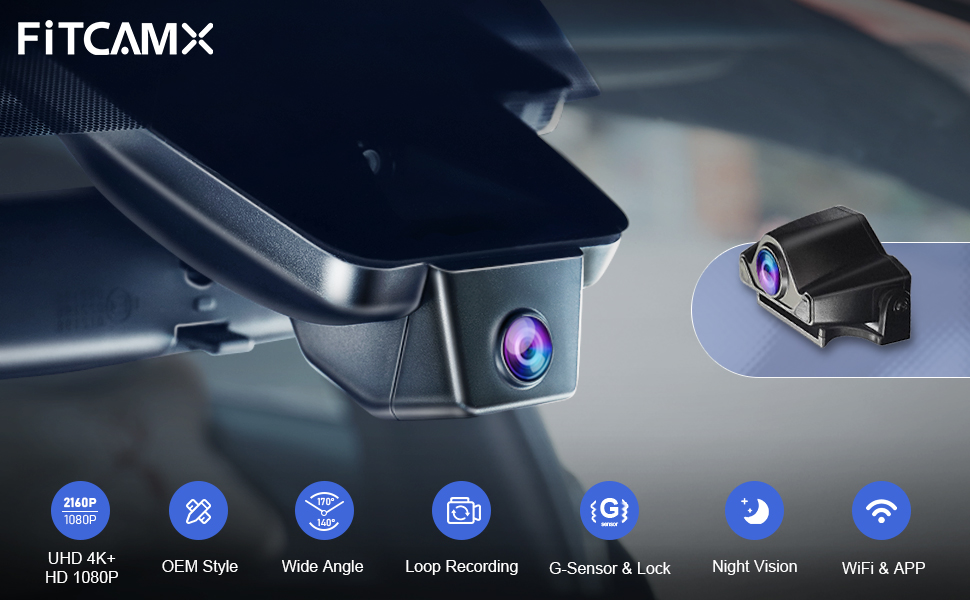
The Fitcamx 4K OEM Dash Cam represents the purest execution of the factory-integrated philosophy. Engineered from PC+ABS composite plastics that precisely match modern vehicle trim textures, it replaces the two-piece clam-shell plastic cover behind the rearview mirror. Once clipped into place, there is zero exposed cabling, no suction cups degrading under sun exposure, and zero obstruction of your forward sightlines.
Under the bonnet of the camera casing sits a capable optical module featuring an f/1.6 wide aperture lens, CMOS imaging sensor, and Wide Dynamic Range (WDR) processing. It records 4K 2160p front footage alongside 1080p rear footage when the dual-channel configuration is chosen. Registration plates in daylight are resolved crisply, and night-time glare from oncoming LED headlamps is managed effectively thanks to the generous aperture.
Connectivity relies on local 2.4GHz Wi-Fi directly to the companion mobile application. A critical benefit confirmed by owner reports: you do not need to stay connected to the camera's Wi-Fi while driving. The unit automatically loop-records to the included MicroSD card the moment the vehicle boots up, meaning your phone stays seamlessly connected to wireless Apple CarPlay or Android Auto without network conflict.
The unit is rated for extreme operating temperatures from -20°C up to 85°C (-4°F to 185°F), preventing the common battery-swelling failures that plague budget lithium-ion dash cameras in hot summer car parks.
- Pros: Flawless OEM aesthetic with zero loose wiring; large f/1.6 aperture provides strong low-light clarity; does not interfere with wireless CarPlay/Android Auto during daily driving.
- Cons: Parking surveillance mode requires a separate fuse box harness; exact vehicle trim and sensor housing variant must be verified meticulously before ordering.
2. Mangoal 4K OEM Style Dash Cam — Strong STARVIS Optics & Multi-Power Flexibility
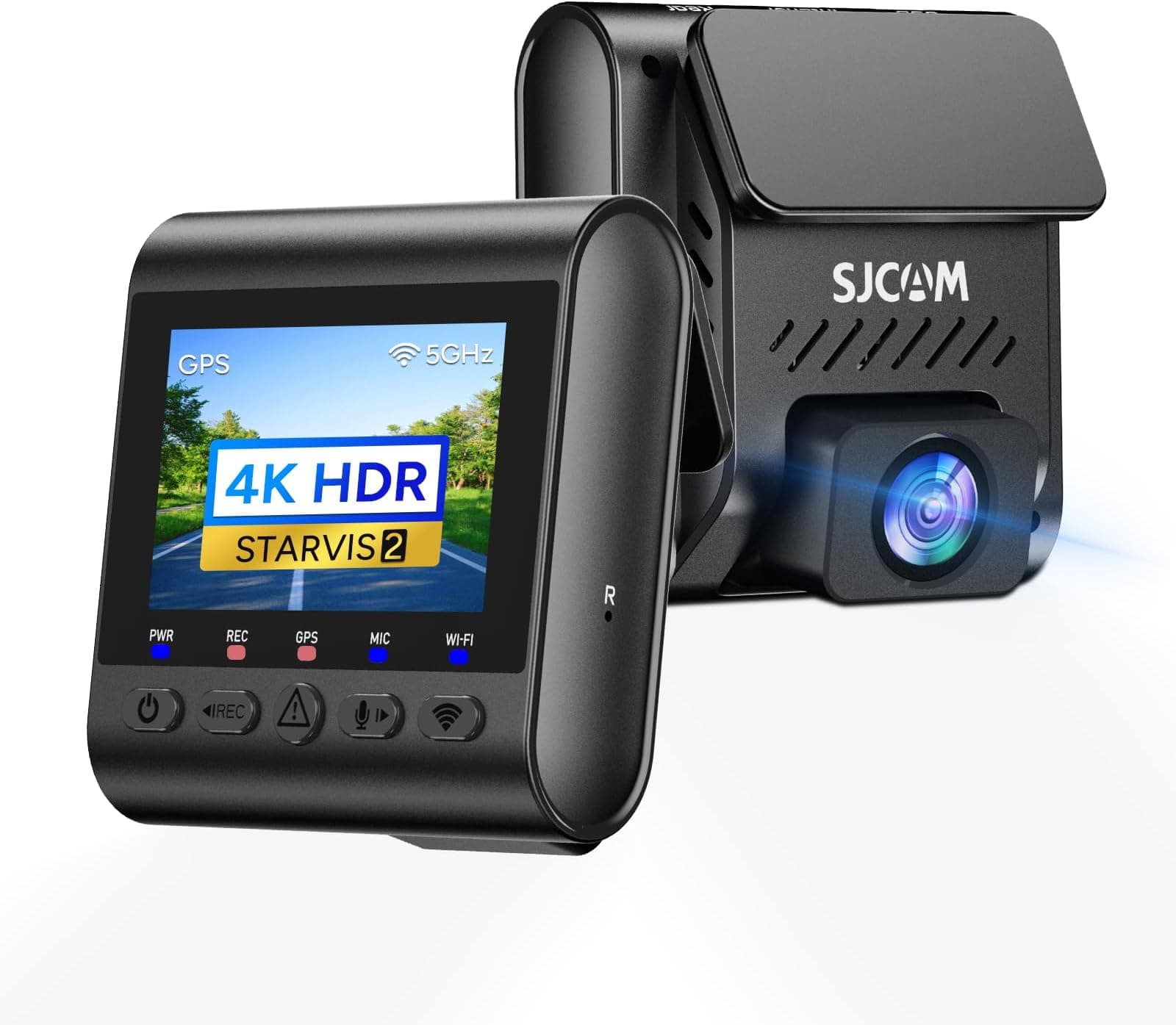
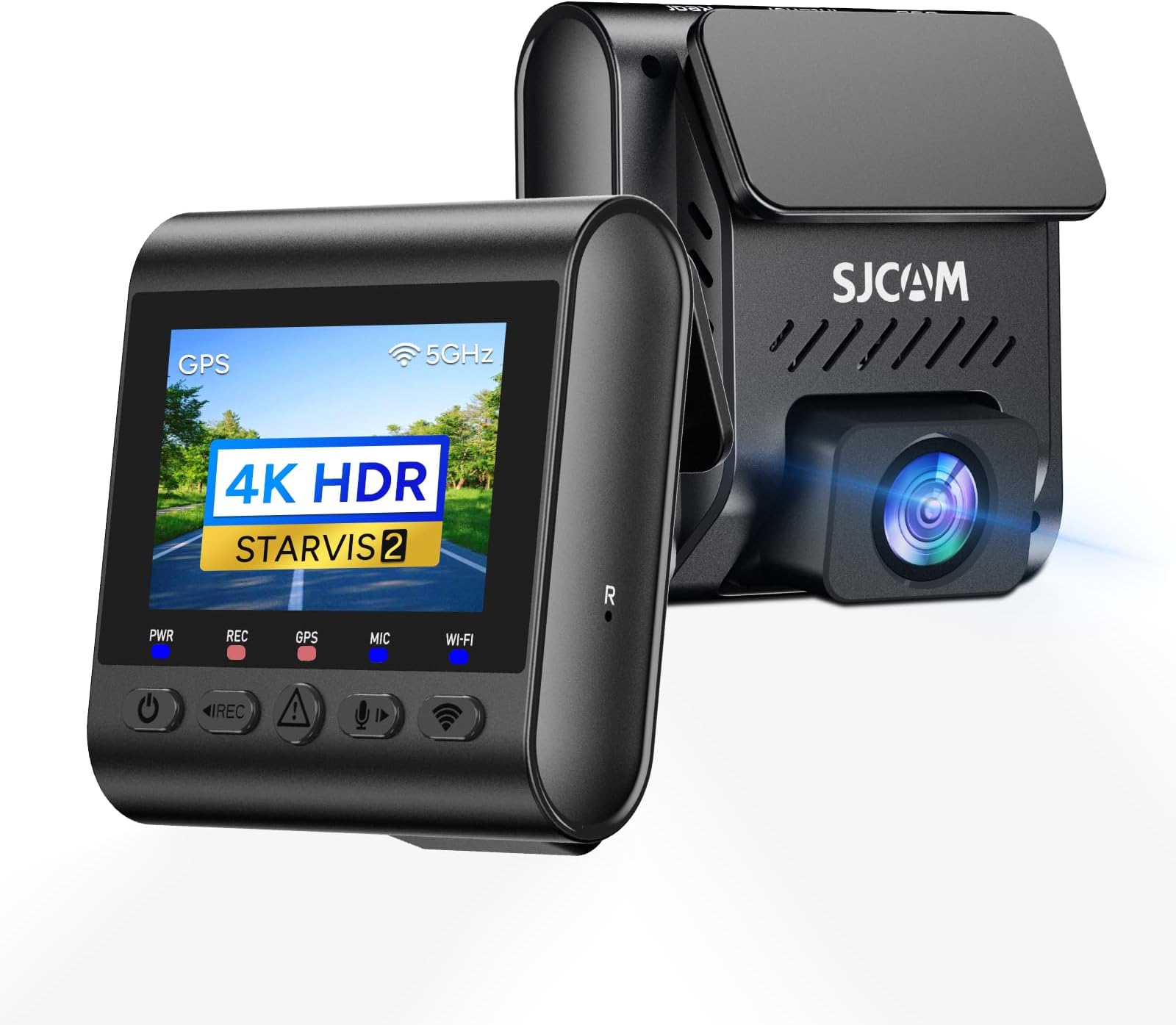
The Mangoal 4K OEM Style Dash Cam takes direct aim at heavy-duty utility vehicles and modern trucks, featuring custom-moulded housings tailored for platforms like the GMC Sierra 1500/2500/3500 HD series. Mangoal distinguishes itself by leveraging the proven Sony STARVIS IMX335 image sensor paired with an f/1.8 lens assembly to record native 2160p video at 30 frames per second.
The STARVIS sensor yields notable advantages during twilight and unlit motorway commutes, suppressing digital noise and reducing motion blur around moving number plates. Crucially, Mangoal includes both an auto-dimming rearview mirror plug adapter and an OBD power adapter in the standard box, along with an external GPS module and a 64GB MicroSD card. This dual-power inclusion gives buyers the choice between pure mirror integration or continuous OBD power for parking monitoring.
One technical caveat buyers must understand: the single-channel front unit cannot be upgraded to a dual-channel setup later simply by purchasing a secondary camera. The internal PCB boards differ between the 1-channel and 2-channel variants, meaning you must commit to your preferred configuration upfront.
- Pros: Sony STARVIS IMX335 sensor ensures robust low-light rendering; includes both mirror-tap and OBD power harnesses in the box; bundled GPS module captures speed and route telemetry.
- Cons: Front-only unit cannot accept an add-on rear camera later; housing shapes are strictly platform-specific and unsuitable for non-compatible trims.
3. Fitcamx Dash Cam for Toyota RAV4 — Dedicated Simplicity for Family Crossovers
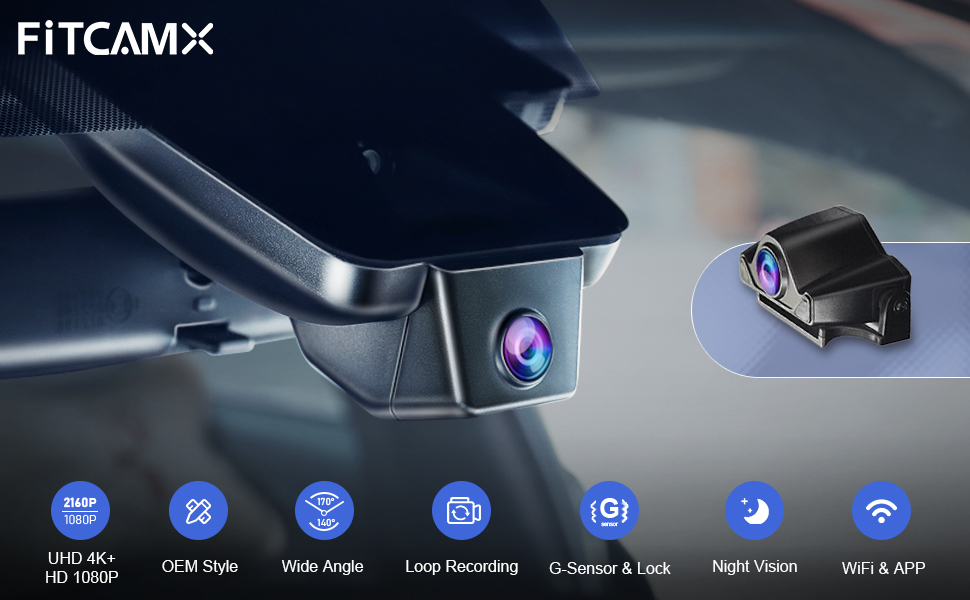
Designed specifically for high-volume family crossovers, the Fitcamx Dash Cam for Toyota RAV4 replaces the factory safety sensor shroud sitting directly ahead of the rearview mirror. For owners who dislike gadgets cluttering their windscreen, this version maintains the cleanest possible cabin profile while keeping full access to Toyota Safety Sense features.
Optics are anchored by an f/1.6 aperture lens recording ultra-high-definition 2160p video at 30fps. WDR compensation balances sudden transitions when driving into direct sunlight or exiting dark motorway tunnels. Built-in G-sensors automatically lock crash footage into an emergency event folder to prevent standard loop overwriting when an impact threshold is crossed.
Because vehicle manufacturers subtly alter windscreen bracketry across trim revisions, Fitcamx explicitly requires checking the factory part numbers (e.g., verifying housing codes such as #42080 or #42090 on select generations) before ordering. Installation takes roughly fifteen minutes with the included trim removal lever, snapping cleanly into the factory plastic retaining clips without rattles.
- Pros: Preserves windscreen visibility completely; tailored specifically to match Toyota interior plastics; responsive f/1.6 lens captures sharp contrast.
- Cons: Does not feature active display screen for instant on-dash playback; no native parking mode without secondary hardwire installation.
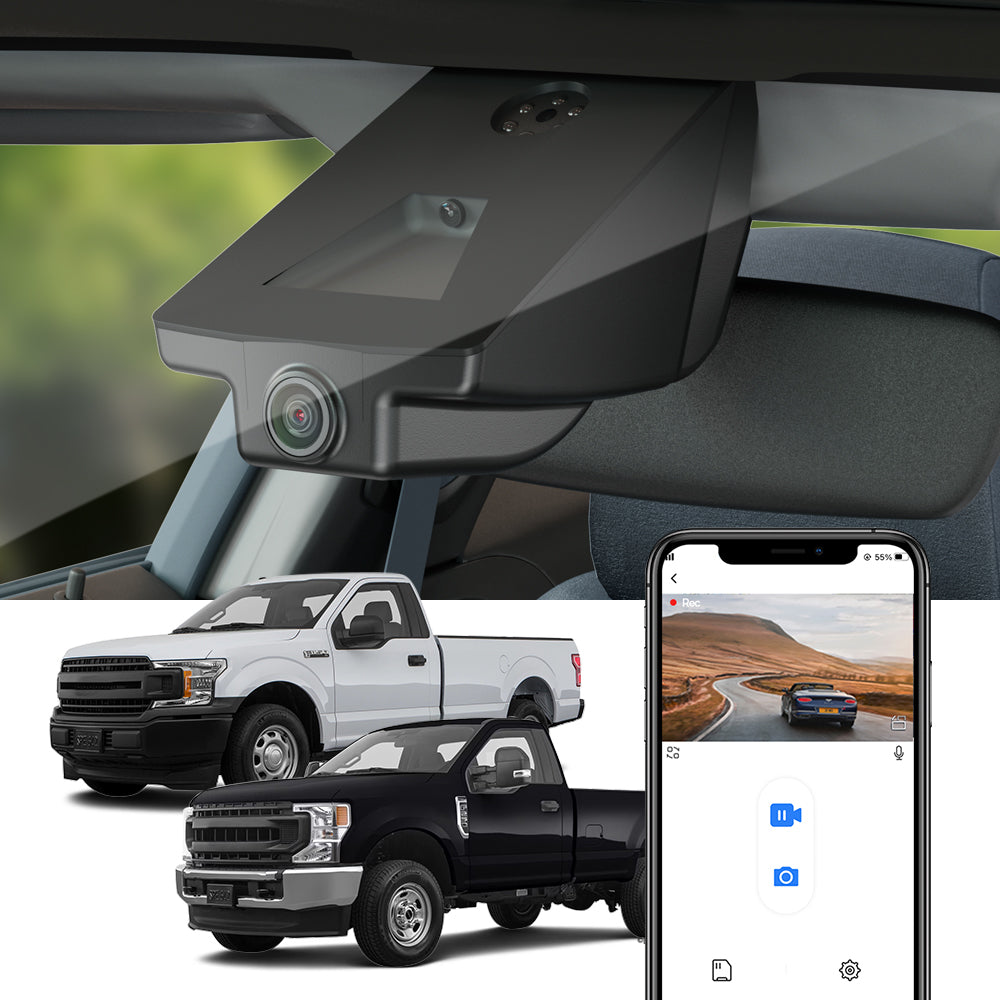
4. Fitcamx Dash Cam for Ford F-150 / Ranger — Robust Utility-Vehicle Integration
Built for the demands of work trucks and commercial fleets, the Fitcamx Dash Cam for Ford F-150 targets platforms like the F-150 and Ranger. These trucks feature prominent rain sensors and forward collision hardware that make standard suction mounts awkward to place. This kit packages two distinct wiring connectors in the box to accommodate minor assembly-line variations in Ford mirror wiring looms.
The truck-specific unit delivers dual-channel capability with a 1440p (2K) front camera and a 1080p rear camera, prioritising wide exposure latitude and high frame stability. The f/1.6 optics cut through glare from wet motorway asphalt and heavy rain, while the high-temperature PC+ABS shell withstands the extreme cabin heat typical of broad, steeply angled truck windscreens.
Loop recording operates continuously onto an included 64GB MicroSD card (with support up to 256GB). Transferring files can be managed wirelessly over the companion smartphone app or by pulling the card directly for desktop review.
- Pros: Includes multiple harness pinouts in the package for varying truck sub-trims; rigid rattle-free mounting handles rough corrugated roads; crisp 1440p+1080p dual recording balance.
- Cons: Rear camera cable still requires routing along headliner to back glass; lower front resolution than 4K single-channel equivalents.
Alternatives to Consider: The Full Digital Mirror Upgrade
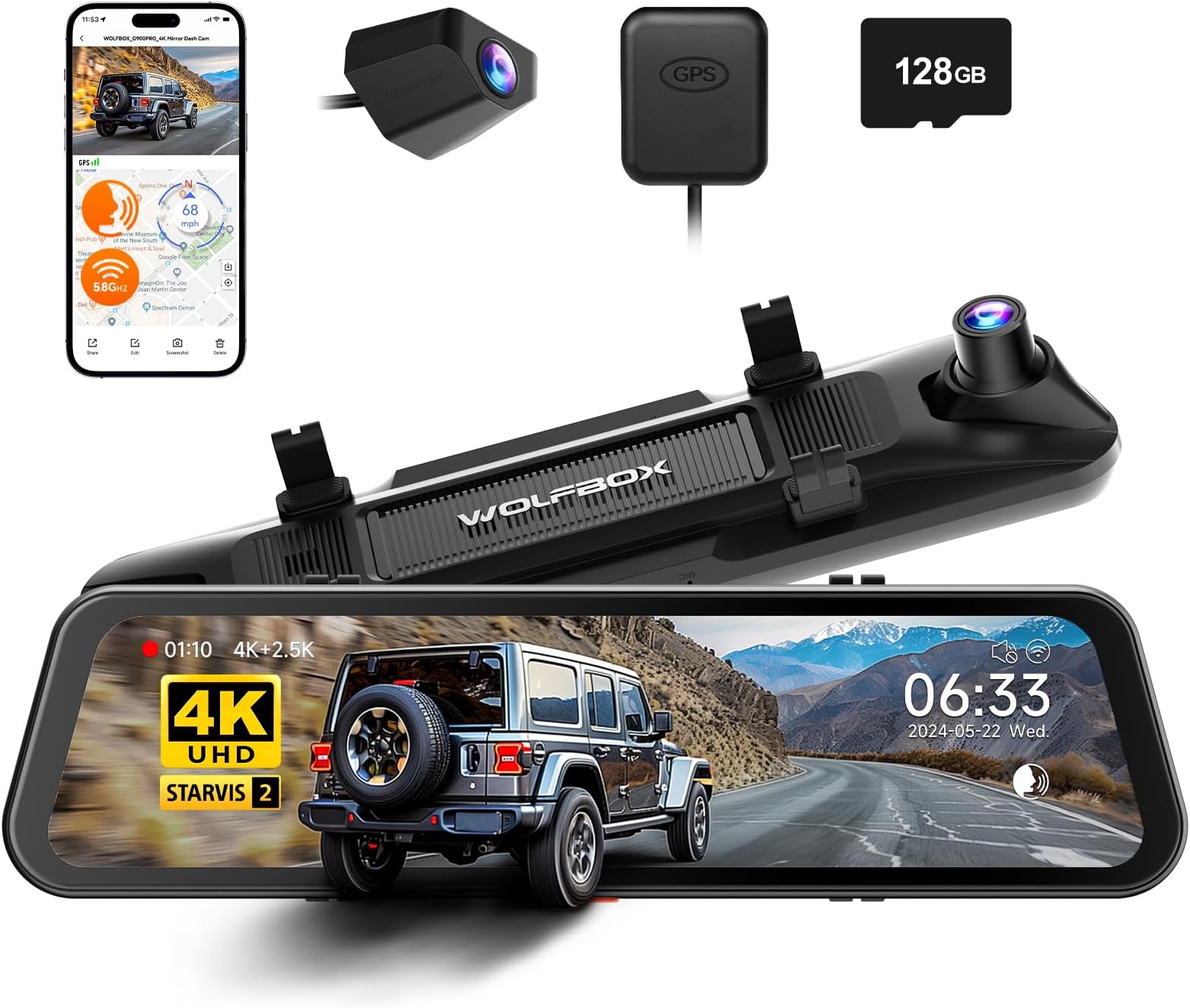
5. Wolfbox G900 4K Mirror Dash Cam — Premium Display & Unmatched Rear Visibility
If your vehicle lacks a powered rearview mirror harness—or if you prefer a large active display over an invisible hidden housing—the Wolfbox G900 4K Mirror Dash Cam offers a different approach. Rather than hiding behind your glass, this unit straps directly over your existing interior rearview mirror, transforming it into a high-definition 12-inch digital streaming display.
The G900 uses the top-tier Sony STARVIS 2 IMX678 8-megapixel sensor for its forward camera, capturing native 4K footage with class-leading low-light sensitivity and dynamic range. The rear 2.5K camera streams a live, wide-angle feed straight to the mirror screen, completely eliminating blind spots caused by rear passengers, headrests, or full boot cargo.
While the Wolfbox requires traditional cable routing (running a power wire down the A-pillar and a video lead to the rear tailgate), it solves a fundamentally different problem than OEM housings: it upgrades both your video recording security and your daily rearward visibility in one package.
- Pros: Top-tier Sony STARVIS 2 IMX678 sensor provides industry-leading night dynamic range; live digital rear-view mirror eliminates interior blind spots; responsive touch screen controls.
- Cons: Requires running cables to the fuse box/12V port and boot lid; bulkier than invisible OEM shroud replacements.
OEM Mirror Tap vs. Universal Dash Cams: Key Trade-offs
Choosing an integrated dash cam requires weighing factory appearance against general-purpose convenience. Here is how the key characteristics compare:
- Aesthetics and Sightlines: OEM-style units win decisively. They sit flush against the glass without suction rings, exposed wiring coils, or adhesive pads degrading under UV light.
- Vehicle Transferability: Universal cameras can be moved between cars in five minutes with a fresh adhesive pad. OEM-fit units are engineered specifically for one vehicle interior shell and cannot be transferred if you sell the car.
- Parking Mode Operation: Standard 12V mirror harnesses only supply power when the ignition is switched on. If you need 24-hour parked surveillance, you will still need to route an optional continuous-power hardwire or OBD lead down to the vehicle power centre.
- App Dependence: Because OEM dash cams do not feature built-in viewing screens, adjusting settings or reviewing video clips requires connecting to the unit's local Wi-Fi via your smartphone.
Buyer's Checklist: Verifying Your Vehicle Compatibility
The single most common mistake when buying an OEM-integrated dash camera is assuming all model years share the same mirror base. Follow these verification steps before ordering:
- Check for Switched Mirror Power: Confirm your vehicle has an auto-dimming mirror, rain sensor, or powered safety camera array behind the glass. Manual day/night flip mirrors generally lack the necessary 12V harness.
- Inspect the Sensor Shroud Shape: Vehicle manufacturers frequently change plastic housing dimensions during mid-cycle facelifts (e.g., changing from a split trapezoid to a solid rectangular housing). Compare your existing shell against listing photos.
- Decide on 1-Channel vs. 2-Channel: If you want rear-window recording, buy the dual-channel kit immediately. The primary front camera boards on models like Mangoal and Fitcamx cannot simply be converted with a standalone rear accessory later.
- Card Quality Matters: High-bitrate 4K loop recording places heavy strain on flash storage. Use high-endurance Class 10 U3 MicroSD cards rated for sustained video writing and extreme temperature cycles.
Final Verdict: Are Mirror-Harness Dash Cams Worth It?
For drivers who want clean automotive interiors free from clunky brackets and snaking cables, the mirror-tapped OEM dash cam is one of the most satisfying automotive electronics upgrades available. The Fitcamx 4K OEM Dash Cam remains the gold standard in this category, offering pristine plastic mouldings, straightforward plug-and-play wiring, and reliable 4K video resolution that operates quietly in the background without disturbing your smartphone's wireless navigation.