As an Amazon Associate I earn from qualifying purchases. This page contains affiliate links, and I may earn a commission at no extra cost to you.
The Reality of At-Home IPL Hair Removal
Ditching razors and painful epilators for an intense pulsed light (IPL) device is one of the most appealing grooming upgrades you can make. The promise sounds simple: a handheld gadget flashes concentrated broad-spectrum light down into the hair follicle, heating the melanin, disrupting the growth cycle, and leaving you with smooth skin for months. Yet at-home IPL is not a magical overnight fix. It requires strict consistency, works only on specific skin-and-hair contrast profiles, and varies wildly across brands in terms of energy output and comfort.
A high-end device can significantly reduce regrowth within four to eight weeks. A weak, poorly calibrated handset will leave you sitting on the bathroom floor for forty minutes, flashing patches of skin with negligible long-term results. If you want permanent visible reduction without paying thousands of dollars at a private clinic, selecting a machine with adequate optical power, fast cycle times, and proper safety sensors is critical.
This guide breaks down the core technical considerations you need to understand before buying, followed by an in-depth analysis of four leading at-home IPL handsets on the market today.
How IPL Works (And Who It Is Actually For)
Intense Pulsed Light works via selective photothermolysis. Unlike clinical diode lasers that emit a single coherent wavelength, IPL emits a broad spectrum of light (typically between 500nm and 1200nm). The melanin (pigment) in the hair root absorbs these light pulses, converting light energy into thermal energy. This heat damages the base of the follicle during its active growth phase (anagen), forcing it into a resting phase (telogen) and causing the hair to shed naturally.
Because the technology relies entirely on melanin absorption, contrast is non-negotiable:
- Ideal candidates: Light to medium skin tones paired with naturally dark hair (black, dark brown, or medium brown).
- Poor or ineffective candidates: Very light blonde, red, grey, or white hair (which lacks sufficient melanin to absorb the thermal energy).
- Contraindicated skin tones: Very dark or deeply pigmented skin (Fitzpatrick skin types V and VI). On dark skin, the epidermal melanin absorbs too much of the light flash rather than channelling it exclusively into the follicle, which risks blistering, discolouration, or burns.
Key Features to Compare Before Buying
1. Energy Output and Optical Fluence
Energy fluence is measured in Joules per square centimetre (J/cm²). Budget handsets often deliver a modest 3 J/cm², requiring dozens of repetitive sessions to show minor thinning. Flagship units push between 5 and 6 J/cm² (or up to 26 Joules total per pulse across specialised modes), delivering the energy density necessary to stun stubborn, coarse follicles on the bikini line and underarms.
2. Flash Rate and Glide Mode
Nothing kills consistency faster than a slow device. If an IPL unit takes two to three seconds to recharge between flashes, treating both legs becomes an exhausting chore. Leading models offer continuous glide modes that flash every 0.25 to 0.5 seconds, cutting full-body sessions down to roughly ten minutes.
3. Contact Cooling vs Ambient Heat
Standard IPL generates noticeable warmth—often described as the snap of a hot rubber band against the skin. Newer designs incorporate sapphire crystal contact cooling, actively chilling the outer glass window down to 50–65°F (10–18°C) during operation. This prevents thermal discomfort on sensitive areas like the upper lip and intimate zones.
4. Skin Tone Sensors and UV Filtration
Entry-level units force you to manually toggle intensity levels based on a printed paper chart. Premium systems feature integrated optical sensors that scan your skin tone dozens of times per second, automatically ramping output up or down to balance maximum efficacy with zero risk of epidermal damage. Built-in optical UV filters are mandatory to protect the surrounding skin from unwanted radiation.
Top IPL Hair Removal Devices Compared
| Product | Key Feature | Price Band | Verdict | Buy |
|---|---|---|---|---|
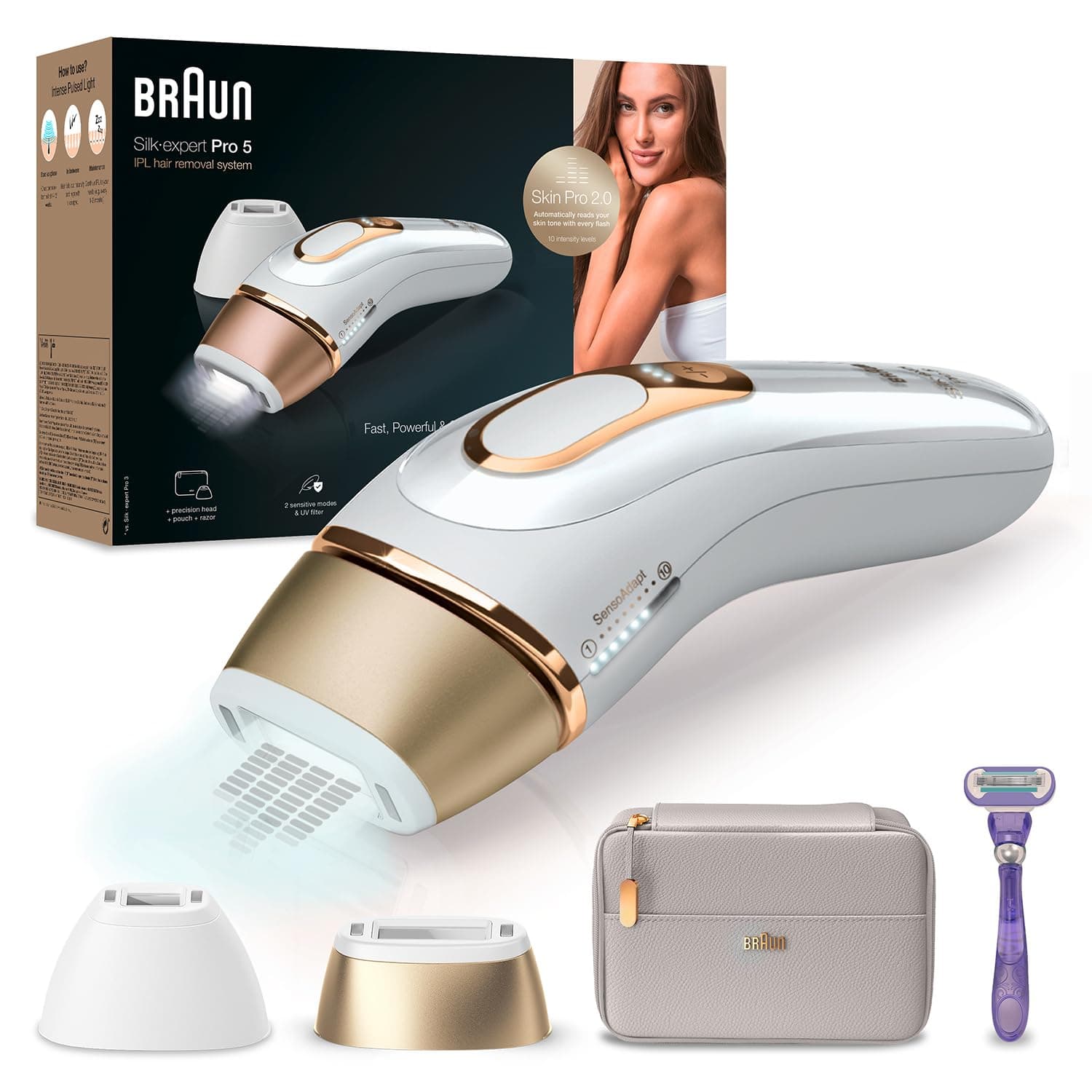
| Braun Silk-expert Pro 5 | SensoAdapt real-time skin sensor, up to 6 J/cm² | Premium | The gold standard for automated safety and long-term reduction speed. | Check today's price on Amazon |
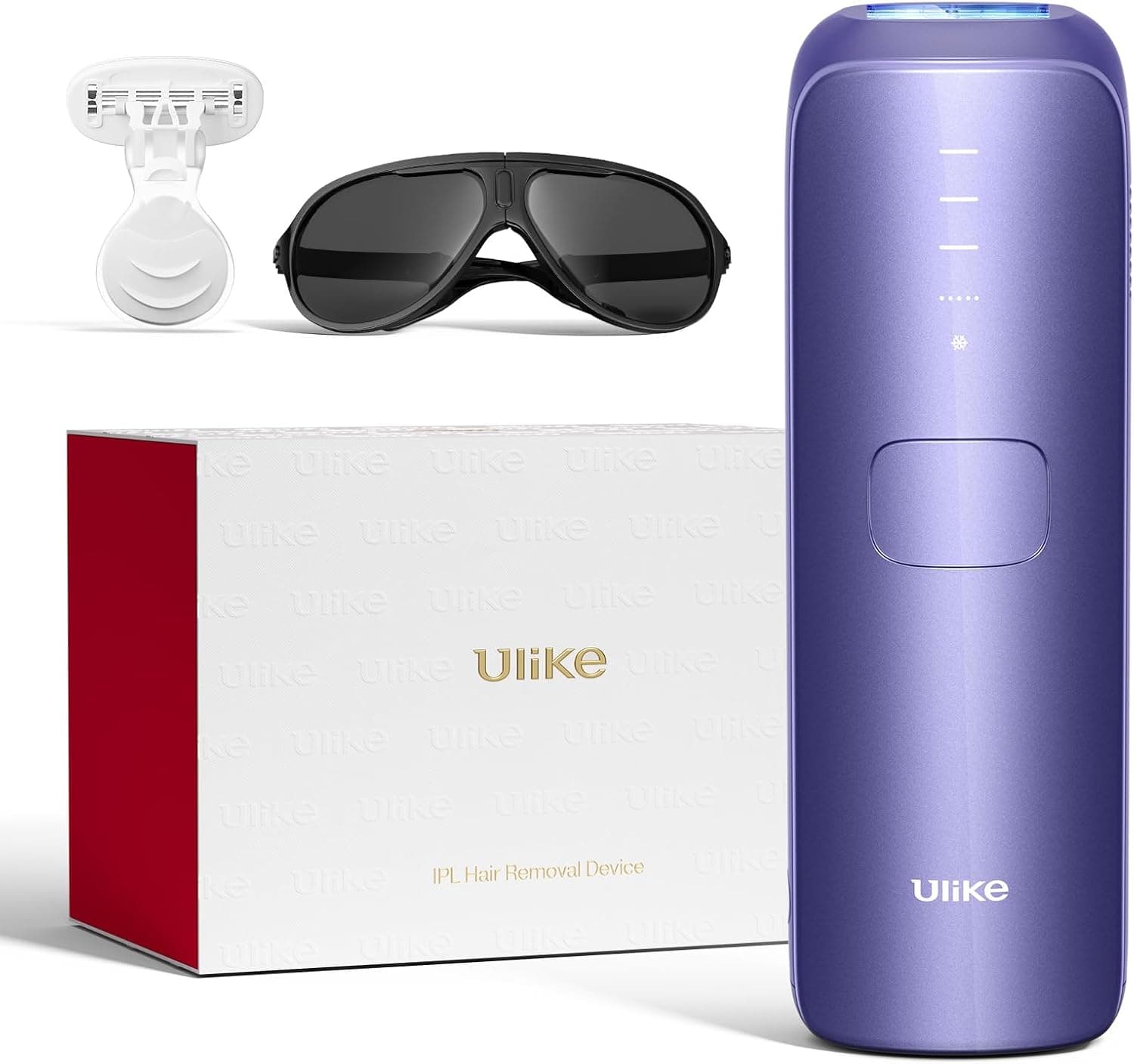
| Ulike Air 3 | Sapphire Ice-Cooling, 0.25s Auto-Glide mode | Mid–Premium | The best option for pain-sensitive skin and ultra-fast gliding sessions. | Check today's price on Amazon |
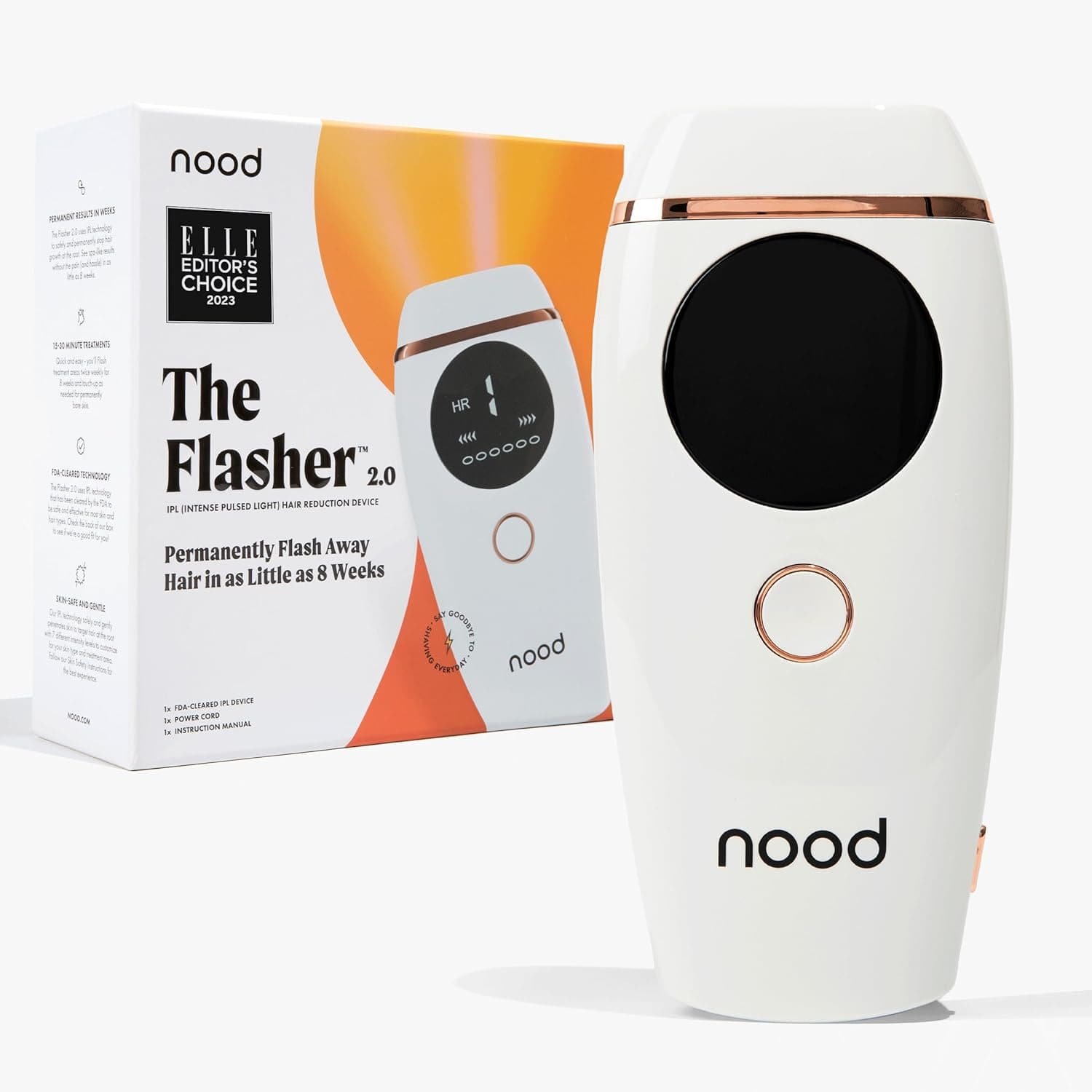
| Nood The Flasher 2.0 | Compact ergonomic build, digital display, 6.5ft cord | Mid-range | A straightforward, no-nonsense handset built for routine maintenance. | Check today's price on Amazon |
| JOVS Venus Pro II | 180° rotating head, multi-mode tailored attachments | Mid–Premium | Versatile ergonomic design that makes awkward angles effortless. | Check today's price on Amazon |
Detailed Breakdown: The Top 4 IPL Handsets
1. Braun Silk-expert Pro 5 IPL Hair Removal System
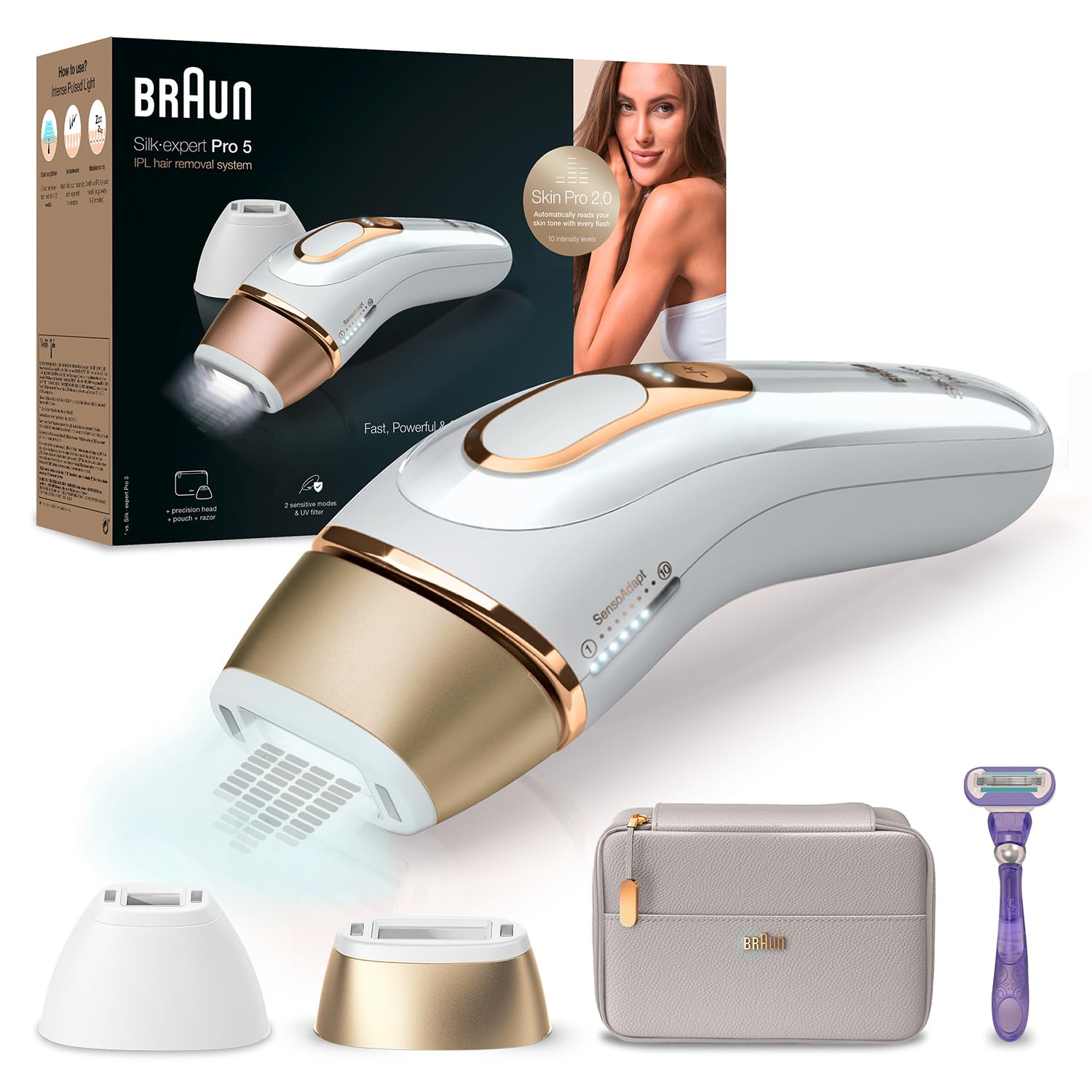
The Check today's price on Amazon remains the benchmark against which all other consumer IPL devices are judged. Designed in partnership with dermatological specialists, its defining strength is the proprietary SensoAdapt optical sensor. Instead of asking the user to guess their Fitzpatrick skin classification, the sensor reads skin tone continuously at up to 80 times per second, automatically fine-tuning the flash intensity across 10 distinct energy levels with every pulse.
The manufacturer states that users can see up to 95% visible hair reduction in four weeks when following the recommended protocol. It delivers substantial energy output while maintaining high flash speeds—delivering a pulse every half-second on lower settings—allowing full-body treatments across legs, arms, chest, and underarms in roughly 10 minutes. The kit includes both a standard window for broad areas and a precision head designed for smaller, curved contours like the bikini line and upper lip. It is fully mains-powered, eliminating battery degradation worries, and requires no replacement flash cartridges over its operational lifetime.
- Pros: Automated real-time skin tone adjustment; clinical-grade energy output; dual treatment heads included; rapid continuous glide mode.
- Cons: Lacks active sapphire contact cooling; initial purchase price sits firmly in the premium category.
2. Ulike Air 3 IPL Hair Removal Device
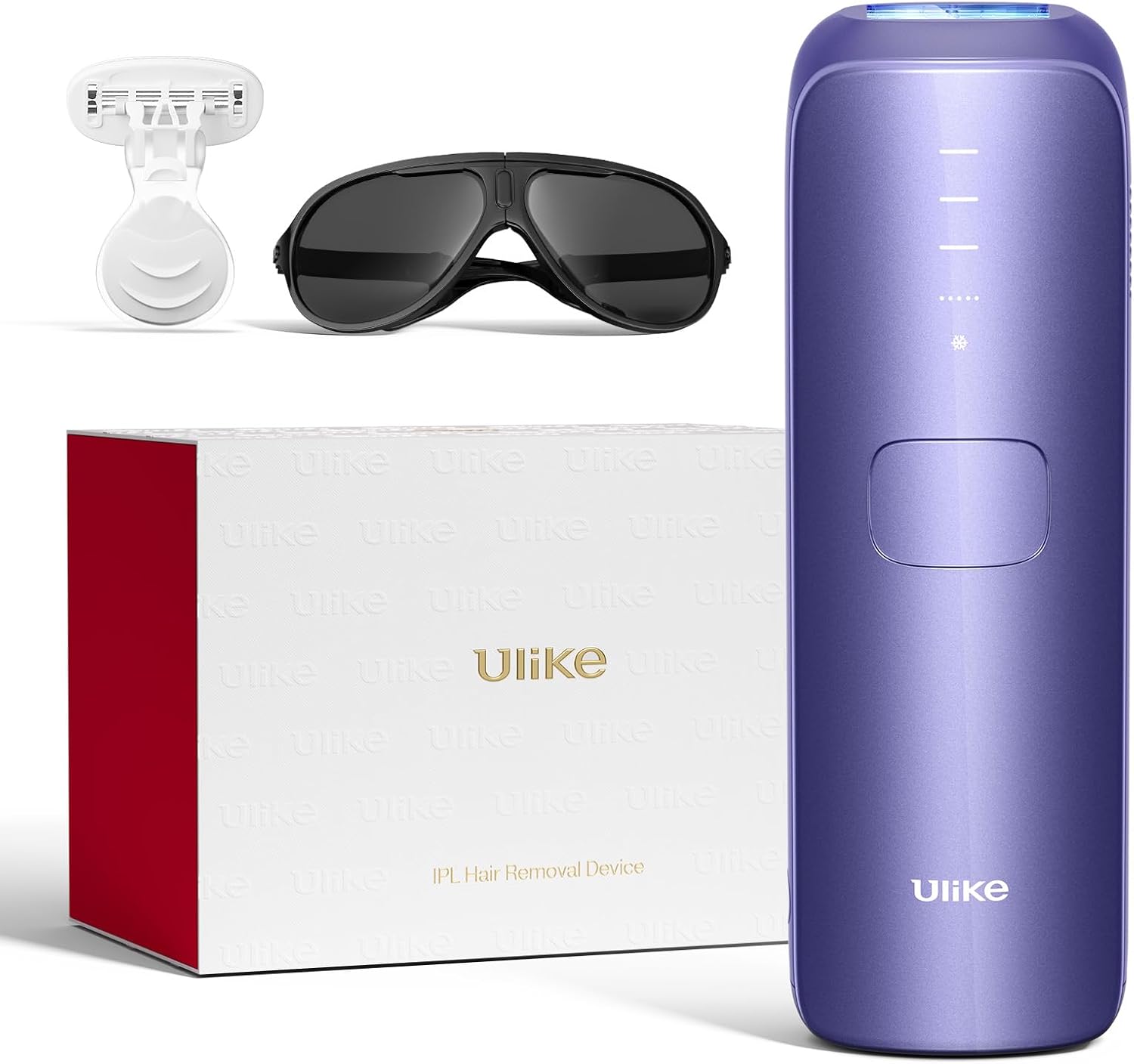
If your primary hesitation regarding at-home hair removal is the sensation of heat or stinging, the Check today's price on Amazon is engineered specifically to address that friction. Its standout technology is a planar sapphire crystal treatment window with integrated thermal dissipation that actively cools the skin contact surface down to 65°F (18°C) within seconds of powering on. This active cooling numbs the superficial epidermis while the underlying light pulse bypasses the cold glass to heat the melanin in the follicle.
Beyond comfort, the Air 3 features a fast Auto-Glide mode that fires pulses at intervals as rapid as 0.25 seconds, making broad areas like thighs and calves remarkably quick to cover. The device incorporates dual-lamp SHR technology delivering up to 26 Joules per pulse cycle to tackle stubborn, coarse strands. The package includes protective eye goggles, a razor, and a structured storage case, giving you an all-in-one setup out of the box.
- Pros: Exceptional sapphire ice-cooling technology; extremely fast 0.25-second auto-glide; sleek, compact flat-head wand design.
- Cons: Single fixed head size means treating very tight contours (like the cupid's bow) requires careful angling.
3. Nood The Flasher 2.0 IPL Hair Removal Handset
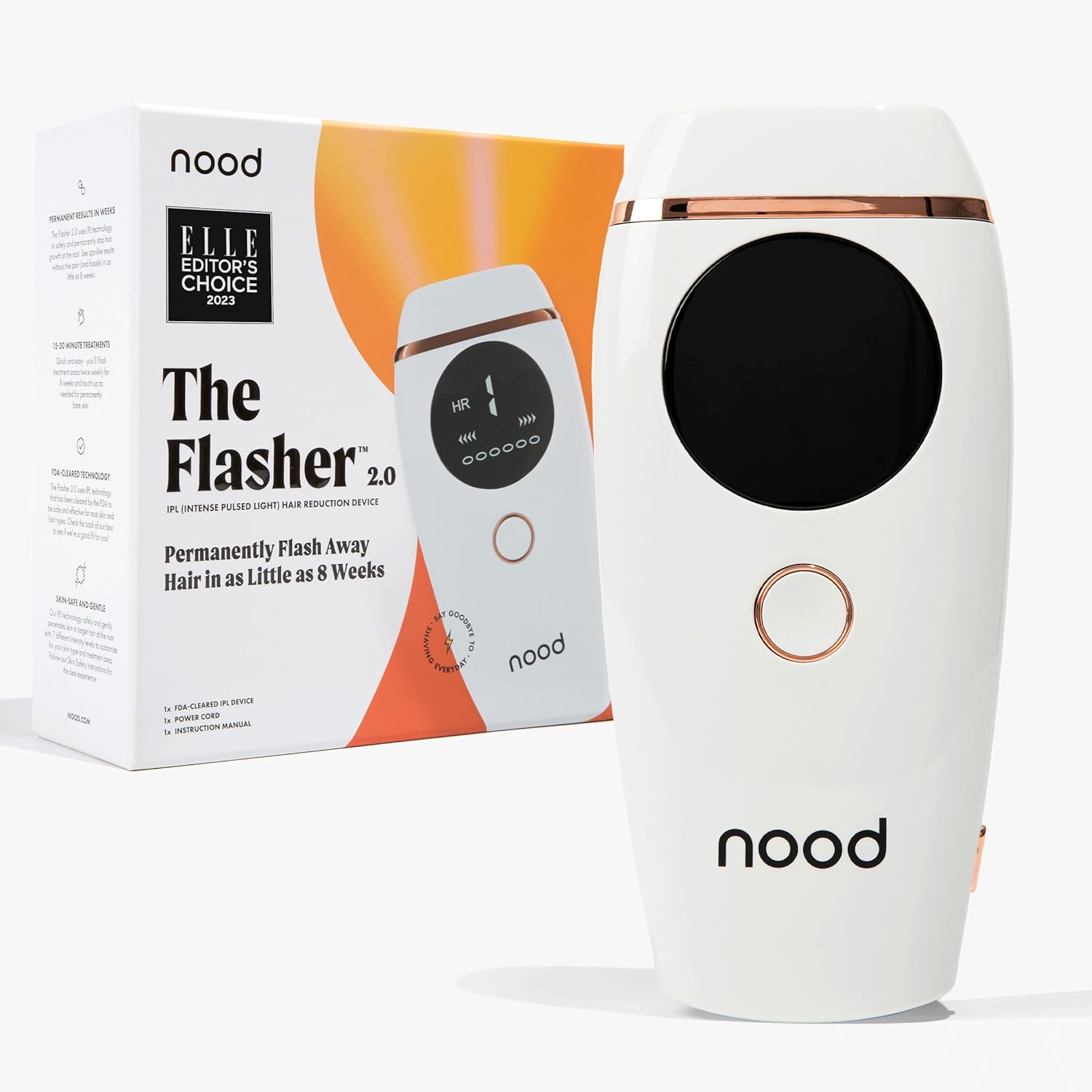
The Check today's price on Amazon targets users who want an intuitive, compact gadget without unnecessary complexity. Sporting an ergonomic, pebble-style handheld form factor, The Flasher 2.0 features a clear digital display that shows your current intensity level, active mode, and remaining flash count.
Operating via a 6.5-foot power cord with universal 100–240V compatibility, it ensures steady, unthrottled energy delivery without the power drop-offs typical of battery-operated alternatives. It features built-in over-voltage and thermal protection circuitry, making it safe for extended home sessions. While it lacks the automated real-time skin scanning found on the Braun Pro 5, its manual multi-level intensity settings allow users to incrementally ramp up power as their skin adapts over successive weekly treatments.
- Pros: Lightweight, ergonomic body; generous 6.5-foot cord; clear digital status readout; straightforward operation.
- Cons: Requires manual skin tone calibration; slower flash recycle times on maximum intensity settings.
4. JOVS Venus Pro II IPL Hair Removal Device
The Check today's price on Amazon departs from conventional wand styling by incorporating a 180-degree rotating treatment head. For anyone who has struggled to maintain a perpendicular 90-degree seal against the back of the thighs, underarms, or shoulder blades, this articulating swivel joint eliminates wrist strain and awkward contortions.
The Venus Pro II pairs this physical flexibility with dedicated treatment modes tailored specifically for arms, legs, underarms, face, and bikini line, adjusting pulse sequencing and wavelength filtration accordingly. Integrated contact cooling helps manage surface temperatures, while the continuous power supply ensures consistent optical discharge across long sessions. It represents a versatile middle ground between clinical ergonomics and consumer ease of use.
- Pros: 180-degree pivoting head provides unmatched reach; custom area-specific optical modes; integrated skin surface cooling.
- Cons: Bulkier overall footprint than standard wand handsets; interface requires a slight learning curve.
What to Expect: A Realistic Treatment Timeline
Marketing bullets often highlight rapid hair reduction, but biological hair growth cycles cannot be rushed. Follicles cycle through growth, regression, and resting phases over a multi-week span. Because IPL only disables follicles currently in the active growth stage, a single flash captures only a percentage of active roots.
- Weeks 1–4 (Initial Phase): Treat the targeted zones once or twice per week (depending on manufacturer guidelines). Hair will still appear to grow initially as the disabled follicle pushes the treated shaft out of the pore. Shaving before every session remains mandatory.
- Weeks 5–8 (Transition Phase): Noticeable bald patches appear. Regrowth becomes significantly thinner, sparser, and slower. Stubble soft-pedals into fine fuzz.
- Week 8 onwards (Maintenance Phase): Treatments drop to once every three to six weeks. Occasional quick touch-ups keep dormant follicles suppressed indefinitely.
Alternatives to Consider
If neither our top automated pick nor our cooling favourite fits your precise budget or routine, consider these directions:
- The Ergonomic Contender: If treating hard-to-reach angles like the back, shoulders, or hamstrings is your primary headache, the articulating swivel of the Check today's price on Amazon offers mechanical advantages that straight-wand devices simply cannot match.
- The Minimalist Budget Route: If you want a compact, straightforward device with zero app clutter or complex dials, the clean handheld format of Check today's price on Amazon delivers capable everyday functionality at an approachable mid-range tier.
Final Verdict
If you want the most reliable, clinically proven balance of automated skin safety and sheer optical power, the Check today's price on Amazon remains the definitive choice for long-term hair reduction. Its dynamic SensoAdapt sensor takes the guesswork out of energy management, ensuring every pulse is as strong as safely possible for your exact skin tone. For those with particularly low pain thresholds or sensitive intimate areas, the sapphire-chilled treatment window of the Check today's price on Amazon is an exceptional alternative that transforms the treatment experience into a completely sting-free routine.