As an Amazon Associate I earn from qualifying purchases. This page contains affiliate links, and I may earn a commission at no extra cost to you.
The Problem with Most STEM Toys Today
Most educational tech aimed at children suffers from a predictable flaw: it delivers twenty minutes of novel excitement before getting relegated to a storage bin forever. Flashy lights and loud sound effects often mask shallow learning curves, while overly complex kits frustrate younger minds before they write their first line of logic. Finding an educational gadget that genuinely teaches computational thinking, spatial awareness, or geography requires looking past the colourful packaging to evaluate how well the product scaffolds its difficulty.
Whether you want to introduce fundamental sequencing without introducing yet another tablet screen, or your older child is ready to transition from visual block coding to actual JavaScript and Python, the gear you choose makes all the difference. We have researched and broken down four established educational devices currently leading the category, assessing their durability, software depth, sensory feedback, and long-term replay value.
Quick Comparison Table
The table below breaks down the primary specifications, price bands, and intended age focus for our selected educational toys.
| Product | Key Specs & Learning Focus | Price Band | Best Suited For | Buy |
|---|---|---|---|---|
| Sphero BOLT App-Enabled Robot Ball | 8x8 LED Matrix, Light/Compass Sensors, Draw/Blocks/Text Coding | Premium (approx. $179) | Ages 8+ & secondary learners needing real text code | Check today's price on Amazon |
| Learning Resources Botley 2.0 the Coding Robot | 100% Screen-Free, Remote Programmer, 78-Piece Obstacle Set | Budget-Friendly (approx. $65) | Ages 5–8 stepping into screen-free sequencing | Check today's price on Amazon |
| Wonder Workshop Dash Coding Robot | Interactive Microphones/Speakers, 5 Companion Apps, LEGO Compatible | Mid-to-High (approx. $149) | Ages 6–11 wanting personality and voice response | Check today's price on Amazon |
| PlayShifu Orboot Earth Interactive AR Globe | Augmented Reality, 1,000+ Geography Facts, Passport Activity Kit | Budget (approx. $55) | Ages 4–10 exploring geography and world cultures | Check today's price on Amazon |
Detailed Product Breakdown
1. Sphero BOLT App-Enabled Robot Ball: The Coding Powerhouse
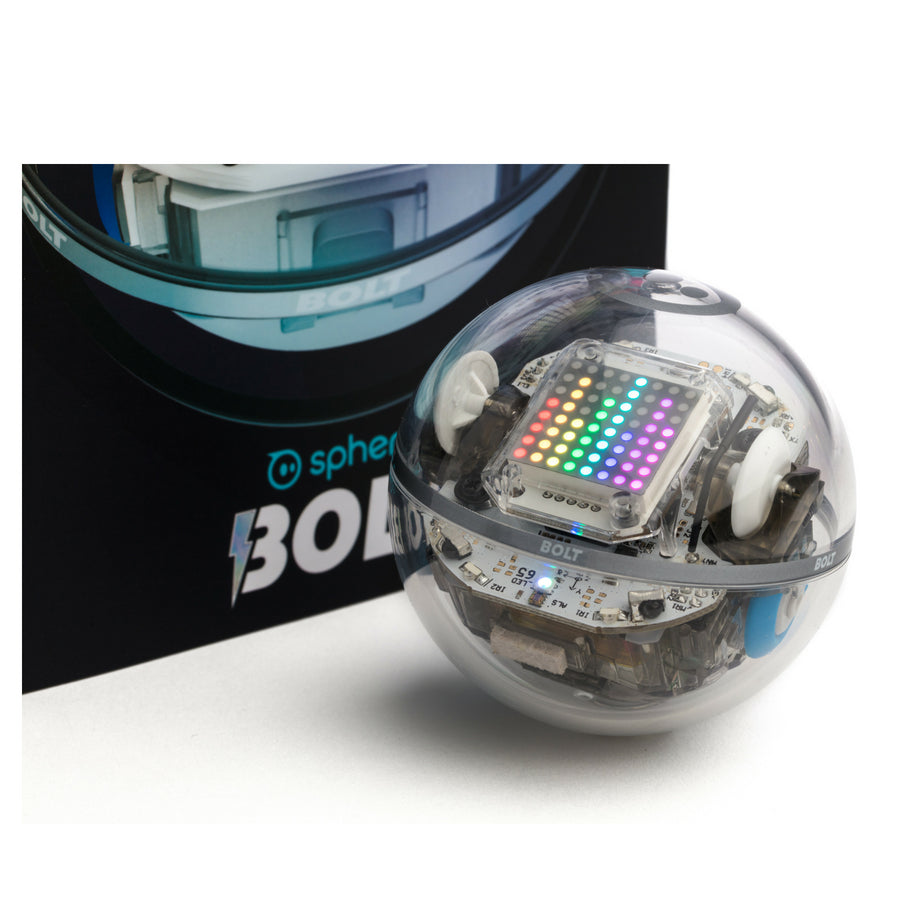
If your goal is to provide a versatile, durable platform that spans simple visual paths all the way to professional programming languages, the Check today's price on Amazon stands out as the most capable hardware in this lineup.
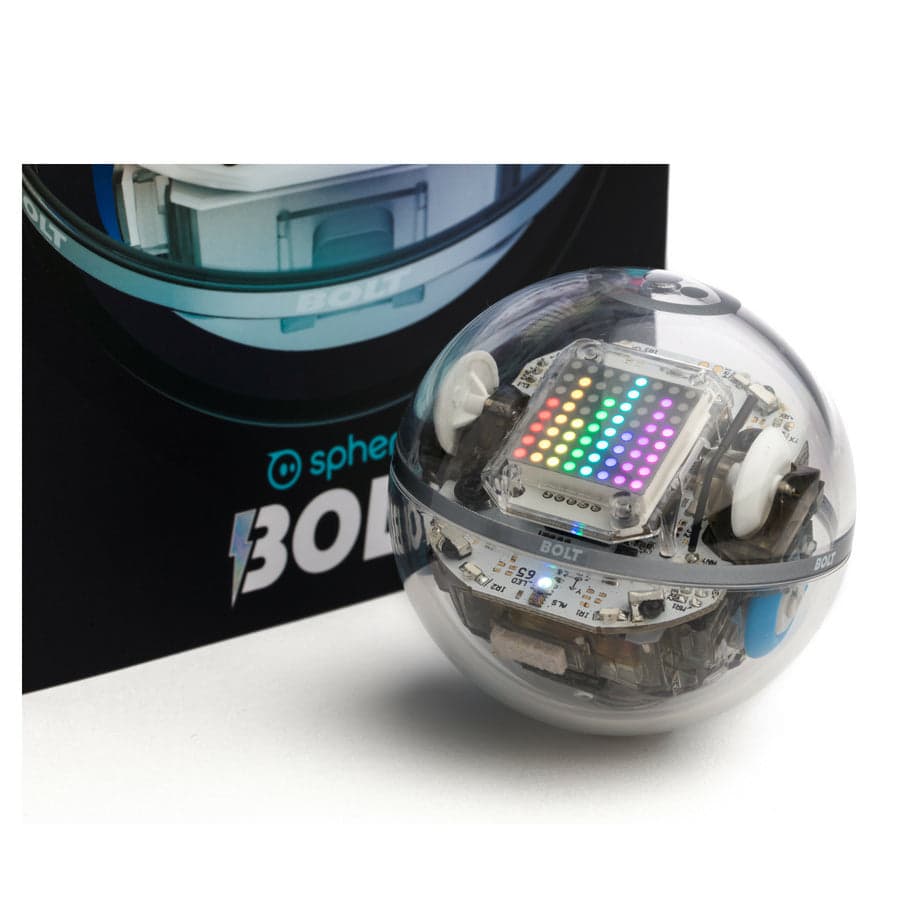
Housed inside a clear, scratch-proof polycarbonate sphere, the BOLT allows curious minds to inspect its internal motors, gyroscope, accelerometer, and circuitry while in motion. It is completely sealed, waterproof, and charges via an inductive cradle, which eliminates fragile USB ports that young children frequently damage. With over four hours of battery life on a single charge, it outlasts almost every rival robot on the market.
What sets the BOLT apart from standard programmable balls is its dynamic 8x8 LED matrix display and comprehensive sensor suite. Users can program the matrix to output real-time sensor data, custom animations, or scrolling text messages. Advanced light sensors, an integrated compass, and motor encoders let learners construct complex conditional algorithms (for example, programming the ball to illuminate and turn when light levels drop, or navigate a room using directional headings).
The companion Sphero Edu app provides a three-tiered progression: freehand drawing for early learners, Scratch-style block coding for intermediate logic, and raw JavaScript/Python text editing for advanced students. This progression ensures the toy remains relevant for years rather than months.
- Pros: Virtually indestructible waterproof design; superb progression from block coding to Python and JavaScript; versatile 8x8 LED screen.
- Cons: Requires a compatible tablet or smartphone; premium pricing makes it an investment.
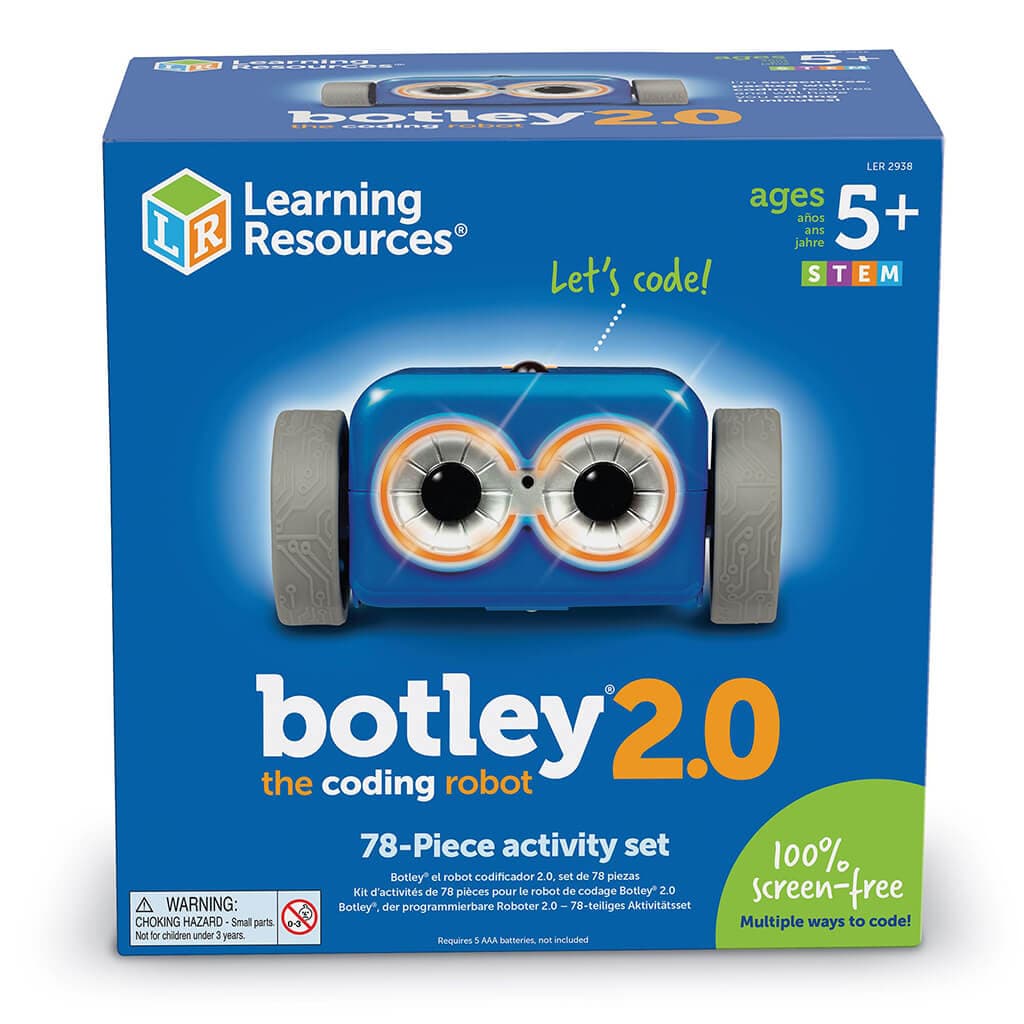
2. Learning Resources Botley 2.0: The Screen-Free Logic Builder
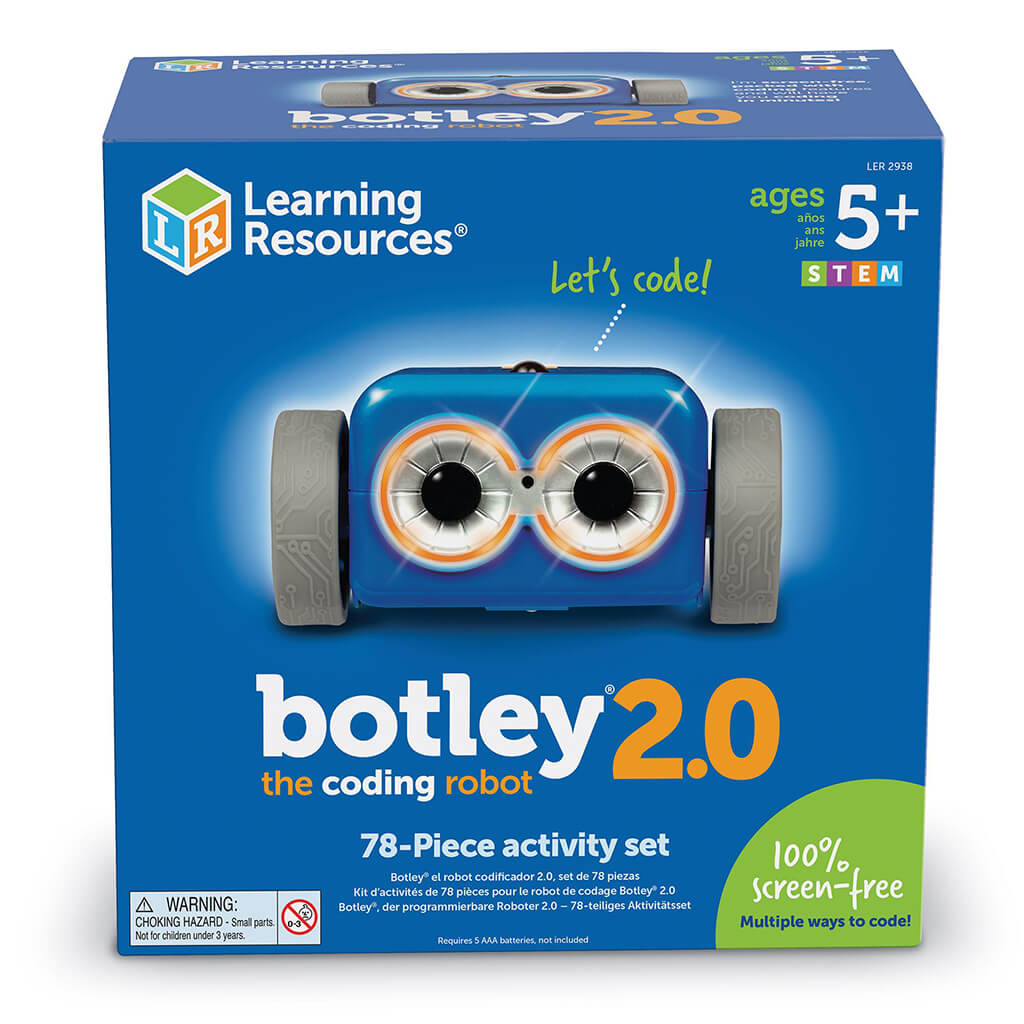
For parents and educators cautious about excessive screen exposure, the Check today's price on Amazon is the gold standard for early computer science foundations. It requires zero tablets, zero phones, and zero internet connections to operate.
Everything is handled directly via a chunky, durable remote control programmer and a comprehensive 78-piece activity set. Children arrange physical coding cards on the floor to plan out a sequence of forward movements, turns, and loops, then input the commands directly into the remote. Botley 2.0 then executes the routine step by step across custom puzzle boards and obstacle courses.
Unlike the original Botley, the 2.0 version introduces expanded directional capability, including 45-degree turns, light-up eyes that can be programmed as nightlights, and interactive sound modes. Built-in object detection allows Botley to react to obstacles placed in its path, teaching foundational 'if/then' logic without complex syntax. The unit also features 16 hidden 'secret code' combinations that transform the robot's behaviour into trains, ghosts, or playful animals, adding a layer of gamification that keeps younger children intrigued.
- Pros: Zero screen time required; immediate plug-and-play simplicity; generous 78-piece obstacle kit included in the box.
- Cons: Requires multiple AAA batteries rather than an integrated rechargeable cell; hard ceiling on how advanced the logic can become.
3. Wonder Workshop Dash Coding Robot: Personality Meets Classroom Rigour
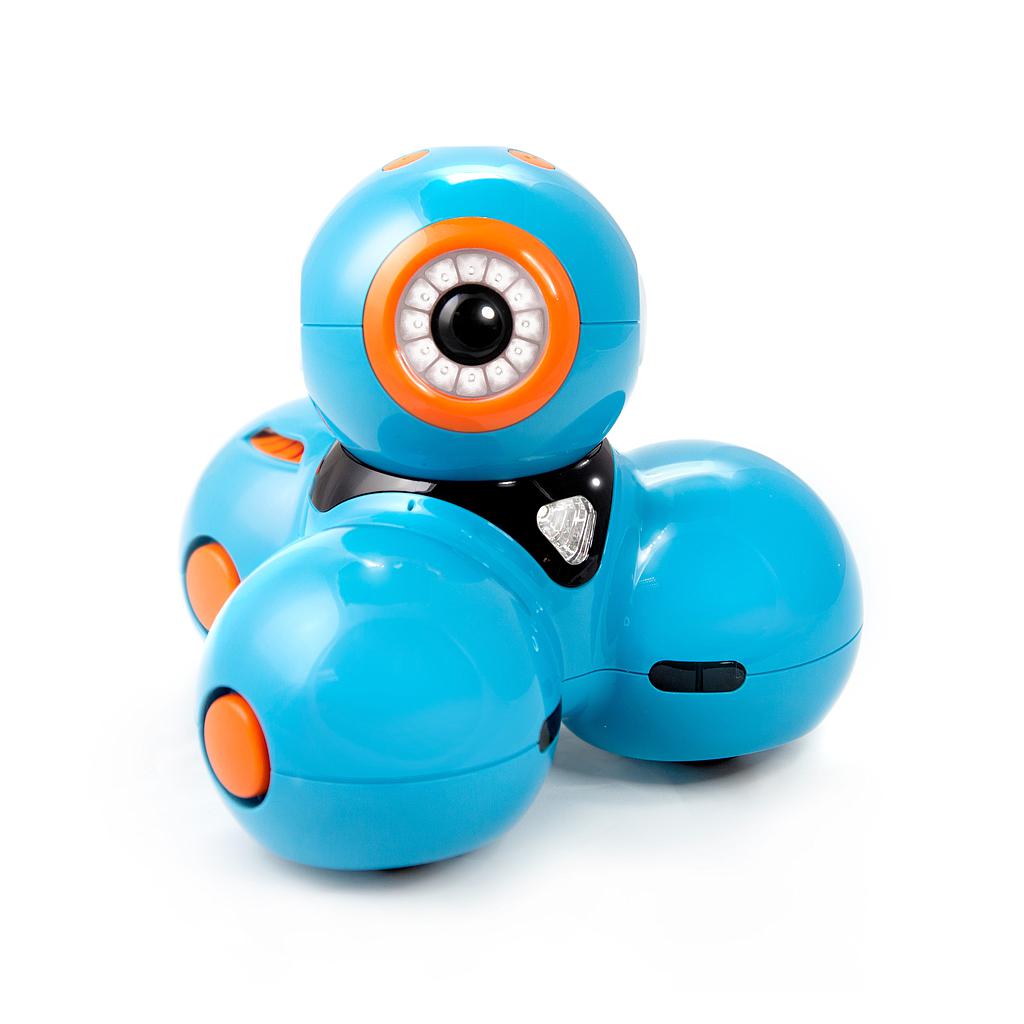
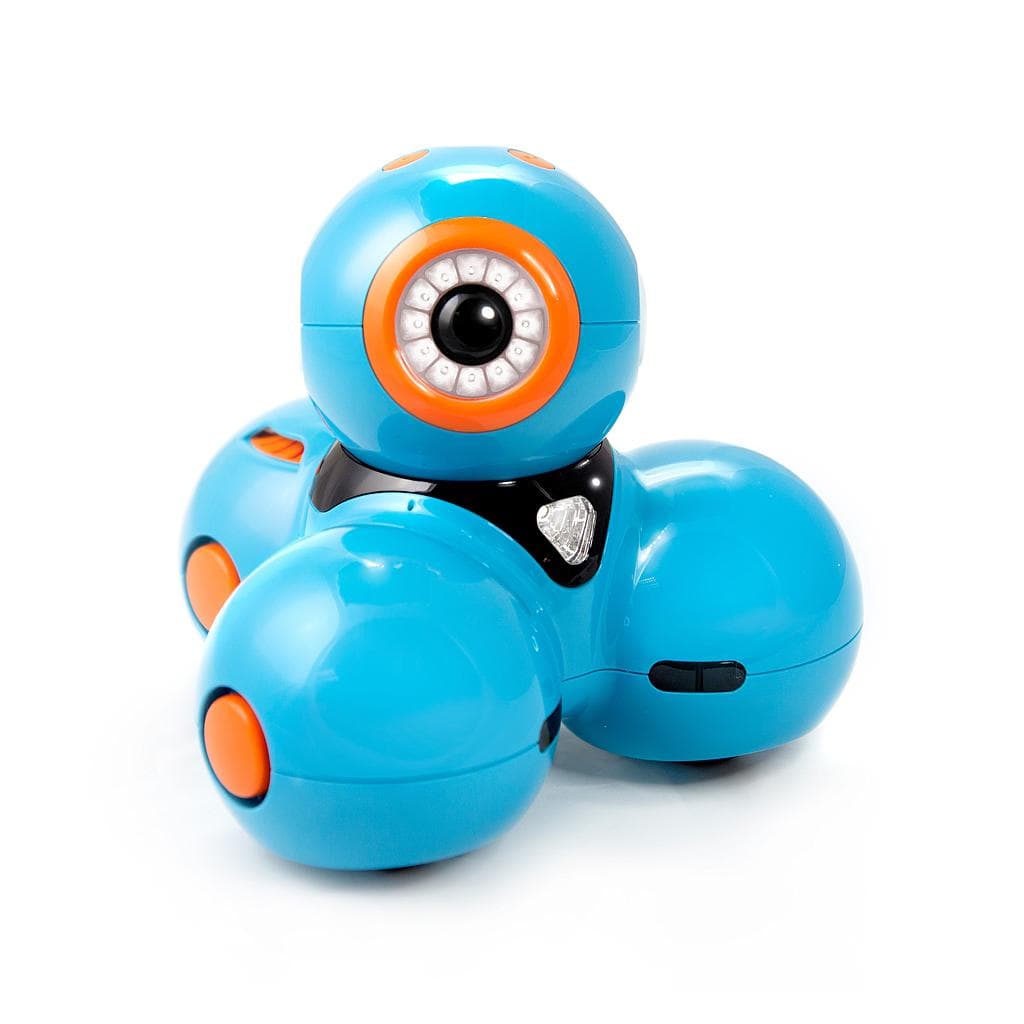
The Check today's price on Amazon has earned a prominent place in tens of thousands of school classrooms worldwide, and for good reason: it successfully bridges the gap between robotic toy and animated character.
Dash is an expressive, three-wheeled robot equipped with multiple microphones, speakers, programmable LED lights, and dual distance sensors. It comes fully assembled straight out of the box. Rather than moving as an abstract shape, Dash turns its head independently, makes responsive vocal noises, and can be programmed to detect claps, navigate around pets, and respond when spoken to.
Wonder Workshop supports Dash with an ecosystem of five distinct mobile apps across iOS, Android, and Fire OS. Younger children can start with 'Path', drawing routes and attaching sound effects, before transitioning to 'Blockly' and 'Wonder' to manage variables, loops, and sensor triggers. The box also includes two building brick connectors, enabling children to mount standard LEGO bricks onto Dash's chassis to construct mechanical arms, plows, and carrying trays. With up to five hours of active battery life, it easily supports lengthy learning sessions.
- Pros: Highly engaging character design that appeals across genders; extensive classroom-proven curriculum; LEGO connector compatibility.
- Cons: App ecosystem is split across multiple separate apps rather than a unified dashboard; pricier than entry-level alternatives.
4. PlayShifu Orboot Earth Interactive AR Globe: Immersive Geography and Science
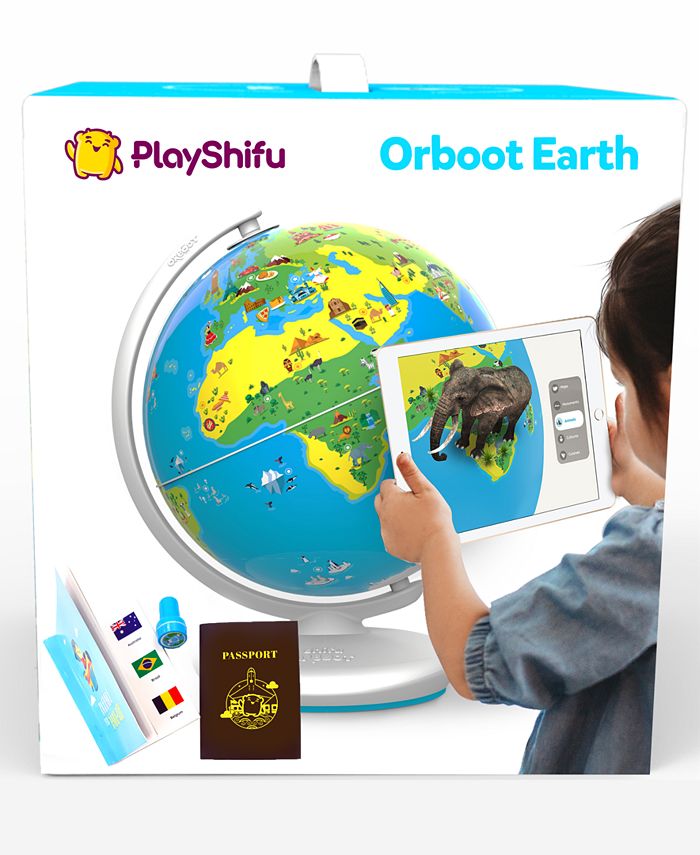
Not every STEM toy revolves around line coding. The Check today's price on Amazon tackles spatial reasoning, geography, environmental science, and cultural history using clever Augmented Reality overlays.
The physical globe itself contains no printed country names, borders, or text—only beautifully illustrated topographic landmasses, oceans, and monuments. When a child scans the globe with a tablet or smartphone running the free Orboot app, 3D animated animals, monuments, weather patterns, and inventions emerge directly on the screen.
With over 1,000 interactive facts, voiceovers, and mini-games across six categories (animals, cultures, monuments, inventions, maps, and cuisines), the Orboot Earth turns static geography into an exploratory adventure. The kit includes an activity passport, stamp, and sticker book, giving kids tactile artefacts to track their digital travels. Because the app functions without an active internet connection once installed, it makes a reliable travel companion or offline learning hub.
- Pros: Screen-guided AR makes geography genuinely captivating; rich voice narration supports emerging readers; excellent value for money.
- Cons: Heavily dependent on a smart device to provide educational context; younger children will need a parent to hold the tablet steady over the globe.
Key Buying Considerations: How to Choose
1. Screen-Free vs. App-Driven
Deciding between screen-free hardware and app-powered robotics depends largely on your child's age and your family's media rules. Screen-free tools like Check today's price on Amazon excel for children aged 5 to 7 who benefit from tangible, tactile problem solving without the visual overstimulation of a screen. Conversely, app-connected systems like the Check today's price on Amazon allow older learners to manipulate real variables, view sensor charts, and export actual syntax.
2. Ceiling of Complexity
Consider how quickly your child might outgrow the toy. A robot restricted to single-step directional arrows will hit a functional wall within six months if bought for an 8-year-old. Look for products that provide distinct progression tiers—starting with visual symbols, moving to block logic, and culminating in text code.
3. Power Sources and Longevity
Take note of whether the device uses built-in rechargeable lithium-ion cells or standard disposable batteries. Toys like Botley 2.0 require 5 AAA batteries across the robot and remote, which adds up over time if used heavily. Devices like Dash and Sphero BOLT feature robust internal batteries that charge via USB or induction docks.
Alternatives to Consider
If our primary recommendations do not quite fit your budget or your child's specific interests, consider these two alternatives:
- For Budget Screen-Free Construction: If you want physical mechanical building rather than pure robotics, consider beginner snap-circuit kits that focus directly on electrical engineering principles without needing code.
- For Younger Pre-Schoolers: If you love the concept behind Botley but need something specifically designed for ages 3 to 5, the Coding Critters series from Learning Resources provides simplified, storybook-driven mechanics.
The Verdict
For children aged 8 and up who want a genuinely deep, durable coding platform that grows with them from primary school into secondary computing, the Check today's price on Amazon remains our overall top recommendation. Its waterproof shell, inductive charging, sophisticated sensor suite, and dual JavaScript/Python support ensure it never feels like a toy they will outgrow next year.
For younger learners aged 5 to 7, Check today's price on Amazon is the clear winner for screen-free logic. Explore the links above to check live pricing and bring hands-on STEM learning into your home.