As an Amazon Associate I earn from qualifying purchases. This page contains affiliate links, and I may earn a commission at no extra cost to you.
The Core Dilemma: Connectivity Versus Dedicated Simplicity
Few nursery purchases spark as much anxiety as choosing between a Wi-Fi-connected smart monitor and a traditional, non-Wi-Fi radio frequency unit. Smart monitors promise total freedom: check on your sleeping infant from the office, stream 1080p footage to your phone, and pore over algorithms that track sleep stages, breathing motions, and ambient humidity. Dedicated non-Wi-Fi monitors, by contrast, offer a closed system that works out of the box without apps, firmware bugs, or reliance on home broadband.
The choice is rarely about which technology is objectively newer; it is about which failure points you are willing to manage. If your home internet drops at 2:00 AM, a Wi-Fi monitor can leave you blind unless it features a local backup stream. Conversely, a closed-circuit 2.4GHz FHSS (Frequency Hopping Spread Spectrum) monitor will never drop connection due to a cloud outage, but its range ends abruptly at your front door or garden patio.
We have broken down the technical realities, security architectures, daily usability hurdles, and real running costs across three leading nursery monitors to help you determine which camp suits your parenting routine.
Quick Comparison Table
| Model | Connection Type | Resolution / Audio | Key Differentiator | Price Band | Check Pricing |
|---|---|---|---|---|---|
| Nanit Pro Smart Baby Monitor | Wi-Fi (2.4/5GHz) | 1080p HD, 2-Way Audio | Overhead mount, sleep analytics, breathing tracking | Premium (approx. $300–$400) | Check on Amazon |
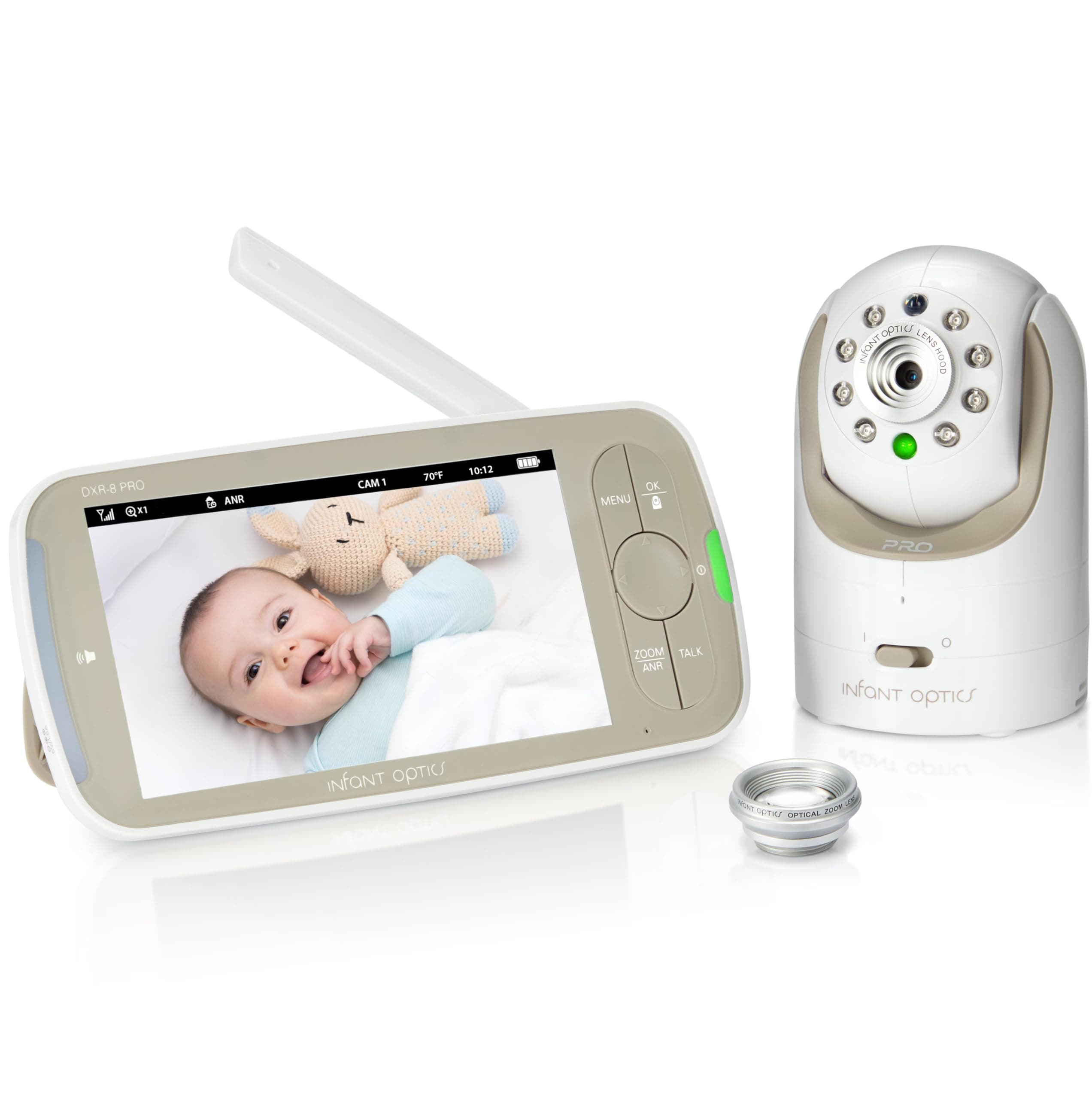
| Infant Optics DXR-8 PRO Baby Monitor | Non-Wi-Fi (FHSS) | 720p HD, Active Noise Reduction | Zero cloud exposure, interchangeable lenses, swappable battery | Mid-to-High (approx. $170–$210) | Check on Amazon |
| Owlet Cam 2 Smart Baby Monitor | Wi-Fi | 1080p HD, 2-Way Audio | Health sensor pairing, cry/cough detection, 48hr cloud clips | Mid-Range (approx. $120–$160) | Check on Amazon |
Understanding the Two Technologies
1. Smart Wi-Fi Monitors
Smart baby monitors route encrypted video data through your local router to remote cloud servers before sending the stream back to your smartphone or tablet. The advantages are clear:
- Unlimited Range: You can check video feeds while travelling, at work, or simply while working in a detached garage or garden room.
- Deep Data Analytics: Algorithms monitor wake windows, room temperature, humidity, and subtle movement patterns over weeks and months.
- Multi-User Access: Grandparents, babysitters, and multiple partners can log in simultaneously without sharing a physical screen.
The drawbacks are equally clear: latency can drift up to several seconds depending on your network quality, push notifications can easily get lost among your phone's other app alerts, and continued access to historical video frequently requires recurring monthly subscriptions.
2. Non-Wi-Fi (FHSS) Monitors
Non-Wi-Fi monitors use direct radio transmission between the nursery camera and a dedicated handheld parent unit. Because they never touch your router or the wider internet, they provide distinct benefits:
- Zero Hacking or Cloud Risk: Without an IP address or cloud gateway, the stream cannot be intercepted remotely over the web.
- Zero-Latency Audio: Sound transmission is instantaneous, ensuring you hear crying without digital buffering delays.
- No Phone Battery Drain: Your smartphone remains free for personal use, avoiding rapid battery drain from background video streaming.
The trade-offs include physical range limits (typically 700 to 1,000 feet in unobstructed air, but significantly less through thick interior walls) and the requirement to keep a separate proprietary screen charged and within arm's reach.
In-Depth Product Breakdowns
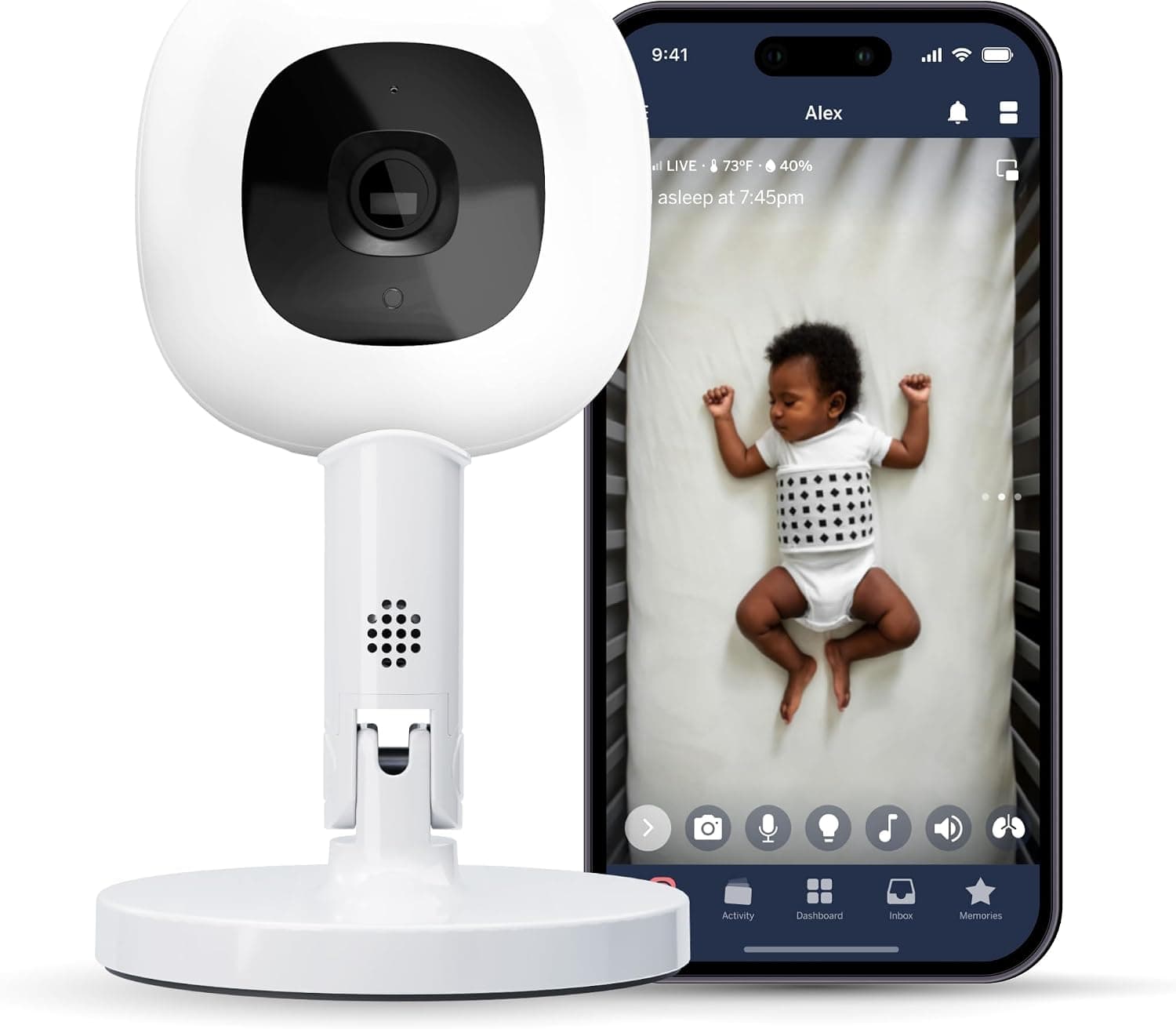
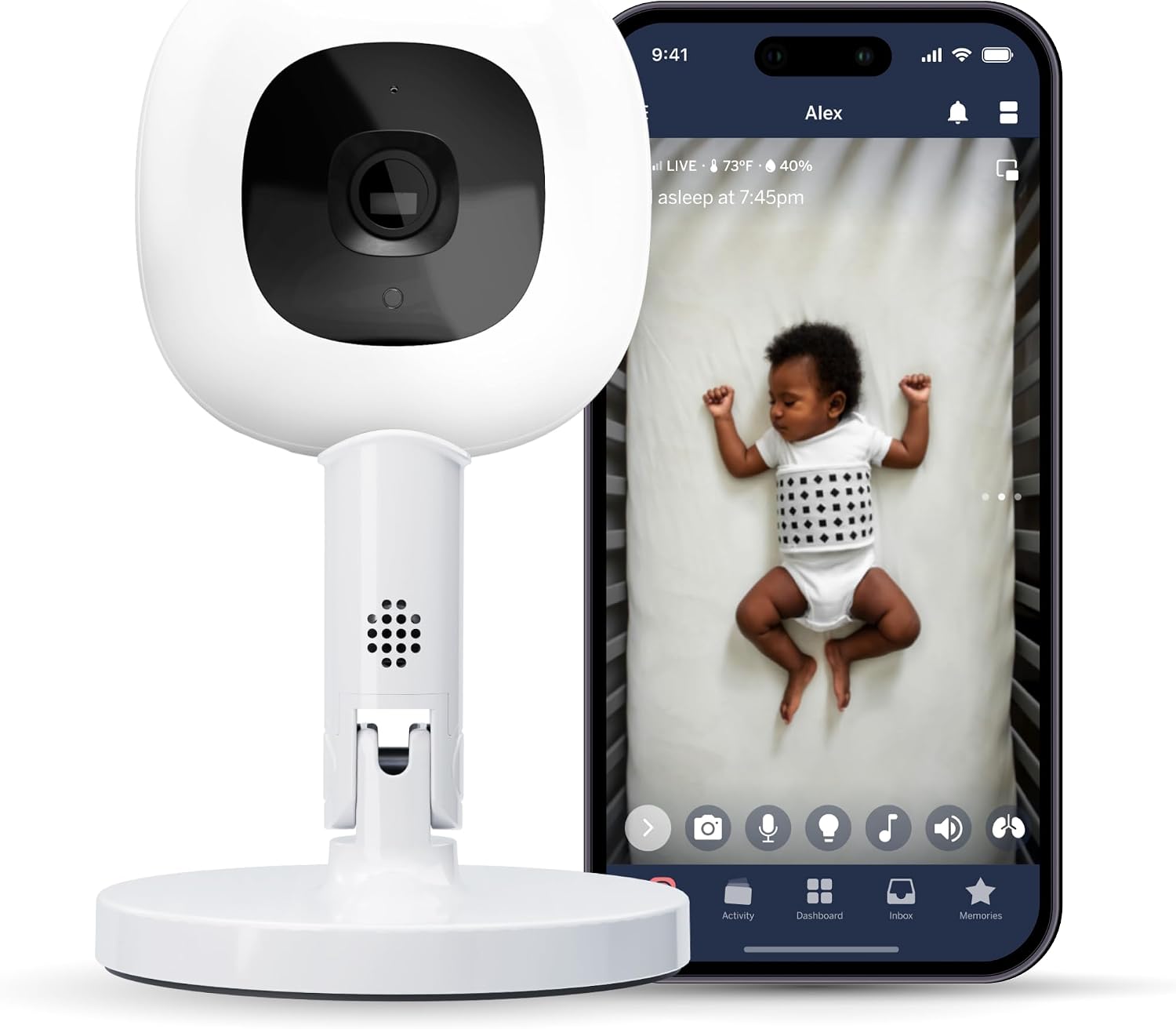
1. Nanit Pro Smart Baby Monitor: The Ultimate Data Hub
The Nanit Pro Smart Baby Monitor represents the pinnacle of app-driven nursery monitoring. Designed to mount cleanly above the cot using an ASTM-certified floor stand or wall mount, it delivers an unobstructed birds-eye view of your sleeping child in crisp 1080p HD.
What sets the Nanit Pro apart from generic smart home cameras is its software intelligence. The camera analyses subtle pixel changes on proprietary patterned swaddles and sleep bands to track breathing motions per minute without putting active electronics against your infant's skin. Real-time notifications cover motion, crying, coughing, and temperature deviations. In addition, its companion app includes a split-screen mode if you choose to expand coverage across multiple rooms.
On the security front, Nanit employs 256-bit AES encryption alongside mandatory two-factor authentication, making unauthorised external access exceptionally difficult when modern password practices are followed. However, buyers should be aware of ongoing costs: while it includes a trial of the Nanit Insights sleep plan, detailed video history and advanced sleep coaching features lock behind a recurring subscription once the trial concludes.
2. Infant Optics DXR-8 PRO: The Gold Standard in Closed-Circuit Privacy
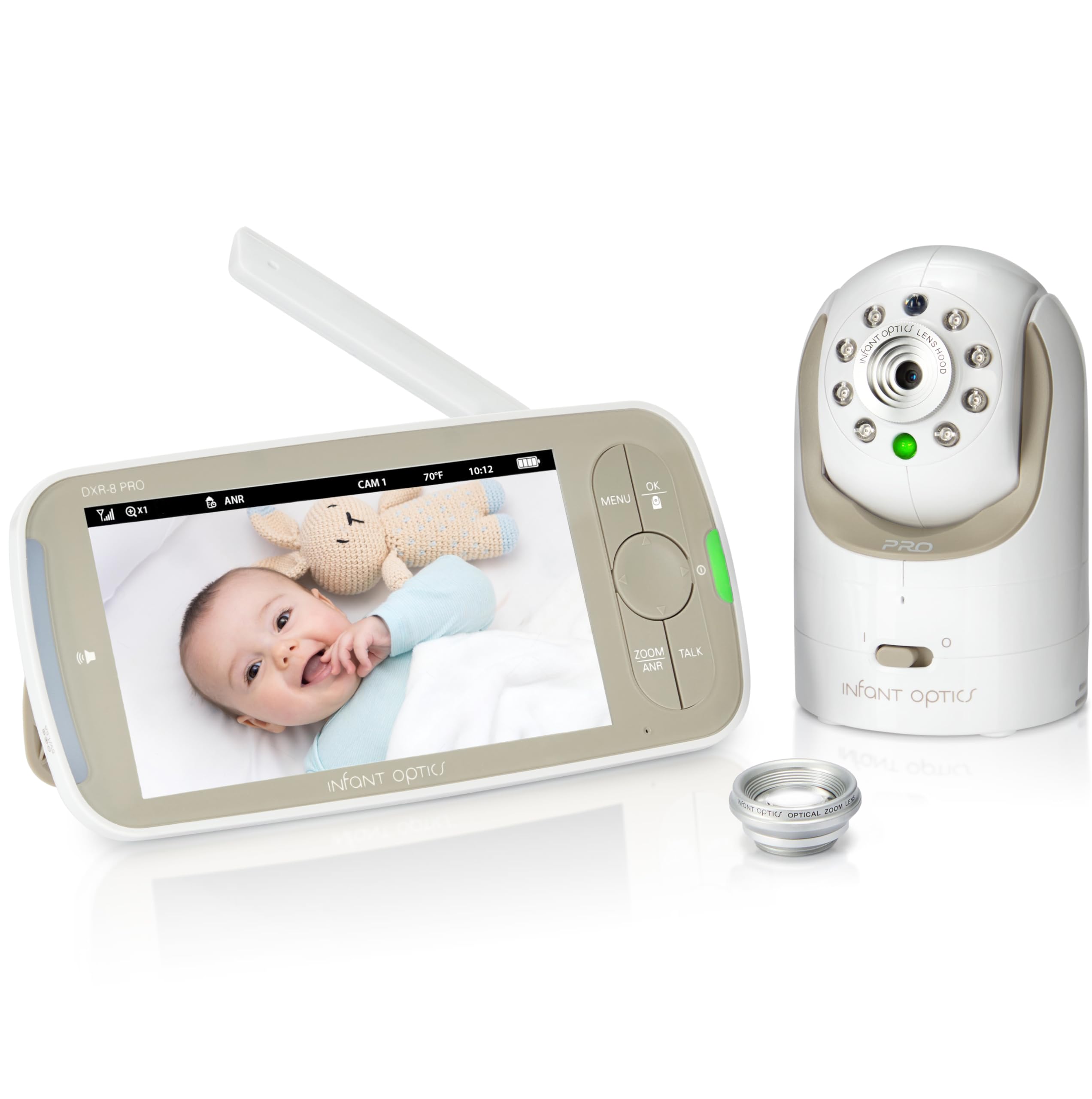
For parents who reject the idea of nursery video ever touching the internet, the Infant Optics DXR-8 PRO Baby Monitor remains a category benchmark. Utilising an encrypted 2.4GHz FHSS radio frequency, it beams a direct signal straight to a dedicated 5-inch handheld display without apps, cloud servers, or user accounts.
The standout hardware innovation here is its patented Active Noise Reduction (ANR). Nursery environments are notoriously loud with white noise machines, air purifiers, fans, and humidifiers. The DXR-8 PRO's hardware DSP filters out constant background hum, allowing only genuine vocalisations—such as whimpers, cries, or speech—to pass through the parent unit's speaker.
It also excels in physical longevity. Where most smart gadgets force you to bin the entire device once their internal lithium cells degrade, Infant Optics designed the DXR-8 PRO with a user-replaceable battery module. Coupled with an interchangeable optical lens system (which lets you switch between standard and optical zoom hardware lenses without digital pixel distortion), this is a purpose-built appliance engineered to outlast multiple children.
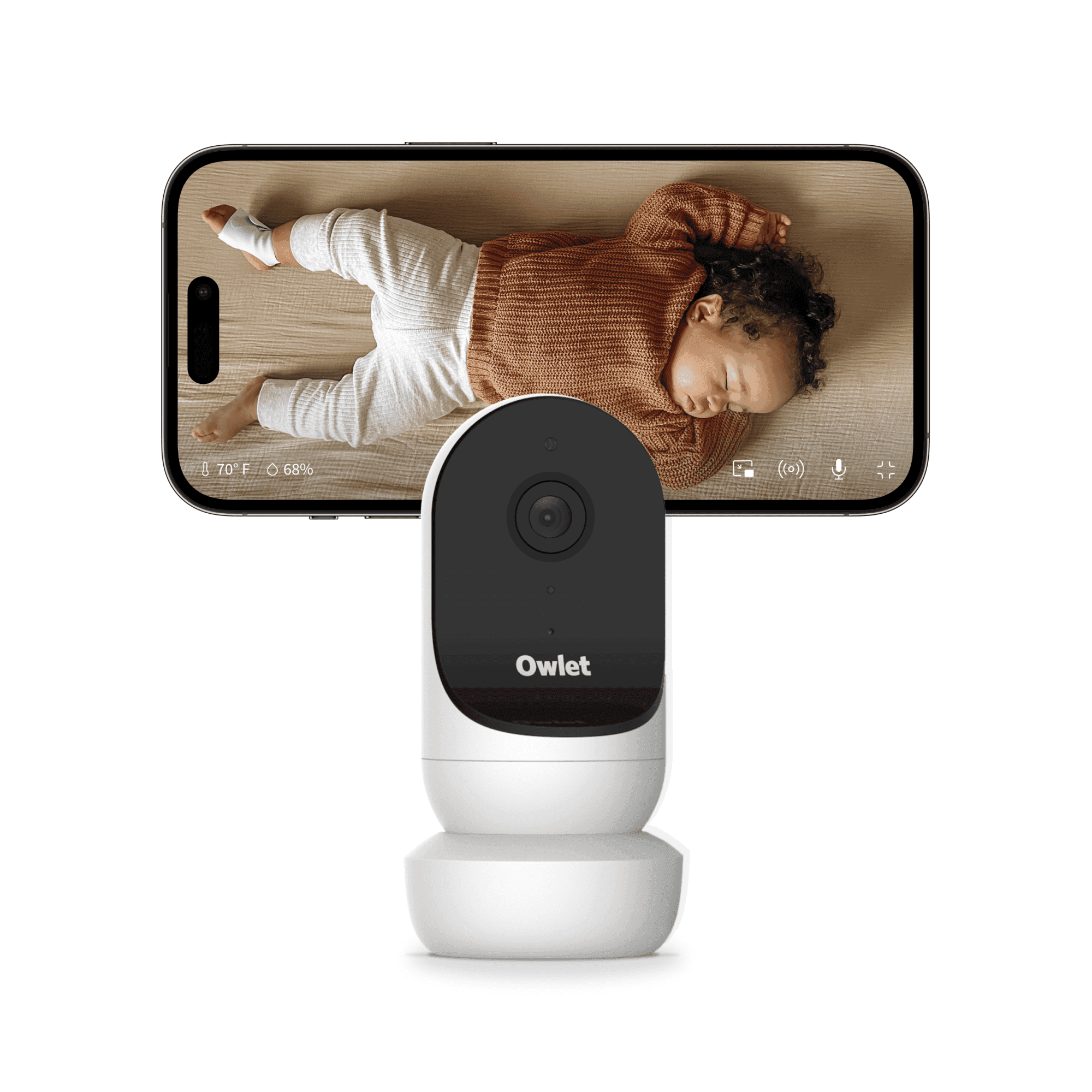
3. Owlet Cam 2: Flexible Video with Ecosystem Expansion
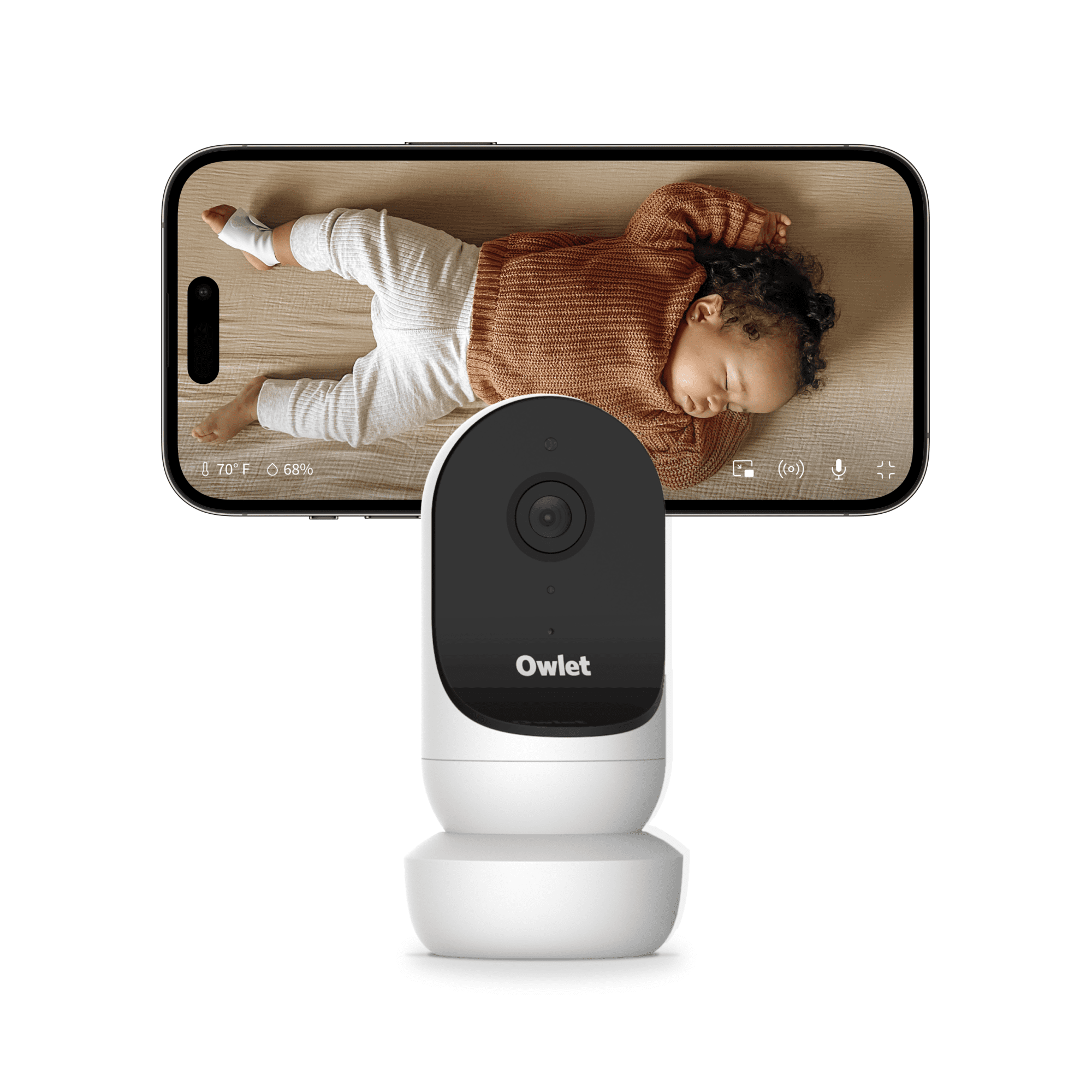
The Owlet Cam 2 Smart Baby Monitor provides an accessible, high-definition smart streaming alternative that integrates directly into Owlet's broader infant health ecosystem. Operating over home Wi-Fi, it streams 1080p video with night vision and two-way talk straight to the Owlet Dream App.
The Cam 2 shines primarily through its notification engine, which distinguishes between general room sounds and specific crying or coughing episodes. It includes 48 hours of rolling cloud video clip storage at no extra charge—a welcome contrast to competitors that require immediate paid tiers for basic clip playback. Upgrading to the optional Owlet360 tier extends that clip archive to 14 days.
Its greatest strength lies in optional modularity: while the camera functions perfectly well as a standalone video monitor, it pairs seamlessly with the FDA-cleared Owlet Dream Sock (sold separately or as a Duo bundle), allowing parents to monitor live pulse rate, oxygen levels, and wake triggers alongside the live video feed. Note that this specific model is designed exclusively for the US market and ecosystem.
Evaluating Key Buying Criteria
Security & Privacy Architecture
A closed-loop system like the Infant Optics DXR-8 PRO Baby Monitor is physically immune to internet-based interception. There are no passwords to crack, no servers to suffer data leaks, and no cloud outages to render your screen blank. If absolute data privacy is your priority, non-Wi-Fi is the definitive answer.
Smart monitors counter this with rigorous enterprise-grade security protocols. The Nanit Pro Smart Baby Monitor safeguards streams with 256-bit AES encryption and granular permission tiers, allowing you to give temporary viewing rights to a babysitter without handing over administrative control.
Notification Reliability vs Screen Fatigue
Smart monitors rely on smartphone notifications. This is a double-edged sword: receiving a push notification on your smartwatch while working in the garden is wonderfully convenient, but sleeping with your smartphone active on the bedside table invites blue light, work emails, and alert fatigue. Furthermore, background streaming can drain your phone's battery significantly overnight.
A dedicated handheld unit provides a distinct physical presence. You can leave the screen asleep with audio monitoring active, or turn the volume knob down while relying on the LED sound-level bar to silently indicate noise in the nursery.
Long-Term Costs and Subscriptions
Non-Wi-Fi monitors represent a one-time hardware purchase. Once you buy the monitor, your ongoing operational cost is zero. In contrast, many smart monitor platforms adopt SaaS (Software-as-a-Service) business models. While basic streaming is typically free, sleep analytics dashboards, developmental milestone tracking, and extended video history often sit behind recurring monthly or annual paywalls.
Alternatives to Consider
If the premium data tracking of Nanit or the specialised hardware of Infant Optics does not suit your budget, these proven alternatives offer compelling middle ground:
- Budget Smart Alternative: For an inexpensive, dependable Wi-Fi camera that bypasses expensive nursery-specific features while retaining crisp 1080p pan-and-tilt capabilities and solid smartphone integration, consider the Nanit Pro Smart Baby Monitor as the gold standard for dedicated sleep analytics, or explore simple smart home cameras if you only require occasional video check-ins.
- Dedicated Hardware Alternative: If you want a non-Wi-Fi setup that matches the Infant Optics DXR-8 PRO's closed-circuit security and lens modularity, pairing the base system with an additional wide-angle lens or spare battery ensures maximum nursery coverage across multi-child households.
The Final Verdict
For most households, the reliability, instantaneous audio response, and zero-subscription model of a dedicated non-Wi-Fi system make it the most practical long-term choice. The Infant Optics DXR-8 PRO Baby Monitor delivers exceptional everyday value thanks to its active background noise filtering, swappable battery, and total freedom from internet outages.
However, if you travel frequently for work, require multi-caregiver access, or find genuine reassurance in data-driven sleep analytics, the Nanit Pro Smart Baby Monitor remains the premier choice in smart nursery technology.