As an Amazon Associate I earn from qualifying purchases. This page contains affiliate links, and I may earn a commission at no extra cost to you.
Spending upwards of £350 on an Apple Watch or Galaxy Watch makes very little sense for most people. If your daily routine involves checking notifications, logging outdoor runs, monitoring sleep patterns, and setting kitchen timers, the flagship tier is massive overkill. Over the past couple of years, the sub-£100 wearables category has transformed from flimsy step counters with low-resolution LCD screens into remarkably capable fitness trackers with vibrant AMOLED panels, aluminium cases, and multi-day battery endurance.
However, cutting the price in half requires trade-offs. Budget wearables inevitably trim back on third-party application ecosystems, contactless payment support, and voice assistant depth. The challenge is identifying which compromises matter to your everyday routine and which you can safely ignore.
Based on published technical specifications, manufacturer documentation, and extensive verified owner feedback, this guide evaluates the four best affordable smartwatches available right now: the Huawei Watch FIT 3, the Xiaomi Redmi Watch 4, the CMF by Nothing Watch Pro 2, and the Amazfit Active.
Quick Comparison Table
Here is how the four leading contenders stack up across core hardware specifications, physical dimensions, and typical real-world battery endurance.
| Smartwatch | Display | Stated Battery Life | Weight & Thickness | Key Strength | Check Price |
|---|---|---|---|---|---|
| Huawei Watch FIT 3 | 1.82″ AMOLED (1,500 nits, 60Hz) | 7–10 days | 26g, 9.9mm | Display brightness & sleek chassis | Check today's price on Amazon |
| Xiaomi Redmi Watch 4 | 1.97″ AMOLED (600 nits, 60Hz) | 10–20 days | 31.5g, 10.5mm | Massive screen & long battery | Check today's price on Amazon |
| CMF by Nothing Watch Pro 2 | 1.32″ AMOLED (620 nits, 60Hz) | 9–11 days | 48g (with bezel), 13.6mm | Modular interchangeable bezels | Check today's price on Amazon |
| Amazfit Active | 1.75″ AMOLED (3,000 nits peak on Active Max / standard AMOLED) | 10–14 days | 24g, 10.7mm | Offline maps & Zepp Coach training | Check today's price on Amazon |
1. Huawei Watch FIT 3 – The Sleekest All-Rounder
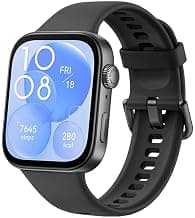
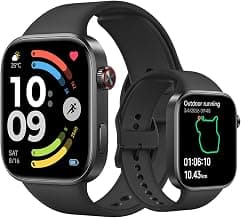
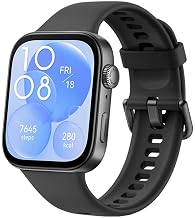
The Huawei Watch FIT 3 represents the current benchmark for how a modern budget smartwatch should look and feel on the wrist. Rather than the tall, narrow rectangular chassis of its predecessor, Huawei shifted to a square design with curved corners that undeniably borrows aesthetic cues from the Apple Watch. Crucially, the engineering quality backs up the visual ambition.
Design and Screen Quality
At just 9.9mm thick and weighing 26 grams without the strap, the watch sits remarkably flush against the wrist. The aluminium alloy frame feels cool to the touch and features a tactile rotating crown alongside a secondary physical function button. The display is the standout component: a 1.82-inch AMOLED panel delivering up to 1,500 nits of peak brightness with a 77.4% screen-to-body ratio and 347 PPI pixel density. In direct outdoor midday sunlight, text and metrics remain pin-sharp and effortless to read.
Fitness and Health Tracking
Huawei’s TruSeen fitness suite handles heart rate, blood oxygen (SpO2), stress, and sleep monitoring. It includes over 100 sports modes with automatic detection for six common workout types, plus an integrated calorie management ledger that tracks nutritional input against active burn. GPS acquisition is reasonably swift for an entry-level unit, tracking outdoor running routes with solid fidelity under clear skies.
Battery and Software Compromises
Huawei claims up to 10 days of maximum battery life, with 7 days under typical everyday usage. Real-world owner feedback indicates that with the Always-On Display (AOD) active and frequent notifications enabled, you can realistically expect around 4 to 5 days between charges, which still trounces standard flagship wearables. The main hurdle remains the software ecosystem: setting up the Huawei Health companion app on Android requires downloading the APK directly or installing the Huawei AppGallery, which adds minor friction compared to straightforward Google Play Store installations. On iOS, pairing is simple via the App Store, though message quick-replies are unavailable.
Who it's for: Buyers wanting a slim, premium-looking wearable with a class-leading screen and strong daily fitness tracking for under £100.
Who should skip: Users who demand contactless payments via Google Wallet or who want an expansive third-party app store.
2. Xiaomi Redmi Watch 4 – Maximum Screen Real Estate and Endurance
If you prefer a bolder, larger wrist presence, the Xiaomi Redmi Watch 4 is engineered around two core priorities: an expansive viewing area and exceptional battery longevity. It ditches the cheap plastic bezels of older Redmi wearables in favour of a sandblasted aluminium alloy mid-frame and a stainless steel rotating crown.
Display and Build
The watch houses a massive 1.97-inch AMOLED screen. While its peak brightness of 600 nits is lower on paper than the Huawei Watch FIT 3, the 60Hz refresh rate and spacious 390 x 450 resolution make skimming notifications, heart rate charts, and weather forecasts painless. The quick-release strap mechanism uses Xiaomi's proprietary latch, which feels secure, though it restricts your choice of standard third-party straps unless you purchase dedicated adapters.
Endurance and Core Features
Battery performance is the Redmi Watch 4's crowning achievement. Powered by a 470 mAh battery, the manufacturer quotes up to 20 days in typical mode and 10 days with Always-On Display engaged. User reports consistently confirm that even with continuous health tracking, automated sleep tracking, and frequent outdoor runs, reaching 12 to 14 days on a single charge is realistic. It also includes an integrated microphone and speaker for Bluetooth phone calls, which produce crisp audio indoors.
Limitations
While the hardware is sturdy, Xiaomi's HyperOS companion software offers limited interactivity. Notifications cannot be replied to from iPhones, and canned responses on Android are basic. The health sensor array is reliable for steady-state cardio but can lag during rapid interval training surges.
Who it's for: Anyone who hates daily charging and wants a massive, vibrant display for notifications and baseline health tracking.
Who should skip: People with smaller wrists (it can feel bulky on wrists under 160mm) and serious athletes who need advanced training load analytics.
3. CMF by Nothing Watch Pro 2 – Bold Modular Style
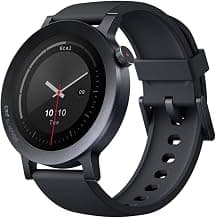
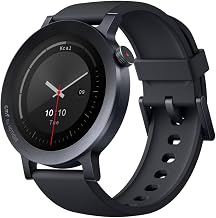
Nothing's sub-brand focuses on playful industrial design and clean user interfaces, and the CMF by Nothing Watch Pro 2 brings something genuinely unique to the budget bracket: physical customisability. Unlike the sea of rectangular Apple Watch lookalikes, the Watch Pro 2 sports a clean circular aluminium casing with interchangeable screw-on bezels (flat or chamfered).
Display and Interface
The device sports a 1.32-inch round AMOLED display running at 60 fps with auto-brightness adjustment and a 91% screen-to-body ratio within its bezel boundary. CMF includes over 130 custom watch faces, many featuring Nothing's signature dot-matrix typography, monochrome aesthetic, and functional interactive widgets. Navigating the UI feels remarkably fluid thanks to the responsive touch digitiser and functional digital crown.
Functionality and Tracking
The Watch Pro 2 features multi-system GPS, continuous heart rate and SpO2 tracking, sleep stage analysis, and gesture controls that let you answer calls or skip music tracks by flicking your wrist. The companion CMF Watch app is refreshingly bloat-free, presenting stats in clean, graphic widgets. Stated battery life sits at 11 days of typical use or 9 days of heavy usage.
Trade-offs
At 13.6mm thick including the bezel assembly, it is noticeably thicker than the Huawei and Amazfit alternatives. Reviewers and owners also note that while GPS tracking is adequate for casual jogging, satellite acquisition times can take 30 to 60 seconds when starting a session between tall buildings.
Who it's for: Design-conscious buyers who prefer a classic round watch silhouette and value clean software aesthetics over deep athletic data.
Who should skip: Sleep-trackers who prefer an ultra-thin profile for overnight comfort, or anyone looking for advanced running metrics.
4. Amazfit Active – The Dedicated Fitness Companion
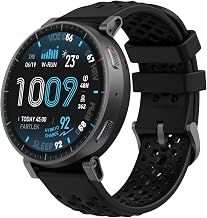
While most budget watches are essentially smart notification hubs with basic step counters attached, the Amazfit Active leans heavily into genuine sports science and training guidance. It balances a lightweight 24-gram chassis with Zepp OS, one of the most mature fitness operating systems available outside Garmin's ecosystem.
Training Metrics and Navigation
The standout feature here is Amazfit’s Zepp Coach, an AI-driven training assistant that generates tailored running programs for 5K, 10K, or half-marathon distances and adapts workouts dynamically based on your recovery. The watch computes a Readiness/HybridCharge score each morning derived from resting heart rate, sleep quality, and heart rate variability (HRV). Furthermore, it supports downloadable offline maps with turn-by-turn route navigation and multi-satellite GPS positioning—rare capabilities at this price tier.
Hardware and Media Storage
The Amazfit Active features a bright 1.75-inch AMOLED screen and an ultra-lightweight aluminium and polymer construction. It includes onboard storage for music playback and podcasts directly to Bluetooth headphones, freeing you from carrying your smartphone during outdoor runs. Battery life is rated at up to 14 days under standard conditions.
Downsides
The physical casing, while exceptionally light, uses more plastic around the back sensor housing than the unibody aluminium used by Huawei. The Zepp companion application is feature-packed but can feel cluttered and intimidating for someone who just wants basic daily summaries.
Who it's for: Runners, gym-goers, and fitness enthusiasts who want structured training plans, offline navigation, and onboard music storage without paying sports-watch prices.
Key Buying Criteria: What Really Matters Under £100?
When shopping for an affordable smartwatch in 2026, marketing materials can easily obscure what makes a device enjoyable to live with. Focus on these four pillars when making your decision:
1. Screen Type and Peak Brightness
Do not settle for a budget watch with a traditional TFT/LCD screen. All four models highlighted here feature AMOLED displays with 60Hz refresh rates. AMOLED ensures true blacks, vibrant colours, and power-efficient Always-On Display modes. If you run or walk outdoors frequently, prioritise brightness: the Huawei Watch FIT 3 leads this category with 1,500 nits of peak brightness, ensuring zero squinting under bright sun.
2. Companion App Stability and OS Compatibility
A smartwatch is only as good as the phone software it syncs with. While all four models support both Android and iOS, the experience varies:
- iOS Users: Apple restricts third-party wearables from replying directly to iMessage/SMS. However, the companion apps from Amazfit, CMF, and Huawei sync health data cleanly into Apple Health.
- Android Users: You get richer notification interaction (such as predefined quick replies). Keep in mind that Huawei Health requires a direct download outside the Play Store, whereas Zepp (Amazfit), Mi Fitness (Xiaomi), and CMF Watch install directly from Google Play.
3. Battery Life vs Real-Time Sensors
Budget smartwatches achieve their week-long battery ratings because they run streamlined Real-Time Operating Systems (RTOS) rather than power-hungry platforms like Google Wear OS or Apple watchOS. Expect the following realistic runtimes:
- Basic use (notifications + daily steps): 10 to 20 days (led by the Xiaomi Redmi Watch 4).
- Heavy use (AOD on, continuous SpO2, 3x GPS runs per week): 4 to 7 days.
Alternatives to Consider
If none of the core four fits your specific requirements, consider these alternative approaches depending on your budget and feature priorities:
For Maximum Simplicity on a Tight Budget: If you find smartwatch screens too bulky or distracting and just want reliable sleep and step tracking, a dedicated fitness band like the Xiaomi Smart Band 9 offers weeks of battery in a tiny footprint for roughly half the cost of a full smartwatch.
For Contactless Payments and Full App Stores: If you genuinely need to reply to WhatsApp messages with a full keyboard, use Google Maps on your wrist, or tap to pay with Google Wallet at supermarket checkouts, you must step up to a Wear OS device. Expect to pay at least double the price and charge your watch every 24 to 48 hours.
Final Verdict: Which Budget Smartwatch Should You Buy?
Every watch in this lineup delivers outstanding hardware value compared to what entry-level money bought just two years ago. However, the Huawei Watch FIT 3 claims our top recommendation for most buyers in 2026. Its combination of an ultra-slim 9.9mm profile, premium aluminium construction, class-leading 1,500-nit AMOLED screen, and reliable health tracking makes it feel distinctly like a £250+ device.
If your main concern is raw battery life and maximum screen real estate, pick the Xiaomi Redmi Watch 4. If you want structured running plans, standalone music storage, and offline GPS maps, the Amazfit Active is the athlete's budget dream. And for those who prioritise distinct industrial styling and a circular case, the CMF by Nothing Watch Pro 2 remains the most expressive option.