As an Amazon Associate I earn from qualifying purchases. This page contains affiliate links, and I may earn a commission at no extra cost to you.
The Reality of Choosing a Breast Pump Before Delivery
Buying a breast pump during the third trimester often feels like shopping in the dark. Marketing materials promise whisper-quiet motors, effortless let-downs, and total multitasking freedom. Yet, milk expression varies wildly between bodies, daily schedules, and feeding goals. What works for an exclusive pumper building a frozen stash rarely matches what an occasional expresser needs for an evening bottle.
The central dilemma boils down to a fundamental trade-off: raw hospital-grade suction efficiency versus cord-free wearable convenience. Wearables allow you to walk around and fold laundry without tubes hanging from your shirt, but they generally take longer to empty breast tissue and feature smaller collection cups. Traditional hospital-grade desktop units demand that you sit near a flat surface, but they offer precision cycle control and dependable vacuum strength that protects your milk supply during those critical early weeks.
Whether you are adding a flagship device to a baby registry or buying a dependable electric setup out of pocket, this guide examines four of the most reliable breast pumps available today, outlining real-world specs, flange considerations, and genuine trade-offs.
Top 4 Breast Pumps: At a Glance
| Product | Type | Key Feature | Price Band | Buy |
|---|---|---|---|---|
| Spectra S1 Plus Hospital Grade Double Electric Breast Pump | Hospital-Grade (Rechargeable) | Closed-system motor, ultra-customisable cycle speed & suction | Mid-Range (~£160–£190) | Check today's price on Amazon |
| Medela Freestyle Hands-Free Double Electric Breast Pump | Hybrid Wearable (Pocket Motor) | 76g anatomic collection cups, 3-part easy clean | Premium (~£230–£280) | Check today's price on Amazon |
| Elvie Double Electric Breast Pump | All-In-Bra Wearable | Truly silent, tubing-free, smart infrared milk tracking | Flagship (~£400–£450) | Check today's price on Amazon |
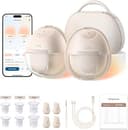
| Momcozy S12 Pro Hands-Free Wearable Breast Pump | All-In-Bra Wearable | DoubleFit silicone flange, 240-min battery, budget-friendly | Budget (~£65–£110) | Check today's price on Amazon |
Detailed Product Breakdowns
1. Spectra S1 Plus Hospital Grade Double Electric Breast Pump
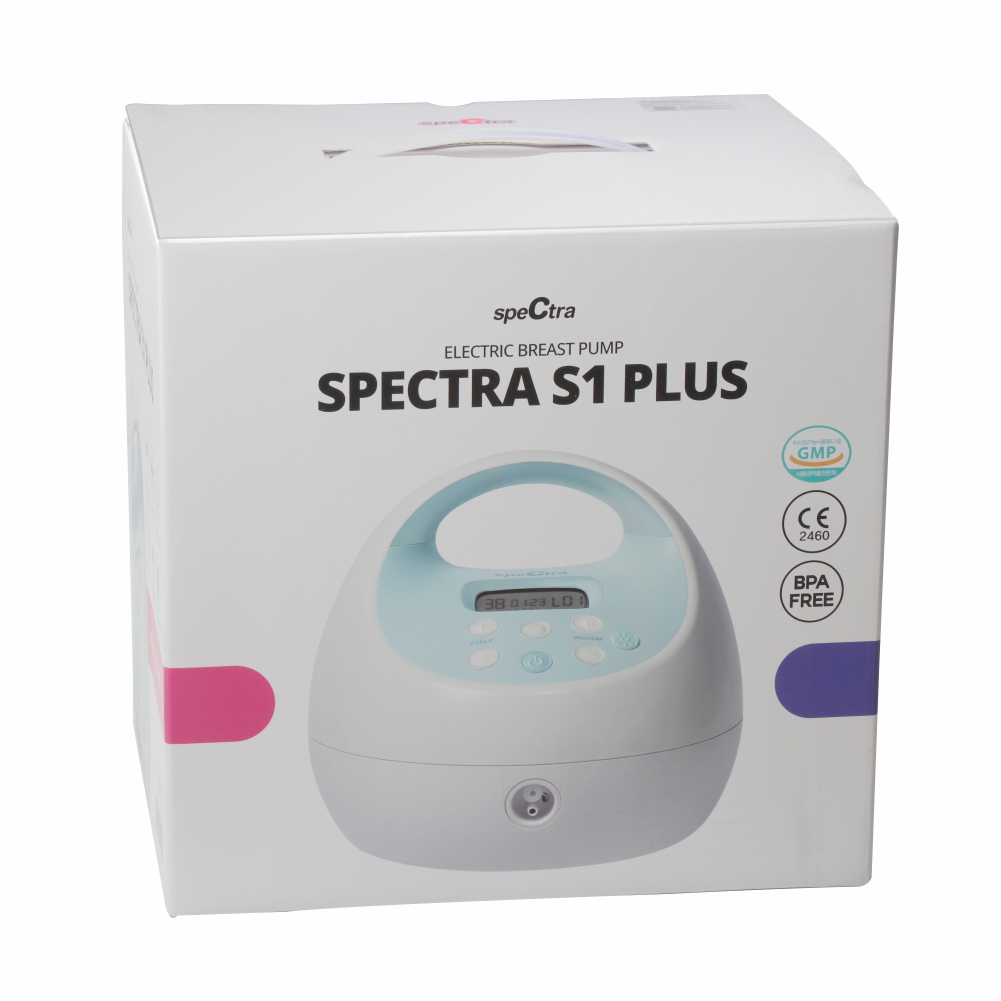
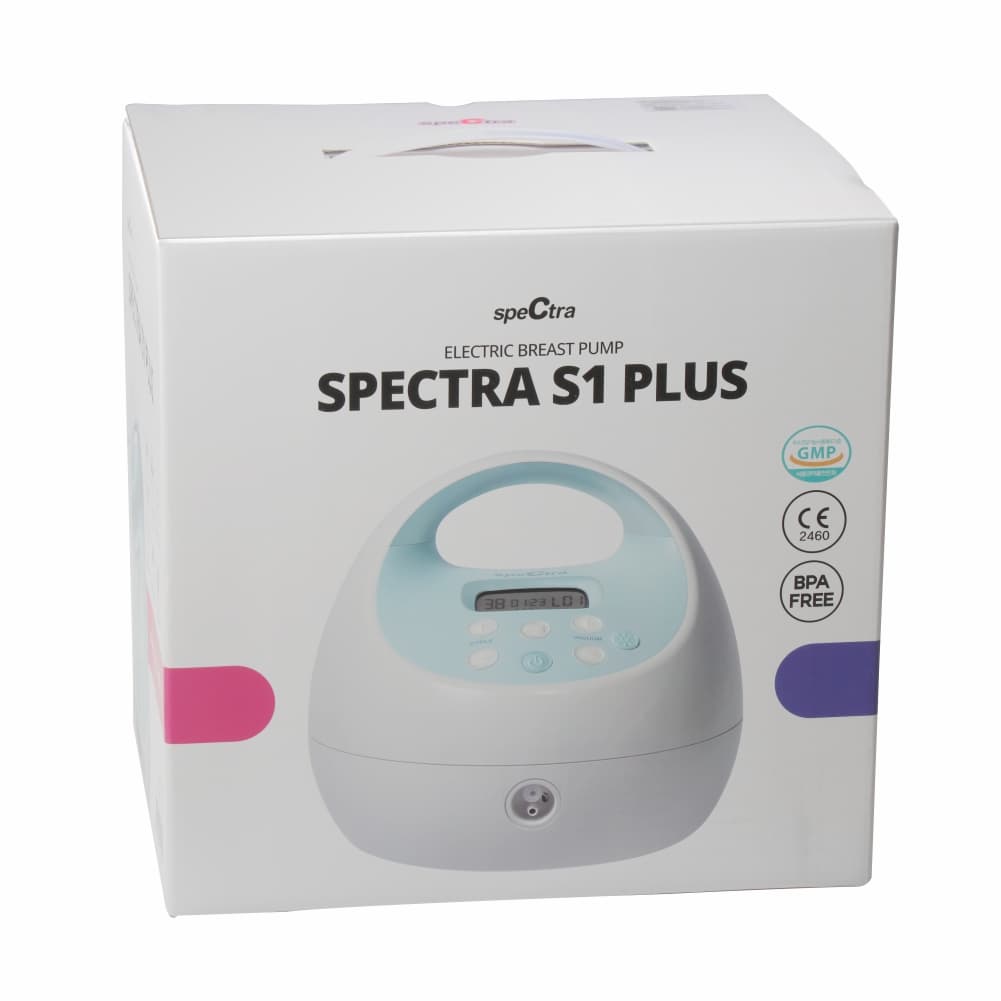
The Spectra S1 Plus Hospital Grade Double Electric Breast Pump remains the gold standard recommendation among lactation consultants for establishing and protecting milk supply. Unlike the mains-only Spectra S2, the S1 features a built-in rechargeable battery that lets you carry the unit around the house without remaining glued to a wall socket.
What distinguishes the Spectra S1 is independent adjustability: you can manipulate suction strength and cycle speed separately. In let-down mode, it pulses at a rapid 70 cycles per minute to trigger flow, before switching to expression mode where you can dial the speed down to 38 cycles per minute for deep, comfortable emptying. The closed-system design utilises backflow protectors with physical silicone membranes, completely separating expressed milk from the motor tubing for optimal hygiene.
- Suction Mechanism: True hospital-grade closed system with independent cycle and vacuum levels.
- Portability: Integrated rechargeable battery providing roughly 3 hours of pumping time; carry handle included.
- Included Parts: 2x backflow protectors, silicone membranes, tubing, and standard wide-neck bottles.
- Noise Level: Low hum with a soothing nightlight (two brightness levels).
The Trade-off: It is bulky. While battery-powered, the S1 is a substantial tabletop sphere weighing over 1.3 kg. It uses traditional external collection bottles and flange assemblies, meaning you cannot slip it into a regular bra and go about your chores unnoticed.
2. Medela Freestyle Hands-Free Double Electric Breast Pump
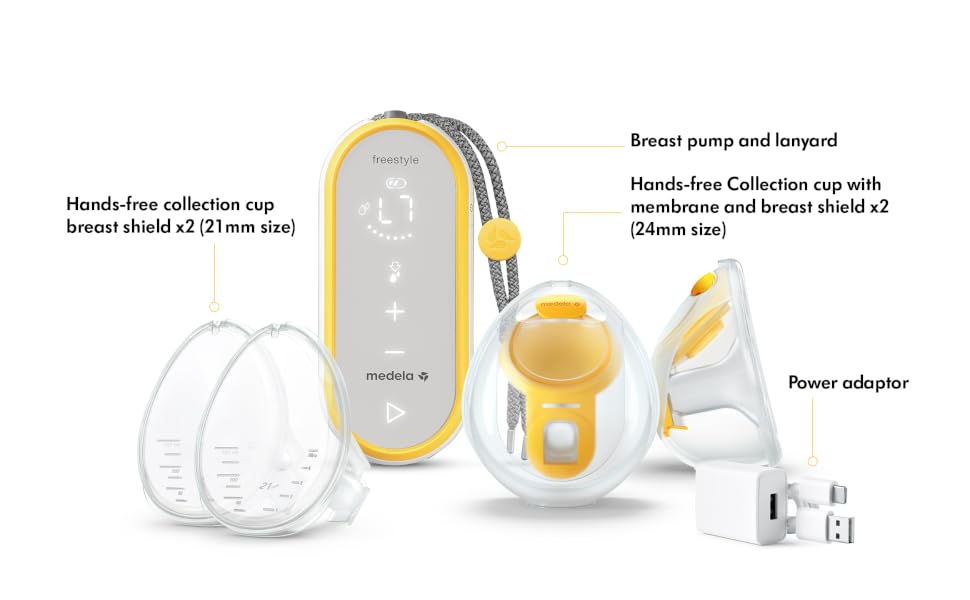
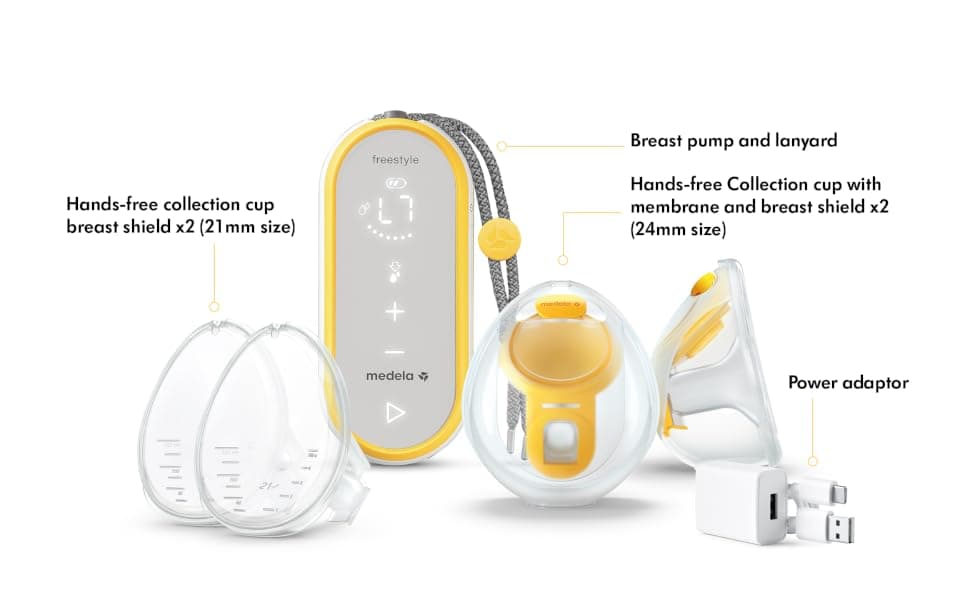
Medela engineered a clever middle ground with the Medela Freestyle Hands-Free Double Electric Breast Pump. Rather than placing heavy motors directly over your breasts, Medela separates the hardware: an ultralight pocket-sized motor connects via slim tubing to anatomic collection cups that tuck neatly inside your nursing bra.
Each collection cup weighs a mere 76 grams. The teardrop shape mirrors natural breast anatomy, featuring a broader lower half that supports the underside of the breast without pinching milk ducts. Maintenance is remarkably straightforward: each cup comprises just three parts (the cup, the silicone membrane, and the breast shield), all of which are top-rack dishwasher safe. The pump connects with the Medela Family app to log output and monitor your milk inventory.
- Cup Weight: 76 g per cup—among the lightest in-bra collection shells available.
- Parts Count: 3 individual parts per cup, drastically reducing daily washing friction.
- Flange Options: Includes both 21mm and 24mm breast shields in the box with O-ring seals.
- Connectivity: Bluetooth syncing with the Medela Family app for session tracking.
The Trade-off: You still have a thin tube running from your bra to the pocket motor. While significantly more discreet than traditional bottles hanging off your chest, it is not completely wire-free.
3. Elvie Double Electric Breast Pump
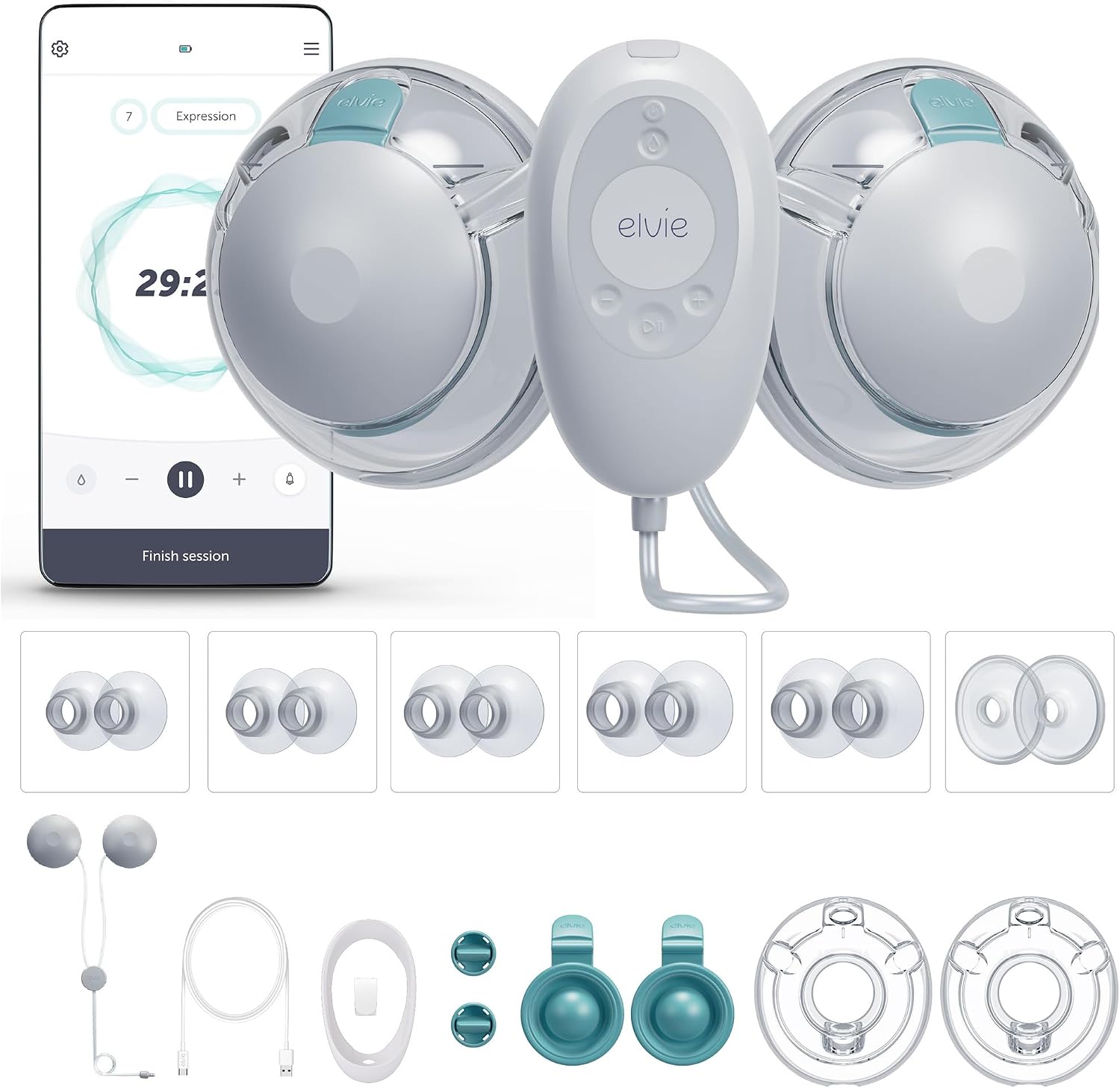
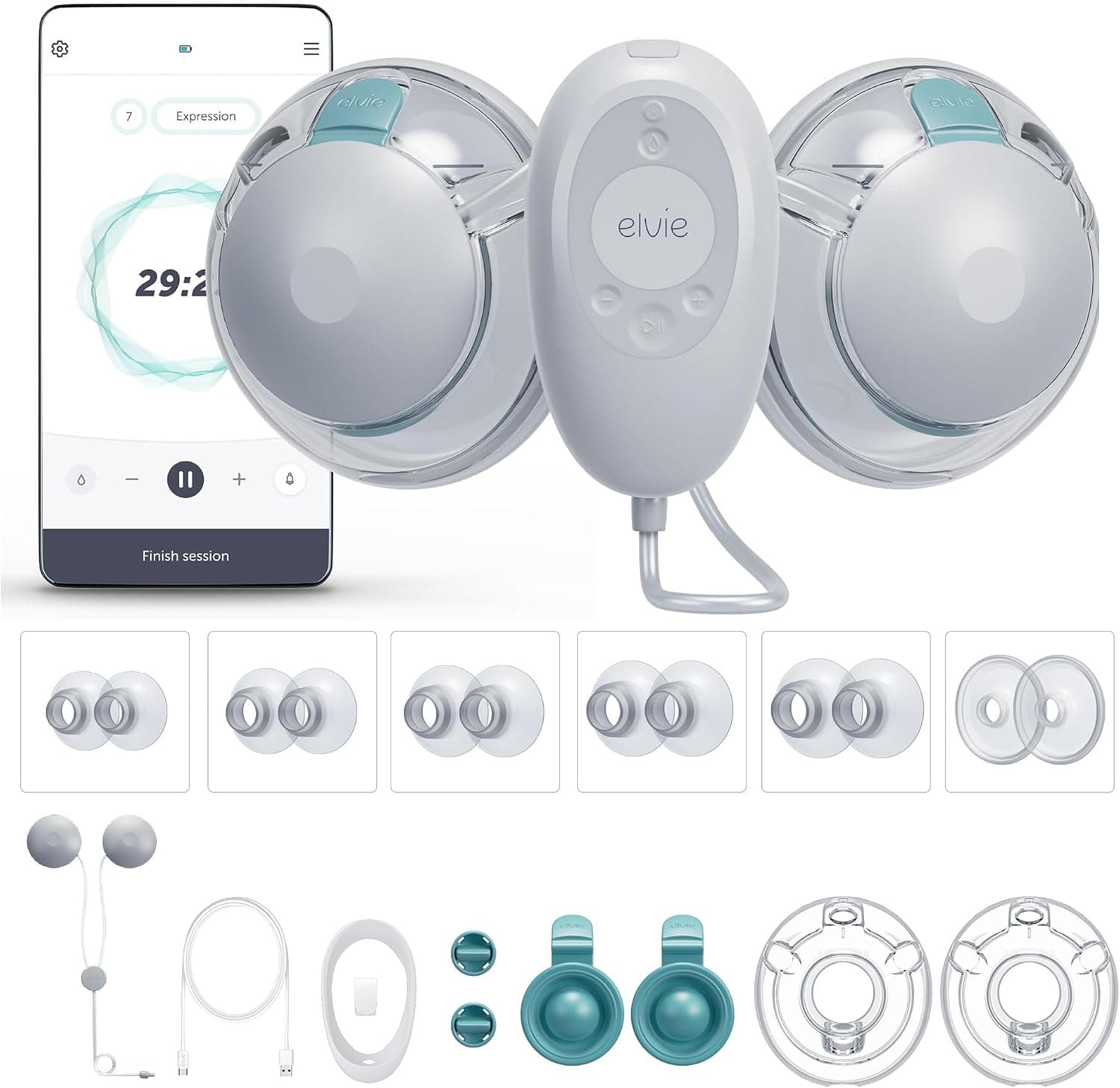
For parents prioritising pure discretion and cutting-edge design, the Elvie Double Electric Breast Pump represents the pinnacle of wearable technology. The pump sits entirely within your nursing bra with zero external tubes, dangling bottles, or separate battery packs. Its proprietary motor mechanism is genuinely quiet, eliminating the rhythmic mechanical chugging common to cheaper pumps.
Elvie integrates real-time infrared sensors to estimate milk volume in the collection bottles as you express, automatically switching from stimulation to expression mode when a let-down occurs. The accompanying mobile app gives you complete control over suction adjustments without having to unzip clothing or fish around inside your bra in public or during office meetings.
- Discretion: Genuinely silent operation; entirely self-contained within the bra cup.
- Sensor Suite: Infrared milk volume monitoring with automatic mode-switching.
- App Control: Real-time vacuum level adjustments and session history from iOS/Android.
- Charging: Micro-USB/standard rechargeable battery designed for quick top-ups.
The Trade-off: The premium price tag is significant. Additionally, the infrared volume tracking can occasionally miscalculate if milk froths, and the delicate assembly requires dry contact points to maintain full suction.
4. Momcozy S12 Pro Hands-Free Wearable Breast Pump
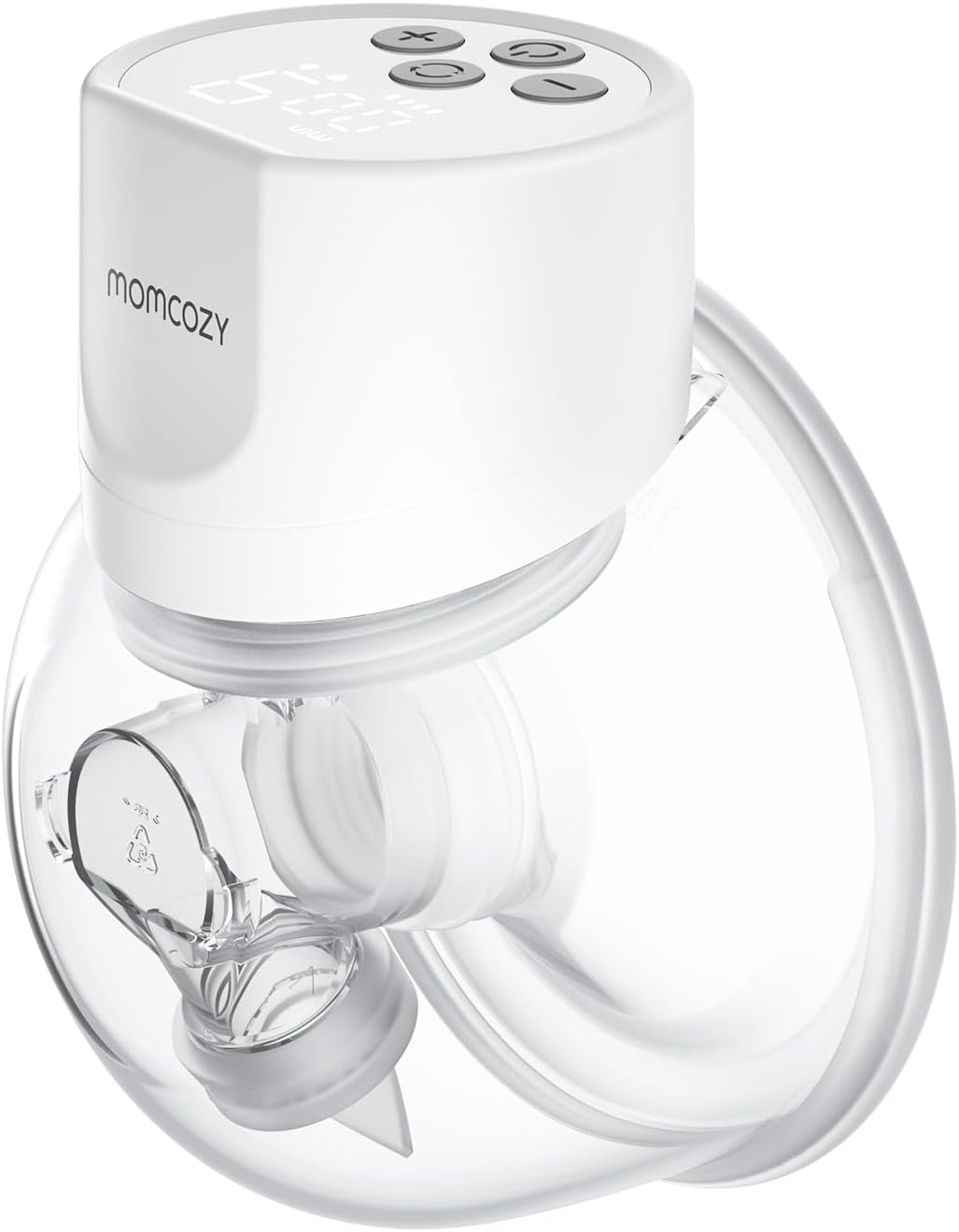
The Momcozy S12 Pro Hands-Free Wearable Breast Pump has established itself as an accessible, high-performance wearable choice for parents unwilling to spend hundreds of pounds on flagship alternatives. Offering up to -292 mmHg of suction, it delivers vacuum strength on par with traditional tabletop electric units.
A notable feature is the DoubleFit hybrid flange, combining a soft silicone contact rim with a firm polypropylene core. This structure creates a secure seal against the skin while maintaining duct alignment under strong suction. The motor head features an intuitive LED screen displaying session duration and current suction level, alongside a built-in 30-minute auto shut-off timer. The 1350 mAh battery delivers up to 240 minutes of operational runtime across charges.
- Suction Strength: Robust -292 mmHg with 3 modes and 9 intensity levels.
- Flange Comfort: DoubleFit hybrid silicone/PP flange designed to prevent edge leaks.
- Battery Life: 1350 mAh capacity delivering up to 8 sessions (240 min) per charge.
- Simplicity: 4 assembly parts with a one-piece funnel for straightforward cleaning.
The Trade-off: Motor bulk sits directly on top of each cup, making the S12 Pro visibly prominent under fitted clothing. The motor sound is quiet (rated under 46 dB), but not imperceptible like the Elvie.
Hospital-Grade vs Wearable: Which Should You Put on Your Registry?
Choosing between a hospital-grade workhorse and a wearable setup depends on your primary feeding routine. Expecting parents frequently ask whether a single wearable pump can handle every feeding scenario. Here is how the two categories compare across essential performance factors:
1. Emptying Efficiency and Supply Establishment
In the first 6 to 8 weeks postpartum, your body relies on thorough, consistent milk removal to signal prolactin receptors and establish baseline supply. Hospital-grade pumps like the Spectra S1 Plus Hospital Grade Double Electric Breast Pump use larger diaphragm motors capable of smooth, continuous cycle transitions that mimic infant suckling without dropping suction mid-stroke. Wearable pumps rely on miniaturised micro-motors that can feel more abrupt and occasionally leave lower breast quadrants partially full if the flange fit shifts while walking.
2. Flange Sizing: The Hidden Variable
No pump performs well if the flange tunnel does not match your nipple diameter. Most pumps include 24mm and sometimes 21mm or 28mm shields in the packaging, yet research indicates that the average postpartum nipple diameter measures between 15mm and 19mm. Using a flange that is too wide pulls areolar tissue into the tunnel, causing friction, swelling, and reduced milk yield. Before sterilising parts, measure your nipple base (excluding the areola) and purchase matching silicone flange inserts if your diameter is under 21mm.
3. Cleaning and Component Durability
If you express four to six times a day, part complexity matters deeply. The Medela Freestyle Hands-Free Double Electric Breast Pump excels here with only three cup parts to rinse. Regardless of brand, duckbill valves and silicone membranes degrade through heat sterilisation and daily stretching. Plan to replace soft silicone valves every 4 to 8 weeks to prevent gradual vacuum loss.
Alternatives to Consider
If the main picks do not entirely fit your specific budget or lifestyle setup, consider these focused alternatives:
- For a budget plug-and-play desktop setup: If you do not require battery operation and want a proven workhorse on a tighter budget, the mains-powered sibling models in traditional electric ranges offer identical motor specs to battery units at a lower price point.
- For single-sided expressing on the move: If you only need to relieve engorgement or catch let-downs while nursing on the opposite side, manual silicone suction collectors or single electric wearables provide a streamlined, low-cost solution.
Buying Checklist for Expecting Parents
- Clarify your feeding intent: If you plan to exclusively pump, prioritise hospital-grade power with the Spectra S1 Plus. If you aim to nurse directly and pump occasionally for shared night feeds, a wearable like the Medela Freestyle or Momcozy S12 Pro offers superior convenience.
- Measure before assuming standard sizing: Do not rely exclusively on the standard 24mm shield in the box; have silicone sizing inserts on hand before your due date.
- Check closed-system credentials: Ensure any pump you select features backflow protection to prevent condensation and milk solids from contaminating the motor mechanism.
- Plan replacement consumable budgets: Factor in the ongoing cost of duckbill valves, silicone membranes, and storage bags over your feeding journey.
Final Verdict
For raw reliability, gentle motor dynamics, and rock-solid supply protection, the Spectra S1 Plus Hospital Grade Double Electric Breast Pump remains our top overall recommendation for expecting parents building an essential nursing station. If cordless mobility and discreet daytime multitasking are non-negotiable, the Medela Freestyle Hands-Free Double Electric Breast Pump delivers the best combination of anatomical cup comfort, lightweight design, and low parts-cleaning maintenance.