As an Amazon Associate I earn from qualifying purchases. This page contains affiliate links, and I may earn a commission at no extra cost to you.
The Truth About Spending Under £250 on a Robot Vacuum
Paying £800 or more for a flagship robot vacuum gets you auto-empty towers, warm-water mop washing, and AI obstacle recognition that can spot a misplaced stray shoe from across the living room. But if your primary goal is simply keeping pet hair off the rug and crumbs off the hard floors while you are at work, spending four figures is completely unnecessary.
The sub-£250 budget segment has undergone a massive upgrade over the past few years. Features that used to be exclusive to £500+ flagship models—like laser LiDAR mapping, high-suction motors exceeding 4,000Pa, and app-controlled no-go zones—are now readily available in affordable machines. However, buying on a budget still requires making sensible compromises. Lower-priced machines often forgo automated self-emptying docks, rely on basic passive damp pads instead of active scrubbing mops, and may struggle more with tangled long hair or low-lying cable clutter.
This guide breaks down four of the most reliable budget robot vacuums currently available, analyzing official specifications, design trade-offs, and owner feedback to help you choose the right model for your layout and budget.
Quick Comparison: Best Budget Robot Vacuums
| Model | Key Spec | Price Band | Best For | Link |
|---|---|---|---|---|
| Dreame D9 Max | LiDAR Laser Mapping, 4000Pa Suction | Mid-Range Budget (£180–£230) | Best Overall / Mixed Flooring | View on Amazon |
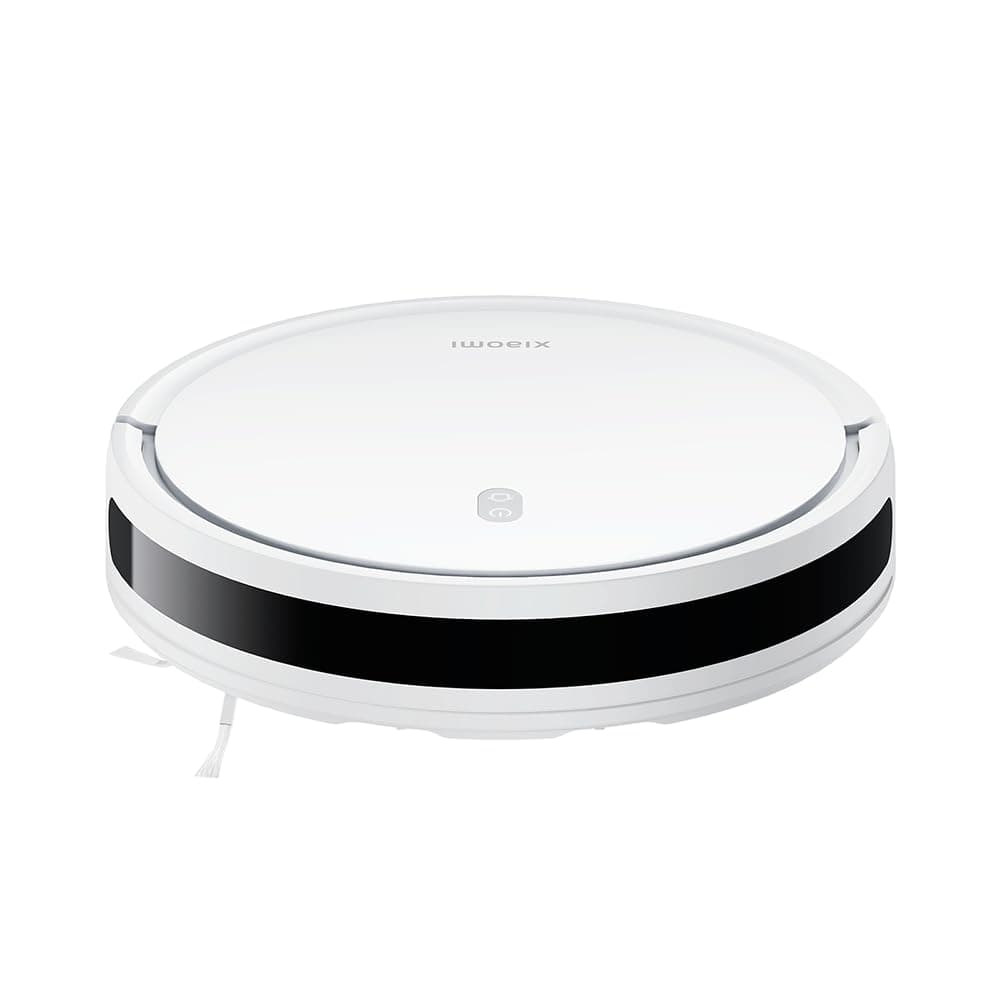
| Xiaomi Robot Vacuum E10 | Inertial Gyroscope, 4000Pa, 8cm Slim | Budget (£120–£150) | Best Low-Profile Hard Floor Cleaner | View on Amazon |
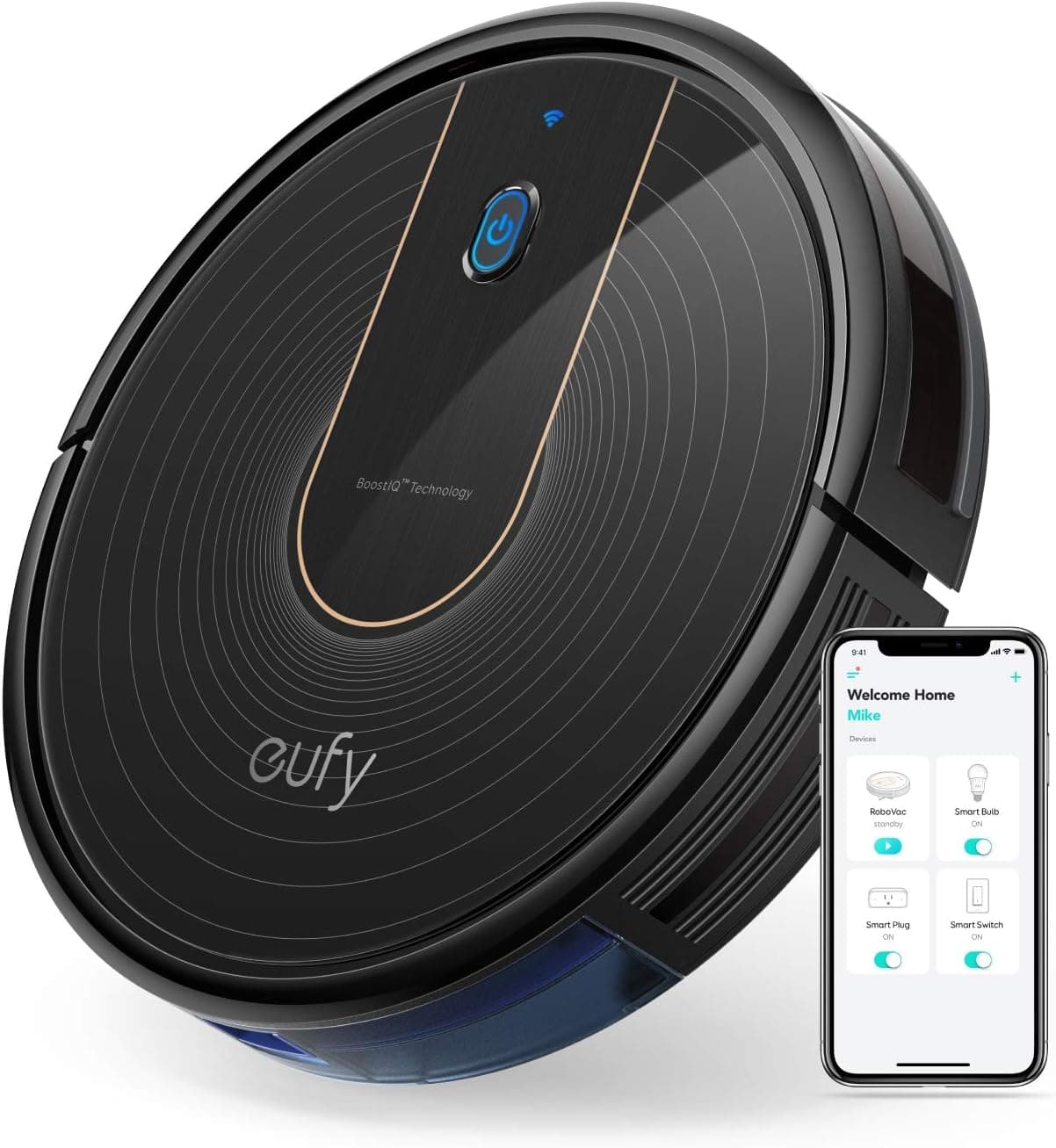
| Eufy RoboVac 15C | Bounce Navigation, BoostIQ, 7.2cm Ultra-Slim | Budget (£130–£160) | Tight Spaces & Low Furniture Clearance | View on Amazon |
| Lefant M210P | Brushless Suction Inlet, 2200Pa, 28cm Wide | Entry Budget (£90–£120) | Pet Hair & Small Apartments | View on Amazon |
Top Pick: Dreame D9 Max
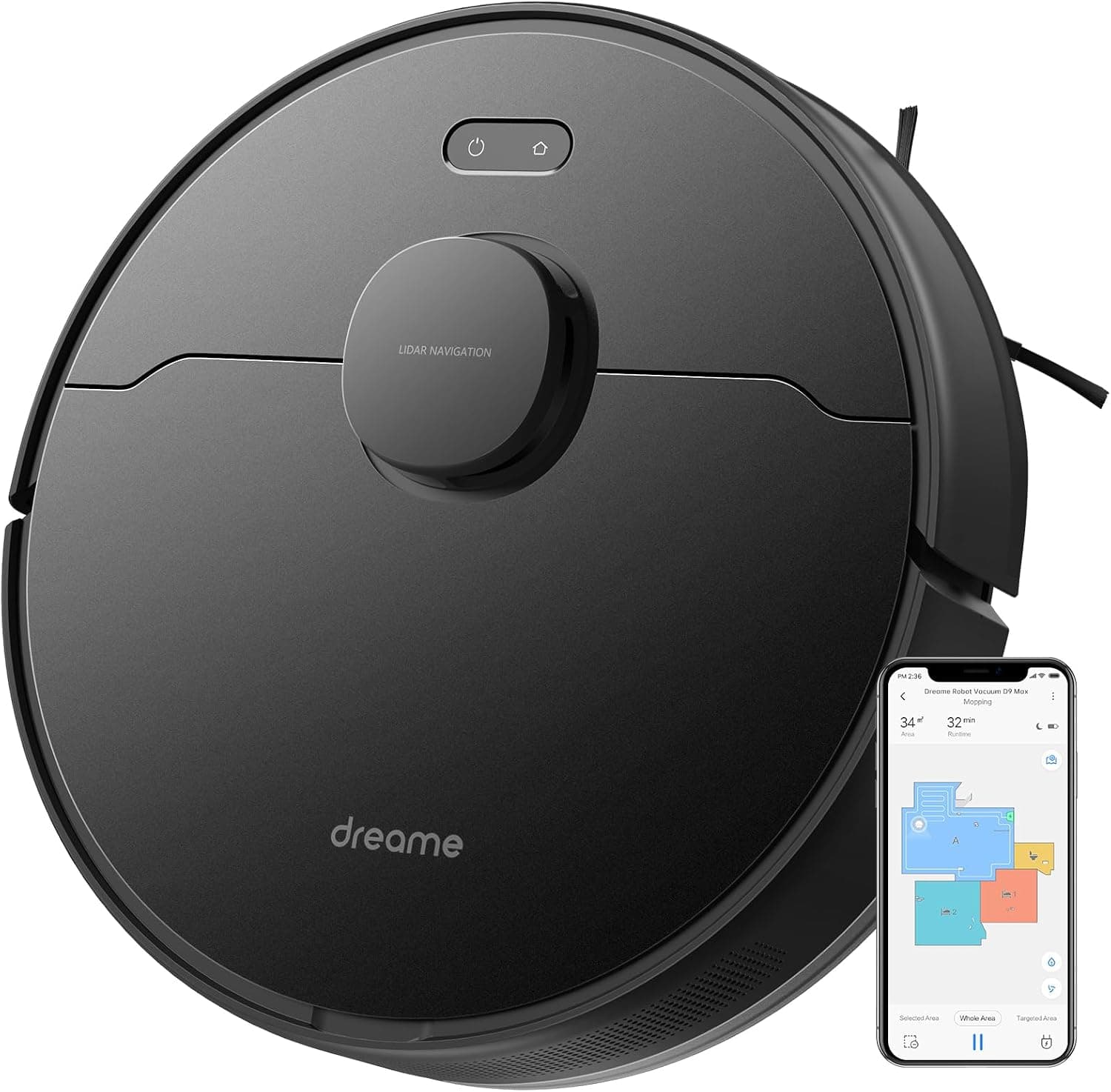
If you want true systematic room-by-room navigation rather than a machine that bounces off your baseboards until the battery dies, the Dreame D9 Max stands out as the clear benchmark under £250.
Design & Navigation Capabilities
The defining feature of the Dreame D9 Max is its top-mounted LDS (Laser Distance Sensor) LiDAR turret. Unlike optical camera systems that fail in dimly lit rooms, LiDAR allows the robot to scan its environment in 360 degrees, mapping out accurate floor plans in minutes regardless of ambient lighting. Once mapped, the robot cleans in efficient, parallel rows rather than random patterns.
Through the companion app, the D9 Max lets you draw custom no-go zones, create virtual walls, set room-specific suction levels, and schedule targeted cleaning for individual rooms. This level of software control is rarely found at this price point.
Suction Performance & Dustbin Capacity
Rated at up to 4,000Pa of suction power across four adjustable modes, the D9 Max easily pulls dirt out of low-to-medium pile carpets. Its primary brush roll features a hybrid design combining rubber blades and standard bristles, accompanied by anti-tangle comb teeth engineered to minimize hair wrapping around the roller.
It features a generous 570ml dustbin, meaning you won't need to empty it halfway through a single cleaning cycle in average-sized homes. Battery performance is similarly robust: the 5,200mAh battery provides up to 150 minutes of continuous runtime on standard power settings, which is enough to cover up to 250 square metres on a single charge.
Trade-offs to Keep in Mind
The main drawback of the LiDAR turret is physical height. Measuring 9.6cm tall, the D9 Max may struggle to clear low-clearance sofas or TV cabinets that slimmer models slip under easily. Additionally, while it includes a clip-on 270ml water tank for light mopping, this feature relies on a passive water-drip pad rather than active scrubbing. It will pick up light dust from hard floors, but it won't erase dried floor stains.
Best Budget Mopping & Hard Floor Option: Xiaomi Robot Vacuum E10
For buyers who primarily have hard floors or low carpets and want high suction without paying for laser mapping, the Xiaomi Robot Vacuum E10 offers exceptional value for money.
Design & Navigation Capabilities
Unlike the Dreame D9 Max, the Xiaomi E10 dispenses with the raised laser turret to achieve a remarkably thin 8cm profile. It uses an inertial navigation system combining precision gyroscopes with a bottom-mounted optical sensor. While it does not build editable, permanent room maps like a LiDAR unit, it navigates in a structured zig-zag pattern across open areas rather than random bounce paths, ensuring consistent coverage.
Cleaning Power & Water Management
Despite its slim chassis, Xiaomi managed to pack a 4,000Pa motor into the E10. Dirt extraction on tile, laminate, and hardwood is exemplary, helped by twin side brushes that sweep wall edges into the main suction path. It also features a smart 200ml electronic water tank that allows users to adjust water output across three levels via the Mi Home app, preventing floor soaking on delicate woods.
Trade-offs to Keep in Mind
Because gyro-based navigation relies on relative movement tracking rather than fixed laser landmarks, the E10 can get disoriented in large, multi-room layouts with lots of obstacles. If it encounters complex furniture legs or gets stuck, it may lose track of its position and restart its pathing. Its 2,600mAh battery delivers roughly 110 minutes of run time, making it best suited for medium-sized flats or single-floor layouts.
Best Ultra-Slim Pick: Eufy RoboVac 15C
Some homes simply have furniture with very low clearance where taller smart-navigating robots get wedged every 10 minutes. For these spaces, the ultra-slim Eufy RoboVac 15C remains a highly practical, stress-free alternative.
Design & Low-Profile Advantage
Standing at just 7.2cm tall, the 15C effortlessly glides under low armchairs, bed frames, and sideboards that halt larger units. It uses a tempered glass top cover that resists scratching better than matte plastic, maintaining a modern look even after months of bumping past furniture legs.
Suction & BoostIQ Technology
The RoboVac 15C delivers 1,500Pa of suction, which sounds modest on paper compared to 4,000Pa competitors, but its dual side-brushes and triple-filter system make efficient use of the air stream. A key highlight is Eufy's proprietary BoostIQ technology: the vacuum automatically detects when moving from hard floor onto carpet and boosts suction power within 1.5 seconds without user intervention.
Trade-offs to Keep in Mind
The 15C relies on traditional bump-and-turn bounce navigation. It operates semi-randomly around the room until its battery runs down, returning to the dock when low. While it eventually achieves thorough coverage in contained areas, it is significantly less efficient than grid-pattern cleaners and cannot generate map boundaries in its app. You must rely on physical magnetic strip boundaries or keep doors closed to restrict its path.
Best for Pet Hair & Tight Budgets: Lefant M210P
Pet owners know that main brush rolls quickly become hair-tangled nightmares requiring frequent cleaning with scissors. The compact Lefant M210P addresses this directly with a bristleless suction design.
Direct Suction Inlet Design
Instead of a standard rotating bristle roller that catches long human hair and fur, the Lefant M210P uses a direct suction inlet. Hair and dander are drawn directly into the 500ml dustbin without wrapping around a central mechanism. This simple design touch virtually eliminates maintenance headaches for households with heavy-shedding dogs or cats.
Size & Maneuverability
At only 28cm in diameter, the M210P is noticeably smaller than standard 33cm–35cm robot vacuums. This small footprint allows it to maneuver easily between dining chair legs and navigate narrow hallways without getting trapped. Suction is rated at 2,200Pa, supported by Freemove 3.0 anti-collision infrared sensors that prevent the unit from violently slamming into furniture.
Trade-offs to Keep in Mind
Without a motorized roller brush to agitate carpet fibers, the M210P is far less effective on medium or thick carpets. Deep-seated sand and crushed debris on rugs won't be lifted as effectively as with the Dreame D9 Max. It is essentially designed for hard floors, flat rugs, and short pet hair management.
Key Factors When Buying a Budget Robot Vacuum
Understanding which specs actually matter helps avoid overpaying for marketing claims that don't translate to real cleaning gains.
1. Navigation Type: Laser vs. Gyro vs. Bounce
- LiDAR (Laser): Best for multi-room homes and precise app control. Uses laser turrets to map rooms down to the centimeter, enabling virtual walls and room scheduling. Found on the Dreame D9 Max.
- Gyroscope / Optical: Clean in neat grid lines without an expensive, tall turret. Highly effective on single floors and open spaces, though susceptible to losing position if bumped off track. Found on the Xiaomi Robot Vacuum E10.
- Bounce / Random: Simple, affordable, and mechanically reliable. The robot moves straight until hitting an object, then changes direction. Takes longer to cover an entire space but easily fits under low furniture. Found on the Eufy RoboVac 15C and Lefant M210P.
2. Suction Power (Pa Ratings)
Suction is measured in Pascals (Pa). For hard floors, 1,500Pa to 2,000Pa is more than enough to capture dust, food crumbs, and cat litter. However, if your home has carpets or area rugs, aim for 3,000Pa to 4,000Pa to lift dirt pulled deep into carpet pile.
3. Furniture Clearance & Height
Always measure the gap beneath your sofa, TV console, and bed before buying. Standard LiDAR models stand around 9.5cm to 10cm tall, whereas non-laser budget models measure between 7.2cm and 8cm. Choosing a vacuum that fits under your lowest common furniture saves you from constantly rescuing a trapped machine.
Alternatives to Consider
If the sub-£250 range doesn't quite fit your scenario, consider these two directions depending on your priorities:
- For ultra-budget buyers (£80–£100): The Lefant M210P represents the lower boundary of practical robot vacuums. Anything cheaper usually sacrifices battery safety, sensor reliability, or filter quality.
- For low clearance on a budget (£120–£150): The Xiaomi Robot Vacuum E10 offers a middle ground, combining strong 4,000Pa suction and systematic grid pathing into an 8cm-thin body.
Final Verdict
You don't need to spend massive amounts to get automated floor cleaning that actually works. If your budget stretches toward the top of this range, the Dreame D9 Max is the best overall purchase under £250. Its combination of LiDAR room mapping, no-go zones, and 4,000Pa suction performance provides an experience remarkably close to high-end flagship devices for a fraction of the cost.
For homes with low-clearance furniture or complex pet-hair needs on hard floors, slim alternative picks like the Xiaomi Robot Vacuum E10 or brush-free Lefant M210P offer specialized solutions without bloated price tags.