
As an Amazon Associate I earn from qualifying purchases. This page contains affiliate links, and I may earn a commission at no extra cost to you.
Spending £250 on a pair of wireless earbuds has become a tech industry default that frankly makes very little financial sense for most listeners. The gap between top-tier luxury flagships and mid-range audio gear has collapsed dramatically over the past two years. Features that once commanded premium price tags—such as adaptive active noise cancellation (ANC), dual-device Bluetooth multipoint pairing, LDAC high-resolution streaming, and wireless charging cases—are now routinely packed into true wireless earbuds priced under £80.
Whether you are hunting for a foolproof tech gift that looks and sounds expensive or simply replacing a lost pair of commuter earphones without draining your bank account, the sub-£80 category is the sweet spot. You get roughly 85% to 90% of the acoustic fidelity and noise suppression of ultra-premium flagships at less than a third of the investment.
However, navigating this crowded market requires caution. Some budget pairs compromise heavily on microphone quality in breezy conditions, while others deliver bloated, muddy bass profiles that overwhelm delicate acoustic tracks. Based on manufacturer specifications, audio codec capabilities, and verified owner feedback, this guide examines the four strongest noise-cancelling earbuds available under £80 so you can make an informed choice.
Quick Comparison: The Sub-£80 ANC Contenders
Here is how the four frontrunners stack up side by side in core specifications, functionality, and real-world strengths:
| Product | Key Specs & Battery | Standout Feature | Verdict | Price & Link |
|---|---|---|---|---|
| Anker Soundcore Space A40 | Up to 50 hrs total (10 hrs per charge); LDAC support | Adaptive ANC reducing up to 98% ambient noise | The undisputed all-rounder with elite battery life and high-res audio. | Check today's price on Amazon |
| Sony WF-C700N | 15 hrs total with ANC (7.5 hrs buds); DSEE audio engine | Ergonomic lightweight shell tailored for small ears | Superb Sony acoustic tuning and comfort, though case capacity is modest. | Check today's price on Amazon |
| CMF by Nothing Buds Pro 2 | 43 hrs total (10 hrs buds); 60 mAh cells; Smart Dial | Physical Smart Dial on charging case for tactile control | Bold industrial design and intuitive tactile control dial with punchy bass. | Check today's price on Amazon |
| EarFun Air Pro 3 | 45 hrs total (9 hrs buds); Qualcomm cVc 8.0 with 6 mics | Hybrid ANC up to 43dB & low 55ms gaming latency | Best value choice for commuters who prioritise clear voice calls. | Check today's price on Amazon |
1. Anker Soundcore Space A40 – The Ultimate All-Rounder
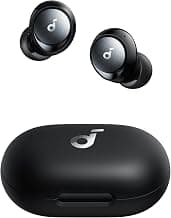
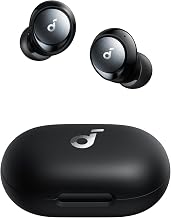
If you want a single pair of earbuds that checks almost every high-end box without a luxury price tag, the Anker Soundcore Space A40 represents the absolute benchmark of this price bracket. Soundcore engineered these earbuds specifically to undercut flagships on endurance and customisation.
Design, Comfort, and Build
The Space A40 adopts a sleek, stemless pebble profile that sits almost flush with your outer ear. Soundcore includes five pairs of silicone ear tips in the box, ensuring that finding a reliable acoustic seal is straightforward regardless of ear shape. Weighing barely under 5 grams per earbud, they avoid creating the fatigue or pressure points often caused by heavier stem-based models during four-hour train journeys or extended study sessions.
Key Features and Active Noise Cancellation
The headline feature here is Soundcore's adaptive active noise cancellation system. Instead of applying a static level of suppression, internal and external sensors continuously monitor ambient noise levels to calibrate counter-frequencies on the fly. Anker states this system reduces ambient noise by up to 98%, with verified user reports consistently confirming that low-frequency drone—such as jet engines, train rumbles, and office air conditioning units—is wiped out almost entirely.
Acoustically, the earbuds utilise double-layer diaphragm drivers that deliver tight, defined sub-bass and articulate mid-range frequencies. Unlike many rivals at this price point that restrict you to standard SBC and AAC codecs, the Space A40 includes LDAC support, enabling high-resolution 24-bit/96kHz audio streaming on compatible Android devices. Furthermore, the accompanying Soundcore app remains one of the most comprehensive on the market, offering an eight-band custom graphic equaliser, HearID sound profiling, and customisable touch controls.
Battery Endurance and Value
Battery performance is exceptional: you get up to 10 hours of standalone listening from the earbuds themselves (around 8 hours with ANC continuously engaged), while the compact, wireless-charging-compatible case extends total playback to a massive 50 hours. A 10-minute fast charge via USB-C provides 4 hours of playback, making them ideal for forgetful commuters who charge their gear at the last minute.
Pros and Cons
- Pros: Outstanding 50-hour total battery life; LDAC high-res audio codec support; class-leading companion app with granular EQ controls; wireless charging case.
- Cons: Lacks wear-detection sensors (music does not auto-pause when you remove a bud); touch controls can be slightly oversensitive when adjusting fit.
2. Sony WF-C700N – Best for Natural Sound and Ergonomics
Sony remains an audio titan, but buying into their flagship 1000X series requires spending upwards of £200. The Sony WF-C700N distils the company's renowned acoustic pedigree and software elegance into a budget-conscious package that punches far above its weight.
Ergonomics and Acoustic Tuning
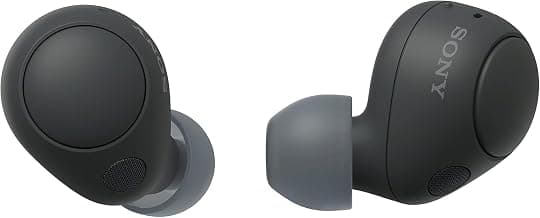
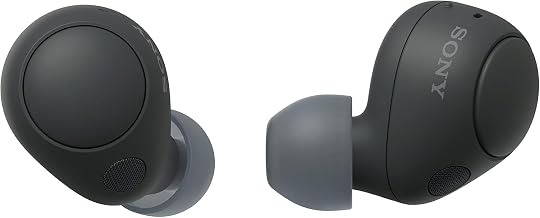
Sony conducted extensive ear-shape research to shape the WF-C700N into one of the smallest and most comfortable earbuds on the market today. If you have smaller ears or frequently find standard true wireless buds painful after an hour, these are the standout solution. Their rounded, textured matte plastic bodies tuck securely into the concha without placing torque on the ear canal.
Sound quality is where Sony's heritage shines. Rather than artificially boosting the low end to mask acoustic flaws, the WF-C700N delivers a remarkably balanced, open soundstage with crisp vocal clarity. It features Sony's proprietary DSEE (Digital Sound Enhancement Engine), which intelligently upscales compressed lossy audio files to restore high-frequency harmonics that MP3 and streaming compression strip away.
Noise Cancellation and Everyday Usability
While the digital noise cancellation does not quite match the raw suppression depth of the Soundcore Space A40 in low-frequency drone environments, it excels at dampening chatter and office ambient noise. Sony's Ambient Sound Mode is among the most natural in this class, avoiding the harsh electronic hiss common to budget transparency modes. Furthermore, physical push buttons on each earbud eliminate accidental touch inputs when adjusting your hair or hood.
For phone calls, Sony integrated a dedicated Wind Noise Reduction Structure around the microphones, preventing blustery gusts from overwhelming your voice when walking outdoors. Multipoint Bluetooth connectivity is included out of the box, allowing smooth switching between your smartphone and laptop.
Trade-offs to Keep in Mind
The primary compromise is battery capacity in the charging case. You get 7.5 hours per charge with ANC active (or 10 hours with ANC off), but the capsule-shaped charging case provides only one additional full charge, resulting in a total playback time of 15 hours with ANC on (20 hours off). There is also no wireless charging support.
Pros and Cons
- Pros: Exceptional lightweight ergonomic fit for smaller ears; balanced, refined soundstage with Sony DSEE upscaling; natural ambient transparency mode; reliable physical buttons.
- Cons: Case holds only one additional charge (15 hrs total with ANC); charging case lacks Qi wireless charging; no LDAC high-resolution codec.
3. CMF by Nothing Buds Pro 2 – Best for Clever Design & Bass Impact
CMF, the sub-brand of Nothing, focuses on combining vibrant industrial design with functional innovation. The CMF by Nothing Buds Pro 2 distinguishes itself instantly with an inventive hardware feature that solves the single biggest annoyance of true wireless audio: fiddly volume controls.
The Revolutionary Smart Dial
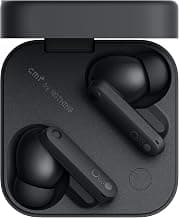
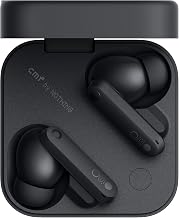
On the corner of the square matte charging case sits a tactile, knurled metal rotary dial called the Smart Dial. Instead of repeatedly tapping an earbud stem and praying the sensor registers your finger, you can simply twist the case dial in your pocket to raise or lower the volume. Through the Nothing X companion app, you can also customise press-and-twist actions to toggle noise cancellation, trigger low-latency gaming mode, activate voice assistants, or mute your microphone during conference calls.
Audio Performance and Deep Bass
Acoustically, the Buds Pro 2 are tuned for energy. If your playlist leans heavily toward electronic music, hip-hop, or modern pop, these earbuds deliver profound sub-bass extension that feels visceral without bleeding into the mid-range. While purists seeking a flat studio-reference sound profile might find the default sound signature slightly bass-forward, the Nothing X app provides detailed parametric EQ adjustments to rein in the lower frequencies if desired.
Battery, Connectivity, and Features
Each earbud houses a generous 60 mAh battery, providing up to 10 hours of standalone music playback on a single charge and 43 hours total when combined with the charging case. Fast charging ensures that a short top-up provides hours of playback. The buds also offer seamless integration with Nothing OS features, including ChatGPT voice prompt shortcuts for paired Nothing and CMF smartphones.
Pros and Cons
- Pros: Innovative tactile Smart Dial on the case; deep, punchy bass response; generous 10-hour standalone earbud battery; stylish minimalist hardware design.
- Cons: Default acoustic tuning is slightly bass-heavy for classical and acoustic genres; charging case is wider than pill-shaped competitors.
4. EarFun Air Pro 3 – Best for Commuter Calls and Low Latency
EarFun has quietly built a sterling reputation among personal audio enthusiasts for undercutting traditional audio brands on raw hardware specifications. The EarFun Air Pro 3 demonstrates exactly why: it pairs high-grade Qualcomm silicon with hybrid ANC at an entry-level price point.
Call Quality and Microphone Architecture
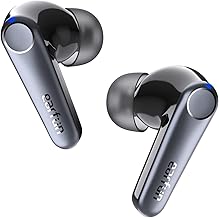
If you take regular hands-free voice calls while walking down windy streets or sitting in bustling train carriages, the EarFun Air Pro 3 is the clear specialist. It incorporates an array of 6 Environmental Noise Cancellation (ENC) microphones powered by Qualcomm cVc 8.0 software algorithms. The system continuously separates vocal frequencies from ambient wind and street rumble, ensuring callers hear your voice clearly without muffled distortion.
Connectivity, Hybrid ANC, and Gaming Mode
Powered by modern Bluetooth 5.3 architecture, the Air Pro 3 maintains an exceptionally robust connection with dual-device multipoint pairing. Switching from a video call on your work laptop to an incoming ring on your smartphone happens swiftly without manual disconnection. For mobile gamers and video streaming enthusiasts, activating the dedicated low-latency mode drops audio-visual delay down to roughly 55ms, eliminating distracting lip-sync lag.
Its QuietSmart 2.0 hybrid ANC technology reduces background noise by up to 43dB. While it does not silence high-pitched keyboard clatter quite as comprehensively as the Soundcore Space A40, it handles persistent engine hum and rail vibration with impressive authority.
Battery and Case Convenience
EarFun includes both USB-C fast charging and Qi wireless charging compatibility. The earbuds run for up to 9 hours on a single charge, with the case storing an additional 36 hours for 45 hours of total playtime. A 10-minute quick charge delivers 2 hours of listening.
Pros and Cons
- Pros: 6-microphone Qualcomm cVc 8.0 array delivers superior call clarity; low 55ms gaming latency; wireless charging case included; robust Bluetooth 5.3 connection.
- Cons: Soundstage is slightly narrow out of the box (requires custom EQ in the EarFun Audio app); touch controls lack tactile confirmation.
Buying Guide: What Matters in Sub-£80 Noise-Cancelling Earbuds?
To ensure you get genuine value for your money, focus on these critical performance factors rather than marketing buzzwords:
1. Active Noise Cancellation (ANC) vs Passive Noise Isolation
Active noise cancellation works by using external microphones to capture incoming sound waves and generating an inverted acoustic wave to cancel them out. It works best on consistent, low-frequency sounds (such as bus engines, train hums, and office HVAC units). Passive isolation, by contrast, relies entirely on the physical seal created by the silicone ear tips inside your ear canal. Even the most sophisticated ANC algorithm will fail if the ear tip does not create an airtight seal, so always try multiple tip sizes to ensure maximum bass retention and noise blocking.
2. Codec Support and Smartphone Compatibility
Basic Bluetooth audio relies on standard SBC and AAC codecs. If you use an iPhone, AAC is the optimal standard. However, if you use an Android device and stream high-resolution audio files or use high-tier streaming services, look for earbuds supporting advanced codecs like LDAC (found on the Anker Soundcore Space A40). LDAC allows roughly three times the data transmission rate of standard Bluetooth, preserving subtle instrumental details.
3. Multipoint Connectivity
Multipoint pairing allows your earbuds to maintain active Bluetooth links with two devices at the same time (e.g., your laptop and your phone). When an incoming phone call arrives while you are listening to audio on your computer, the earbuds automatically pause the computer stream and route the call through. All four models highlighted in this guide support multipoint, saving you from tedious Bluetooth menu reconnects.
4. Case Battery Reserves vs Standalone Playtime
Always distinguish between standalone earbud runtime (how long the buds last out of the case on a single charge) and total case capacity. If you take long-haul flights or work 8-hour shifts without breaks, you need at least 7 to 10 hours of standalone earbud battery (such as the CMF by Nothing Buds Pro 2 or Space A40). If you primarily commute in 45-minute bursts, total case capacity matters more.
Alternatives to Consider
If none of the four core models perfectly fits your intended budget or use case, consider these two alternative options:
- Ultra-Budget Under-£40 Pick: If your budget is strictly capped and you want basic active noise cancellation with punchy sound, look into the EarFun Air Pro 3 when promotional discounts apply, as it regularly dips closer to entry-level pricing while retaining multipoint pairing and 6-mic call quality.
- Premium Upgrade Option: If you are willing to double your budget to gain industry-leading spatial audio tracking, head-detection sensors, and flagship ANC that silences high-frequency human voices, step up to the Sony WF-C700N's larger sibling models or dedicated flagship tiers from major brands.