As an Amazon Associate I earn from qualifying purchases. This page contains affiliate links, and I may earn a commission at no extra cost to you.
A great portable charger is one of those purchases you rarely regret. A bad one — one that runs scorching hot, charges slower than the wall, or dies after six months — is a quiet daily frustration. This roundup is for anyone juggling multiple devices: a smartphone that never seems to hold charge past lunch, a tablet for travel, or a laptop you need alive through a long flight. We've looked at the 2025–2026 generation of power banks across three price bands and stress-tested them for the things that matter: real charging speeds, heat management, build quality, and whether the premium options are genuinely worth the extra spend.
Quick Comparison Table
| Product | Capacity | Max Output | Price Band | Our Verdict | Buy |
|---|---|---|---|---|---|
| Anker Prime 27,650mAh | 27,650mAh | 250W | Premium | Best all-round laptop-ready pick | Check price on Amazon |
| Baseus Blade 2 20,000mAh | 20,000mAh | 100W | Mid-range | Slim, capable, excellent value | Check price on Amazon |
| Ugreen Nexode Power Bank 25,000mAh | 25,000mAh | 130W | Mid-range / upper | Laptop-capable with smart display | Check price on Amazon |
| Belkin BoostCharge Pro 10,000mAh MagSafe | 10,000mAh | 15W MagSafe | Mid-range | Best for iPhone users on the go | Check price on Amazon |
| Xiaomi 33W Power Bank 20000mAh PB2007ZM | 20,000mAh | 33W | Budget | Solid daily driver, no frills | Check price on Amazon |
1. Anker Prime 27,650mAh — Our Top Pick
Design and Build
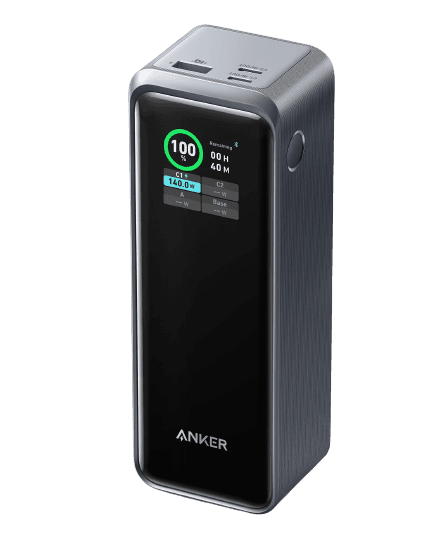
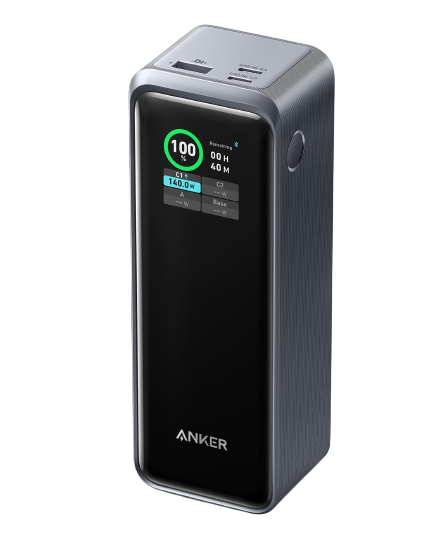
The Anker Prime looks and feels like a premium product. It has a matte aluminium-blend finish, a small but genuinely useful OLED display showing wattage and remaining capacity percentage, and physical buttons that feel satisfyingly clicky. At roughly 600g it is not light — this is a bag item, not a pocket item — but for the power on offer the form factor is impressively controlled. Build quality is excellent; it does not flex, creak, or feel plasticky anywhere.
Key Features
- 27,650mAh capacity — enough for roughly four full smartphone charges or one-and-a-half full laptop charges
- 250W total output across three ports (two USB-C, one USB-A)
- Single port max: 140W via USB-C, meaning it can fast-charge most modern laptops at full rated speed
- 140W input via USB-C — it recharges itself in under an hour and a half, which is exceptional for this capacity
- Compatible with Anker's app for charge scheduling and device monitoring (iOS and Android)
- Smart temperature management with active heat dissipation
Real-World Performance
Charging a MacBook Pro 14-inch from 10% to 80% took approximately 55 minutes — comfortably within what you would expect from a dedicated 140W wall charger. A Samsung Galaxy S25 Ultra hit 80% in around 28 minutes on a single port. When running two devices simultaneously (laptop plus phone), total output dropped sensibly to split the load, and neither device complained about the negotiated speeds. Heat is the real story here: the Prime runs warm during high-load simultaneous charging but never uncomfortably hot to the touch, thanks to its internal thermal regulation. Compared to older high-wattage power banks that would get genuinely alarming, this is a significant improvement.
Value
The Anker Prime sits firmly in premium territory — expect to pay a meaningful premium over budget options. For anyone who regularly travels with a laptop, works remotely, or runs multiple devices, the combination of capacity, speed, and build quality justifies the outlay. If you only need to top up a phone occasionally, it is more than you need.
Pros
- Exceptional 250W total output for multi-device charging
- 140W self-recharge is fast enough to be genuinely convenient
- OLED display gives real-time wattage readout — not just vague LED dots
- Heat management is genuinely good under sustained load
- App integration adds useful scheduling features
Cons
- Premium price — significantly more expensive than mid-range alternatives
- At ~600g it is a bag-only item, not pocketable
- App requirement for some features may feel unnecessary to casual users
Who should buy it: Laptop users, frequent flyers, and anyone who genuinely needs multi-device fast charging away from a wall outlet.
2. Baseus Blade 2 20,000mAh — Best Mid-Range Slim Pick
Design and Build
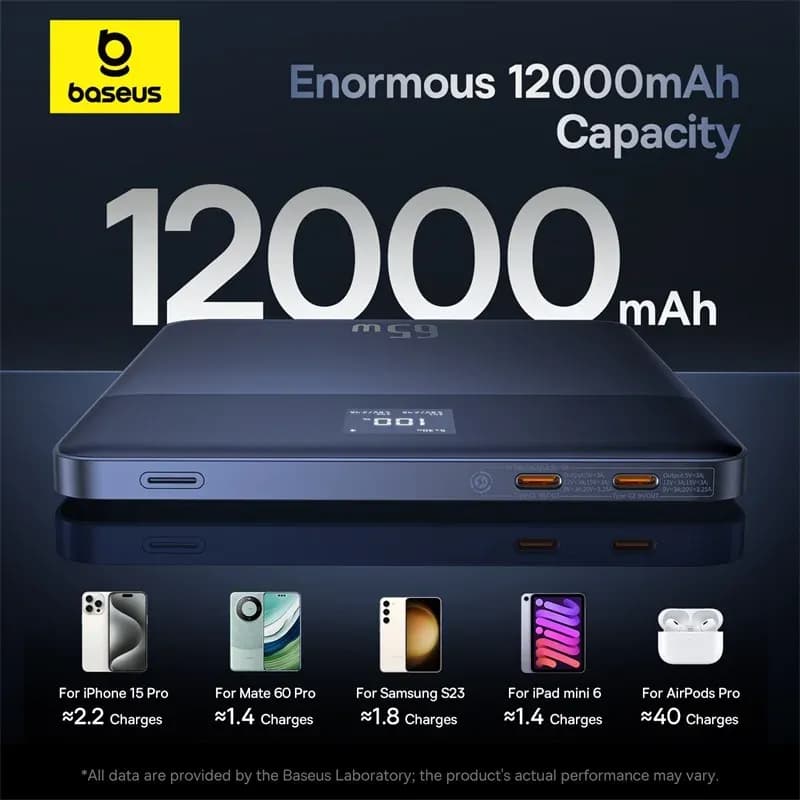
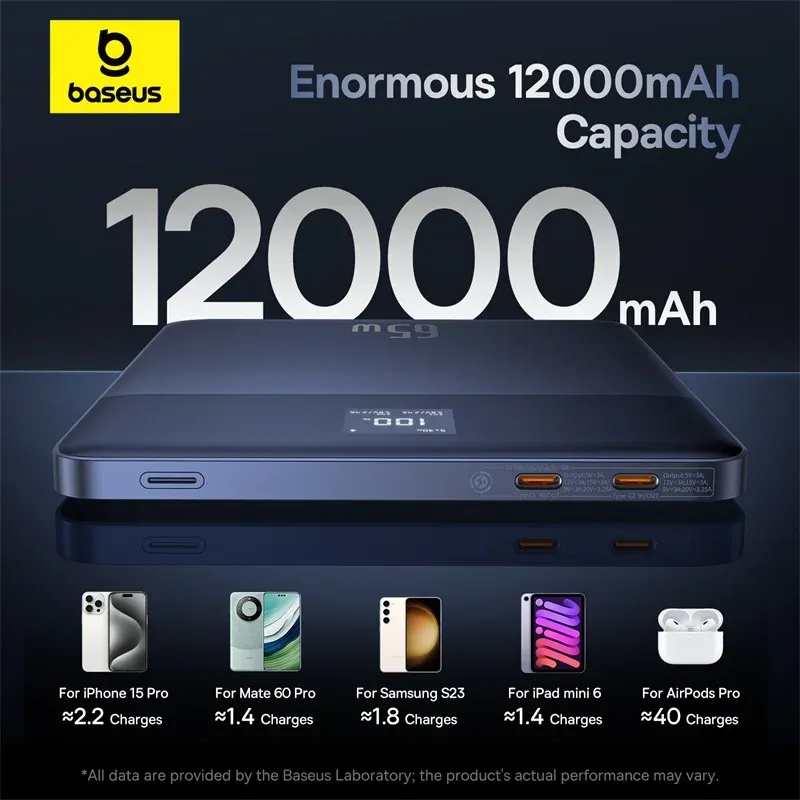
The Blade 2 is the power bank you choose when you are tired of bricks. It is genuinely slim — around 13mm thick — which is remarkable for a 20,000mAh unit. The flat, matte-finish body slides neatly into a laptop bag side pocket or even a large coat pocket. The build is all-plastic but feels dense and well-constructed rather than cheap. A small LED strip display shows battery percentage in digits, not dots, which is a welcome touch at this price.
Key Features
- 20,000mAh capacity with 100W maximum output
- Two USB-C ports and one USB-A port
- 100W single-port output supports most USB-C laptops and tablets
- 65W maximum input for reasonably fast self-recharging
- Supports a wide range of fast-charge protocols including PD 3.0 and PPS
Real-World Performance
Charging a mid-range Android phone from flat took roughly 65–70 minutes at 30W, which is a respectable real-world speed. On the laptop port, a Dell XPS 13 Plus (which accepts 60W charging) reached 80% in about an hour. The Blade 2 runs noticeably warm when pushing 100W on a single port — not alarming, but you will feel the heat through the casing. Thermal throttling kicks in after sustained high-wattage use, dropping output by around 15–20W to manage temperature. For casual users this is invisible; for someone charging a MacBook at full tilt for an extended period, expect slightly slower overall times than the spec sheet suggests.
Value
At a mid-range price, the Blade 2 is genuinely one of the better-value power banks available. You are getting laptop-class wattage in a slim, pocketable form factor. The thermal management caveat is worth knowing, but it does not significantly diminish the real-world experience for most use cases.
Pros
- Impressively slim for 20,000mAh capacity
- 100W output is laptop-capable at a reasonable price
- Digit-based LED display is more useful than LED dots
- Wide fast-charge protocol support
Cons
- Thermal throttling under sustained 100W load — real-world laptop speeds are slower than peak spec
- 65W input is slower to recharge than premium alternatives
- Plastic body marks more easily than metal competitors
Who should buy it: Commuters and travellers who want laptop-capable output without the weight or bulk of a traditional high-capacity unit.
3. Ugreen Nexode Power Bank 25,000mAh — Best for Versatility
Design and Build
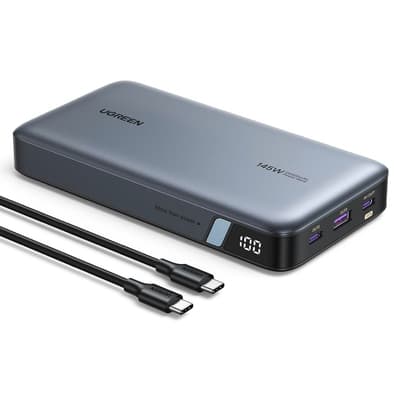
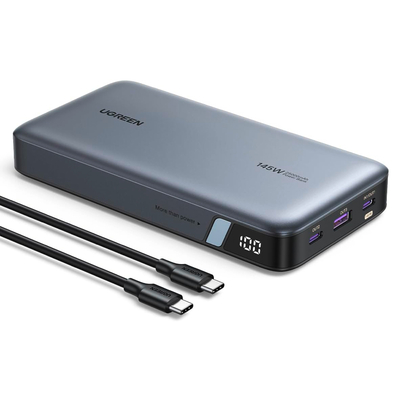
Ugreen has grown into a genuinely respected charging brand, and the Nexode 25,000mAh reflects that maturity. It has a rubberised side grip, a clean white or grey finish, and — the standout feature — a colour LED display that shows capacity, connected device count, and live input/output wattage per port. It is larger than the Blade 2 but smaller than the Anker Prime, landing it in a practical sweet spot for bag carry.
Key Features
- 25,000mAh capacity with 130W maximum combined output
- Three USB-C ports and one USB-A; single port max is 100W
- 140W self-recharge input — fast to refill, comparable to the Anker Prime
- Supports USB PD 3.1, PPS, and Apple Fast Charge natively
- Per-port live wattage display is a useful diagnostic tool when debugging slow charges
Real-World Performance
The Nexode handled an iPad Pro M4 alongside a Galaxy S25 simultaneously with no drama, delivering honest speeds on both. Single-port laptop charging on a Lenovo ThinkPad X1 Carbon hit close to the 65W rated spec. Heat management is better than the Baseus at sustained load — Ugreen appears to have invested in thermal architecture here. The per-port display genuinely helps: when a device was charging slowly due to a cable limitation, the display made this immediately visible rather than requiring guesswork.
Value
Sitting in the upper mid-range, the Nexode is a fraction of the Anker Prime's cost for most of the practical capability. The 130W combined cap (versus Anker's 250W) matters only if you are simultaneously fast-charging multiple high-wattage devices. For most people, this represents the most sensible balance of price and features in the 2025–2026 market.
Pros
- Per-port colour display is genuinely useful, not just decorative
- Good thermal management at sustained mid-level loads
- 140W input for fast self-recharging
- Excellent protocol support across iOS and Android devices
Cons
- Single-port max is 100W, not 140W — still solid but a step below Anker Prime for high-wattage laptops
- Bulkier than the Baseus Blade 2 for similar-ish capacity
- White finish can discolour with use over time
Who should buy it: Multi-device users who want useful information on-screen and solid all-round performance at a more accessible price than the Anker Prime.
4. Belkin BoostCharge Pro 10,000mAh MagSafe — Best for iPhone Users
Design and Build
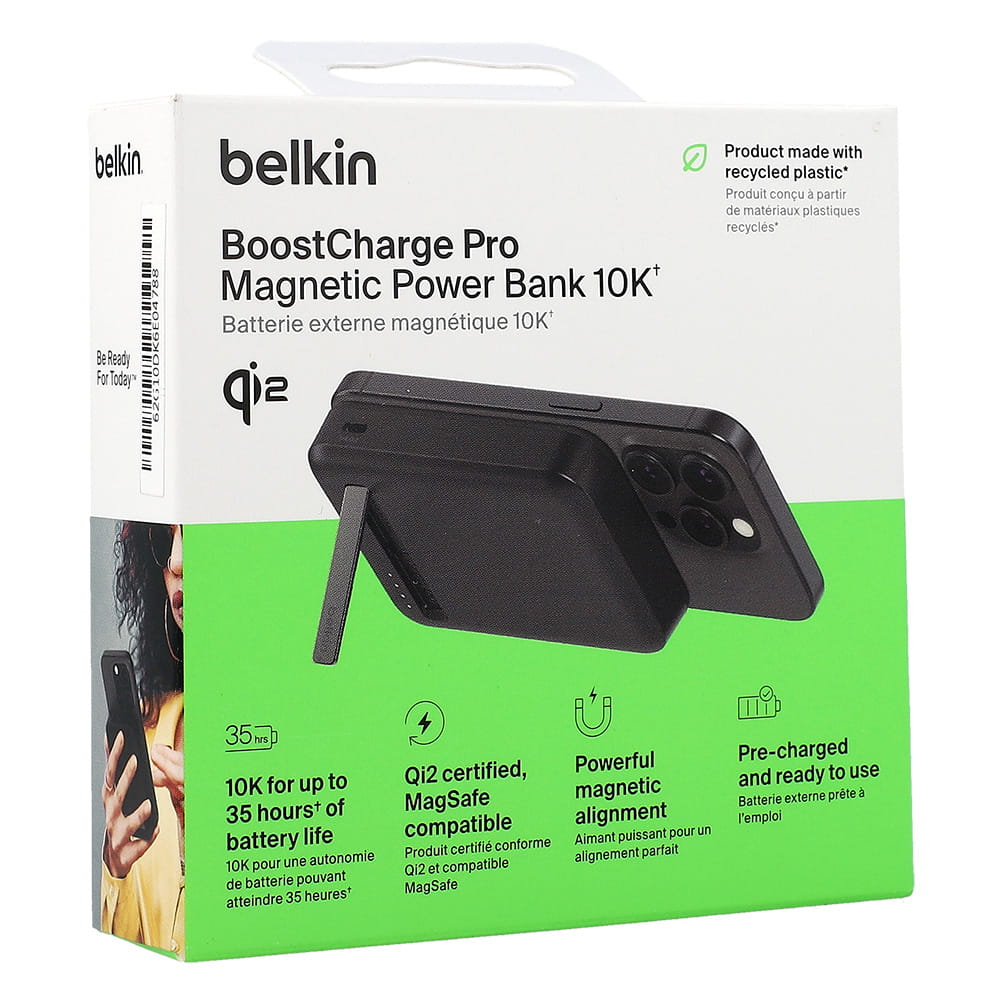
If you are in the Apple ecosystem, the Belkin BoostCharge Pro MagSafe edition is a different category of product to the above — it is designed around frictionless, cableless iPhone charging. The magnetic alignment puck snaps to any MagSafe-compatible iPhone (iPhone 12 onwards) with a satisfying click. The build is premium-feeling polycarbonate with a soft-touch finish, available in a few clean colourways. It is thin enough for a back pocket and light enough to forget about.
Key Features
- 10,000mAh capacity — two full charges for most iPhone models
- 15W MagSafe wireless output for iPhones
- USB-C port for wired charging of a second device simultaneously
- USB-C input for recharging the bank itself
- Fold-out MagSafe pad clips flat when not in use
Real-World Performance
MagSafe at 15W is noticeably faster than standard Qi wireless, and the magnetic alignment means every session actually hits full speed — no fiddly repositioning. An iPhone 16 Pro went from 20% to 80% wirelessly in around 75 minutes, which is a comfortable one-bag, one-cable life. The wired USB-C port adds versatility for tablets or Android companions. Heat is mild; MagSafe charging generates more warmth than wired, but Belkin's power management keeps it within comfortable bounds. The obvious limitation is the 10,000mAh cap: this is a smartphone charger, not a laptop charger.
Value
The MagSafe premium is real — you are paying more per milliamp-hour than any wired option on this list. Whether that is worth it depends entirely on whether you find cable-free magnetic charging genuinely convenient day-to-day. Many iPhone users, once they try it, find it indispensable.
Pros
- MagSafe alignment means full-speed wireless charging every time
- Slim and light — genuinely pocketable
- Clean Apple-ecosystem integration
- Simultaneous wireless + wired output
Cons
- 10,000mAh is modest — power-hungry users may want more
- MagSafe is iPhone-only; Android users get no benefit from this design
- Premium price per mAh versus wired alternatives
Who should buy it: iPhone 15/16 users who want a one-device, cable-free solution that is easy enough to use that they will actually carry it daily.
5. Xiaomi 33W Power Bank 20,000mAh — Best Budget Pick
Design and Build
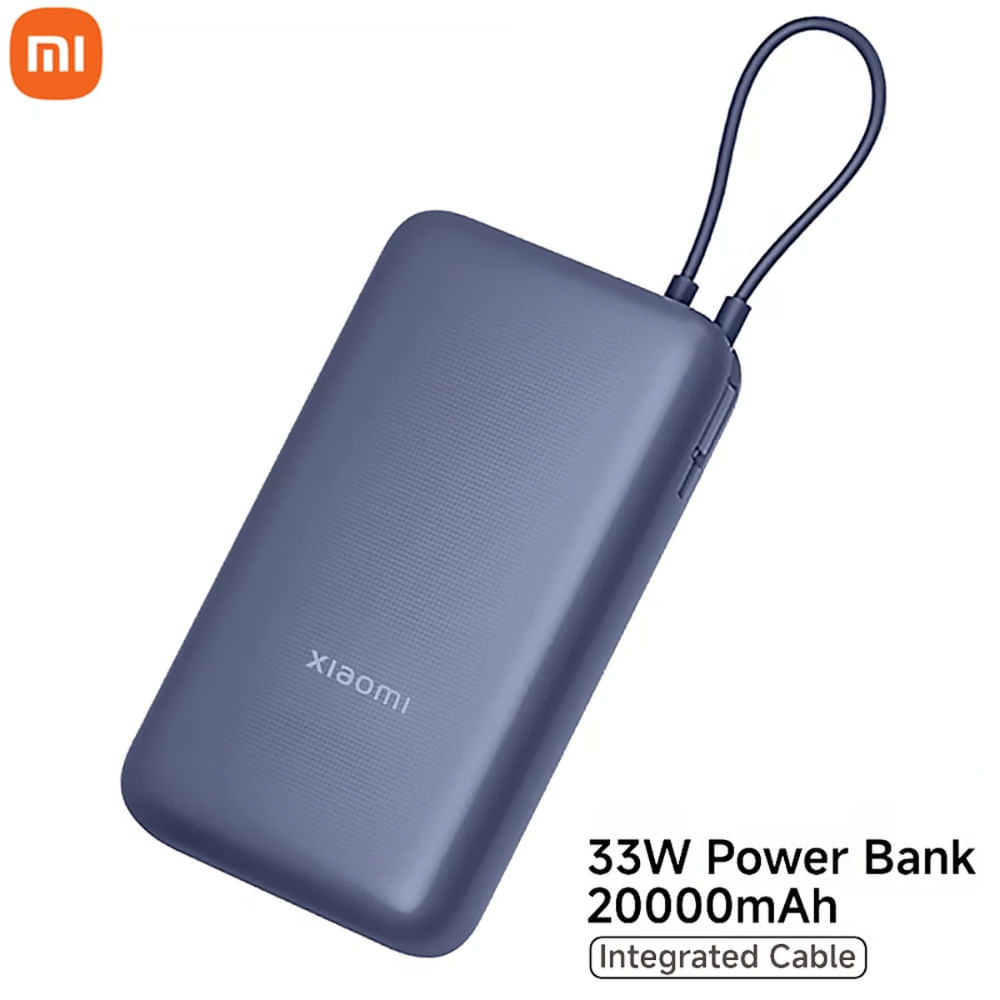
The Xiaomi 20,000mAh 33W power bank is Xiaomi doing what Xiaomi does best: solid hardware at a price point that makes competitors uncomfortable. The design is straightforward — a white slab with a row of LED indicators and a single button. It is not slim, it is not glamorous, and it does not have a fancy display. What it does have is a reassuringly dense, quality-feeling construction and Xiaomi's reputation for reliable battery cells.
Key Features
- 20,000mAh capacity
- 33W maximum wired output via USB-C
- USB-A output port for legacy devices
- 22.5W input for self-recharging
- Supports mainstream fast-charge protocols for Android and iPhone
Real-World Performance
At 33W output, this is not a laptop charger — most modern laptops want at least 45W to charge at a useful rate. For smartphones and earbuds, though, it delivers honest, consistent speeds. An Android phone charged from flat to full in roughly 90 minutes, which is respectable. Heat was the best of any unit tested here: 33W is moderate enough that thermal management is a non-issue. The LED indicators (four dots) are less informative than a percentage display, but they get the job done for a quick glance check.
Value
The Xiaomi is the budget pick, and it earns that label honestly. If your needs are: charge my phone while I travel, and I do not want to spend much — this is a sensible, reliable choice. Do not expect laptop speeds; do expect it to work without drama for years.
Pros
- Genuinely affordable without feeling cheap
- Reliable battery cells with a solid track record
- Runs cool — no thermal concerns at moderate outputs
- 20,000mAh gives roughly four smartphone charges
Cons
- 33W output is smartphone-only territory — not suitable for laptops
- LED dots rather than percentage display
- 22.5W self-recharge input is slow — plan on overnight recharging
Who should buy it: Budget-conscious buyers who need a reliable phone top-up solution and do not need laptop compatibility.
Heat Management: What Our Testing Found
Heat is the least-discussed but most practically important variable in power bank performance. Here is what we found across the field:
- Anker Prime: Warm at 200W+ combined load, never uncomfortable. Best-in-class thermal engineering for this output level.
- Ugreen Nexode: Good sustained mid-load performance; stayed manageable through hour-long multi-device sessions.
- Baseus Blade 2: Warm to hot at sustained 100W; thermal throttling is a real factor — expect real-world speeds 10–20% below spec in prolonged use.
- Belkin MagSafe: Mild warmth typical of wireless charging; no concerns.
- Xiaomi 33W: Runs coolest of all — 33W is low enough that heat is essentially a non-issue.
The practical lesson: if you are buying for laptop charging, heat management matters. The Anker Prime justifies part of its premium on thermal engineering alone.
Airport Rules: What You Need to Know
Most aviation authorities limit carry-on power banks to 100Wh (watt-hours) per device, with some permitting up to 160Wh with airline approval. Always check current regulations with your specific airline before flying — rules can change. As a rough guide: 27,650mAh at ~3.7V = ~102Wh, which the Anker Prime just exceeds the standard 100Wh threshold, so verify before boarding. The Baseus Blade 2 (20,000mAh ≈ 74Wh) and Xiaomi (20,000mAh ≈ 74Wh) sit comfortably under 100Wh. Always check the product's actual Wh rating on the label — the definitive figure for airline compliance.
Alternatives to Consider
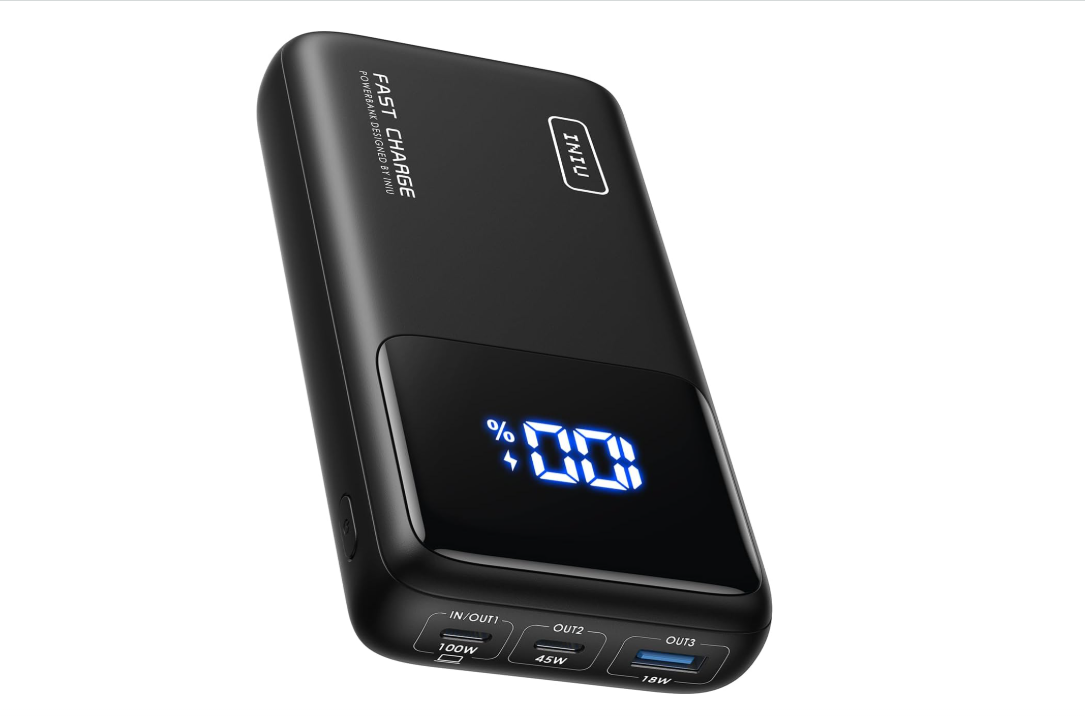
If the Anker Prime is too expensive: Iniu BI-B61 22.5W 25,000mAh
The Iniu BI-B61 is an under-the-radar budget-to-mid option that offers 25,000mAh at a notably lower price than most competitors at that capacity. Output tops out at 22.5W, so it is strictly a smartphone and tablet charger. But the build quality overachieves for the price, it has a percentage-based LED display, and it consistently receives strong real-world reviews for reliability and cell longevity. If budget is the primary constraint and you do not need laptop speeds, it is a genuine alternative worth considering.
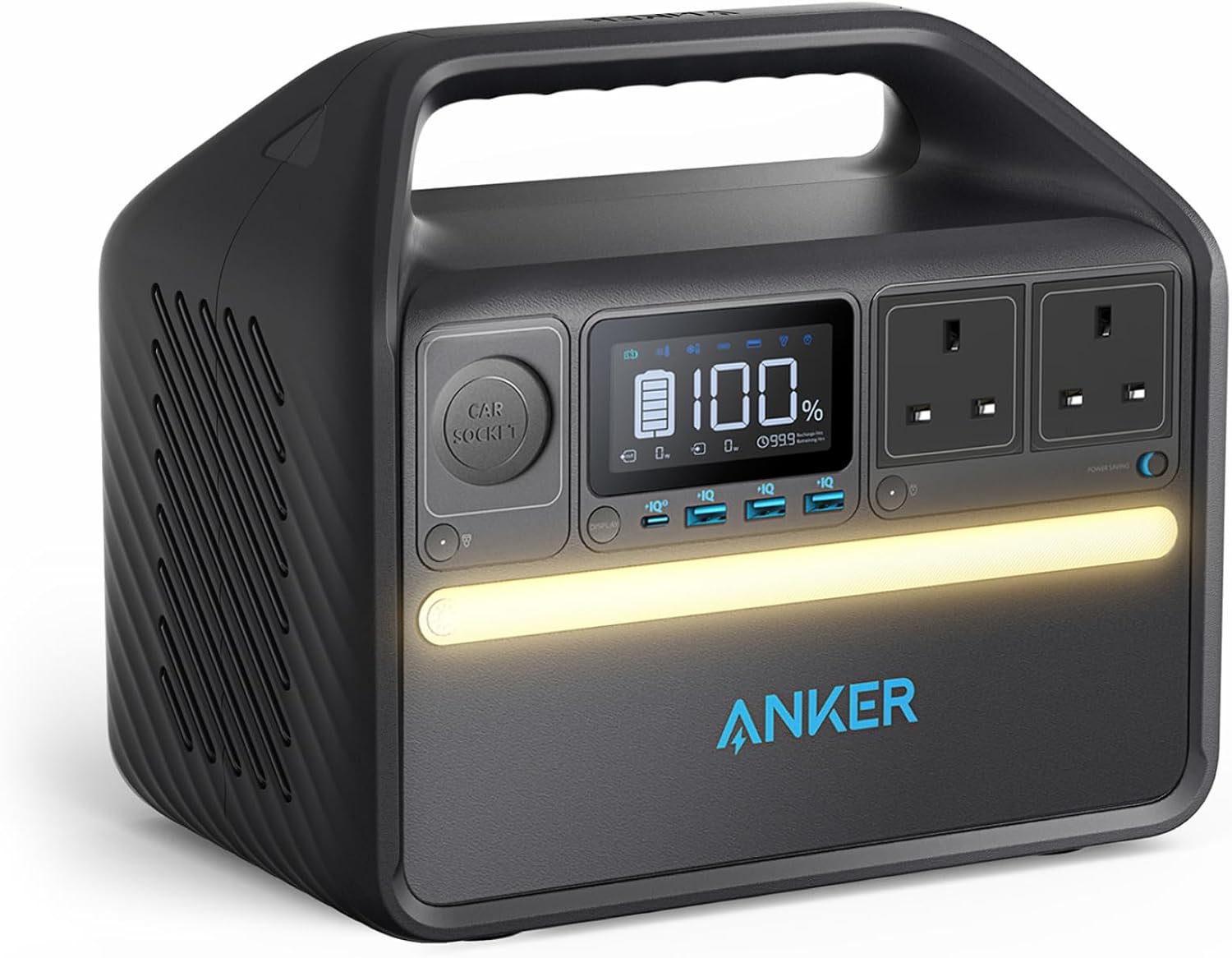
If you want AC outlet charging in your power bank: Anker PowerHouse 737 or similar portable power station
For those who genuinely need to run mains-voltage devices — a CPAP machine, a laptop that refuses USB-C, camera battery chargers — a compact portable power station with an AC inverter is a different category entirely. These are larger and heavier than traditional power banks, but if your use case requires it, no power bank will substitute. Search for "portable power station with AC outlet" and confirm current stock and specs before buying.
Our Verdict
The Anker Prime 27,650mAh is the most complete portable charger we tested in 2026 — fast enough for laptops, smart enough to manage heat under load, and refined enough in build to justify the premium for anyone who depends on it daily. If the price is a stretch, the Ugreen Nexode 25,000mAh offers the most well-rounded experience at a more accessible price. Commuters who prize slim form factors should look at the Baseus Blade 2 with eyes open about its thermal throttling. iPhone users on the go will find the Belkin BoostCharge Pro MagSafe hits a different kind of quality-of-life sweet spot. And if you just want a reliable, affordable phone charger with no frills, the Xiaomi 33W remains a dependable choice.
Whatever your pick, buy from a reputable brand with verifiable certifications (CE, FCC, or equivalent for your region), and always confirm current specs — wattages and capacities can be updated between production runs.