As an Amazon Associate I earn from qualifying purchases. This page contains affiliate links, and I may earn a commission at no extra cost to you.
The Shift in Mid-Range Robot Vacuums
Spending over a thousand pounds on a robot vacuum used to be the only way to get true hands-off floor cleaning. If you wanted a machine that didn't just drag a damp microfibre cloth across your floor, but actually scrubbed with rotating pads, washed its own mops with fresh water, dried them with warm air, and emptied its own dustbin, you had to pay flagship money. That changed dramatically when Roborock introduced the Q Revo platform.
Instead of recycling old flat-pad mopping tech into lower price brackets, the Q Revo line introduced dual-spinning mop pads combined with full-featured dock automation at a mid-range price tag. It quickly became the benchmark against which every rival under £900 is measured. However, with subsequent line extensions like the higher-spec S5V variant and tough competition from rival brands, deciding which automated floor cleaner fits your home requires a close look at specs, navigation performance, and long-term maintenance needs.
Understanding the Roborock Q Revo Platform
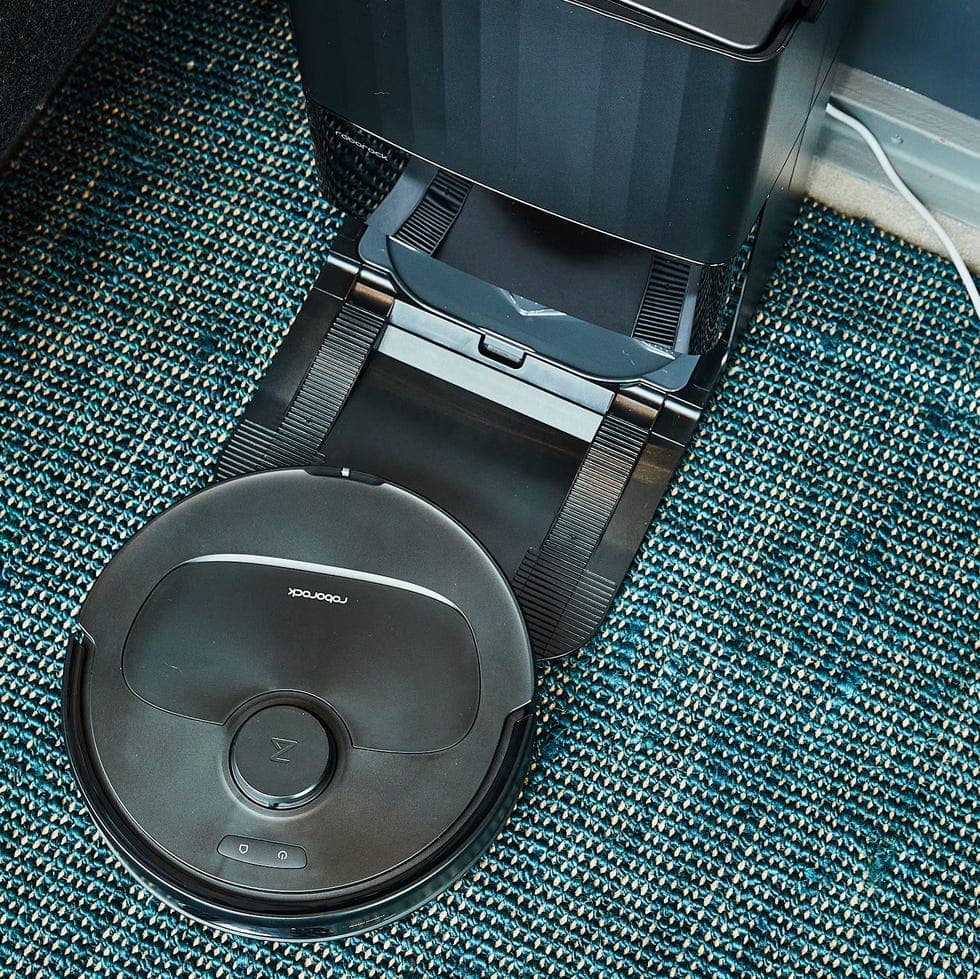
The core philosophy of the Q Revo ecosystem is straightforward: eliminate daily human intervention without charging top-tier flagships prices. Where older mid-range robots forced owners to remove damp pads after every run to prevent mildew smells, the Q Revo dock handles pad washing, warm-air drying, dustbin emptying, and clean water refilling automatically.
Hardware design across the series favours practical, durable plastics over glossy finishes that attract fingerprint smudges and scratches. The dock holds two large water tanks (typically around 4 to 5 litres each for clean and dirty water) alongside a sealed dust bag designed to store up to seven weeks of dry debris depending on pet shed levels. The robot itself uses LiDAR (Light Detection and Ranging) housed in a top turret for room mapping and navigation, supplemented by front-facing sensor arrays for obstacle detection.
Mopping Tech: Spinning Pads vs. Vibrating Flat Cloths
Historically, Roborock built its reputation on vibrating flat plates (VibraRise technology). While effective on fine dust, vibrating plates don't always lift sticky spills as efficiently as dual spinning mop heads that rotate at roughly 200 RPM while pressing downward against the floor. The Q Revo switched to twin circular microfiber pads. When the robot detects carpet via ultrasonic sensors, it automatically raises these pads—typically by 10mm to 12mm—preventing damp carpet edges while continuing to vacuum dry rugs.
Navigation and Obstacle Detection
LiDAR mapping remains the gold standard for creating precise 3D floor plans of your home within minutes. A single pass allows the Roborock app to divide rooms automatically, set virtual no-go zones, and establish cleaning sequences. Front-facing structured light sensors handle obstacle avoidance, identifying shoes, cables, and furniture legs on the fly so the robot can path around them rather than dragging them across the kitchen.
Top Picks & Best Alternatives Compared
| Product | Key Specs | Price Band | Verdict | Buy |
|---|---|---|---|---|
| Roborock Qrevo S5V | 12,000Pa suction, FlexiArm mop, dual tangle-free rollers | Mid-to-High | Best overall balance of power, edge cleaning, and automated maintenance. | View on Amazon |
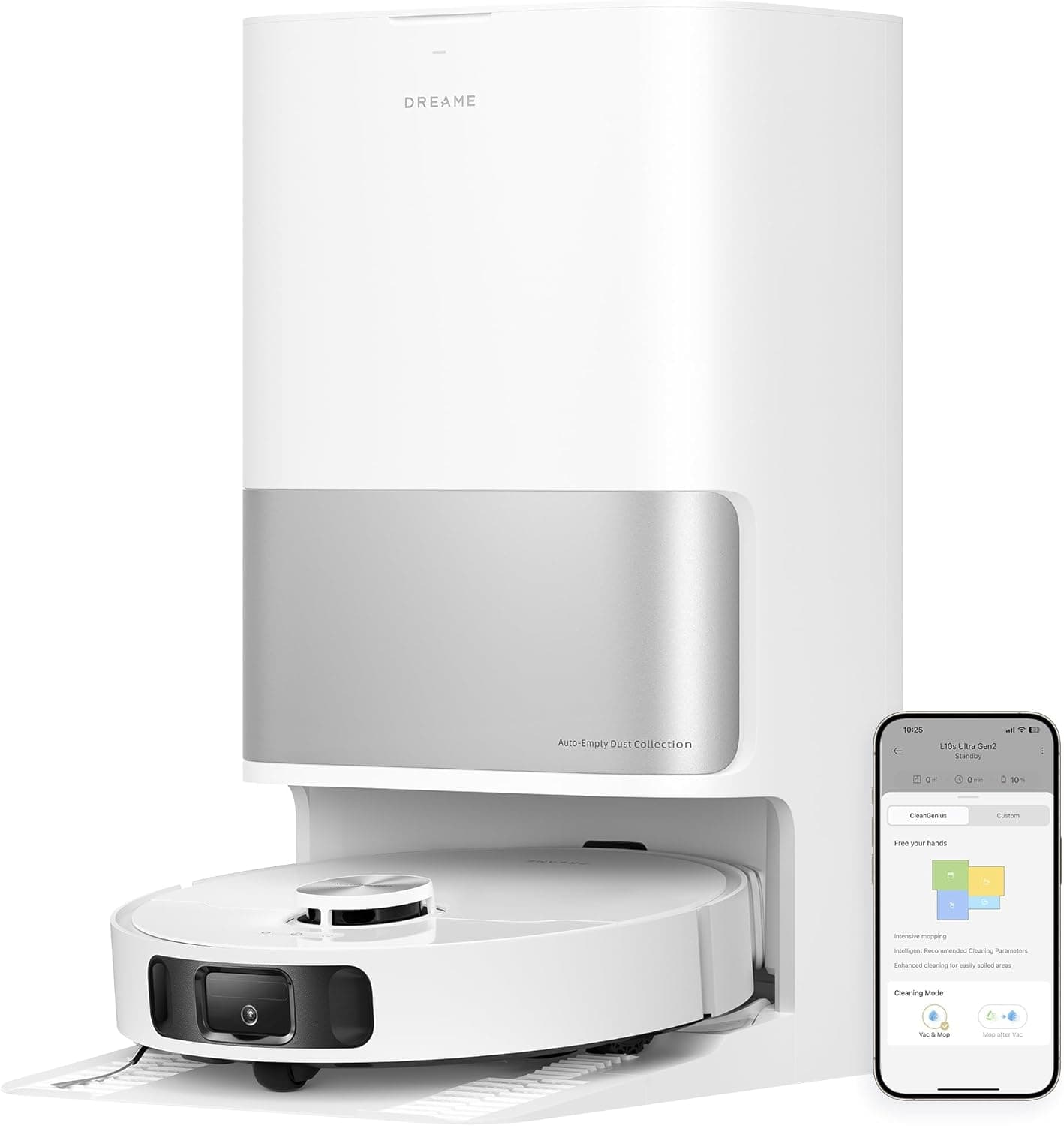
| Dreame L10s Ultra | 5,300Pa suction, RGB camera + 3D light, auto detergent dosing | Mid-Range | Terrific obstacle recognition and built-in liquid cleaner reservoir. | View on Amazon |
| Ecovacs Deebot T20 OMNI | 6,000Pa suction, 55°C hot water mop washing, 9mm lift | Mid-to-High | Ideal for homes with ground-in grease thanks to heated pad washing. | View on Amazon |
| Eufy Clean X9 Pro | 5,500Pa suction, 12mm mop lifting, twin spinning mops | Mid-Range | Great scrubbing force and mop lift height, though lacks self-emptying dust dock. | View on Amazon |
Detailed Breakdown of the Models
1. Top Choice: Roborock Qrevo S5V
The Roborock Qrevo S5V represents the evolution of the Q Revo architecture, addressing two historical complaints: corner mopping coverage and extreme suction power on heavy carpets. With a massive 12,000Pa rating, this model pulls deep-seated grit out of thick pile carpets far more effectively than standard 5,000Pa mid-range units.
Its standout feature is the FlexiArm edge mopping mechanism. When the robot detects a baseboard, wall, or furniture edge, the right-side spinning pad extends outward beyond the robot body chassis. This eliminates the un-morphed perimeter gap common to round robot cleaners. Furthermore, the dual zero-tangle roller system uses counter-rotating rubber blades to push long pet hair directly into the suction inlet rather than wrapping tightly around the brush core.
Pros:
- Class-leading 12,000Pa suction handles stubborn debris on heavy carpets effortlessly
- FlexiArm mechanics extend the mopping pad right against skirts and plinths
- Dual anti-tangle rubber rollers dramatically reduce hair wrap maintenance
- Full-featured dock empties dust, washes mops, and dries pads with warm air
Cons:
- Dock footprint is tall and demands clear vertical space for water tank refills
- Slightly higher investment than entry-level Q Revo revisions
2. Superior Camera Navigation: Dreame L10s Ultra
If your floor is constantly strewn with charging cables, pet toys, or stray socks, the Dreame L10s Ultra remains one of the most compelling alternatives in the mid-range sector. Unlike basic structured-light models, the L10s Ultra incorporates an RGB camera along with 3D structured light. This allows it to identify specific household objects by type, marking them directly onto your room map and giving them a wider berth.
The dock design is another area where Dreame shines: it includes automated cleaning solution dispensing. You slot a detergent cartridge directly into the dock console, and the machine precise-mixes liquid soap into the fresh water line automatically during pad washes. Combined with 5,300Pa of suction and dual rotating pads, it delivers a very refined cleaning experience across mixed flooring environments.
Pros:
- RGB camera provides outstanding visual obstacle detection for busy homes
- Integrated automatic detergent mixing container inside the dock
- Compact, sleek aluminum-accented dock design
- Automatic mop pad lifting when crossing carpets
Cons:
- Lower suction rating (5,300Pa) compared to newer 10,000Pa+ competitors
- RGB camera feature requires explicit privacy setup permissions in the app
3. Heated Pad Washing: Ecovacs Deebot T20 OMNI
Mopping floors with cold water works fine for light daily dust, but dried kitchen spills and cooking oils respond far better to heat. The Ecovacs Deebot T20 OMNI introduced 55°C hot water mop washing to the mid-range segment. By heating the water directly inside the dock during the pad cleaning cycle, it dissolves oily kitchen residue and stubborn grime out of the mop fibers much better than cold water agitation can match.
Performance is backed by 6,000Pa of suction and dual spinning mops that lift 9mm when rug edges are encountered. The Ecovacs YIKO voice assistant allows you to issue direct spoken commands to the robot ("OK YIKO, vacuum under the dining table") without needing an external Amazon Alexa or Google Home device connected, though the app experience can occasionally feel cluttered compared to Roborock's intuitive UI.
Pros:
- 55°C hot water mop washing removes tough dirt and oil from pads efficiently
- YIKO built-in voice control operates without needing third-party smart speakers
- Deep corner-cleaning modes rotate the chassis to swing mops into tight angles
- Solid 6,000Pa suction handles everyday dust on hard floors and rugs
Cons:
- App setup and routine customization can feel overly complex
- 9mm mop lift height may touch plush, high-pile carpet fibers
4. Dedicated Scrubbing Power: Eufy Clean X9 Pro
The Eufy Clean X9 Pro takes an interesting alternative approach to automated cleaning. Instead of trying to build a dock that handles both dust bag emptying and mop washing, Eufy focused heavily on superior mopping force and a giant 12mm auto-lifting mechanism. It exerts 1kg of downward pressure while spinning its dual pads, making it exceptionally good at scrubbing sticky spills off tile and sealed hardwood.
The main trade-off is the dock design. The Auto-Clean Station washes and warm-air dries the mop pads using separate clean and dirty water tanks, but it does not auto-empty the robot's onboard dustbin. You still have to manually dump the onboard dust box every few cleans. For homes that are primarily hard flooring with minimal shedding pets, the aggressive scrubbing and generous 12mm carpet clearance make it a strong contender.
Pros:
- 1kg downward scrubbing force delivers top-tier wet floor stain removal
- Generous 12mm mop pad lift clearance keeps medium-pile rugs dry
- 3D ToF (Time-of-Flight) sensor avoids small obstacles effectively
- Quiet operation during cleaning and pad-washing cycles
Cons:
- Dock washes mops but does not feature auto-emptying for the dustbin
- 5,500Pa suction is modest compared to the newest high-suction models
Buying Considerations: What Actually Matters?
When selecting a mid-range robot vacuum with a mop dock, marketing spec sheets can make choosing feel overwhelming. Focusing on four primary real-world performance factors will help narrow down the choice:
1. Carpet Clearance and Mop Lifting
If your home features thick rugs or medium-to-high pile wall-to-wall carpeting, mop lift height is critical. Standard mid-range robots elevate their pads between 7mm and 10mm. While this keeps thin doormats dry, plush carpets will brush against the bottom of damp mop pads as the robot passes over. Models with 10mm to 12mm lift—or those with intelligent auto-carpet detection that lets you designate no-mop zones—are essential for carpet-heavy households.
2. Maintenance Demands: Water Tanks vs. Dust Bags
Auto-empty dust stations use disposable dust bags that typically last 6 to 8 weeks before needing replacement. However, mop stations require regular water management. A 4-litre clean water tank lasts through roughly 3 to 4 full home cleans before needing a refill under normal settings, while dirty water tanks should be emptied and rinsed promptly to prevent odor buildup. If you travel frequently, look for dock designs that incorporate sealed dirty water seals and efficient drying cycles.
3. Edge and Corner Mopping Mechanics
Because circular spinning mop pads are recessed inside the perimeter of a round robot body, standard machines leave an uncleaned strip of 2 to 4 centimeters along baseboards and cabinet kickplates. Newer designs like the FlexiArm technology found on the Roborock Qrevo S5V overcome this by physically extending the right mop pad outward when wall edges are detected. If you have extensive bare hard floors, this feature drastically reduces manual touching-up.
4. Hair Wrap Prevention
Single bristle roller brushes are prone to long hair wrapping tightly around the central axle, requiring scissors to cut free every few weeks. Dual counter-rotating rubber rollers or specially angled comb teeth in the brush housing direct hair straight into the dust chute. Pet owners should prioritize machines featuring dual-rubber or anti-tangle brush architectures.
Verdict and Final Recommendation
The mid-range robot vacuum market has matured to the point where spending four figures on a flagship machine is unnecessary for the vast majority of homes. The original Roborock Q Revo formula established that you can get reliable LiDAR mapping, dual spinning mops, auto-emptying, and pad drying without compromise.
For overall performance, the standout choice today is the Roborock Qrevo S5V. Its massive 12,000Pa suction power, extendable edge-mopping arm, and anti-tangle dual rollers solve the few remaining weakness of early mid-range automated cleaners. If advanced obstacle recognition for loose cables and clutter is your top priority, the camera-guided Dreame L10s Ultra remains a fantastic alternative, while the Ecovacs Deebot T20 OMNI offers hot-water pad cleaning for oil-prone kitchen tiles.