As an Amazon Associate I earn from qualifying purchases. This page contains affiliate links, and I may earn a commission at no extra cost to you.
The Mid-Range Robot Vacuum Reality Check
Robot vacuums have evolved from random bumper cars into genuinely intelligent floorcare assistants, but marketing departments still love pushing specs that sound impressive on paper while ignoring real-world friction points. You hear endless chatter about peak suction figures in Pascals and complex LiDAR arrays, yet half of these devices still get choked on cables or dump fine dust straight back into your room when emptying.
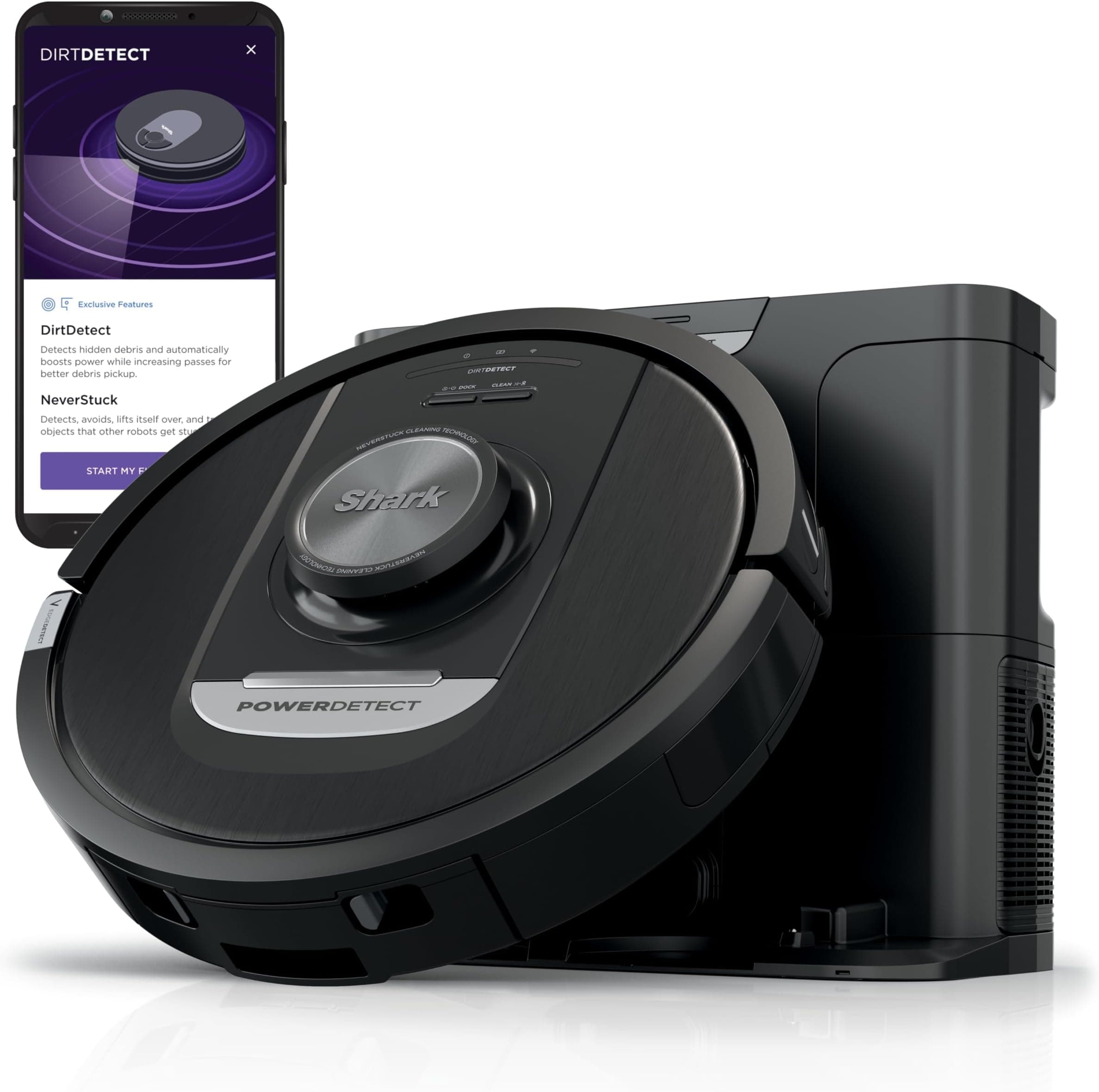
Shark entered the automated floorcare market with a very specific pitch: take the heavy-duty agitation technology from their corded uprights and pack it into a self-navigating, self-emptying robot. The Shark PowerDetect Self-Empty Robot Vacuum represents their latest push into genuinely automated floorcare, promising to automate suction changes, edge cleaning, and floor-type detection without forcing you to pay top-tier £1,000+ flagship pricing. But does the technology actually deliver a hassle-free experience across real UK living rooms, or are you better off with traditional stick vacuums or competitor mid-range robots?
Shark PowerDetect Self-Empty Robot Vacuum: Specs & Sensor Breakdown
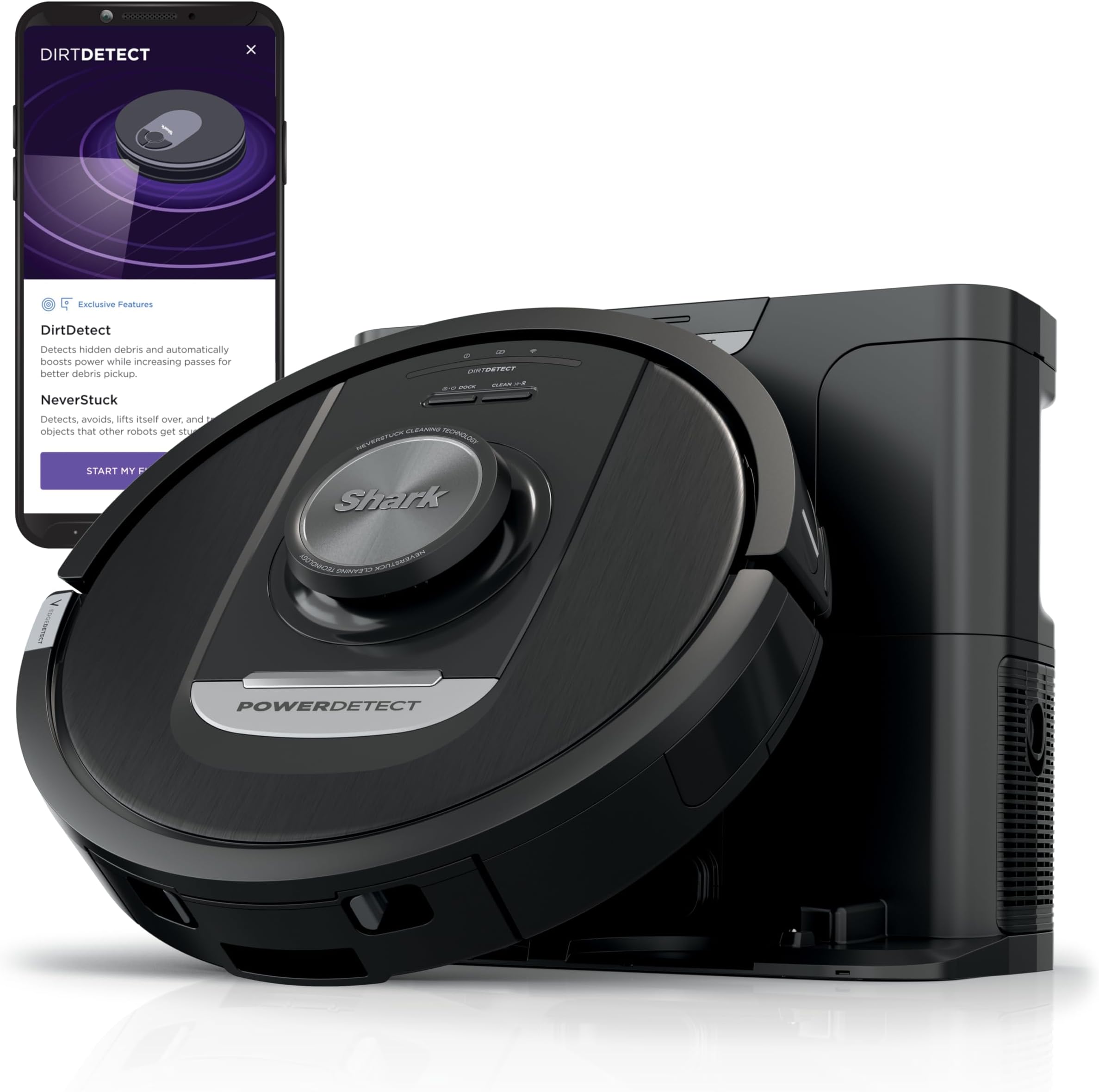
The core selling point of the PowerDetect series is Shark's four-part detection suite. Instead of running on a single fixed suction power setting, the vacuum continuously queries its environment to adjust motor power, fan speed, and brushroll engagement on the fly. Here is how those four technologies function in practice based on technical specs and verified owner reports:
- DirtDetect: Optical sensors identify heavy concentrations of debris or high-traffic grit, signaling the robot to boost suction and perform repeated back-and-forth passes over the targeted patch until the sensor clears.
- FloorDetect: Distinguishes hard flooring from carpets instantly. On rugs and carpets, it revs up suction to pull embedded pet hair from fibers; on hard floors, it throttles back motor output to preserve battery life and prevent scattering lighter debris.
- EdgeDetect: Uses side-facing sensors to spot walls, baseboards, and cabinet kick-plates. When an edge is detected, the robot directs targeted air blasts or adjusts its lateral brush speed to pull dust away from walls into the main suction path.
- StainDetect / Wet Mode (on combo variants): Spots dried spills on hard floors to increase pad pressure or water flow when using mopping accessories.
Underneath the hood, the Shark PowerDetect Self-Empty Robot Vacuum pairs this sensory array with a self-cleaning brushroll featuring flexible fins alongside soft bristles. This dual-action design is explicitly built to prevent hair wrap—a massive quality-of-life win if you share your home with long-haired family members or shedding pets. Rather than requiring you to sit down with a pair of scissors every fortnight to cut tangled strands out of the roller, the comb system strips hair off the roller and pulls it straight into the dustbin during operation.
The Self-Empty Base: Practical Convenience vs Footprint
One area where Shark genuinely sets itself apart from many European and Asian competitors is its docking station architecture. The included self-empty base features a bagless reservoir system capable of holding roughly 60 days of dirt and debris. Most competitor auto-empty bases force you into a subscription trap of buying proprietary paper filter bags. Shark uses a washable HEPA filter container inside the base station that you simply pop out, empty into your kitchen bin, and rinse periodically.
The trade-off? The dock is a bit taller and wider than minimalist charging pucks. You need a dedicated wall area with clear side clearance for the robot to dock successfully without obstruction. Furthermore, while the self-emptying suction cycle inside the base lasts only about 15 seconds, the motor operating during that transfer is unevocatively loud—think standard high-wattage upright vacuum noise levels. It is best scheduled to empty while you are out of the house or during daytime hours.
How It Compares: Specs & Feature Matrix
Choosing floorcare gear requires matching the tool to your home's layout, carpet depth, and maintenance tolerances. The table below compares the Shark PowerDetect robot against its closest cordless relative and a key mid-range robot rival.
| Product | Key Specs | Price Band | Verdict | Buy Link |
|---|---|---|---|---|
| Shark PowerDetect Self-Empty Robot Vacuum | 4-Sensor Power Detect, Bagless Auto-Empty Dock, Self-Cleaning Brushroll | Mid-Range (approx £400-£500) | Excellent automated balance for mixed hard floor and carpet layouts. | Check price on Amazon |
| Shark PowerDetect Clean & Empty Cordless Vacuum Cleaner | DuoClean Detect, Reverse Clean, 2L Bagless Auto-Empty Dock, Anti-Hair Wrap | Mid-Range (approx £350-£450) | Best for deep manual cleaning, staircases, and rapid spot pickups. | Check price on Amazon |
| eufy Clean X8 Pro Robot Vacuum | Twin-Turbine 2x 2000Pa Suction, Active Detangling Roller, LiDAR Mapping | Mid-Range (approx £350-£450) | Strong alternative for homes with complex floorplans needing precise mapping. | Check price on Amazon |
Alternatives to Consider
1. For Manual Power & Stairs: Shark PowerDetect Clean & Empty Cordless Vacuum Cleaner
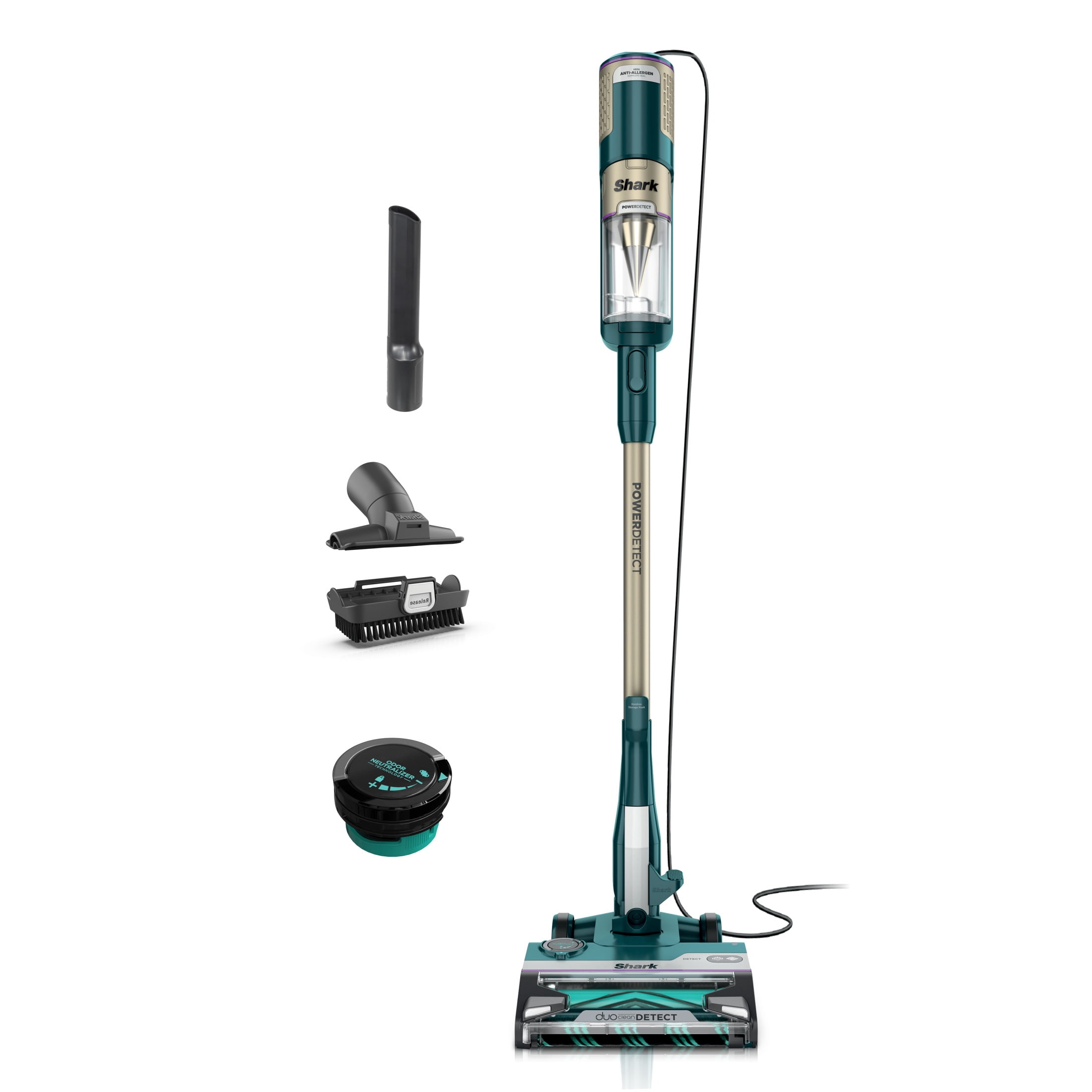
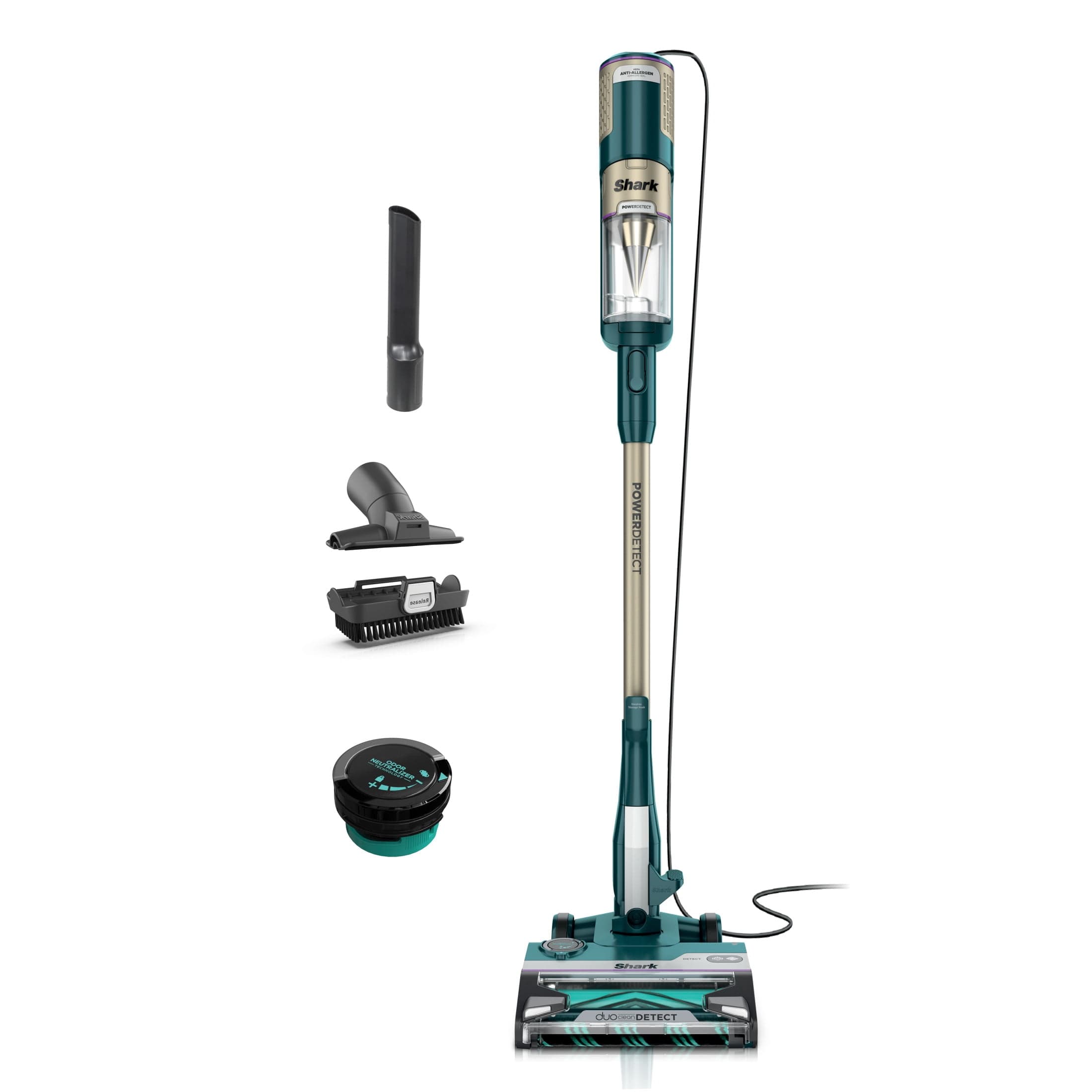
If your home features multiple levels, steep staircases, or tight gaps between dense furniture where a robotic disk simply cannot fit, automated cleaning might cause more frustration than convenience. In that case, the Shark PowerDetect Clean & Empty Cordless Vacuum Cleaner, DuoClean Detect | Reverse Clean, 2L Auto-Empty Base, Anti-Hair Wr... brings the exact same sensor intelligence into a versatile stick design.
This cordless model utilizes Shark's DuoClean Detect head, which incorporates Reverse Clean technology—meaning it maintains active brushroll friction and suction whether you push the head forward or pull it backward. That eliminates the common annoyance of traditional stick vacuums spitting larger crumbs across hardwood floors on the pull-back stroke. Plus, once you clip it back onto its floor-standing charging station, a 2-liter auto-empty base pulls dirt out of the hand-unit dust cup automatically. It gives you the hands-off dust management of a robot with the raw motor torque and agility of a premium cordless stick.
2. For Precision Mapping & Pet Hair: eufy Clean X8 Pro Robot Vacuum
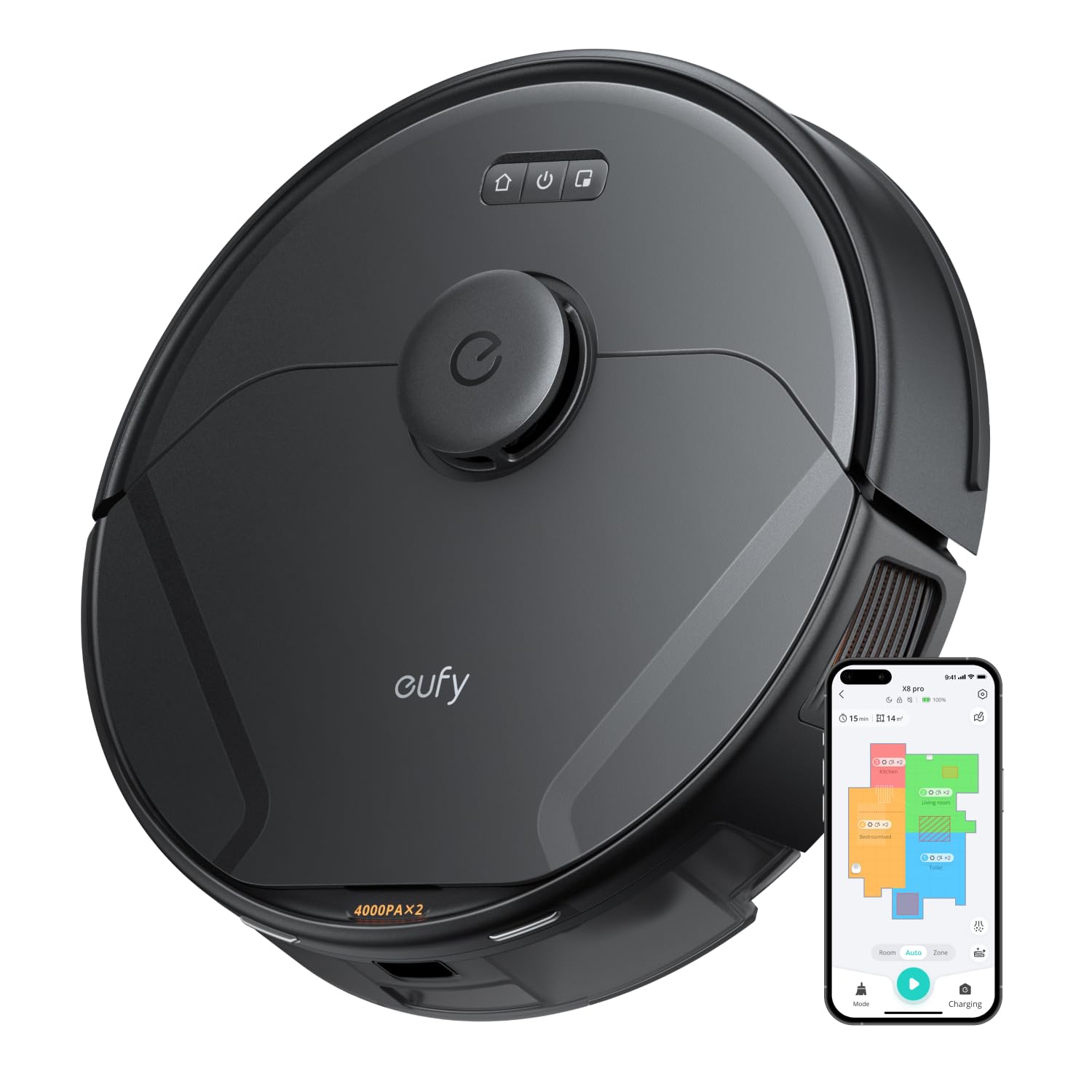
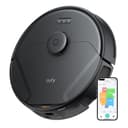
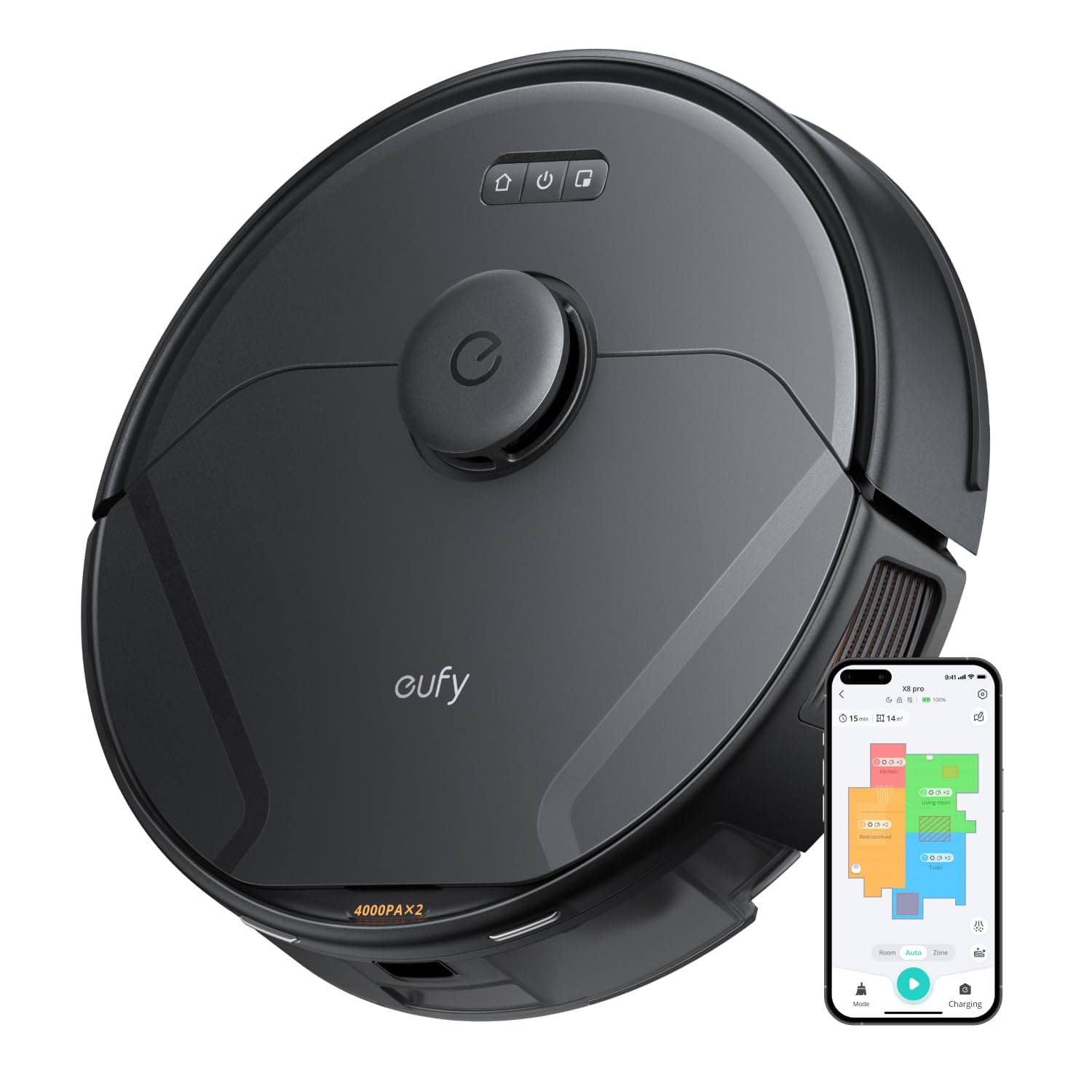
Buyers looking exclusively at the robot form factor should pay close attention to the eufy Clean X8 Pro Robot Vacuum. Where Shark heavily emphasizes multi-sensor dirt identification, eufy focuses on raw dual-engine airflow and precise laser-guided navigation.
The X8 Pro uses a Twin-Turbine system generating double the directed airflow of standard single-motor budget robots, making it an absolute monster for pulling fine cat and dog dander out of thick pile carpets. Additionally, eufy's active hair-detangling mechanism uses an internal mechanical comb that actively rotates backward to strip hair off the roller brush into the intake path after every cleaning cycle. If your living space is a maze of chair legs, pet beds, and side tables, eufy's laser navigation often creates cleaner, more precise floorplan maps on its first pass compared to vision- or bumper-guided systems.
Real-World Buying Considerations: What Spec Sheets Don't Tell You
Before pulling the trigger on any automated floorcare system around the £400 mark, evaluate these key factors in your home:
1. Furniture Clearance
The Shark PowerDetect Self-Empty Robot Vacuum houses its sensor suite within a raised top housing. While this allows it to read room layouts effectively, measure the gap beneath your sofa, TV unit, and low-slung armchairs. You generally need at least 10cm of vertical clearance for the robot to slide underneath without wedging itself tightly against the chassis.
2. Door Thresholds & Rug Fringe
Mid-range robot vacuums typically handle standard floor transitions (like moving from wood to a low-pile area rug) with ease. However, if your home features raised wooden door saddles or thick transition strips exceeding 18mm to 20mm in height, the robot may treat them as wall obstacles and turn around. Similarly, long, loose rug tassels remain the natural enemy of all rotating brushrolls—if you have deep oriental rugs with loose fringe, you will need to set up app-based no-go zones.
3. App Setup & Wi-Fi Bandwidth
Shark's companion smartphone app handles schedule programming, room labeling, no-go zone drawing, and suction preference adjustments. Note that like almost all smart home floorcare equipment, initial setup requires connecting to a 2.4GHz Wi-Fi network band. If your home router merges 2.4GHz and 5GHz signals into a single unified network name, you may need to temporarily pause the 5GHz band during initial device pairing.
Final Verdict: Which Floorcare Upgrade Suits You Best?
The Shark PowerDetect Self-Empty Robot Vacuum earns a strong recommendation for anyone who wants automated floor maintenance without paying exorbitant flagship prices or suffering through ongoing bag replacement costs. Its automatic floor and dirt detection systems genuinely reduce the need for user intervention, and its self-cleaning brushroll takes care of the single most annoying maintenance chore in pet-owning households.
If you live in a multi-story house or prefer manual control for instant spot cleans on upholstery and stairs, opt for the Shark PowerDetect Clean & Empty Cordless Vacuum Cleaner, DuoClean Detect | Reverse Clean, 2L Auto-Empty Base, Anti-Hair Wr... instead. Meanwhile, households with extremely complex floor plans and heavy pet hair accumulation should weigh the eufy Clean X8 Pro Robot Vacuum for its outstanding twin-turbine suction and swift mapping. Assess your flooring layout, set realistic expectations for base station noise, and enjoy taking a huge slice of daily sweeping off your to-do list.