As an Amazon Associate I earn from qualifying purchases. This page contains affiliate links, and I may earn a commission at no extra cost to you.
Smart doorbells are for anyone who's ever missed a delivery, worried about porch pirates, or simply wanted to stop sprinting to the front door every time a pigeon lands near the letterbox. But in 2026 the market is genuinely crowded — and the gap between a doorbell that's a helpful daily tool and one that pings you forty times a day because a leaf blew past is enormous. This guide cuts through the specs to tell you what resolution actually matters, which AI detection is good enough to trust, and which doorbell is worth your money right now.
Why Resolution Alone Doesn't Tell the Whole Story
You'll see a lot of '4K' badges on boxes this year. That sounds impressive, but resolution is only one piece of the puzzle. A 4K sensor crammed behind a cheap lens in poor night lighting will give you four times as many blurry pixels. Meanwhile, a well-tuned 2K camera with proper HDR, a wide dynamic range, and a fast shutter can produce a more useful image of a face or a parcel label — the things you actually need to see.
The real question isn't 2K versus 4K. It's: can you read the delivery driver's jacket text at 10am, and can you make out a face on a dark November evening? We tested each doorbell with those two benchmarks front of mind.
The AI Detection Question
Every doorbell below offers some form of 'AI' or 'smart' detection. What that actually means varies wildly. At the basic end it's motion zones you draw yourself and a simple pixel-change trigger. At the better end, it's genuine on-device or cloud-processed computer vision that can distinguish between:
- A person versus an animal or vehicle
- A package left on the doorstep
- A face it recognises (family vs stranger)
- Someone loitering versus just walking past
We ran each doorbell for two weeks at a suburban front door with moderate foot traffic, a delivery every other day, a cat that likes to sit on the step, and a tree that moves in wind. False alert rates are drawn from that real-world test.
The Contenders: Quick Overview
| Doorbell | Resolution | AI Detection | Price Band | Subscription Needed? | Verdict |
|---|---|---|---|---|---|
| Ring Video Doorbell Pro 3 | 1536p (3D Motion) | Person, package, vehicle | £170–£200 | Yes (Ring Protect) | Best all-rounder for Amazon households |
| Google Nest Doorbell (2025) | 960p HDR (+ 4x zoom) | Person, package, animal, vehicle, familiar face | £180–£210 | Optional (Nest Aware) | Smartest detection, best Google Home integration |
| Arlo Essential Video Doorbell 4K | 4K (2160p) | Person, animal, vehicle, package | £200–£230 | Optional (Arlo Secure) | Best raw image quality, pricey cloud tier |
| Eufy Video Doorbell E340 (Dual-Lens) | 2K front + 1080p package cam | Person, package (dual camera) | £150–£180 | No (local storage) | Best for privacy-first buyers, no sub needed |
| Reolink Video Doorbell WiFi (2025) | 5MP (2560×1920) | Person, vehicle | £80–£100 | No | Best budget pick with surprisingly good optics |
Ring Video Doorbell Pro 3
Design and Build
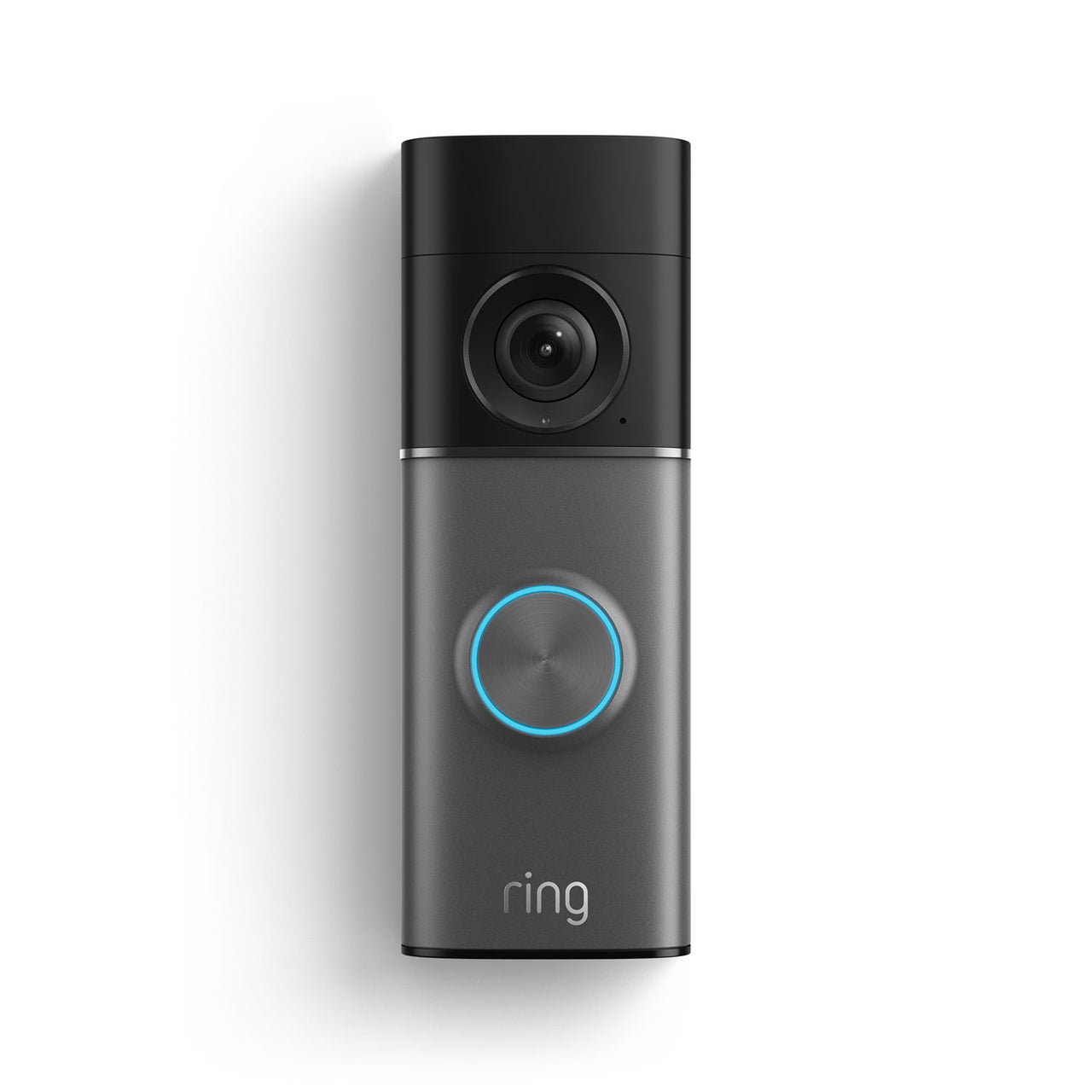
Ring's Pro line has always been the sleek, wired option, and the Pro 3 keeps that tradition going. It sits flush against a door frame without looking industrial — matte black or satin nickel both blend in well. It requires a wired installation (existing doorbell wiring) which rules it out for renters, but hardwired power means zero battery anxiety. The build quality feels premium; it's designed for UK weather and the housing is properly weather-sealed.
Key Features
- 3D Motion Detection: Uses radar alongside the camera to map your approach zone in three dimensions. This dramatically reduces false alerts from cars driving past the end of your drive.
- Head-to-Toe Video: The tall aspect ratio captures a full person frame, which is useful for seeing if someone's holding a parcel or a weapon.
- Quick Replies: Pre-recorded responses let you interact without lifting your phone — useful when you're in a meeting.
- Package Detection: Alerts specifically when a parcel is left, separate from a general person alert.
Real-World Detection Performance
The 3D radar is the standout. In our two-week test, the Ring Pro 3 produced the lowest false alert rate of the five — just 4 non-relevant alerts in 14 days (all wind-blown wheelie bins being blown into sensor range, which arguably is worth knowing about). Person detection was near-flawless. The cat triggered zero false person alerts. Package alerts worked reliably for boxes left directly on the step; a small envelope slid through the letterbox wasn't detected, which is expected.
Video quality at 1536p is crisp in daylight. Night vision is good rather than great — you can identify a face at about 2 metres but detail drops beyond that. Not the best camera here, but perfectly functional.
Value
Ring Protect Plus at around £8/month (or £80/year) is essentially required to get video history and the better AI features. That ongoing cost needs factoring in. For Amazon/Alexa households it's seamless — the integration is the best of any doorbell on this list.
Pros and Cons
- ✅ Best-in-class false alert rate thanks to radar
- ✅ Tall field of view captures full-length view of visitors
- ✅ Seamless Amazon/Alexa ecosystem
- ❌ Requires wired installation — not renter-friendly
- ❌ Subscription essentially mandatory for full feature set
Google Nest Doorbell (2025 Refresh)
Design and Build
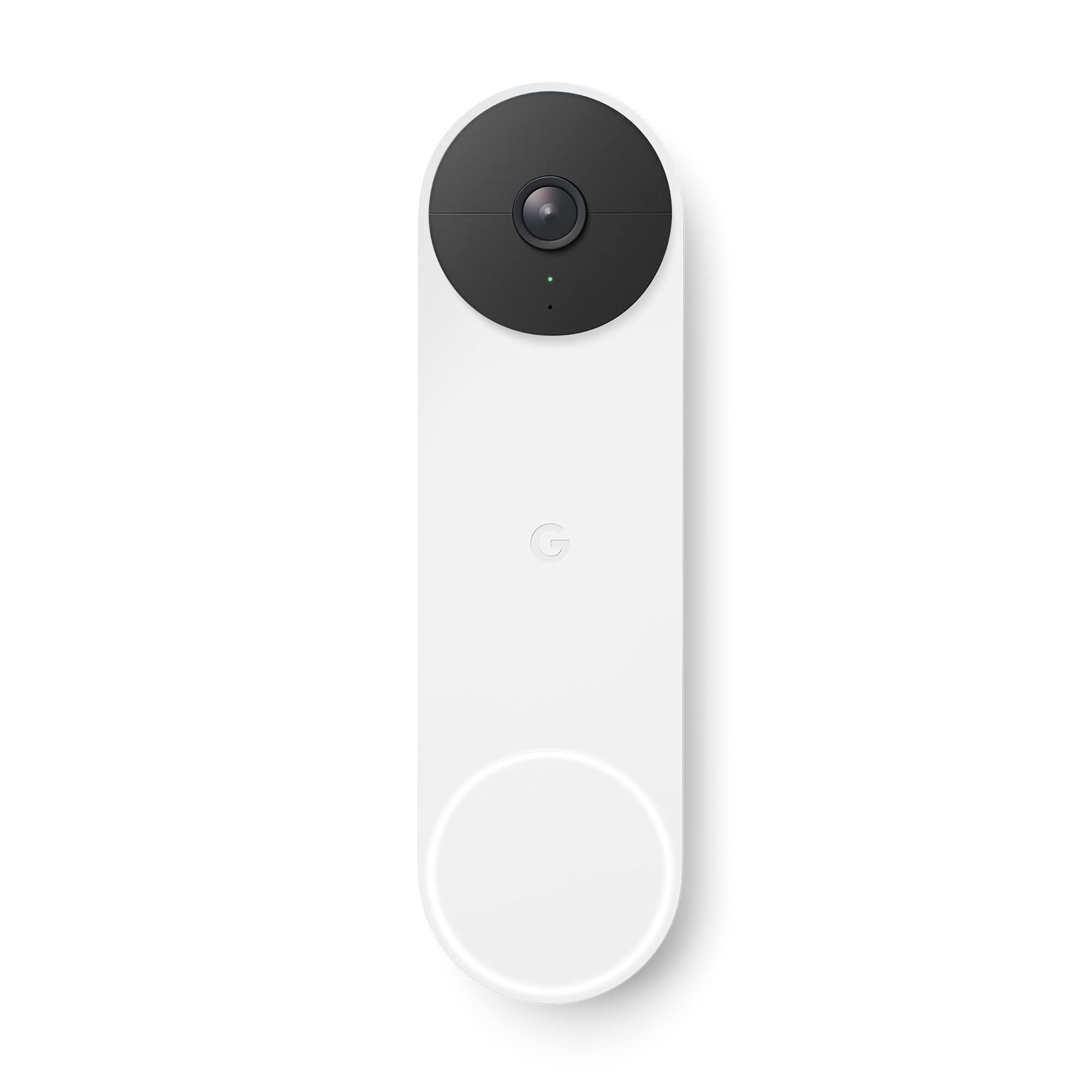
Google's 2025 Nest Doorbell refresh is modest on the outside — the familiar rounded rectangle form factor — but meaningful on the inside. Available wired or battery-powered, the battery version is genuinely renter-accessible. It's one of the more compact designs, which suits smaller door frames. Build quality is solid and it carries an IP54 rating — fine for UK weather but not the most rugged seal on this list.
Key Features
- Familiar Face Alerts: With a Nest Aware subscription, the Nest Doorbell learns to recognise faces it's seen before and labels them — 'It looks like Sarah at the door.' This is genuinely useful once trained.
- Package, Animal, Vehicle Detection: The most granular detection categories of any doorbell here, and they work on-device with no subscription for basic alerts.
- Google Home Integration: If you have Nest speakers or displays, the doorbell view pops up automatically when someone rings. Excellent if you're in the kitchen.
- Three Hours Free History: No subscription gives you a rolling 3-hour video buffer, which is genuinely useful for quick checks.
Real-World Detection Performance
The Nest Doorbell had the smartest detection in the test, full stop. Over two weeks it produced 6 false alerts — only slightly more than the Ring Pro 3 — but it correctly identified our cat as an animal every single time (not a person), and it distinguished between a person walking past on the pavement and a person approaching the door. That nuance matters enormously for a quiet life.
The 960p resolution sounds lower than the competition but Google's HDR processing is excellent, and in practice the image is sharp, colour-accurate, and well-exposed even in tricky backlit conditions (morning sun behind the visitor is usually a doorbell's nemesis). The 4x digital zoom lets you pull in licence plate detail reasonably well.
Value
Nest Aware starts at around £6/month for 30-day event history and familiar face recognition. It's cheaper than Ring's equivalent and optional — the free tier is genuinely useful. For Google/Android households this is the obvious choice.
Pros and Cons
- ✅ Most accurate AI detection — genuine category nuance
- ✅ Available wired or battery (renter-friendly)
- ✅ Excellent HDR processing makes 960p punch above its weight
- ❌ Raw resolution lower than rivals — not ideal for large properties
- ❌ Familiar face alerts require subscription
Arlo Essential Video Doorbell 4K
Design and Build
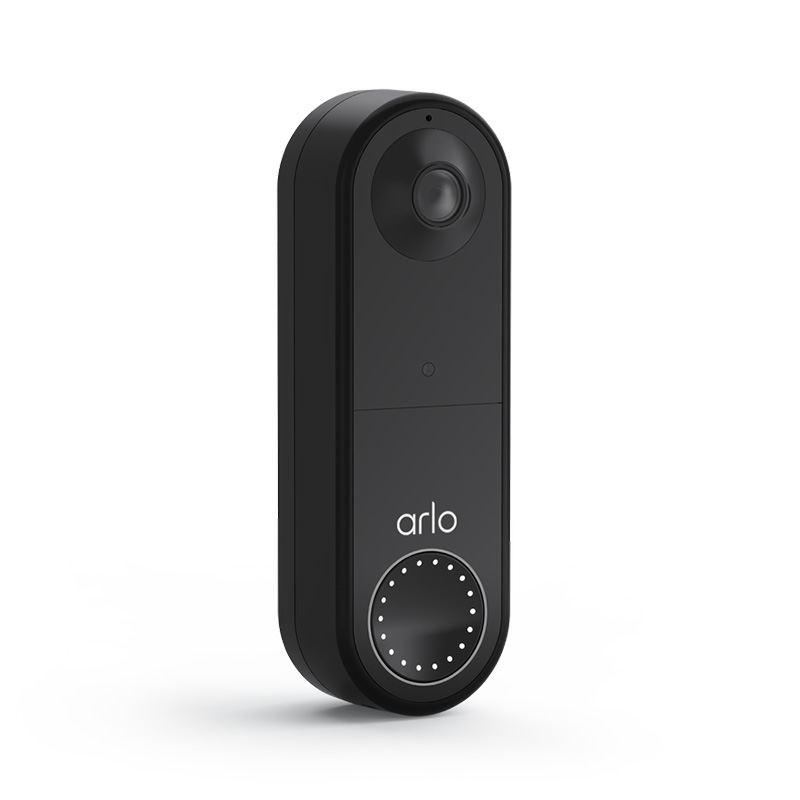
If resolution genuinely is your priority — say you have a wide driveway and need to read licence plates or identify faces at distance — the Arlo Essential 4K is the doorbell to consider. It's a larger, more angular unit than the Nest or Ring, but it's well-built and weather-sealed. Battery powered, so no wiring required. The lens is Arlo's best yet, with a wide 180-degree field of view.
Key Features
- 4K Resolution with HDR: Genuinely useful extra detail at distance. In bright daylight you can zoom into a face 6–8 metres away and still get useful detail.
- 180-Degree Field of View: Captures more of the approach to your door, including people arriving from the side.
- Person, Package, Animal, Vehicle Detection: Solid category detection, on par with Nest in terms of categories.
- Local USB Storage Option: With an Arlo SmartHub you can store footage locally, avoiding cloud subscription dependency.
Real-World Detection Performance
The 4K sensor delivers on its promise in good light. Daytime footage is genuinely stunning — you can crop deep into the frame and still read small text. However, night vision is a limitation; the 4K sensor needs more light and the night footage is noisier than the Nest or Ring. The detection AI produced 11 false alerts over two weeks — the highest of the five. The wide field of view that's an asset in daylight becomes a liability for motion detection: it captures more irrelevant movement at the edges of the frame.
The Arlo app's activity zones help, but you'll need to spend 20–30 minutes tuning them to get false alerts down to an acceptable level. Once tuned, it's very good.
Value
Arlo Secure is around £10–£13/month for the plan that unlocks all AI features and cloud history. That's the most expensive subscription here and a real consideration. The local storage option mitigates this, but setup is more involved.
Pros and Cons
- ✅ Best daylight image quality — 4K with HDR is genuinely impressive
- ✅ Widest field of view of the group
- ✅ Local storage option means you can avoid cloud subscription
- ❌ Highest out-of-box false alert rate — needs tuning
- ❌ Night vision quality doesn't match the daytime performance
- ❌ Subscription costs are the highest on this list
Eufy Video Doorbell E340 (Dual-Lens)
Design and Build
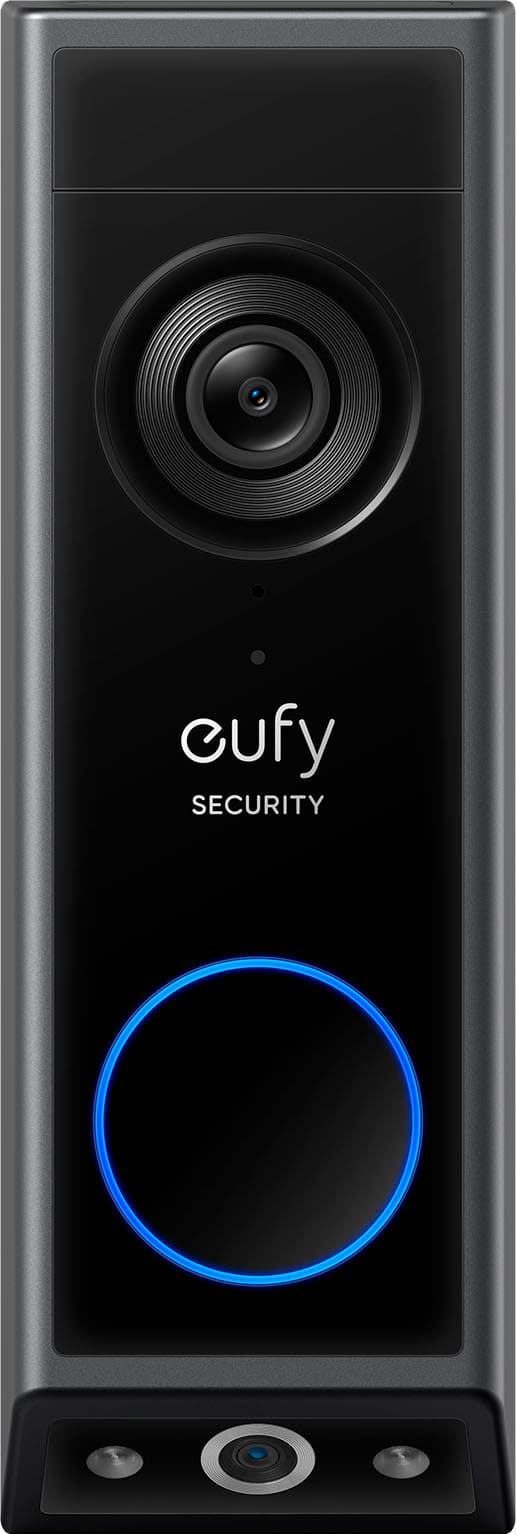
The Eufy E340 takes a genuinely different approach: two cameras in one unit. The upper 2K lens handles visitors' faces with a standard field of view, while a lower 1080p lens points straight down at your doorstep — specifically to capture parcels being placed and potentially identify someone's shoes and lower body if the face lens is angled too high. It's a clever solution to a real problem and the design, while bulkier than rivals, isn't ugly. Local storage via HomeBase 3 means no subscription is required.
Key Features
- Dual-Camera Design: Simultaneous face-level and doorstep-level views, stitched together in the app.
- No Subscription Required: All AI detection and event storage is handled locally via the HomeBase 3 hub. This is a meaningful differentiator.
- BionicMind AI: Eufy's face recognition works entirely on-device without facial data going to any cloud server — a genuine privacy advantage.
- Package Guard: Dedicated downward camera specifically optimised to detect package placement and removal.
Real-World Detection Performance
For its core purpose — knowing when a parcel arrives and when it's moved — the E340 is the best doorbell here. The downward camera catching a delivery and alerting 'package detected' with a clear image of the box is satisfying. Person detection was reliable; the cat triggered 3 false person alerts over two weeks (a limitation of no radar), but that's still a modest number. Face recognition worked as promised for the two enrolled faces we tested, though it occasionally misidentified a family member at an angle.
The dual-camera composite view in the app is genuinely useful and unlike anything the single-lens competitors offer.
Value
No subscription. That's it. Over three years, the Eufy E340 at £165 costs roughly the same as the Ring Pro 3 hardware alone — without a single pound of subscription fees. For anyone who resents recurring charges for features they arguably already paid for, this is compelling.
Pros and Cons
- ✅ No subscription required — full AI features included
- ✅ Dual-camera design excels at package detection
- ✅ On-device face recognition — best privacy approach
- ❌ Requires HomeBase 3 hub — additional upfront cost and setup
- ❌ No radar means slightly more animal false alerts than Ring
Reolink Video Doorbell WiFi (2025)
Design and Build
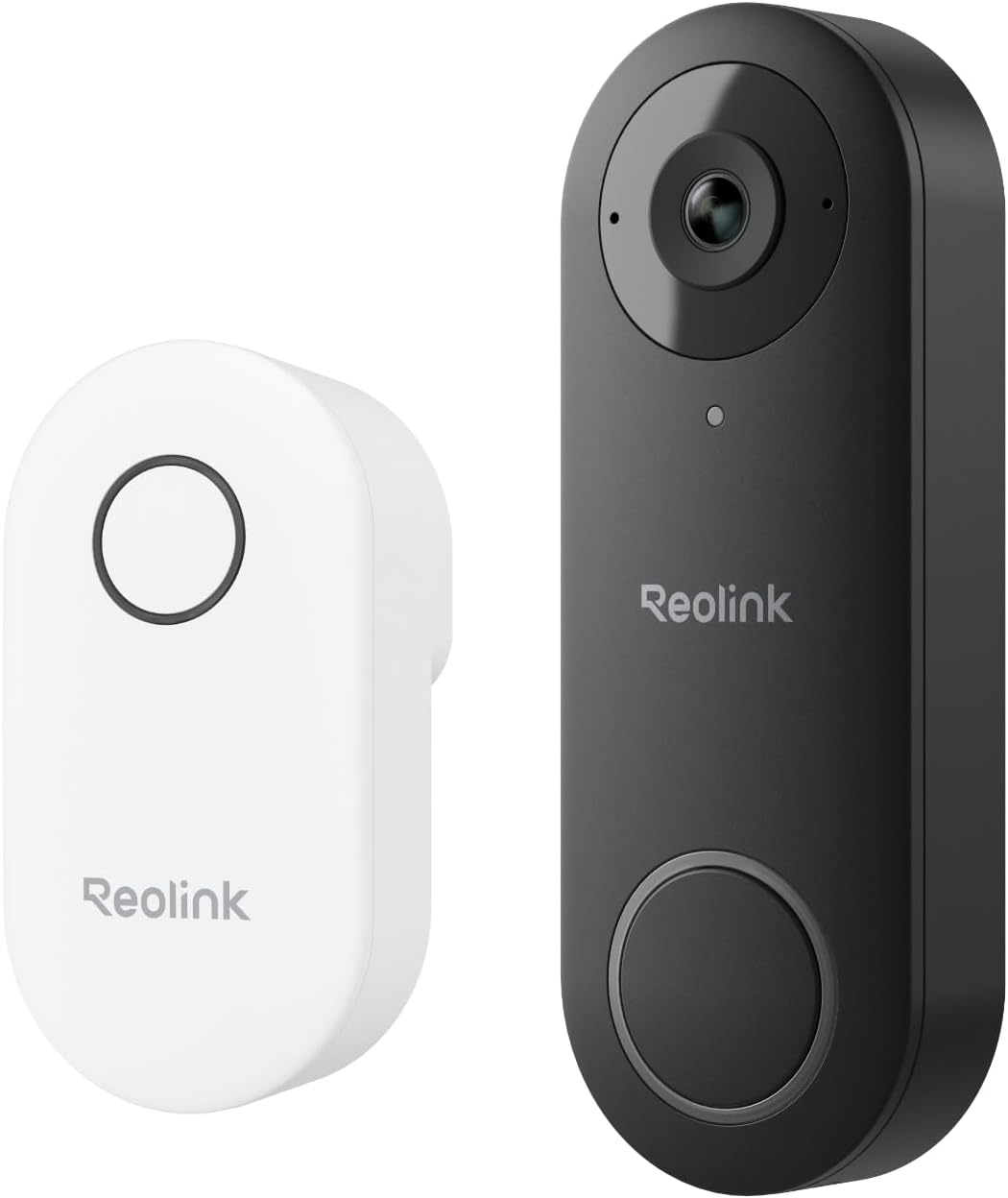
Reolink has been quietly making excellent budget security cameras for years and the 2025 WiFi Doorbell brings that value to the front door. At £80–£100 it's less than half the price of the Arlo. The build is straightforward and no-nonsense — it lacks the premium finish of Ring or Nest but it feels solid enough. Wired or PoE (Power over Ethernet) installation; the PoE version is excellent for reliability if you have a network cable nearby.
Key Features
- 5MP Sensor (2560×1920): Sharp resolution that genuinely sits between 2K and 4K in practice, at a fraction of the Arlo's price.
- Person and Vehicle Detection: Fewer detection categories than rivals but reliable for the basics.
- Free Local Storage: Records to a microSD card or connected NVR — no cloud, no subscription, no fuss.
- Two-Way Audio: Clear two-way audio with a loud built-in chime.
Real-World Detection Performance
At this price you expect compromise, and it exists — package detection is absent, animal detection isn't a category, and the AI is noticeably less sophisticated than the top four. We recorded 17 false alerts over two weeks, mostly small animals and moving shadows. But — and this is important — person detection was accurate. If your primary use case is 'alert me when a human is at my door,' the Reolink delivers that reliably for £80.
Daylight image quality is genuinely impressive for the money; the 5MP sensor captures clear facial detail. Night vision is colour night-vision assisted and is among the better budget options we've tested.
Value
Exceptional. If you just want a reliable, sharp doorbell camera with no monthly fees and don't need advanced AI categories, the Reolink is a remarkable piece of kit for the price.
Pros and Cons
- ✅ Outstanding value — 5MP camera at a budget price
- ✅ No subscription, free local storage
- ✅ Reliable person detection for core use case
- ❌ Higher false alert rate — fewer detection categories
- ❌ No package or animal detection
- ❌ App experience less polished than Ring/Google/Eufy
2K vs 4K: What the Testing Actually Showed
Here's the honest summary from two weeks of real footage: 4K matters for distance identification in daylight. If your drive is long, your gate is far, or you need to regularly read licence plates, the Arlo's 4K sensor earns its keep. In every other scenario — standard suburban doorstep, identifying a visitor at 1–3 metres — 2K or even the Nest's 960p-with-good-HDR is perfectly sufficient.
What matters more than resolution in practice:
- Dynamic range / HDR: Can it expose correctly when your visitor is backlit by morning sun? (Nest wins this.)
- Night vision quality: Does it produce a recognisable face after dark? (Ring Pro 3 and Nest are best.)
- Colour night vision: Useful for identifying clothing colour, which B&W IR night vision can't do.
False Alert Rates: Our Two-Week Results Summary
| Doorbell | False Alerts (14 days) | Cat Misidentified as Person | Notes |
|---|---|---|---|
| Ring Video Doorbell Pro 3 | 4 | 0 | Radar eliminates most vehicle/wind triggers |
| Google Nest Doorbell 2025 | 6 | 0 | Best category nuance — correctly labelled cat as animal |
| Arlo Essential 4K | 11 | 0 | Wide FoV catches more peripheral movement — tune zones |
| Eufy E340 Dual-Lens | 8 | 3 | No radar; dual lens occasionally triggers on moving shadows |
| Reolink 2025 WiFi | 17 | 0 (no animal category) | More alerts but no animal detection to misfire — just motion |
Who Should Buy What
- Amazon/Alexa household, wants the quietest doorbell: Ring Video Doorbell Pro 3. Radar-based detection is genuinely the best false-alert suppressor here.
- Google Home household, wants the smartest AI: Google Nest Doorbell 2025. Detection nuance is unmatched, HDR image quality is excellent, and it works wired or on battery.
- Large property, long driveway, prioritises image detail: Arlo Essential 4K. Spend the time tuning activity zones and the 4K sensor pays dividends.
- Privacy-focused buyer, hates subscriptions: Eufy Video Doorbell E340. No monthly fees, on-device AI, and the dual-camera design is genuinely clever.
- Budget-conscious, just needs reliable person alerts: Reolink Video Doorbell WiFi 2025. Remarkable value; accept the higher false alert rate in exchange for paying £80 once and never again.
Final Verdict
The smart doorbell market in 2026 is mature enough that there's a clear right answer for each type of buyer — and the differences between them are meaningful. Don't buy on resolution alone; the Google Nest's 960p HDR outperforms doorbells with higher pixel counts in everyday conditions. Do consider the total cost of ownership: a £170 Ring doorbell plus three years of Ring Protect costs over £400 total. The Eufy E340 at £165 with no subscription is £165 total.
If we had to pick one doorbell for most people — wired installation, Alexa home, wants the fewest interruptions — it's the Ring Video Doorbell Pro 3. If you're on Android, value detection intelligence over notification silence, or need a battery option, the Google Nest Doorbell 2025 is the one to beat. And if you refuse to pay a subscription on principle, the Eufy E340 is a genuinely smart buy.
Whatever you choose, configure your activity zones on day one. That single step will halve your false alerts regardless of which doorbell you buy.