As an Amazon Associate I earn from qualifying purchases. This page contains affiliate links, and I may earn a commission at no extra cost to you.
The Reality of Spending Under £150 on a Robot Vacuum
Buying a budget robot vacuum used to be a gamble. You were almost guaranteed a mindless plastic disc that spent two hours clattering into skirting boards, getting hopelessly entangled on tassel rugs, and dying under the sofa before doing a single useful pass. But entry-level cleaning tech has quietly matured. Today, you do not need to drop £600 on a self-emptying, obstacle-avoiding flagship just to keep daily dust and crumbs off your kitchen laminate.
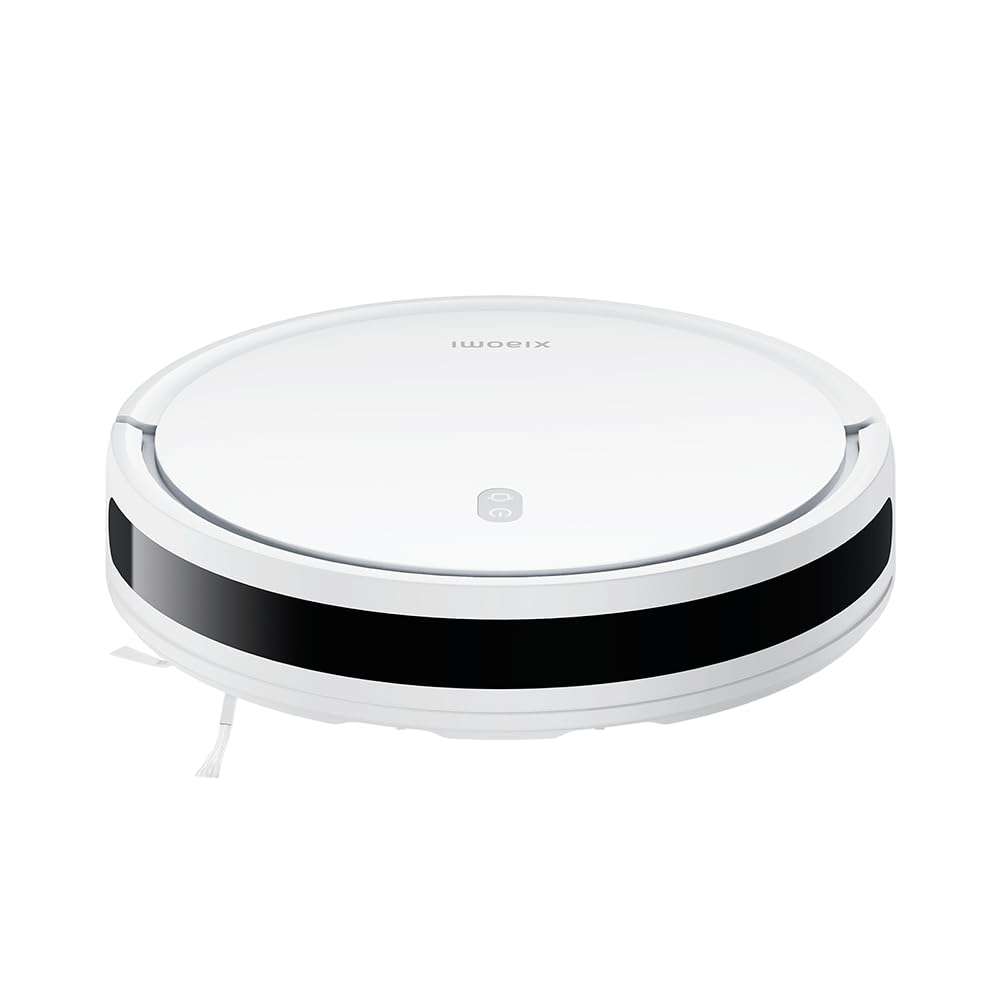
Enter the Xiaomi Robot Vacuum E10. Positioned squarely at the budget end of the market (typically floating around £100 to £140), it advertises features that sound suspiciously like mid-tier specs: 4,000 Pa of suction, a hybrid vacuum-and-mop design, smartphone app control via Xiaomi Home, and smart path planning using basic gyroscopic navigation. On paper, it sounds like an outrageous bargain that renders £300 models redundant.
In practice, it is a capable, unpretentious floor cleaner that delivers strong daily maintenance, but only if your expectations are calibrated to what budget hardware can actually do. This guide breaks down what Xiaomi gets right with the E10, where it cuts corners, and how it compares against competing entry-level alternatives like the Lefant M210 and the step-up Xiaomi Robot Vacuum S12.
Design, Dimensions, and Under-Furniture Clearance
From a hardware perspective, the Xiaomi E10 keeps things clean and functional. Finished in Xiaomi’s signature matte white plastic, it sports a minimalist top deck with just two physical buttons: Power and Dock. There is no raised laser turret sticking out of the top, which is actually one of its subtle physical advantages.
Because it lacks a LiDAR dome, the E10 stands at a slim 8.0 cm tall. That low profile allows it to glide under low-clearance furniture—like TV cabinets, IKEA couches, and sideboards—where taller laser-guided vacuums routinely wedge themselves. If your home features lots of low-slung seating, a lower height is often far more valuable than fancy top-mounted sensors.
Flipping the unit over reveals a standard, effective underbody layout: a single side-sweeping brush to drag debris from corners, a floating main roller brush featuring a mix of rubber blades and bristle tufts, two primary drive wheels capable of mounting low door thresholds (up to roughly 15mm), and a clip-in 2-in-1 combo module that holds both dust and water.
Navigation and Path Planning: Inertial vs Laser
Understanding how the E10 navigates is critical to deciding whether it will work in your layout. The E10 uses an IMU (inertial measurement unit) combined with a gyroscopic sensor and wall-following bumpers. In simple terms: it does not 'see' your rooms with a camera or a laser radar, nor does it create a permanent interactive floor map that you can split into labeled rooms with forbidden zones.
Instead, it follows a structured, S-shaped zig-zag pattern. When it hits a wall or obstacle, it gently bumps, turns, and continues its row. For single rooms, small flats, or open-plan ground floors, this systematically covers roughly 80% to 90% of visible floor space far better than old-school random 'bounce' vacuums. However, because it relies on dead reckoning, it can occasionally get disoriented in complex, multi-room floor plans with lots of scattered table legs or loose cables.
If you leave dining chairs unstacked or wires sprawling across the rug, the E10 will nudge them, attempt to wriggle free, and occasionally ask for help via an app notification. Prepping your floor by picking up charging cables and dog toys is non-negotiable with this class of device.
Suction Power and Real-World Cleaning Performance
Where the E10 genuinely punches above its weight is raw suction torque. Rated at up to 4,000 Pascals (Pa), it offers four selectable suction modes: Silent, Standard, Strong, and Turbo. For context, many older budget vacuums capped out at 1,500 to 2,000 Pa.
- Hard Floors (Laminate, Tile, Wood): The E10 excels here. In Standard or Strong mode, the main roller brush combined with 4,000 Pa airflow effortlessly pulls up cereal crumbs, stray cat litter, dried mud, and fine dust. The single edge brush spins at a controlled pace, sweeping debris into the main vacuum throat without flinging it across the room.
- Low-to-Medium Pile Carpets: Cranking the unit into Turbo mode delivers surprisingly deep extraction on low-pile rugs. The floating roller maintains good contact with floor contours. However, on deep plush pile carpets, the drive wheels can struggle, and the roller brush may bind up on long fibers.
- Pet Hair Handling: The bristle-and-rubber combo roller does a good job lifting pet fur from rugs. The inevitable downside is maintenance: long human hair and fine pet fur will wrap tightly around the brush bearings and end-caps, requiring you to clear them with the supplied tool once or twice a week.
The Mopping Feature: Honest Expectations
Xiaomi advertises the E10 as a '2-in-1 Vacuum and Mop'. It is vital to understand what budget mopping actually means here so you aren't disappointed. The E10 features an electronically controlled water tank integrated into the 400ml dustbin housing, feeding water to a washable microfibre pad clipped to the underside.
The electronic pump allows you to toggle between three water delivery levels in the Xiaomi Home app, preventing the pad from soaking sensitive laminate floors. However, the pad is simply dragged behind the vacuum as it travels. There is no sonic vibration, no dual spinning pads, and no downward motor pressure to scrub stubborn stains.
Think of the E10’s mopping function as a damp dust wiper. It is great for picking up fine powdery residue left behind after vacuuming and keeping hard floors looking fresh day-to-day. It will not remove dried syrup, caked-on kitchen spills, or ground-in muddy paw prints. Furthermore, because it cannot automatically detect carpet, if you run a mop cycle in a room with a rug, the E10 will drag its damp pad straight over the rug unless you physically roll the carpet up first.
App Control and Smart Features
The E10 integrates into the standard Xiaomi Home app (available for iOS and Android). Through the app, you can:
- Start, pause, or send the unit back to its charging dock remotely.
- Switch between the four suction power levels and three water discharge rates.
- Set scheduled cleaning runs (e.g., set it to run at 10:00 AM every Monday, Wednesday, and Friday).
- View a real-time (temporary) trail map showing where the vacuum has traveled during the current session.
- Link to Amazon Alexa or Google Assistant for basic voice activation ("Alexa, turn on the vacuum").
Crucially, because the E10 lacks LiDAR hardware, the app map resets after every run. You cannot draw virtual no-go lines, set up keep-out zones, or target individual rooms for spot cleaning. If you want those features, you must step up to a laser-navigating model like the Xiaomi Robot Vacuum S12.
Battery Life and Docking
Packing a 2,600 mAh battery, Xiaomi claims up to 110 minutes of continuous runtime in Standard mode on hard floors. In real-world conditions—combining Standard suction with occasional Turbo bursts over rugs—you can realistically expect roughly 70 to 80 minutes of cleaning before it drops to 20% battery and automatically turns back toward the charging base.
For flats, terraced ground floors, or medium-sized homes up to roughly 80–90 square metres, a single charge is plenty to cover the floor area. If it runs out mid-clean in a larger home, it will dock, recharge fully (which takes roughly 4 to 5 hours), but it does not reliably resume where it left off in the same way smart-mapping models do.
Budget Robot Vacuum Comparison
To give you context on where the E10 sits in today's entry-level market, here is how its specs compare against established alternatives in the £100–£200 range:
| Model | Navigation Type | Suction Power | Key Feature | Price Band | Buy Link |
|---|---|---|---|---|---|
| Xiaomi Robot Vacuum E10 | Gyroscopic / Inertial | 4,000 Pa | Strong suction & damp mop combo | Budget (£110-£140) | Check Amazon Price |
| Lefant M210 | Random / Bump | 2,200 Pa | Tangle-free nozzle (no roller brush) | Budget (£90-£120) | Check Amazon Price |
| Lefant M210P | Gyroscopic / Inertial | 2,200 Pa | App scheduling, ultra-compact design | Budget (£100-£130) | Check Amazon Price |
| eufy RoboVac 11S | Random / Infrared | 1,300 Pa | Ultra-slim 7.2cm, quiet, remote control | Budget (£120-£160) | Check Amazon Price |
| Xiaomi Robot Vacuum S12 | LiDAR Laser Navigation | 4,000 Pa | True floor mapping & virtual wall zones | Mid-Range (£180-£220) | Check Amazon Price |
Alternatives to Consider
If you want true room mapping and keep-out zones: Xiaomi Robot Vacuum S12
If you live in a house with a complex ground floor layout, multiple rugs, or kids' play areas you constantly need to avoid, spending slightly more for the Xiaomi Robot Vacuum S12 is a smart move. The S12 adds a LDS laser radar turret on top. This grants full, persistent multi-floor mapping, individual room selection, and the ability to draw virtual wall boundaries in the app so the vacuum never wanders into pet bowl zones or chaotic toy piles.
If you suffer from constant long hair tangles: Lefant M210 or Lefant M210P
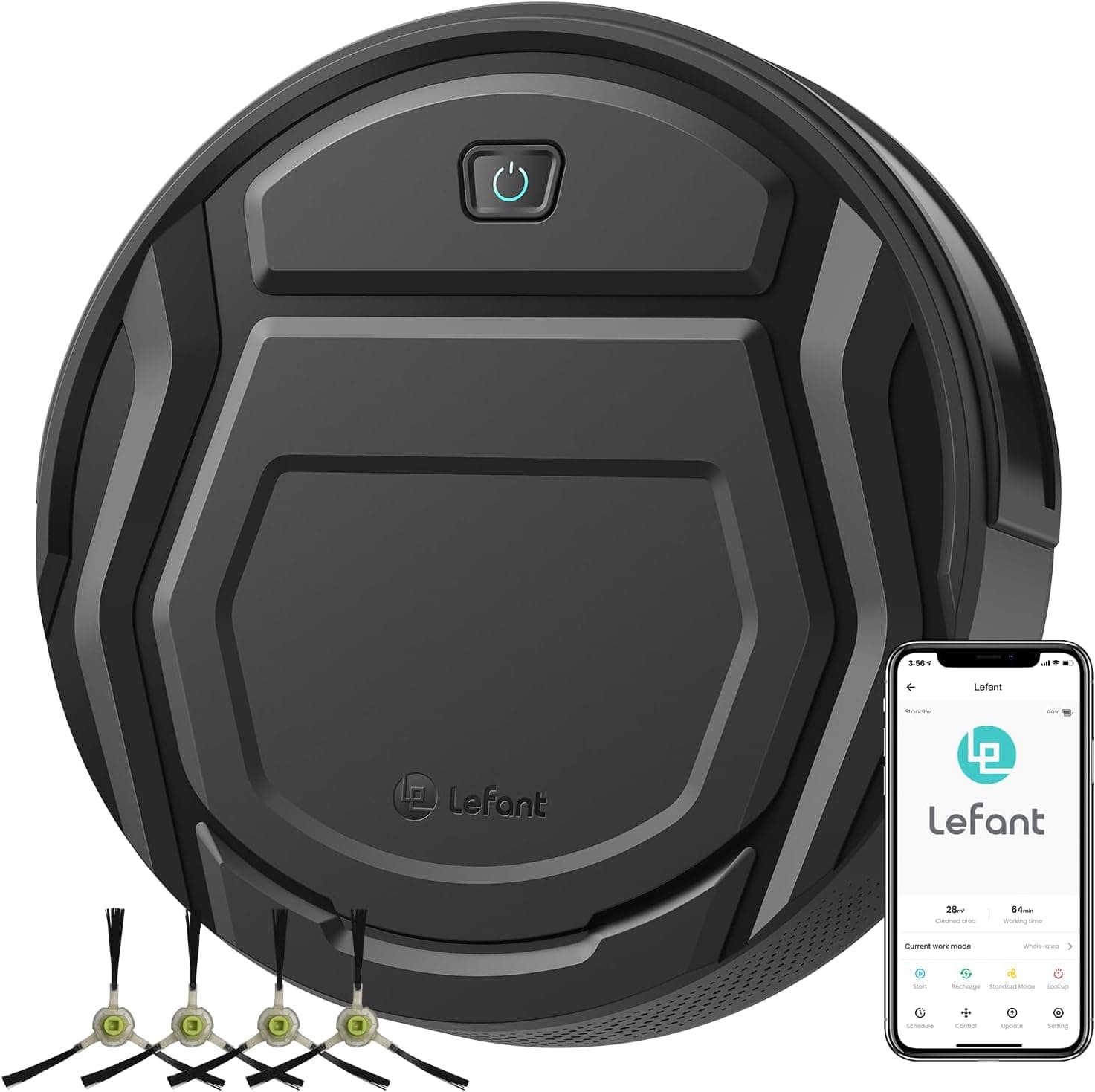
If you have multiple shed-prone pets or long hair that constantly snags around central vacuum rollers, consider the Lefant M210 or the upgraded Lefant M210P. Rather than a traditional bristle brush, these use a direct suction inlet port. Hair is pulled straight into the dustbin without wrapping around a brush core, radically reducing weekly blade cleaning, though they trade away deep rug agitation performance in exchange.
If you hate apps and want dead-simple operation: eufy RoboVac 11S
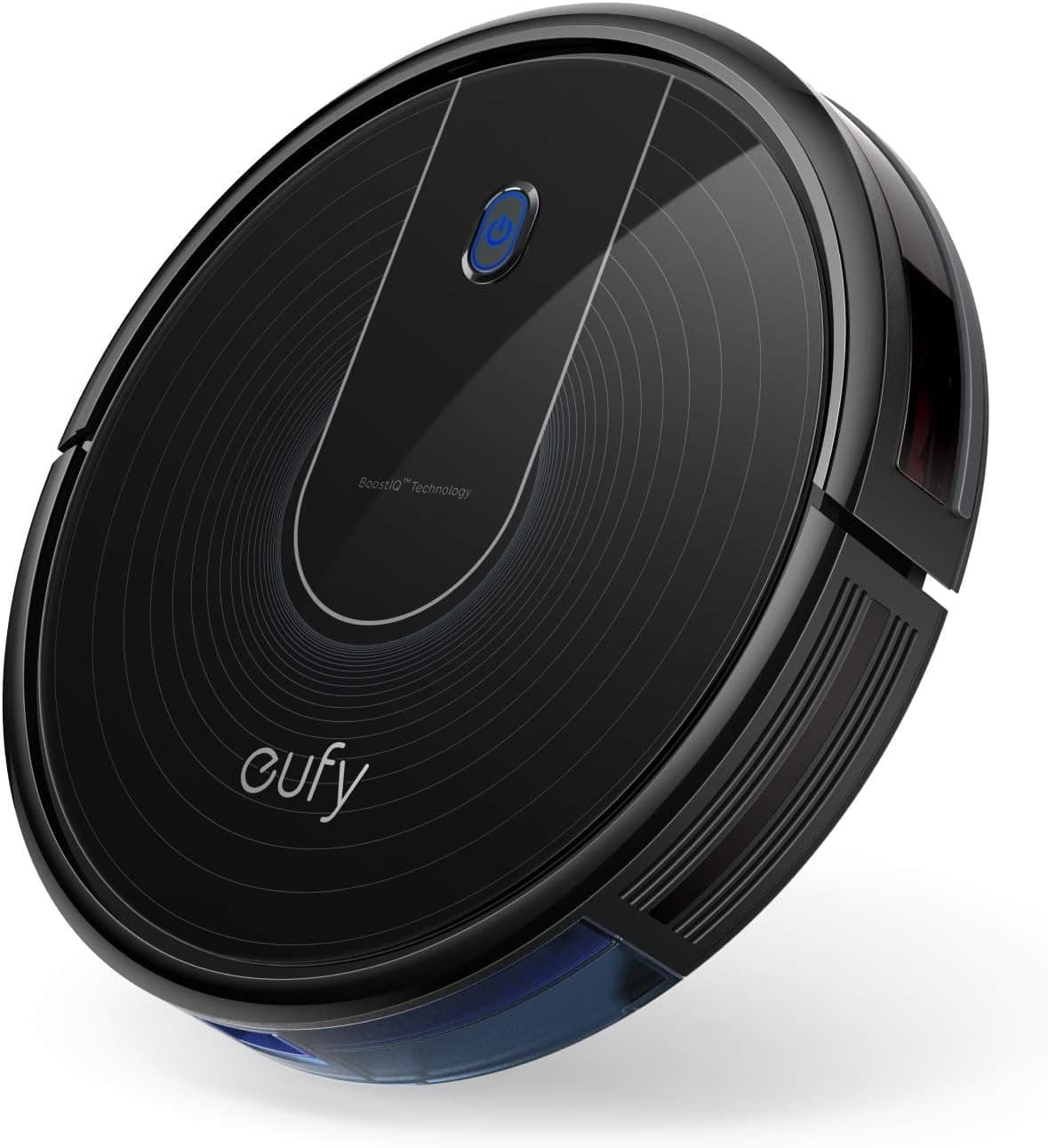
For buyers who do not want to connect a vacuum to home Wi-Fi or mess around with smartphone apps, the classic eufy RoboVac 11S remains a crowd favorite. It is whisper-quiet, ultra-thin at 7.2 cm, and controlled entirely via an included physical remote control. It lacks the raw 4,000 Pa punch of the Xiaomi E10, but its set-and-forget simplicity is ideal for older users or minimalist setups.
Who Should Buy the Xiaomi Robot Vacuum E10?
The Xiaomi E10 hits a sweet spot that makes it easy to recommend for specific living situations:
- Flats and Compact Homes: In open-plan single-level layouts, its gyroscopic navigation works efficiently without getting lost.
- Hard Floor Dominant Spaces: If your home is mostly wood, tile, laminate, or vinyl, the combination of 4,000 Pa suction and light damp wiping keeps dust film under complete control.
- Budget-Conscious Buyers: You want reliable app scheduling and strong suction without spending £250+.
- Homes with Low Furniture: Its 8cm height lets it scrub under couches that stop LiDAR models in their tracks.
However, you should skip it if you have large thick carpets throughout, or if your floor plan is cluttered with items you cannot pick up before every clean, as the lack of AI obstacle avoidance and virtual keep-out zones will force you to free it regularly.
Verdict
The Xiaomi Robot Vacuum E10 is one of the most competent budget floor cleaners available today. By focusing heavily on raw suction power (4,000 Pa) and a sleek low-profile chassis while skipping expensive laser modules, Xiaomi delivers a vacuum that handles basic daily maintenance effortlessly. It won't scrub off dried floor stains, and it won't map individual rooms, but at this price point, it accomplishes exactly what a budget robot vacuum ought to do.