As an Amazon Associate I earn from qualifying purchases. This page contains affiliate links, and I may earn a commission at no extra cost to you.
Handing a tablet to a restless child is undeniably effective at halting a tantrum in thirty seconds flat. It is also an open invitation to over-stimulation, algorithmic rabbit holes, and the inevitable high-decibel meltdown when screen time ends. That exact frustration has sparked a quiet hardware renaissance: dedicated, screen-free audio players designed specifically for children.
These little gadgets promise bedtime audiobooks, morning podcasts, and curated music without blue light or algorithmic autoplay. Yet the hardware approaches could not be more divergent. Some systems rely on chunky physical figurines, others use smart cards, while voice-activated smart speakers and offline battery-powered players occupy the fringes. Deciding between them means balancing upfront costs against ongoing content ecosystems, toddler drop-resilience against older-child longevity, and closed physical media against cloud streaming.
This buying guide breaks down published specifications, hardware design, content libraries, and verified owner feedback across five leading audio players to help you pick the right system without wasting your money on redundant plastic.
Quick Comparison Table
Here is how the five leading screen-free audio devices compare across core specifications, content formats, and price bands.
| Product | Target Age | Media Format | Price Band | Verdict | Where to Buy |
|---|---|---|---|---|---|
| Yoto Player (3rd Generation) | 3 to 12+ years | Smart NFC Cards | Premium (~$100–$140) | The most versatile home player with the deepest library for older children. | Check today's price on Amazon |
| Toniebox Audio Player Starter Set | 1 to 6 years | Hand-painted Figurines | Mid-to-High (~$90–$100) | Best tactile design for toddlers, though individual figures add up quickly. | Check today's price on Amazon |
| Yoto Mini | 3 to 12+ years | Smart NFC Cards | Mid-Range (~$70–$80) | The gold standard for family road trips and airplane travel. | Check today's price on Amazon |
| Amazon Echo Dot Kids (5th Gen) | 5 to 12 years | Voice / Alexa Streaming | Budget (~$30–$60) | Unbeatable value and open music streaming, but lacks physical tactile play. | Check today's price on Amazon |
| LeapFrog On-the-Go Story Pal | 2 to 5 years | Pre-loaded / Built-in | Budget (~$25–$35) | Zero recurring content costs, but restricted strictly to early years. | Check today's price on Amazon |
1. Yoto Player (3rd Generation) — The Best All-Round Bedside Companion
If you want a single device that can manage bedtime routines for a three-year-old and still play full-length audiobooks for an eight-year-old without feeling like baby gear, the Yoto Player (3rd Generation) is the benchmark.
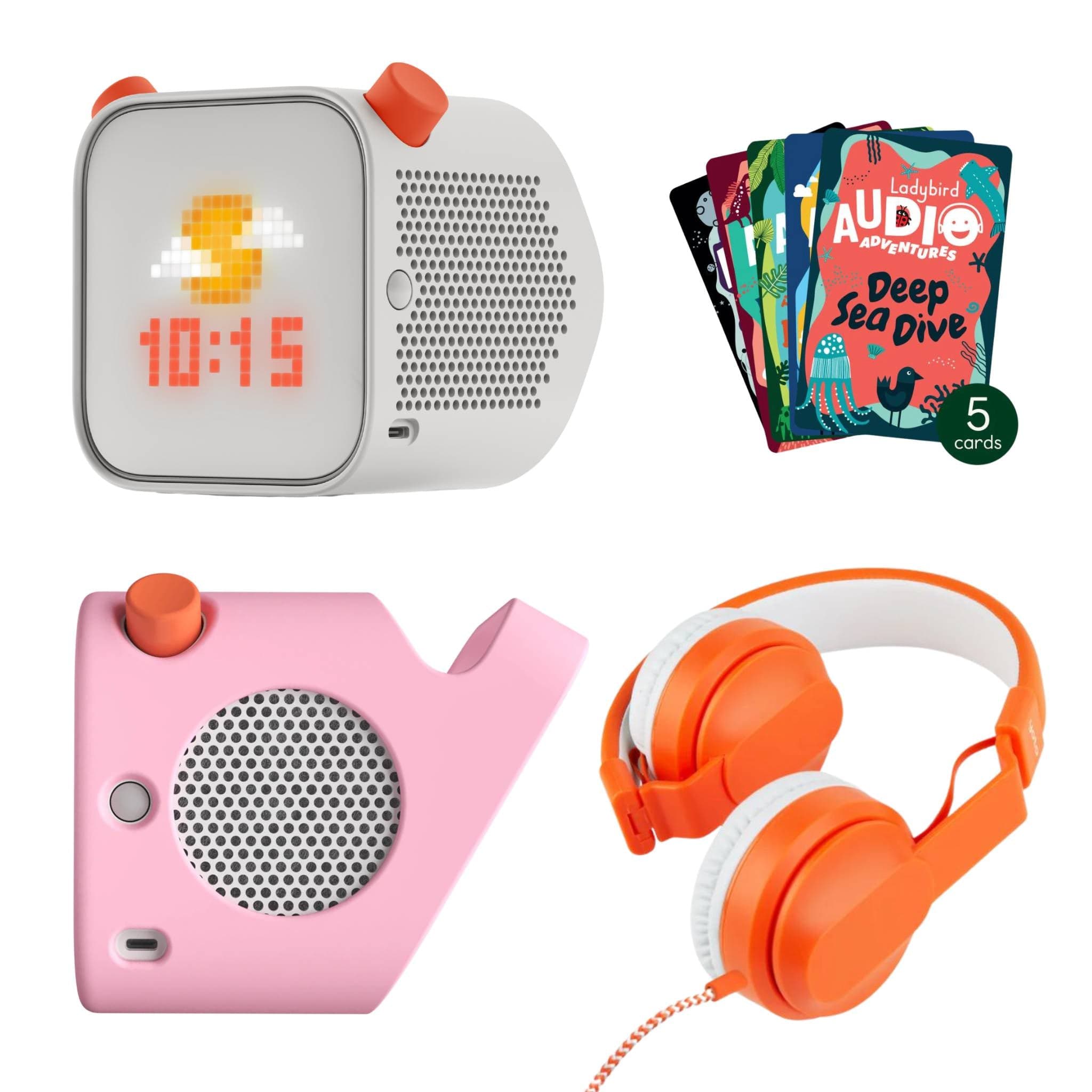
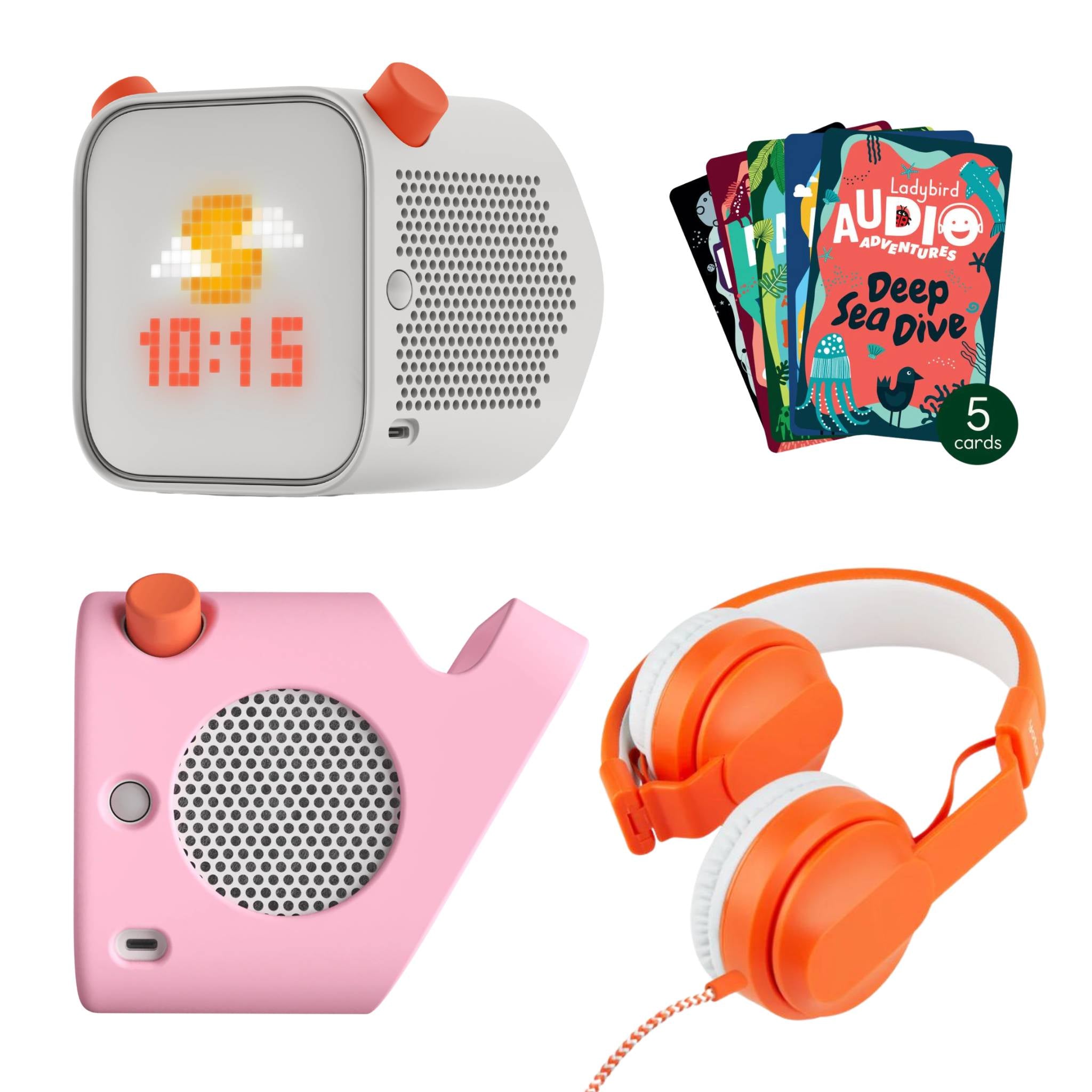
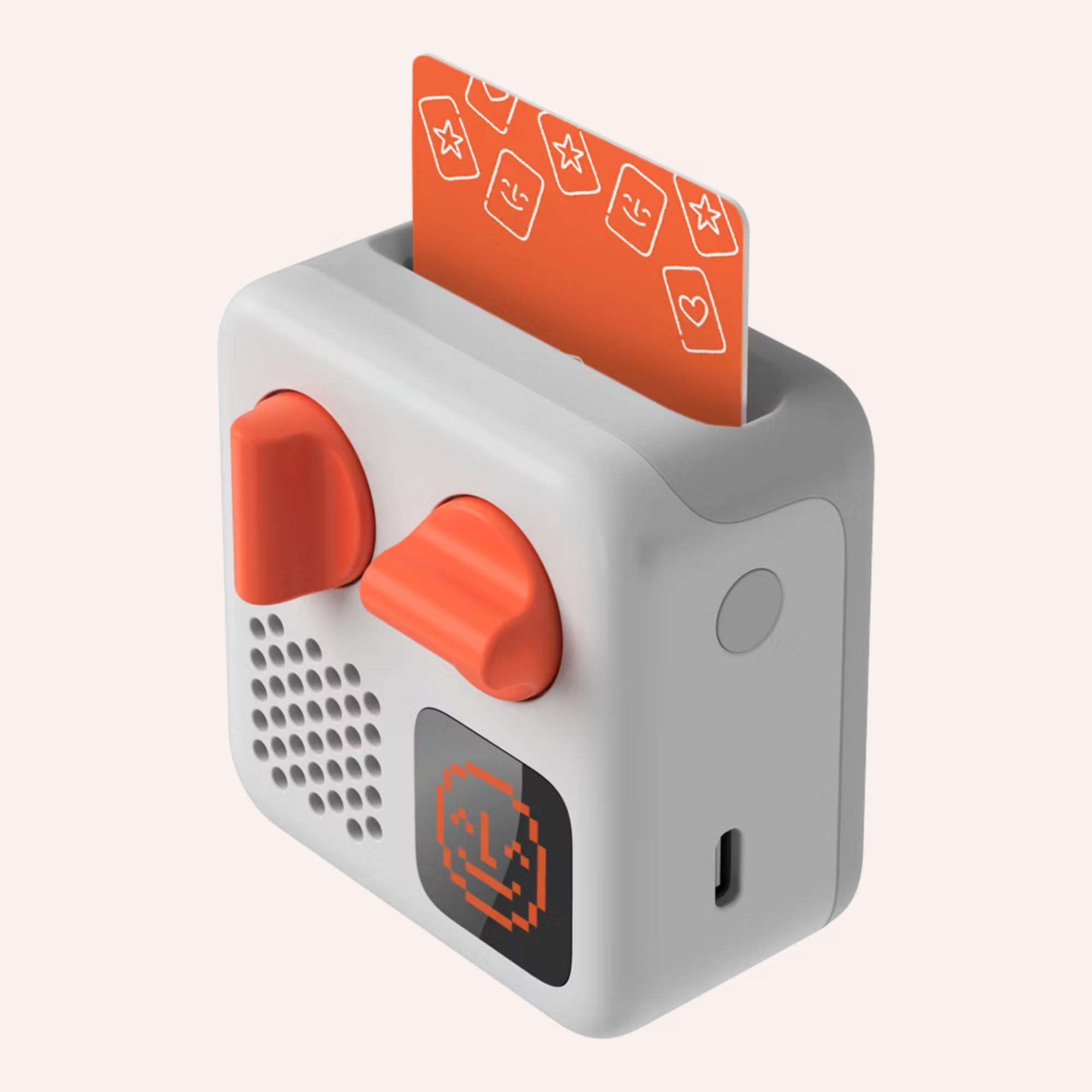
Rather than using novelty figurines, Yoto relies on credit-card-sized NFC smart cards. Slip a card into the top slot, and the audio starts playing instantly; pull it out, and playback pauses. It is intuitive enough for a preschooler, yet mature enough that older children will not cringe at using it. The 3rd Gen model features a clean, upright design, two tactile orange dials on the corners (one for volume, one for chapter skipping), and a low-resolution pixel display on the front face that displays dynamic chapter art, an alarm clock, and custom icons.
Hardware, Sound, and Bedside Features
The 3rd Generation Yoto Player was engineered with bedside utility in mind. Turning the device face-down activates an integrated nightlight with customisable colours via the companion mobile app. It also features an "OK-to-wake" night-and-day clock graphic, a built-in room thermometer, USB-C and wireless charging capability, and a standard 3.5mm headphone jack. The acoustic output is surprisingly punchy and clear for spoken-word audio, providing sufficient volume to fill a medium-sized bedroom without tinny distortion.
Content Ecosystem and Ongoing Value
Yoto's card catalogue spans over a thousand titles, covering everything from Julia Donaldson and Disney soundtracks up through Roald Dahl, Percy Jackson, and Harry Potter. However, the system's biggest competitive advantage is the "Make Your Own" (MYO) blank card feature. Using the Yoto app, parents can link custom MP3 files, home recordings of grandparents reading stories, or free kid-safe podcasts directly to blank cards. Once linked, the audio caches directly to the player's internal storage, allowing completely offline playback away from home Wi-Fi.
- Pros: Huge longevity (ages 3 to 12+); versatile nightlight and OK-to-wake clock; highly cost-effective "Make Your Own" blank cards; warm, room-filling sound.
- Cons: Premium upfront price; larger chassis is not ideal for small travel bags.
2. Toniebox Audio Player Starter Set — The Indestructible Toddler Favourite
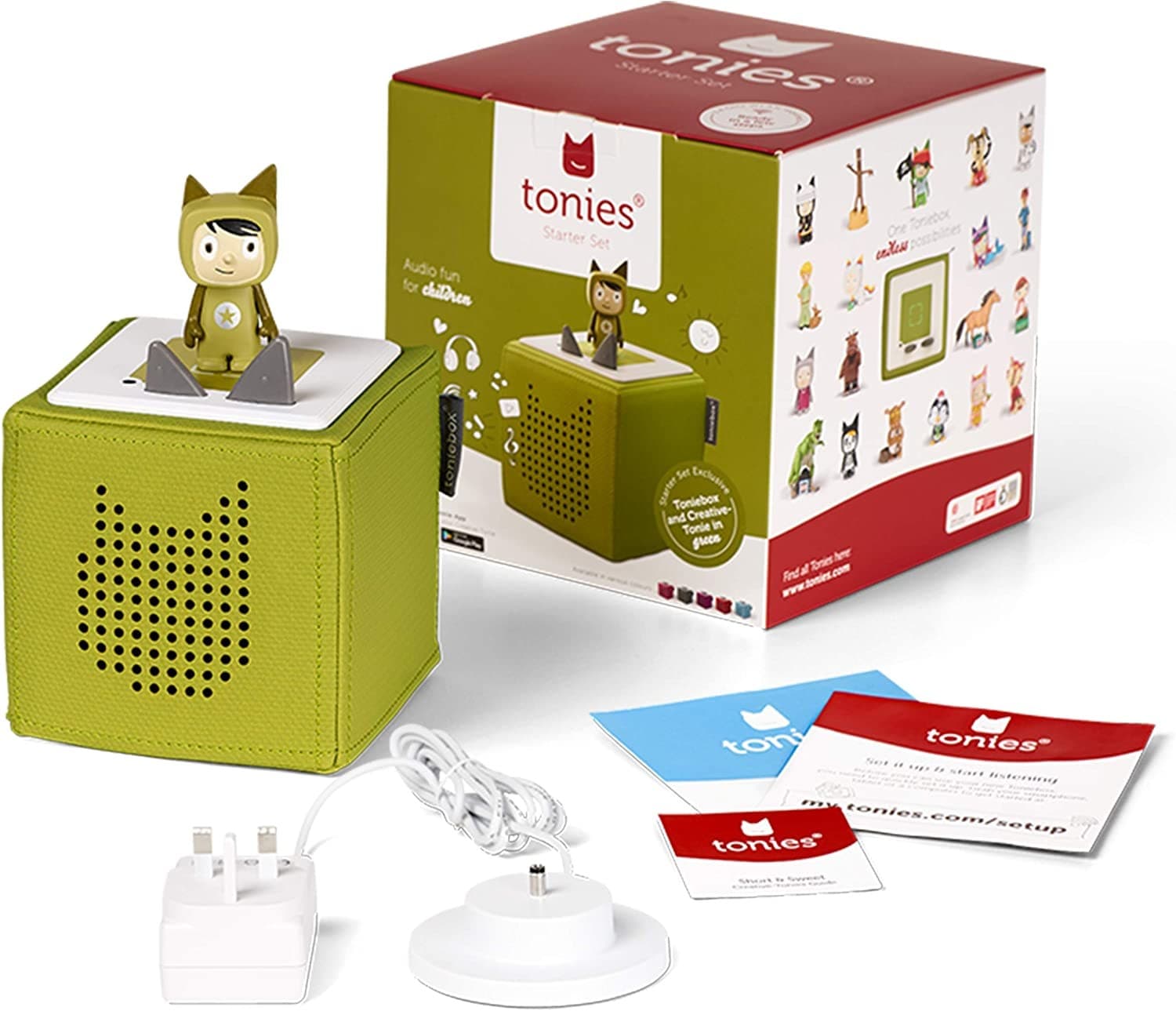
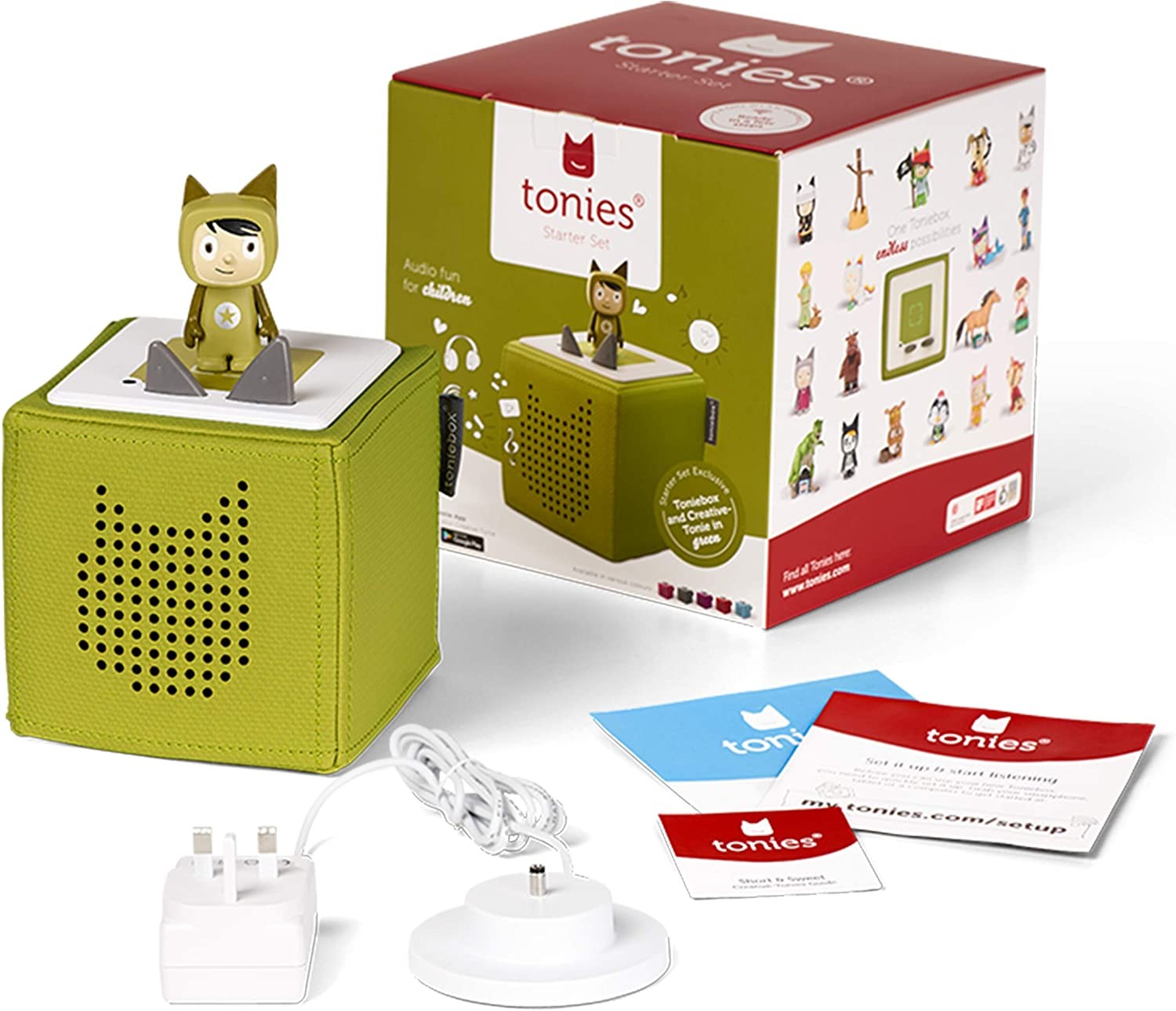
The Toniebox Audio Player Starter Set takes a radically different tactile approach. Designed as a soft, padded, fabric-covered cube, it is virtually indestructible against toddler drops, tosses, and rough handling.
There are no buttons, dials, or screens. Playback is entirely physical: children place a magnetic, hand-painted character figurine (a "Tonie") on top of the box to start the story or music album. Volume is controlled by squeezing the soft, rubberised "ears" on top of the cube, while skipping tracks requires physically slapping the cushioned side of the box. Tilting the box fast-forwards or rewinds the audio.
Tactile Design vs. Practical Flexibility
For children aged 18 months to 4 years, the Toniebox design is unmatched. Young toddlers who lack the fine motor skills to slide cards into slots can effortlessly place a figurine on top of the magnetic pad. Because the unit is wrapped in water-resistant fabric and padded foam, it survives falls from bedside tables onto hardwood floors without a scratch.
The trade-off comes down to cost and physical clutter. Each official Tonie figurine costs between $15 and $20, generally holding between 15 and 45 minutes of audio. Building a library of 10 to 15 titles rapidly doubles your total investment, and traveling with a dozen bulky figurines is considerably more cumbersome than slipping a stack of thin cards into a pouch. While "Creative-Tonies" allow up to 90 minutes of custom audio uploads, the overall platform clearly prioritises early-childhood licensing (Disney, Paw Patrol, Sesame Street) over long-form chapter books for older readers.
- Pros: Virtually unbreakable soft-padded exterior; completely intuitive for toddlers; wonderful tactile character figurines that double as toys.
- Cons: Individual figurines are expensive and bulky to travel with; slap-to-skip controls can be finicky; limited longevity for kids over 6 years old.
3. Yoto Mini — The Definitive Travel Player
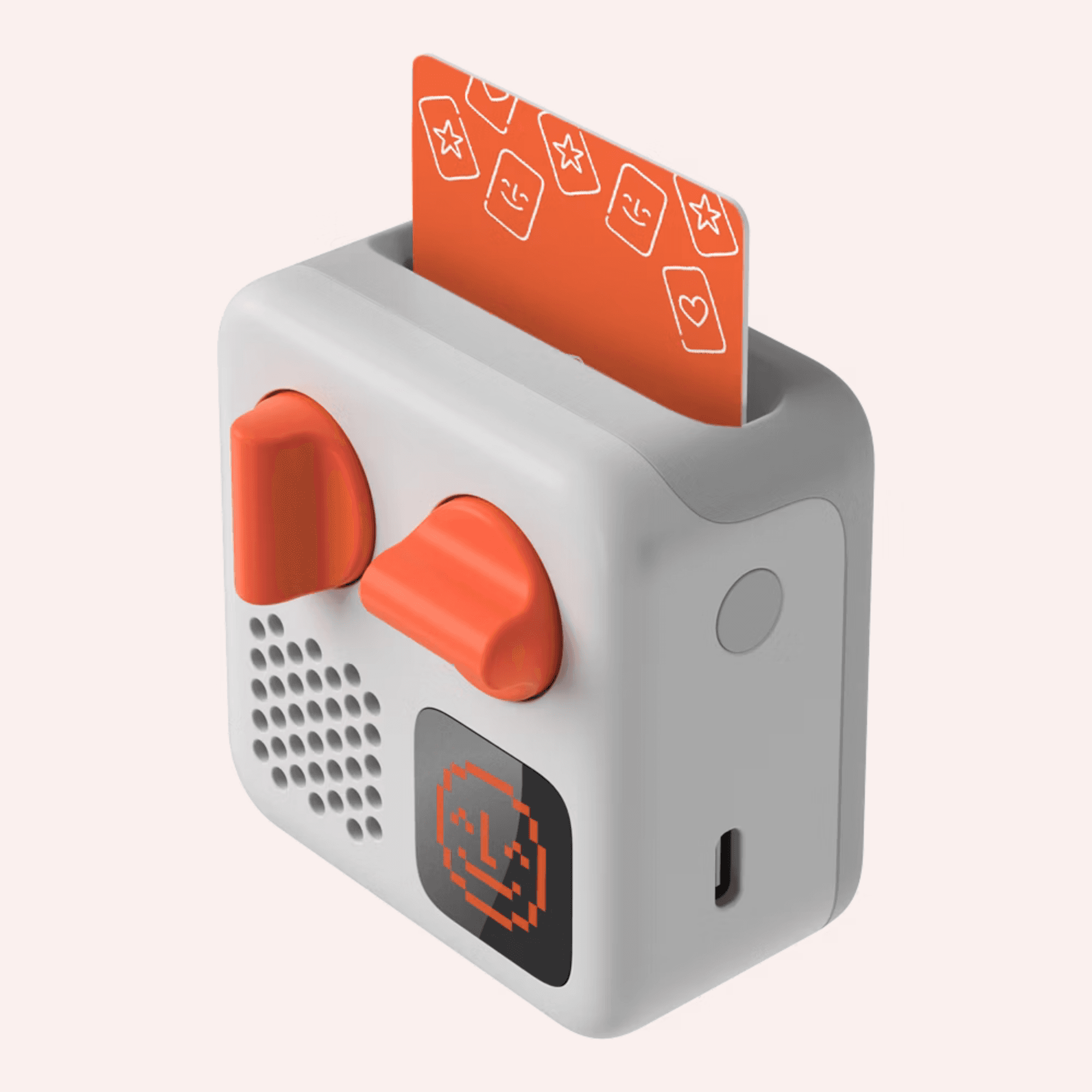
If your primary motivation for buying an audio player is surviving long car journeys, flights, or restaurant dinners without handing over your smartphone, the Yoto Mini is the sharpest dedicated portable option available.
It utilises the exact same ecosystem of NFC cards and MYO capabilities as its larger sibling, but packs everything into a palm-sized chassis weighing under 200 grams. Despite the reduced footprint, it retains the crisp pixel display, tactile navigation dials, standard 3.5mm headphone jack, USB-C charging port, and full Bluetooth speaker support.
Portability and Battery Life
The Mini provides up to 14 hours of continuous playback per charge, easily lasting through long travel days. Because the cards are credit-card sized and paper-thin, carrying twenty different audiobooks takes up zero noticeable space in a backpack pocket. When paired with the silicone Adventure Jacket case and wrist lanyard, it is remarkably rugged against accidental drops.
The principal sacrifices compared to the 3rd Gen full-size player are acoustic volume and bedside functionality. The smaller internal speaker is tuned for clarity at close range and headphone listening rather than filling a noisy room with music, and it omits the ambient nightlight and room thermometer. For travel and personal daytime listening, however, it hits an almost perfect price-to-utility sweet spot.
- Pros: Ultra-compact and lightweight; excellent battery endurance; uses the full, robust Yoto card library; affordable entry into the card ecosystem.
- Cons: Lacks the ambient nightlight of the full-size model; smaller speaker lacks deep bass for musical playback.
4. Amazon Echo Dot Kids (5th Gen) — Maximum Versatility on a Tight Budget
The Amazon Echo Dot Kids (5th Gen) offers an alternative model that ditches physical media entirely in favour of voice control and cloud streaming.
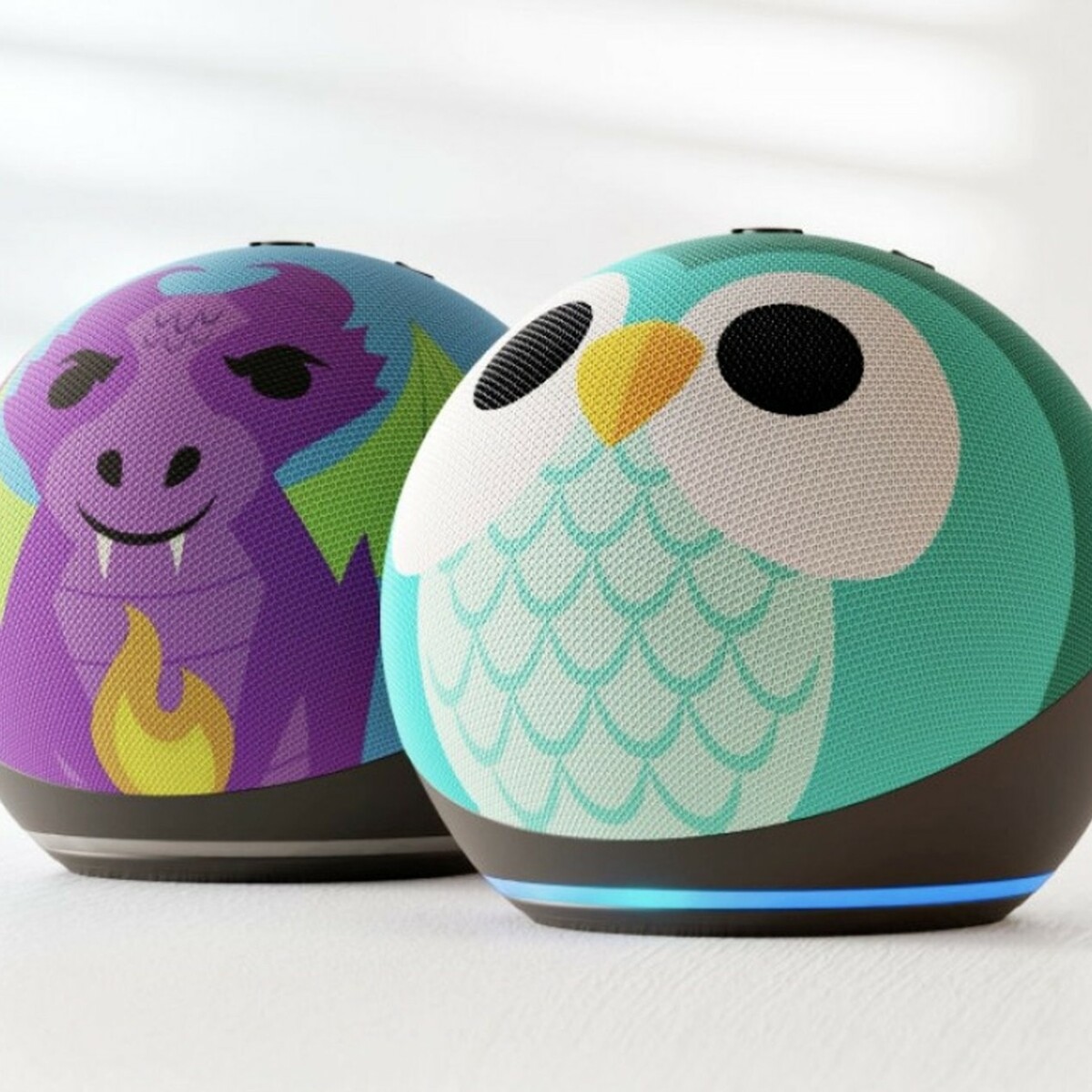
Costing significantly less than proprietary card and figurine players, the Echo Dot Kids includes a playful spherical fabric design (such as the Owl print), parental filter controls, and a dedicated Amazon Kids+ subscription window that unlocks thousands of audiobooks, educational games, and kid-friendly podcasts. It also links seamlessly to standard streaming services like Amazon Music, Apple Music, and Spotify.
Voice Control vs. Toddler Autonomy
For children aged 5 to 10 who can speak clearly, voice activation is extraordinarily capable. Kids can ask Alexa for specific artists, bedtime stories, weather updates, or homework math help. Audio quality from the 5th Gen Dot's front-firing speaker is surprisingly rich and room-filling, easily outperforming the smaller portable speakers in pure acoustic clarity.
The obvious caveat is that it requires an active Wi-Fi connection, a wall outlet, and a reliable voice interface. Toddlers with developing speech will find it frustrating to trigger voice commands consistently, and parents seeking complete separation from connected smart microphones will naturally prefer offline card or figurine players. However, if your goal is an inexpensive, smart bedside audio hub with parental time limits and expansive music streaming, the value here is difficult to beat.
- Pros: Highly affordable hardware; excellent sound quality for its size; direct streaming from major music services; robust parental dashboard controls.
- Cons: Must remain plugged into mains power; requires stable Wi-Fi; no physical, tactile media for younger children.
5. LeapFrog On-the-Go Story Pal — The Zero-Subscription Starter Option
For parents who want simple audio entertainment for a preschooler without committing to buying $15 figurines or navigating mobile apps, the LeapFrog On-the-Go Story Pal is a straightforward, budget-conscious choice.
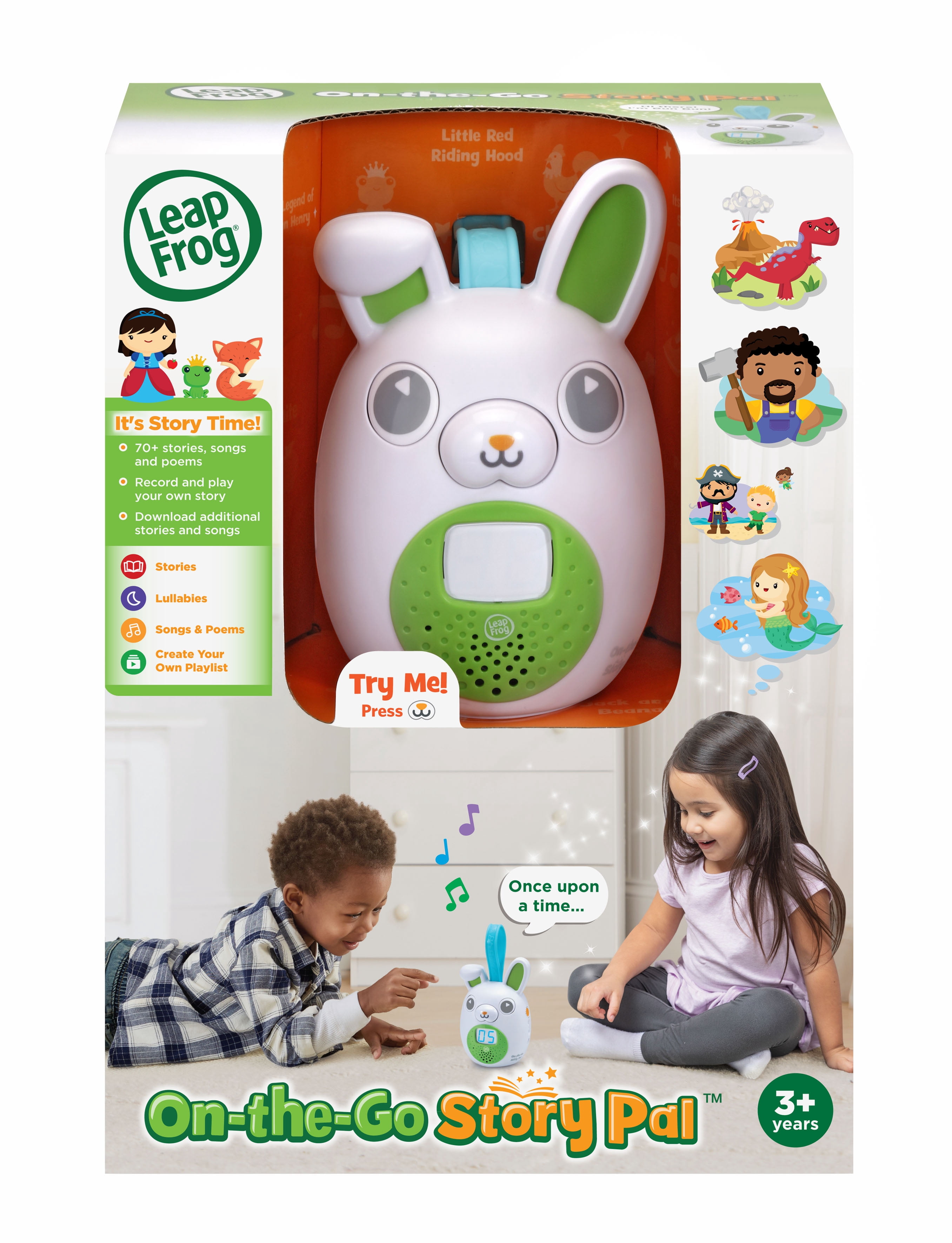
Shaped like a friendly bunny with a carrying handle, the player comes pre-loaded with over 70 audio tracks, including classic fables, educational songs, poems, and bedtime lullabies right out of the box. Simple tactile dial buttons allow kids to cycle through categories, build a playlist of five favourites, or set a sleep timer to shut off playback automatically.
Simple Utility and Real Limitations
The biggest appeal of the Story Pal is total simplicity: no Wi-Fi setup, no cloud accounts, and no ongoing card purchases. Parents can also record their own voice reading stories via a built-in microphone function. It includes a 3.5mm headphone jack for car journeys and runs on standard AA batteries.
The limitation is its strict developmental shelf life. The pre-loaded content is squarely aimed at children aged 2 to 5 years. Once your child outgrows nursery rhymes and short fairy tales, there is no expansive digital bookstore or long-form chapter library to transition into. It is a disposable stepping stone rather than a long-term media player, but for its modest entry price, it delivers reliable, friction-free utility.
- Pros: Very inexpensive; includes 70+ built-in stories and songs out of the box; no recurring subscriptions or Wi-Fi setup needed.
- Cons: Operates on disposable AA batteries; strictly limited content that children outgrow by age 5; basic plastic construction.
How to Choose the Right Screen-Free Player
Selecting the best audio player comes down to three concrete factors: your child's developmental age, where the player will spend most of its time, and how much you are willing to spend on recurring content.
1. Age and Dexterity
Toddlers under three years old thrive on immediate, coarse physical actions. The Toniebox Audio Player Starter Set is built specifically for this developmental stage because dropping a magnetic character on a box requires virtually no fine motor precision. Between ages 3 and 6, card slots become second nature, making the Yoto Player (3rd Generation) and Yoto Mini ideal. Beyond age 6, children generally prefer the card aesthetic over chunky toy figures, and voice-assisted players like the Amazon Echo Dot Kids (5th Gen) become viable for requesting full music albums and audiobooks independently.
2. Portability vs. Bedside Features
If the device will live permanently on a nightstand, opt for a full-sized unit with bedtime sleep features. The 3rd Gen Yoto Player offers an ambient nightlight, room temperature tracking, and an OK-to-wake clock face, while the Echo Dot Kids provides alarms and routines. If the player is meant for travel, strollers, and road trips, the Yoto Mini is vastly superior due to its integrated battery, headphone output, and compact form factor.
3. The Real Cost of Content
Always factor in the cost of growing your audio library. Tonies are premium physical toys that average $15–$20 each. Yoto cards average $8–$12 for commercial audiobooks, but the blank "Make Your Own" cards drastically reduce long-term costs by letting you link free podcasts and existing MP3 libraries. If you want zero ongoing costs, the LeapFrog On-the-Go Story Pal comes completely pre-loaded, while the Echo Dot Kids relies on low-cost monthly streaming subscriptions.
Alternatives to Consider
If you find yourself split between these main systems, consider these two specific alternatives:
- For Budget-Conscious Parents Wanting Cards: If you love the Yoto content ecosystem and Make-Your-Own flexibility but cannot justify the full-size player's price tag, pick the Yoto Mini. It plays the exact same cards and podcasts at a significantly lower entry cost while doubling as a fantastic travel companion.
- For Toddlers Who Just Need Bedtime Routine Lighting: If you are primarily interested in the Toniebox for bedtime winding-down, keep in mind that the Toniebox Audio Player Starter Set lacks a nightlight clock. The Yoto Player (3rd Generation) combines audio storytelling with a sleep-trainer clock and nightlight in one chassis, eliminating the need to buy a separate nightlight.
Final Verdict
Screen-free audio players genuinely solve the problem of digital overstimulation, turning bedtime battles and boring car rides into engaged listening sessions. While the Toniebox remains a toddler favourite for its soft, indestructible build, the Yoto Player (3rd Generation) is the superior overall investment for most families due to its massive content library, sleep-training bedside utilities, and the long-term cost savings of custom Make-Your-Own cards.