As an Amazon Associate I earn from qualifying purchases. This page contains affiliate links, and I may earn a commission at no extra cost to you.
Why Screen-Free Audio Is Taking Over Family Living Rooms
Handing a toddler a tablet often feels like an easy win until the inevitable meltdown occurs when screen time ends. Blue light disrupts sleep schedules, interactive video apps are engineered for rapid dopamine hits, and passive video consumption does little for active listening comprehension. Screen-free audio players solve this dilemma by returning narrative control to physical interaction.
Instead of swiping on glass, children interact with physical figurines, smart cards, or tactile discs to trigger stories, music, podcasts, and educational activities. The tactile feedback empowers independent play from as young as two years old, while parents retain peace of mind knowing there are no algorithms, hidden microtransactions, or inappropriate video suggestions lurking behind the next tap.
However, entering a screen-free audio ecosystem is a long-term financial commitment. The hardware purchase is merely step one; the true cost lies in the physical media ecosystem you invest in over the subsequent years. Below, we dissect the five leading dedicated audio systems to establish which platform delivers the best balance of hardware durability, audio quality, content variety, and ongoing affordability.
Top Screen-Free Entertainment Systems Compared
| Product | Primary Media Format | Target Age Range | Battery & Portability | Price Band | Buy |
|---|---|---|---|---|---|
| Tonies Toniebox Starter Set | Hand-painted magnetic figurines | Ages 3–8 | Integrated rechargeable (~7 hrs) | Mid-to-Premium | Check today's price on Amazon |
| Yoto Mini Audio Player | NFC Smart Cards | Ages 3–12+ | USB-C rechargeable (~14 hrs) | Mid-Range | Check today's price on Amazon |
| Storypod Starter Set | Yarn Crafties & Magnetic Books | Ages 0–6 | USB rechargeable (~6–8 hrs) | Mid-Range | Check today's price on Amazon |
| TIMIO Educational Player | Magnetic Scratch-Proof Discs | Ages 2–6 | 3x AA Batteries (Offline only) | Mid-Range | Check today's price on Amazon |
| LeapFrog On-the-Go Story Pal | Preloaded internal library | Ages 3–8 | 3x AA Batteries | Budget | Check today's price on Amazon |
Detailed Breakdown of the Leading Audio Systems
1. Tonies Toniebox Audio Player Starter Set
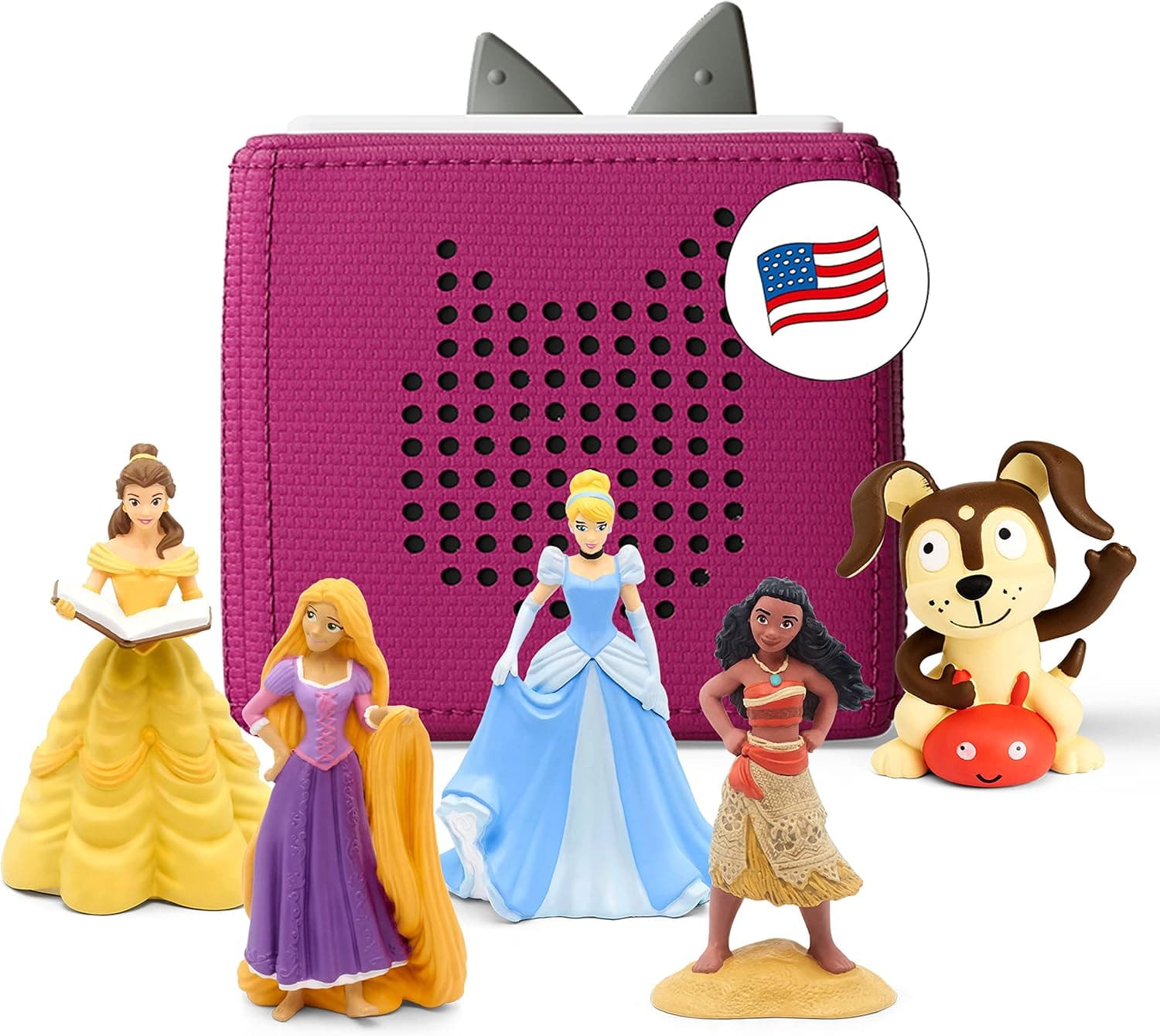
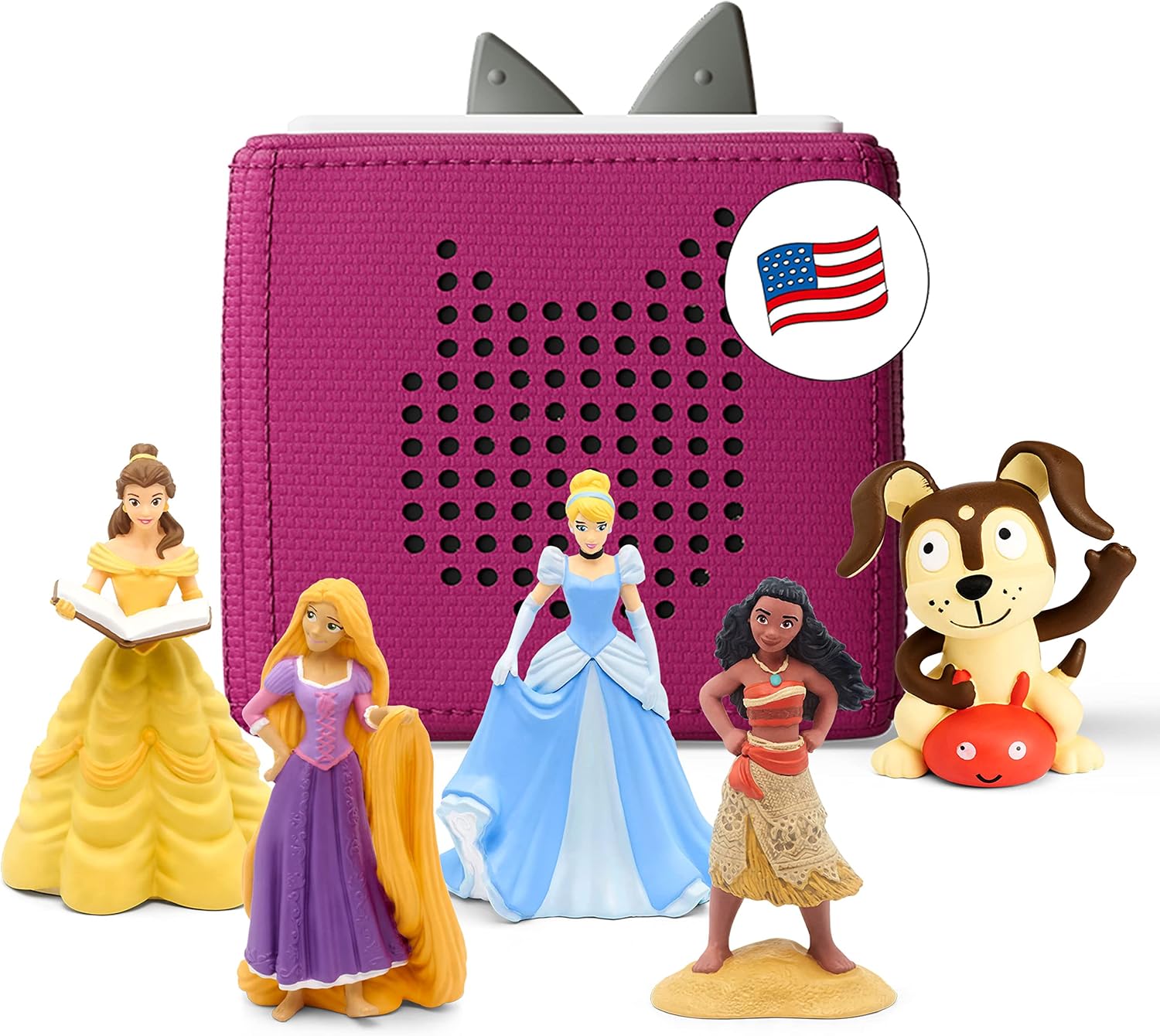
The Tonies Toniebox remains the most iconic silhouette in modern children's audio. Built like a padded, squishy cube, it is practically indestructible against the daily drops, throws, and spills of early childhood. The soft fabric exterior cushions impacts, while the playback mechanism is purely intuitive: place a magnetic Tonie figurine on top, and audio begins immediately.
Navigation relies on physical gestures rather than digital menus. Tapping the padded sides skips tracks backward or forward, tilting the box fast-forwards or rewinds, and pinching the rubberised silicone ears adjusts the volume. For younger toddlers who lack fine motor control, this direct physical relationship makes the Toniebox uniquely accessible.
Where the Toniebox stumbles is portability and long-term storage. The figurines are charming collectible toys, but packing a dozen chunky figurines alongside a bulky cube for a flight or holiday requires dedicated luggage space. Furthermore, the licensed character Tonies—spanning Disney, Pixar, and popular children's television—generally retail between $15 and $20 for roughly 30 to 50 minutes of audio, making library expansion an expensive ongoing pursuit.
2. Yoto Mini Audio Player
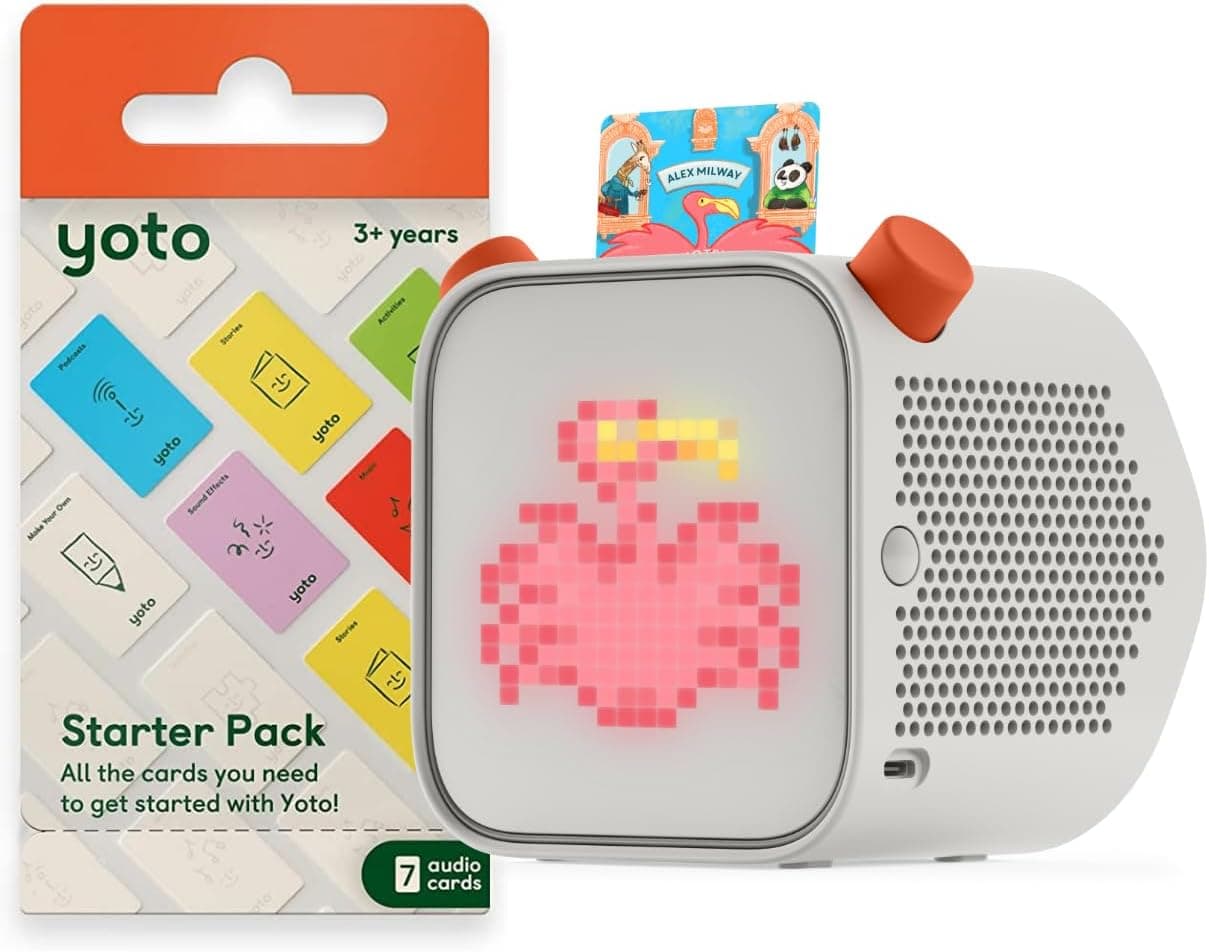
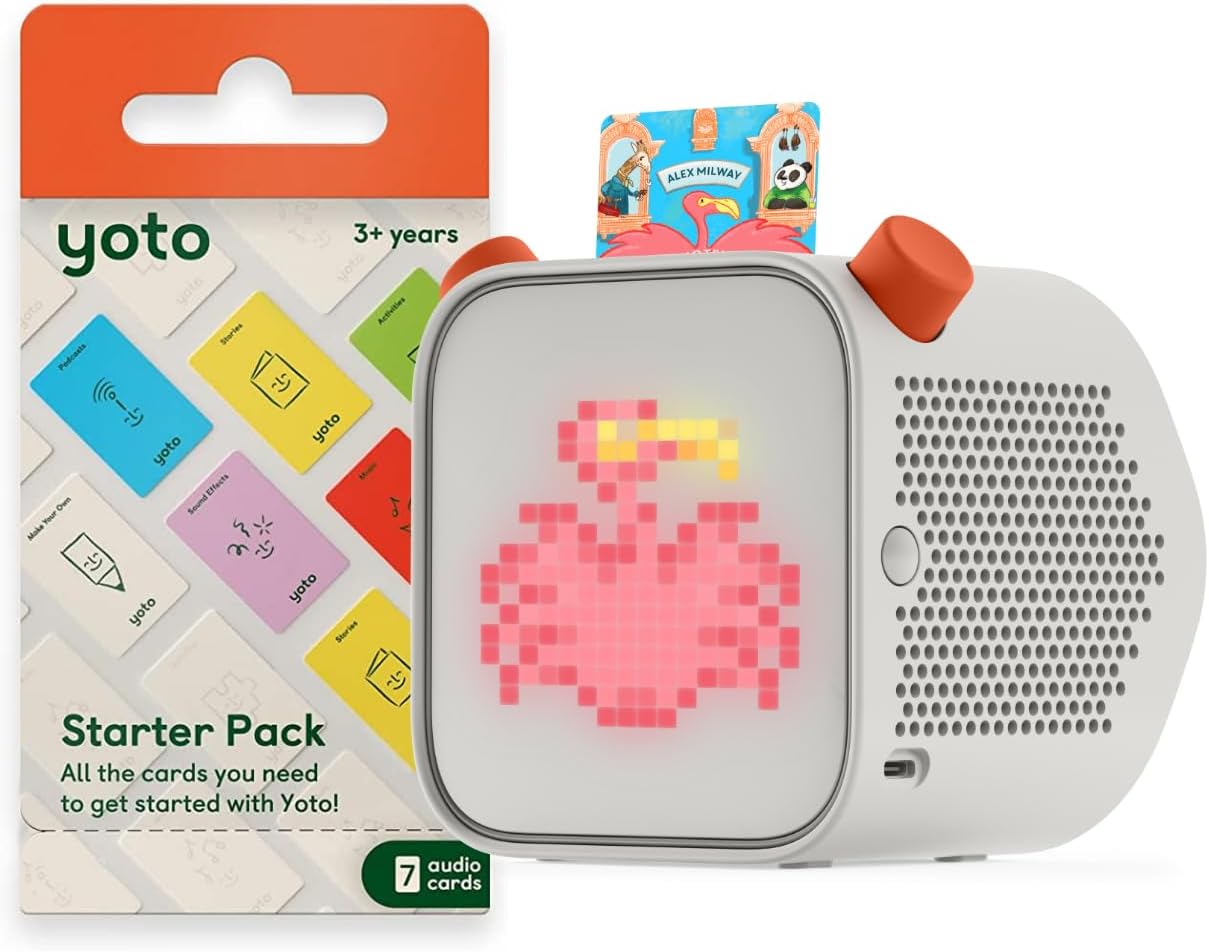
The Yoto Mini strips away the bulky toy aesthetic in favour of a sleek, palm-sized retro audio unit. Using credit-card-sized NFC smart cards inserted into a top slot, the Yoto Mini plays everything from bestselling chapter books (Roald Dahl, Harry Potter, Percy Jackson) to ambient sleep sounds, kid-safe radio stations, and daily podcasts. A low-resolution pixel display on the front brings simple visual cues to life without the hyper-stimulating glare of a standard screen.
From a software standpoint, Yoto outclasses the competition. Audio cards cache locally to the player's internal memory via Wi-Fi, meaning that once inserted, playback is entirely offline. If a card is lost or left behind during travel, parents can trigger the purchased track directly from the smartphone companion app via Bluetooth or stream it directly to the player remotely. The physical cards are credit-card thin, making a 30-story library easy to pack into a compact travel wallet.
The standard Yoto Mini hardware has a firmer plastic shell than the padded Toniebox, meaning investing in a silicone adventure jacket or padded travel case is sensible for active households. However, because its audio catalogue expands effortlessly from toddler lullabies all the way to 10-hour middle-grade audiobooks, the Yoto Mini boasts the longest practical lifespan of any player on the market.
3. Storypod Interactive Audio Story Starter Set
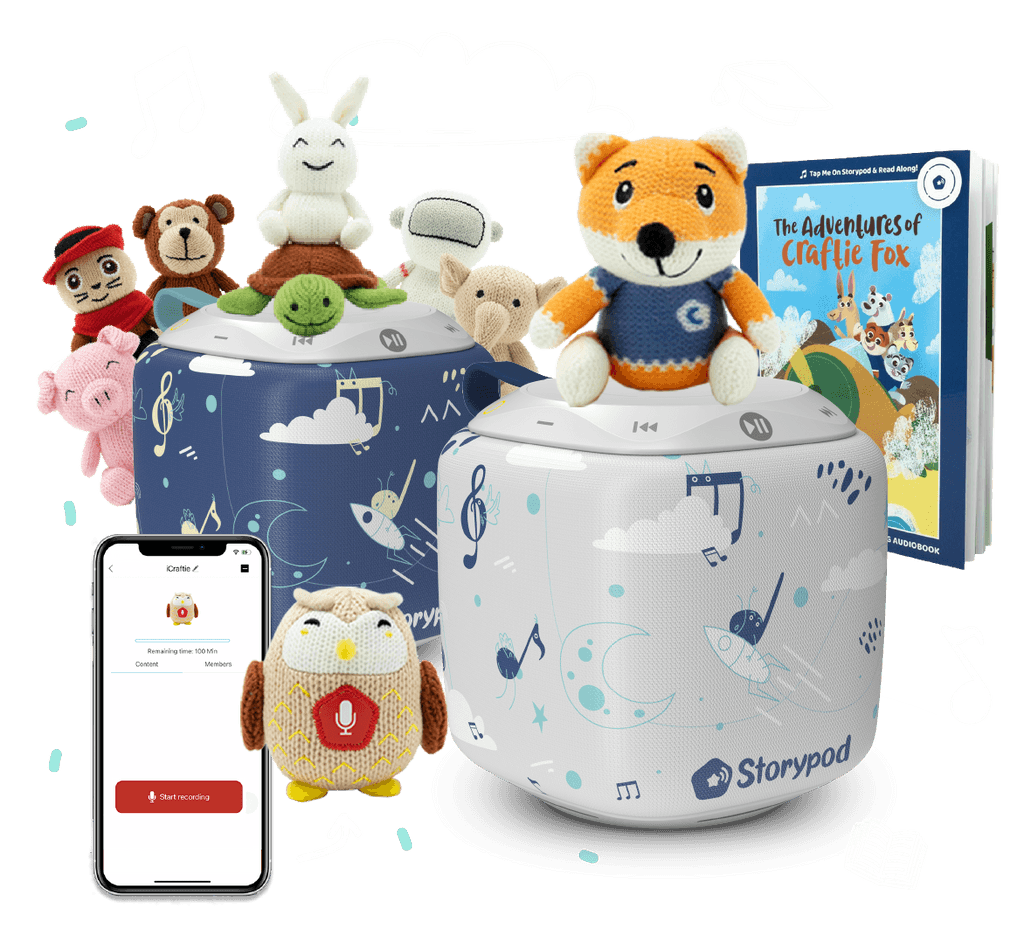
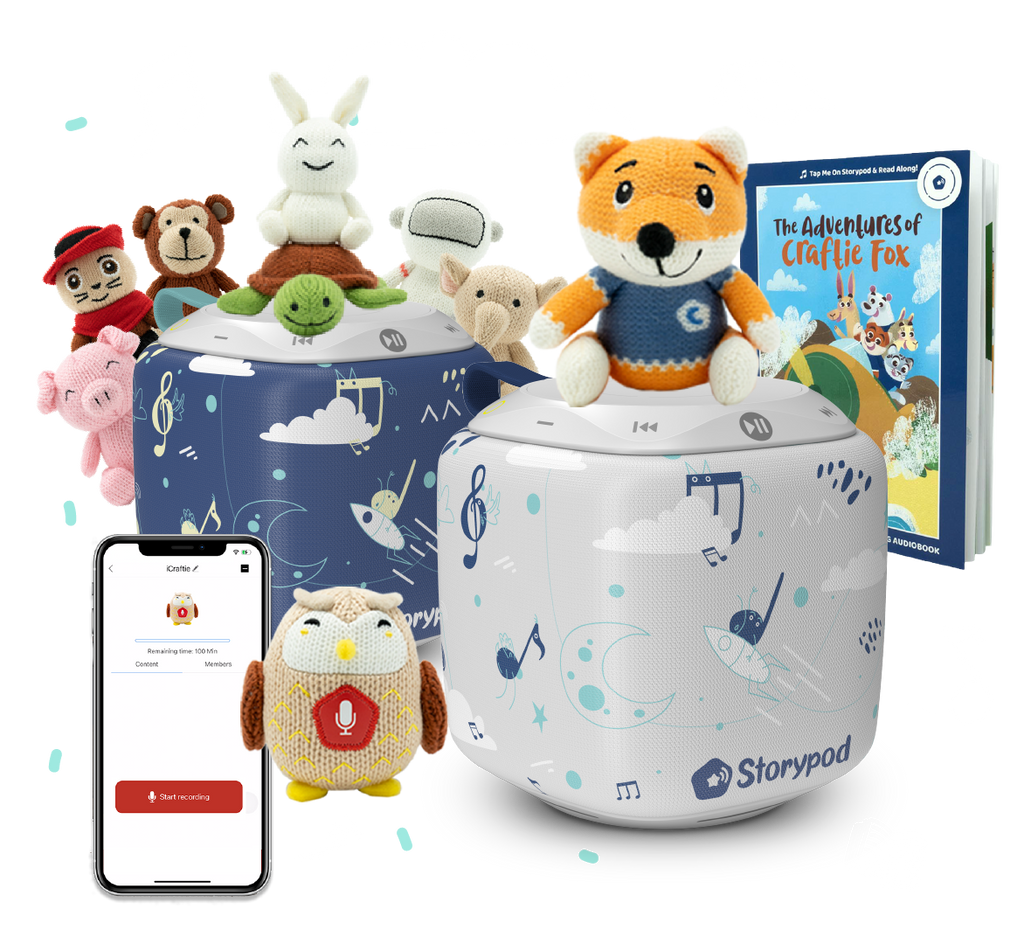
Storypod bridges the gap between passive audio listening and tactile literacy development. Rather than focusing exclusively on plastic figurines, Storypod utilises multiple physical mediums: yarn-woven plush characters called 'Crafties', read-along picture books with built-in sensors, interactive activity cards, and trivia tokens.
When a child places a Craftie or book on the Storypod, the magnetic sensor reads the data and plays immersive audio adventures, songs, or developmental lessons. A standout feature is the read-along book functionality: children turn physical paper pages while the audio prompts chime to indicate when to flip, reinforcing early reading mechanics and vocabulary retention. It also includes recordable tokens that allow distant family members to narrate stories via the mobile app.
Storypod's primary compromise is age ceiling. While fantastic for the infant-to-kindergarten demographic, older primary-school children will quickly outgrow the plush Craftie aesthetic and simplified interactive quizzes. If you have children aged five and under, it offers arguably the most educationally structured audio experience available.
4. TIMIO Educational Audio and Music Player Starter Set
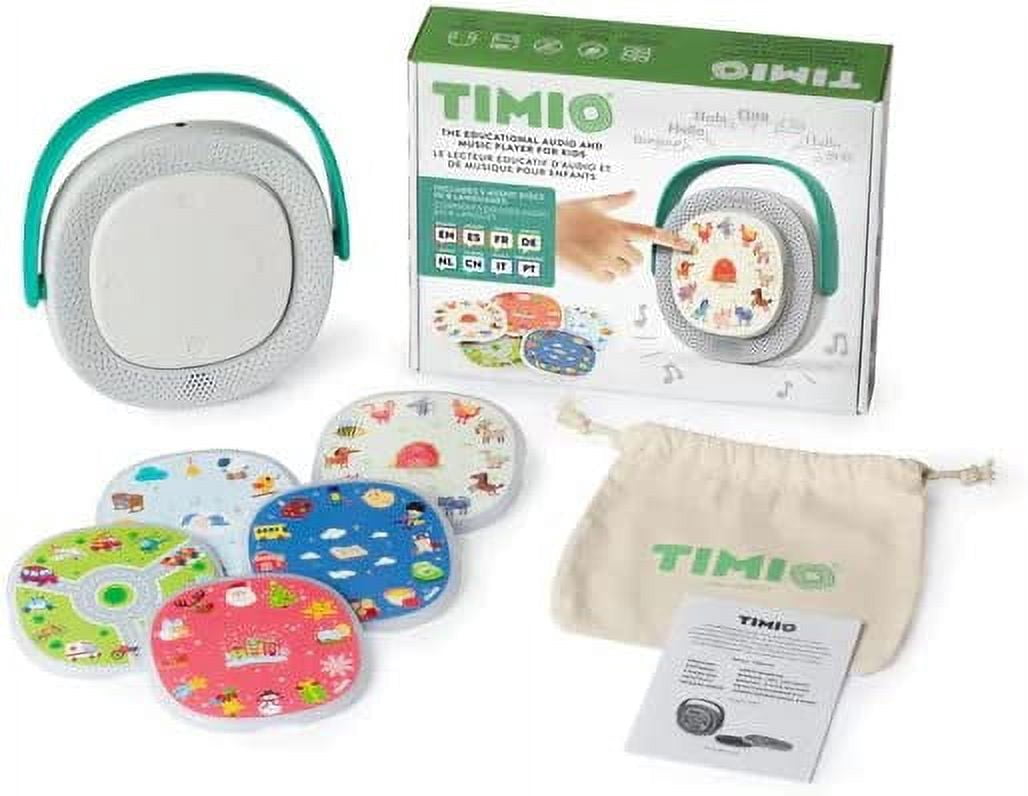
TIMIO approaches screen-free audio from a purely educational, zero-Wi-Fi perspective. Made from food-grade ABS plastic with a sturdy carry handle and illuminated LED ring, the player operates entirely via magnetic, scratch-resistant discs. There are no companion apps, no Wi-Fi pairing headaches, and zero account logins required.
Place a disc on the central pad, and the TIMIO instantly becomes an interactive audio board. Children tap the illustrated icons around the perimeter of the disc to trigger vocabulary words, animal noises, classical music, lullabies, or interactive quiz questions. Crucially, TIMIO supports 8 languages straight out of the box (including English, Spanish, French, German, and Mandarin), allowing parents to switch languages instantly to support bilingual development.
Because TIMIO does not connect to the cloud, its scope is constrained to the specific discs you own. You cannot stream full-length audiobooks or sync custom digital media playlists. It runs on 3 AA batteries rather than an internal lithium pack, which is ideal for zero-charging car journeys but creates ongoing battery replacement needs unless you use rechargeables.
5. LeapFrog On-the-Go Story Pal
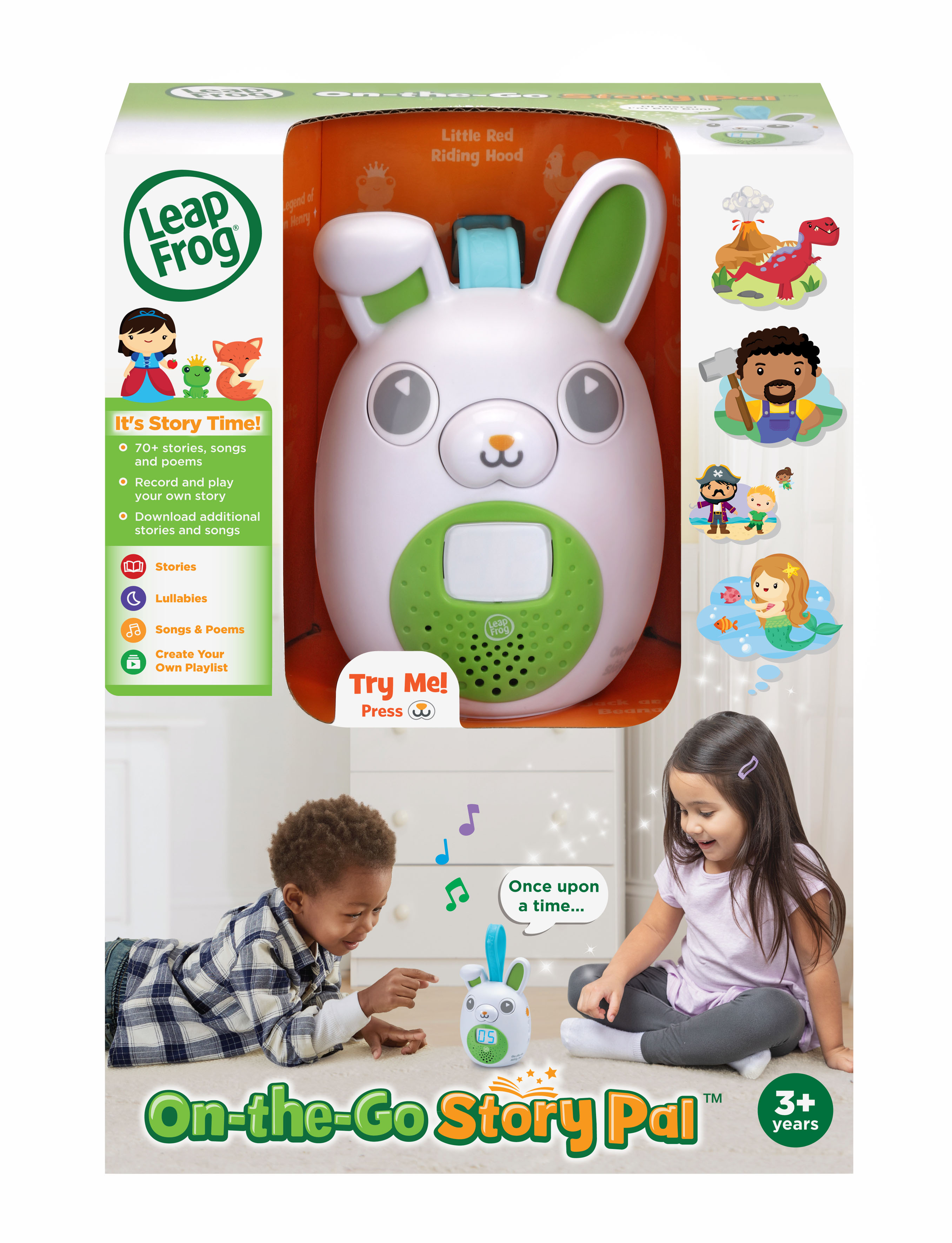
For parents who balk at the idea of spending upwards of $100 on a hardware starter kit plus $15 per individual story, the LeapFrog On-the-Go Story Pal provides an ultra-affordable standalone alternative. Shaped like an ergonomic bunny with a sturdy carry strap, the device comes preloaded out of the box with over 70 stories, fables, poems, and lullabies.
There are no physical figurines or NFC cards to purchase or misplace. Navigation is straightforward: kids rotate the selector wheel to cycle through content categories, press play, or engage the headphone jack for quiet travel. Parents can also record up to 10 minutes of their own voice reading a favourite custom book via the integrated recording feature.
The trade-off is content finality. Once your child exhausts the preloaded library of public domain classics and LeapFrog original stories, you cannot easily purchase modern mainstream licensed narratives like Disney or commercial audiobooks. It is a closed, self-contained unit that prioritises budget-friendly utility over expanding media ecosystems.
What to Look for When Buying a Kids' Audio System
1. Content Age Ceiling
Many systems excel at nursery rhymes and 15-minute toddler stories but hit a hard wall by age six. If you want a device that transitions into early chapter books, educational history podcasts, and full-length novels, prioritise systems with open-ended audio catalogues like Yoto. If your primary goal is sensory play and gross motor interaction for a 2-year-old, figurine-based players like Toniebox shine.
2. Portability and Travel Readiness
Consider where the player will actually live. Chunky padded cubes with loose figurines look delightful on a bedroom nursery shelf, but they are notoriously cumbersome in aeroplanes and car backseats. Flat smart cards and integrated headphone jacks make long-haul transit significantly easier for both parents and children.
3. The Hidden Cost of Media Expansion
Always check the average price per content unit before committing. Figurines with licensed Disney tracks often average $18 for 35 minutes of playtime. NFC cards often range between $6 and $12, frequently bundling multiple hours of classic literature. If budget is a strict priority, standalone preloaded units or systems offering record-your-own blank media deliver the highest playtime-per-dollar ratio.
Alternatives to Consider
If you prefer not to enter a proprietary card or figurine ecosystem, consider standard hardware alternatives:
- Dedicated Kids Bluetooth Speaker: Pairing a rugged, waterproof Bluetooth speaker with an old offline smartphone running a managed Spotify Kids or Audible profile provides infinite audio variety, though it sacrifices the independent physical tactile selection that younger children love.
- Standalone Preloaded Audiobooks: If long car rides are your sole use case, budget players like the Check today's price on Amazon eliminate recurring media costs entirely.
Final Verdict
If you have a child aged 3 to 12 and want a system that grows alongside their reading ability while offering unmatched travel convenience, the Yoto Mini Audio Player is the most capable, cost-effective, and versatile screen-free audio player on the market. For younger toddlers (ages 2 to 4) where soft-touch durability and toy-like physical interaction are the absolute priority, the Tonies Toniebox Audio Player Starter Set remains a charming, albeit bulkier, household favourite.