As an Amazon Associate I earn from qualifying purchases. This page contains affiliate links, and I may earn a commission at no extra cost to you.
Want to give a child more than just another screen to stare at? Electronic building kits are a brilliant way to introduce foundational STEM concepts – particularly electronics, physics, and programming logic – in a hands-on, engaging way. Watching a child's face light up as they successfully complete a circuit that makes a light glow or a motor spin is truly priceless. These aren't just toys; they're gateways to understanding how the world around us works, building critical thinking skills, and fostering a love for creation and problem-solving. But with so many options out there, all promising to be the 'best' or 'most educational,' it can be tough to know where to start, especially when sticking to a budget under £70.
I've dug through the current market, scrutinising specs, poring over owner reviews, and comparing educational value to bring you a focused look at four of the best electronic building kits available right now. My goal is to help you find a kit that's not only within budget but also genuinely sparks curiosity and provides a meaningful learning experience. Whether you're nurturing a budding engineer, a curious tinkerer, or just looking for a genuinely educational gift, there's a fantastic option here.
Why Electronic Building Kits are Essential Learning Tools
Beyond the immediate fun, electronic building kits offer a wealth of developmental benefits. They move children beyond passive consumption of technology to active creation. Kids learn about voltage, current, resistance, series and parallel circuits, and the basic function of components like LEDs, switches, and motors. These kits encourage:
- Problem-Solving: When a circuit doesn't work, kids have to troubleshoot, identify the issue, and try different solutions.
- Critical Thinking: Understanding cause and effect in a circuit teaches logical deduction.
- Fine Motor Skills: Manipulating small components and connecting circuits refines dexterity.
- Patience and Persistence: Some projects require multiple attempts, fostering resilience.
- Creativity: Many kits encourage open-ended design once the basics are mastered.
Crucially, these kits bridge the gap between abstract scientific concepts and tangible, real-world applications. It’s one thing to read about electricity; it’s another entirely to build something that uses it.
Comparison Table: Top Electronic Building Kits for Kids
| Product | Key Focus | Age Range | Price Band | Verdict | Buy |
|---|---|---|---|---|---|
| Snap Circuits Classic Electronics Kit | Basic circuit building, rapid prototyping | 8+ | Mid-range | Excellent, intuitive introduction to electronics. | Check price on Amazon |
| Littlebits Electronics Starter Kit | Modular, magnetic circuit blocks, creative invention | 8+ | Premium | Highly creative, intuitive, but can be pricey. | Check price on Amazon |
| Thames & Kosmos Electronics Workshop Kit | In-depth component understanding, soldering-free | 10+ | Mid-range | More traditional, detailed electronics education. | Check price on Amazon |
| Makeblock mBot Ranger Robot Kit | Robotics, coding (graphical), mechanical building | 10+ | Premium | Comprehensive robotics and programming introduction. | Check price on Amazon |
The Best Electronic Building Kits Reviewed
Snap Circuits Classic Electronics Kit
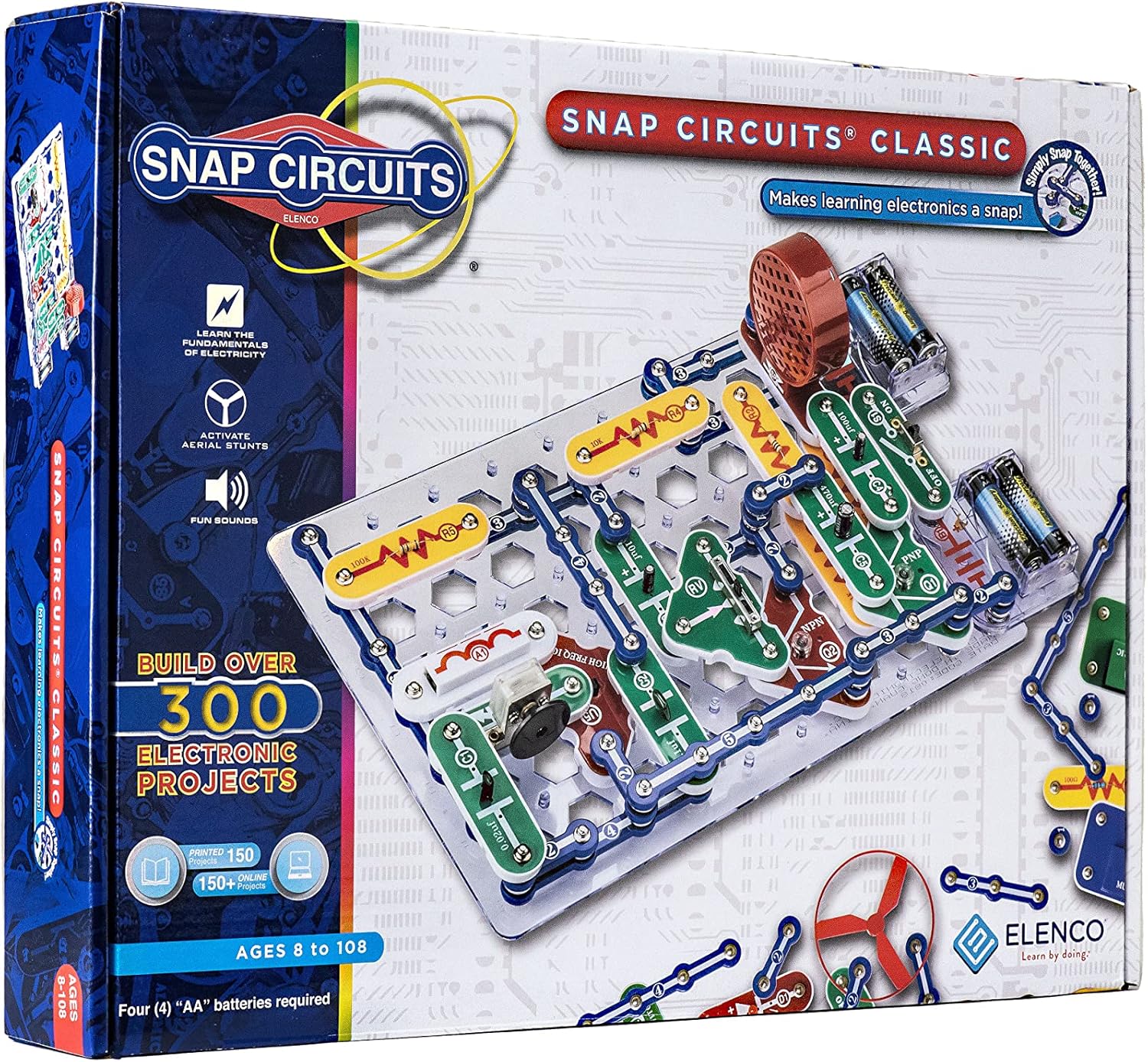
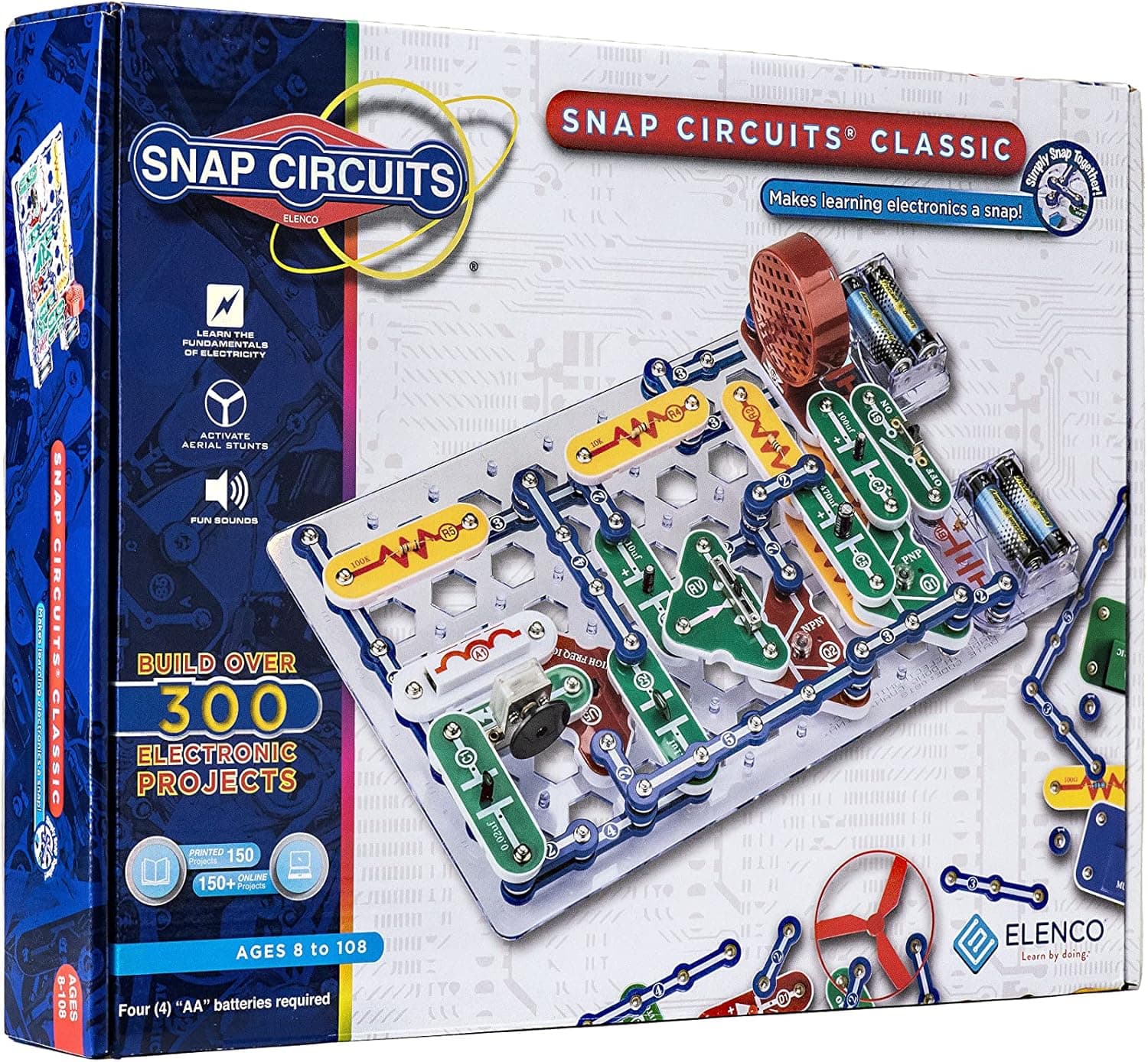
For years, the Snap Circuits Classic Electronics Kit has been the gold standard for introducing kids to electronics, and it's easy to see why. This kit takes the intimidating complexity out of circuit building by using colour-coded plastic modules that simply snap together onto a plastic grid. There's no soldering, no breadboards, and minimal frustration, making it incredibly approachable for children as young as eight, and even fascinating for adults.
Design and Build
The design philosophy of Snap Circuits is all about simplicity and safety. Each component – be it a switch, a motor, an LED, or a resistor – is encased in a durable plastic module. These modules have metal snaps on their underside, allowing them to connect firmly to the base grid and to each other, forming a complete circuit. The colour coding helps kids quickly identify different component types. Building is straightforward: follow the clear, illustrated instructions, snap the parts into place, and watch your creation come to life. Owners commonly report that the parts are robust enough to withstand enthusiastic play and repeated assembly/disassembly, which is crucial for a product aimed at kids.
Key Features and Performance
The Classic kit, often referred to as the SC-300, typically boasts over 300 projects. This isn't just a marketing number; it translates to a huge variety of experiments ranging from simple light switches and flying saucers to AM radios and doorbells. The included manual is excellent, guiding children through each project with clear diagrams and explanations of the underlying electrical principles. What I particularly appreciate is how it introduces concepts incrementally, building confidence with each successful circuit. Performance is reliable; once assembled correctly, the circuits consistently work as described. The immediate feedback – a light coming on, a fan spinning – is incredibly rewarding for young learners. Many kits in the Snap Circuits line are also compatible, meaning you can expand a child's collection without obsolescence, though this particular kit offers plenty to get started with.
Value
The Snap Circuits Classic Kit typically sits in the mid-range price bracket, often around £40-£50, making it an excellent investment given its vast project library and durability. For the sheer number of engaging projects and the intuitive learning experience it provides, it’s hard to beat. It's a kit that can be revisited repeatedly, offering new challenges as a child's understanding grows. You're getting a comprehensive introduction to electronics that genuinely delivers on its educational promise.
Pros:
- Extremely intuitive and easy to assemble for young learners.
- Robust, durable components designed for repeated use.
- Over 300 projects offer extensive learning and replayability.
- Excellent, clear, illustrated instruction manual.
- Strong foundation for understanding basic circuit theory.
Cons:
- Components are proprietary, limiting integration with other systems.
- Focuses on pre-designed projects rather than open-ended invention (initially).
- Some advanced concepts are simplified, not fully explained.
Who Should Buy It:
This is the ideal starting point for children aged 8 and up who are new to electronics. It's perfect for parents who want a safe, frustration-free way to introduce core electrical concepts without needing prior knowledge themselves.
Littlebits Electronics Starter Kit
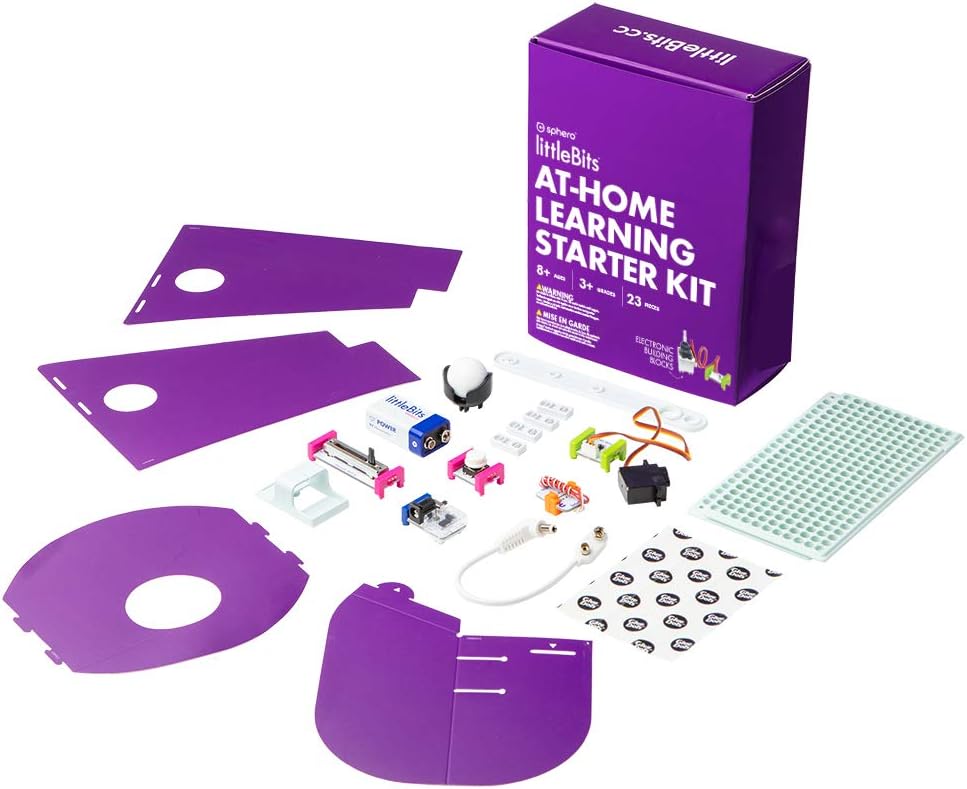
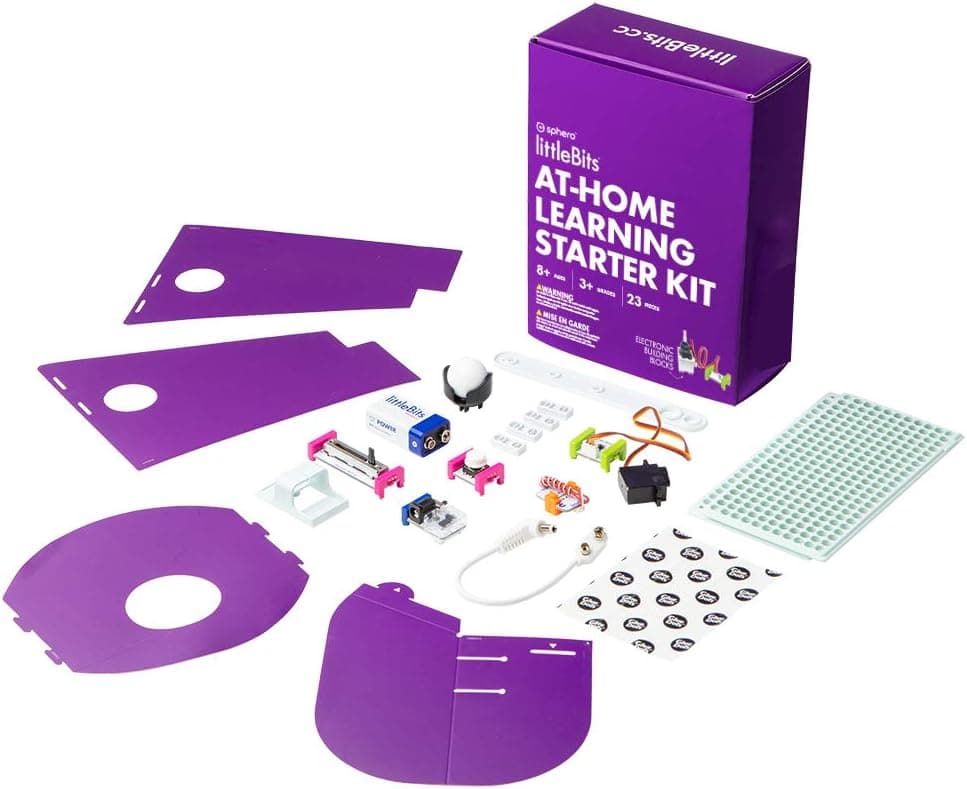
The Littlebits Electronics Starter Kit takes a distinctly modern, modular approach to circuit building. Instead of snapping components onto a board, Littlebits uses small, magnetic blocks that connect end-to-end, each representing a different electronic function (power, input, wire, output). This design makes it incredibly easy and almost impossible to connect components incorrectly, fostering a high degree of confidence and creativity from the outset.
Design and Build
Each Littlebit module is a tiny, self-contained circuit board with magnetic connectors. These magnets are polarised, meaning they only click together in the correct orientation, effectively preventing wiring errors. This 'no wrong way to connect' design is a huge advantage for encouraging experimentation without frustration. The blocks are brightly coloured, visually distinct, and incredibly tactile. Building with Littlebits feels more like playing with Lego than traditional electronics, which is a major draw for engaging younger children and those who might be intimidated by traditional circuit boards. They feel solid and well-made, designed to withstand the rigours of enthusiastic invention.
Key Features and Performance
The Starter Kit typically includes a selection of essential modules like a power bit, button, light sensor, wire, LED, and buzzer. What truly sets Littlebits apart is its emphasis on invention and iteration. While it comes with an invention guide featuring several structured projects (like a remote-controlled fan or a sound-activated light), the real magic happens when kids start combining bits in novel ways to create their own gadgets. The drag-and-drop digital app (if available with the specific kit version) can further enhance the experience, providing visual guides and even programming capabilities for more advanced sets, though the Starter Kit focuses purely on physical construction. Performance is flawless; the magnetic connections are robust, and the circuits work instantly and reliably, giving immediate gratification to budding inventors.
Value
The Littlebits Electronics Starter Kit usually falls into the premium price band, often hovering around £60-£70, sometimes even slightly over. While this might seem steep for the number of physical components, you're paying for the intuitive, frustration-free design and the emphasis on open-ended creative invention. The quality of the modules is excellent, and the system is highly expandable with additional bits purchased separately. If your primary goal is to foster pure invention and creative problem-solving with minimal setup fuss, Littlebits offers exceptional value in that specific niche, even if the initial outlay is higher.
Pros:
- Magnetic, modular design eliminates wiring errors and frustration.
- Incredibly intuitive, allowing for rapid prototyping and experimentation.
- Strong focus on open-ended invention and creative problem-solving.
- Durable, high-quality components.
- Excellent for visual learners and fostering confidence.
Cons:
- Higher price point for fewer initial components compared to Snap Circuits.
- Proprietary system limits integration with standard electronics.
- Instructional content might be less structured for foundational theory than other kits.
Who Should Buy It:
Ideal for creative thinkers aged 8 and up who thrive on inventing and experimenting rather than strictly following instructions. It's also great for educators looking for a tool that encourages rapid, iterative design.
Thames & Kosmos Electronics Workshop Kit
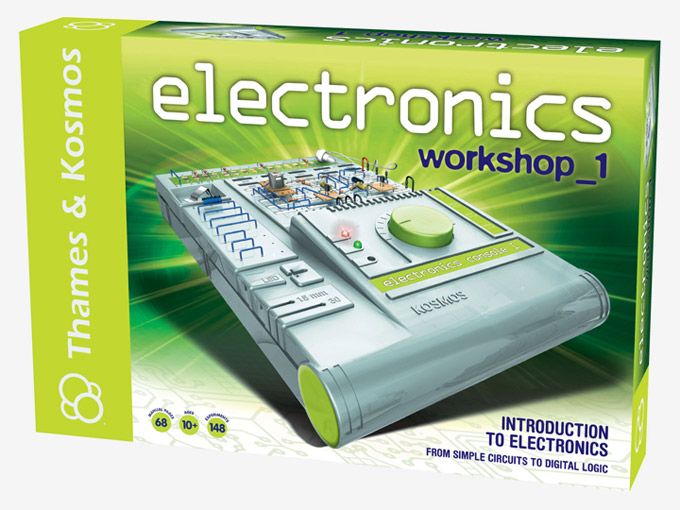
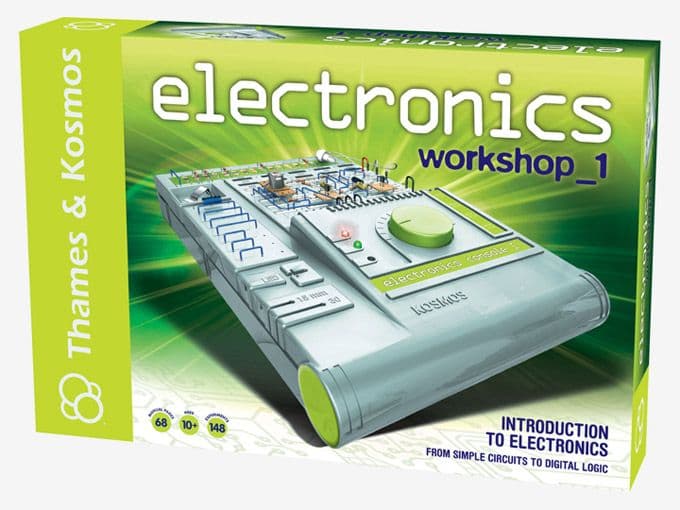
For those looking for a more traditional, yet still accessible, introduction to electronics without the need for soldering, the Thames & Kosmos Electronics Workshop Kit offers a fantastic middle ground. This kit provides a wide array of discrete components and teaches kids how to build circuits on a breadboard, a skill that's directly transferable to more advanced electronics projects.
Design and Build
Unlike the snap-together simplicity of Snap Circuits or the magnetic appeal of Littlebits, the Thames & Kosmos kit introduces children to a more 'real-world' approach using a breadboard. This might sound intimidating, but the kit's design makes it approachable. It includes a physical instruction manual that is exceptionally well-written and comprehensive, guiding users through component identification (resistors, capacitors, transistors, LEDs, switches, wires) and how they fit into a circuit diagram. The components themselves are standard small electronic parts, and connecting them involves pushing wires and component leads into the holes on the breadboard. It requires a bit more dexterity and attention to detail than the other kits, but this also means kids are learning valuable skills for future projects. Everything feels organised, and the quality of the components is perfectly adequate for learning.
Key Features and Performance
The kit typically features around 100 experiments, which cover a broad range of topics from basic circuits to more complex applications involving transistors and integrated circuits. What makes this kit stand out is its emphasis on explaining the 'why' behind each component and circuit. The manual doesn't just tell you what to do; it teaches you what each part does and how it affects the circuit. Projects include light sensors, alarm circuits, logic gates, and even simple radio receivers. Performance is solid once circuits are correctly assembled. The learning curve is slightly steeper than with Snap Circuits, but the depth of understanding gained is significantly greater. It’s a rewarding experience that builds genuine confidence in electronics.
Value
The Thames & Kosmos Electronics Workshop Kit usually falls into the mid-range category, similar to Snap Circuits, often available for around £45-£60. For this price, you're getting a truly robust educational experience that goes beyond mere demonstration. It provides a solid foundation in component recognition, circuit diagram reading, and breadboard prototyping – skills that are directly applicable to hobbyist electronics platforms like Arduino or Raspberry Pi. It offers excellent value for the depth of knowledge it imparts.
Pros:
- Teaches practical breadboard skills, transferable to real-world electronics.
- Comprehensive, well-explained instruction manual with theoretical depth.
- Introduces a wide range of discrete electronic components.
- Over 100 varied experiments cover fundamental and advanced concepts.
- Excellent preparation for more complex hobbyist projects.
Cons:
- Requires more precision and dexterity than snap-together kits.
- Slightly steeper learning curve; may require more adult guidance for younger kids.
- Components are small and can be easily misplaced.
Who Should Buy It:
Best for children aged 10 and up who have demonstrated a keen interest in how things work and are ready for a more in-depth, traditional electronics learning experience. It's perfect for aspiring engineers who want to understand the building blocks of circuits.
Makeblock mBot Ranger Robot Kit
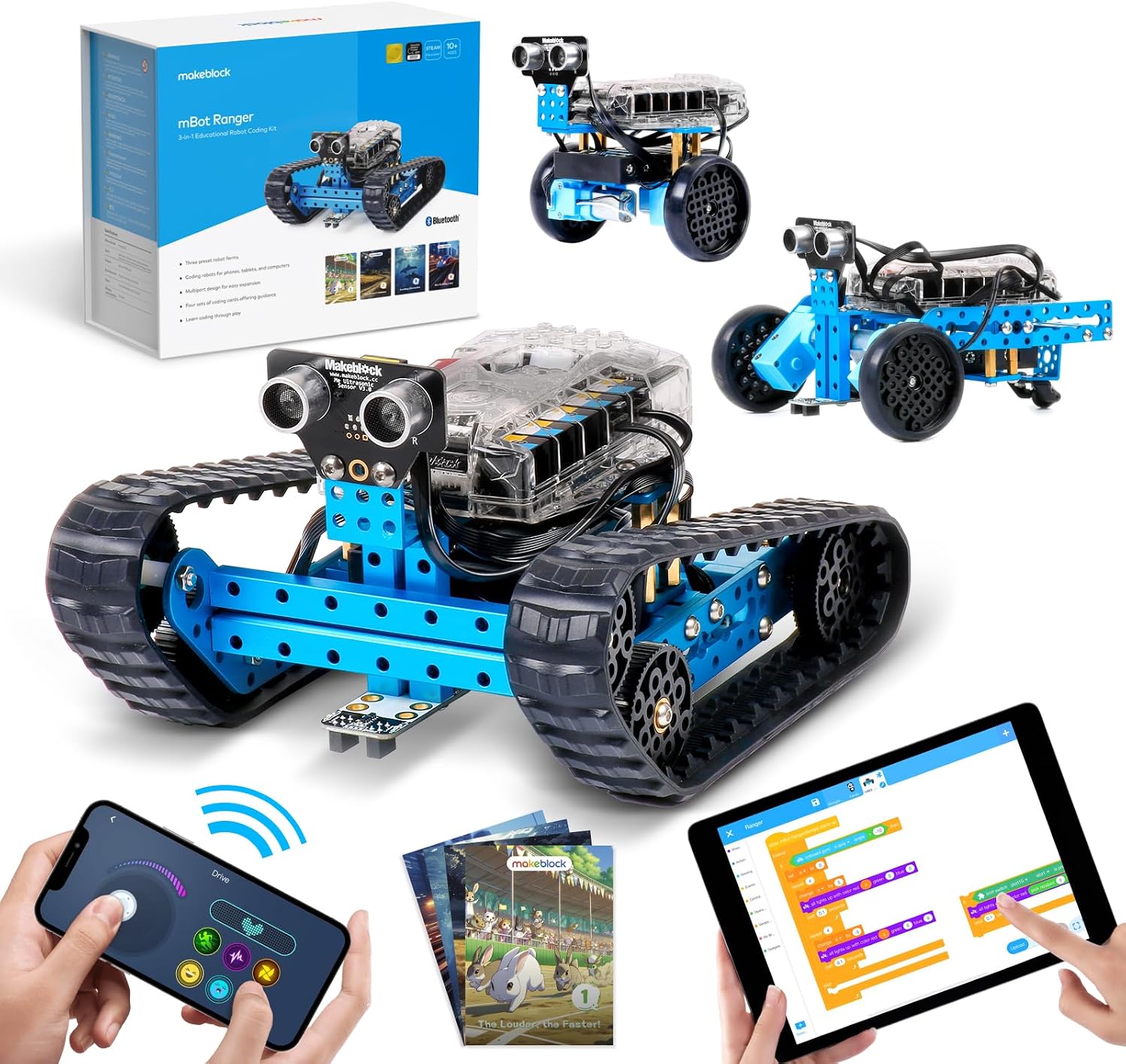
Shifting gears slightly, the Makeblock mBot Ranger Robot Kit combines electronics with mechanical engineering and programming, offering a comprehensive introduction to robotics. This isn't just about making lights blink; it's about building an autonomous robot and then programming its behaviour, making it incredibly engaging and relevant to modern tech skills.
Design and Build
The mBot Ranger is essentially a 3-in-1 robot kit that allows kids to build three different configurations: a tank-like robot (Land Raider), a three-wheeled self-balancing car (Dashing Raptor), and a racing car (Nervous Bird). The components are primarily aluminium beams, plates, motors, and sensors, all designed for easy assembly with screws and nuts. The instructions are typically clear, though building any complex robot always requires patience and attention to detail. Once built, the Ranger feels sturdy and well-engineered, capable of withstanding typical play. The main control board is based on Arduino, providing a robust and flexible platform for learning.
Key Features and Performance
The core of the mBot Ranger is its programmable mainboard, which connects to various sensors (ultrasonic for distance, line follower) and actuators (motors, LEDs). Programming is done via the graphical mBlock app, which is based on Scratch 2.0. This drag-and-drop interface is incredibly intuitive, allowing kids to learn coding logic by chaining together visual blocks of commands. For more advanced users, it can also be programmed with Python or even Arduino C. This scalability is a huge asset. The robot's performance is impressive; it can autonomously navigate, follow lines, avoid obstacles, and even balance on two wheels (in the Dashing Raptor configuration). The immediate, physical manifestation of their code working in the real world is incredibly motivating for kids.
Value
The Makeblock mBot Ranger Robot Kit sits firmly in the premium price band, often costing £65-£70 or more. While it's at the very top of our £70 budget, the value proposition is strong for what you get: a multi-configuration robot, a robust programmable platform, and an introduction to both mechanical building and coding. It's a comprehensive STEM learning tool that prepares kids for more advanced robotics and programming endeavours. Considering its versatility and the depth of learning it provides, it's a worthwhile investment for a dedicated aspiring roboticist.
Pros:
- Combines mechanical building, electronics, and programming in one kit.
- Builds three different robot configurations for varied learning experiences.
- Graphical programming (mBlock/Scratch) is highly accessible for beginners.
- Scalable to more advanced text-based coding (Python, Arduino C).
- Robust aluminium construction and reliable components.
Cons:
- Highest price point in this selection.
- Requires more involved assembly with screws and nuts.
- Learning curve for coding can be steeper for absolute beginners.
Who Should Buy It:
An excellent choice for older children (10+) with a strong interest in robotics, coding, and mechanical design. It's perfect for those who want to see their code physically come to life and control a moving machine.
Factors to Consider When Choosing an Electronic Building Kit
Picking the right kit isn't just about price; it's about matching the kit to the child's age, interest, and your family's learning style. Here are a few things to think about:
- Age Appropriateness: Younger children (7-9) benefit most from snap-together or magnetic systems like Snap Circuits or Littlebits, which minimise frustration. Older children (10+) can handle kits with breadboards or mechanical assembly, such as Thames & Kosmos or Makeblock.
- Learning Style: Does your child prefer guided projects (Snap Circuits, Thames & Kosmos) or open-ended invention (Littlebits)? Are they interested in coding (Makeblock) or pure circuit theory?
- Component Type: Do you want a system that mimics 'real' electronics components (Thames & Kosmos), or one that simplifies it for easier understanding (Snap Circuits, Littlebits)?
- Expandability: While all these kits offer plenty out of the box, consider if you might want to add more components or integrate with other systems down the line.
- Durability: Kids can be tough on toys. Kits with robust components and solid connections will last longer.
- Replay Value: A kit with a large number of projects or open-ended creative potential will provide longer-lasting engagement.
Alternatives to Consider
While the kits above offer fantastic value and learning, sometimes a slightly different approach is needed. If you're looking for something simpler and even more budget-friendly, or a step up into proper microcontroller programming, these might fit the bill:
4M Kidzlabs Brush Robot
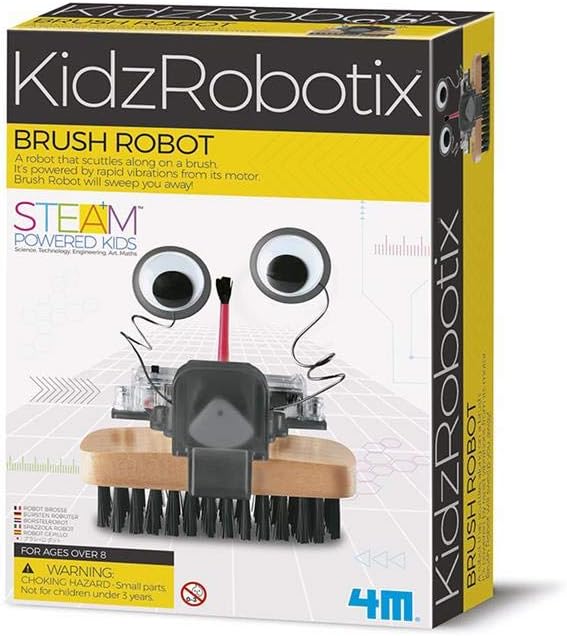
For a truly entry-level, very affordable option, the 4M Kidzlabs Brush Robot is a charming little kit. It teaches a basic motor circuit and mechanical design in the context of building a wobbly robot from a brush head. It's quick to assemble, usually around £10-£15, and provides an immediate, tangible result. It's a great stocking filler or first dip into simple robotics for younger kids (6+), although its educational depth is limited to a single project.
Elegoo UNO Project Super Starter Kit
If you have an older, more dedicated teen (12+) who's already shown an interest in electronics and is ready to delve into microcontroller programming, the Elegoo UNO Project Super Starter Kit is an outstanding choice. This kit includes a genuine Arduino UNO R3 board (or a high-quality clone) and a vast array of components like LEDs, sensors, motors, and an LCD screen. It teaches actual C++ programming for embedded systems and uses a standard breadboard, preparing kids for serious electronics projects. While typically slightly above the £70 budget (often around £75-£90), it offers unparalleled depth for the aspiring electronic engineer or programmer.
Verdict: Which Electronic Building Kit Should You Buy?
Choosing the 'best' kit truly depends on your child's age, interests, and how they learn. However, if I had to pick a single all-rounder that provides exceptional educational value, robust design, and broad appeal within our budget, the Snap Circuits Classic Electronics Kit is still the one to beat.
Its unparalleled ease of use combined with a massive library of engaging projects makes it the perfect entry point for most children aged 8 and up. It builds confidence without frustration, laying a solid foundation for future STEM exploration. If you have a child who thrives on invention, Littlebits is a fantastic (albeit pricier) alternative, while Thames & Kosmos offers a more traditional, in-depth learning experience. For the budding roboticist, the Makeblock mBot Ranger is an incredible comprehensive package. Ultimately, any of these kits will be a fantastic gift that provides far more than just entertainment; they offer the tools to inspire the next generation of innovators.
Ready to spark an engineering mind? Pick up your chosen kit today!