As an Amazon Associate I earn from qualifying purchases. This page contains affiliate links, and I may earn a commission at no extra cost to you.
Why Wi-Fi 7 Changes the Game for Device-Heavy Smart Homes
Smart homes reach a breaking point when you cross forty or fifty active connected devices. Video doorbells, smart displays, automated lighting bridges, outdoor cameras, and high-bitrate streaming pucks do not just use bandwidth—they constantly fight for airtime. Older dual-band and tri-band Wi-Fi 6 systems choke not because your internet connection is slow, but because the wireless spectrum is saturated with competing transmission requests.
Wi-Fi 7 tackles this bottleneck directly through three fundamental hardware upgrades: 320 MHz ultrawide channels in the 6 GHz band, 4096-QAM modulation, and Multi-Link Operation (MLO). MLO is the standout feature for whole-home mesh installations. Instead of a wireless satellite node locking into a single static band to communicate with the main router, MLO allows devices and mesh nodes to aggregate multiple wireless frequency bands simultaneously. If interference hits one band, packets seamlessly flow through another without dropping a single frame of your security feed or causing a smart lock to report as offline.
If you are spending top-tier money to banish dead zones and establish a rock-solid foundation for smart home hardware, these three flagship systems represent the absolute peak of modern consumer mesh networking.
Top Wi-Fi 7 Mesh Systems Compared
| Mesh System | Wireless Architecture | Wired Multi-Gig Ports | Smart Home Integration | Price Band | Buy Link |
|---|---|---|---|---|---|
| Netgear Orbi 970 Series (RBE973) | Quad-Band (Up to 27 Gbps) | 10 GbE WAN + 10 GbE LAN + 2.5 GbE LAN | Basic IoT network segmentation | Ultra-Premium | Check price on Amazon |
| ASUS ZenWiFi BQ16 Pro | Quad-Band (Up to 30,000 Mbps) | Dual 10 GbE + Triple 2.5 GbE/1 GbE | Smart Home Master (3 dedicated SSIDs) | Premium | Check price on Amazon |
| Amazon eero Max 7 | Tri-Band (Up to 4.3 Gbps wireless) | Dual 10 GbE + Dual 2.5 GbE | Built-in Thread, Matter, & Zigbee controller | High-End | Check price on Amazon |
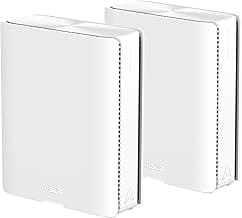
1. ASUS ZenWiFi BQ16 Pro – The Ultimate Power-User Smart Home Mesh
The ASUS ZenWiFi BQ16 Pro is an absolute monster of a mesh package designed for people who refuse to compromise on control, port selection, or long-term software costs. ASUS built this system around a high-performance quad-band Wi-Fi 7 engine capable of theoretical cumulative throughput up to 30,000 Mbps, backed by sixteen internal front-end modules and twelve internal antennas engineered to drive signals through thick building materials and multi-storey layouts.
Smart Home Network Separation
Where the ZenWiFi BQ16 Pro pulls ahead for automated households is its "Smart Home Master" software layer. Rather than lumping all smart plugs, sensors, and cameras onto a single secondary 2.4 GHz network, ASUS allows you to spin up three distinct sub-networks (SSIDs). You can isolate cheap 2.4 GHz smart switches on a dedicated IoT VLAN that cannot touch your personal computers or local network storage, assign a separate low-latency SSID for VR headsets and game consoles, and maintain a protected guest network with instant VPN routing.
Hardware Ports and Connectivity
Physical backhaul and multi-gig flexibility are best-in-class here. Each BQ16 Pro node comes equipped with dual 10-Gigabit Ethernet ports alongside multiple 2.5-Gigabit and 1-Gigabit connectors. If you run a high-speed Network Attached Storage (NAS) array or have a multi-gigabit fibre broadband connection, you will not run out of high-bandwidth wired sockets. Additionally, a built-in USB 3.0 port supports 4G/5G mobile tethering backup, ensuring your smart home automations stay live even during a local broadband outage.
Long-Term Value
Unlike competitors that lock advanced security reports, ad blocking, and fine-grained parental controls behind monthly paywalls, ASUS includes commercial-grade AiProtection Pro (powered by Trend Micro) free for the lifetime of the hardware. For a premium mesh setup, avoiding an annual recurring software fee makes a massive financial difference over five to seven years of operation.
2. Amazon eero Max 7 – The Smartest Hub Integration and Simplest Setup
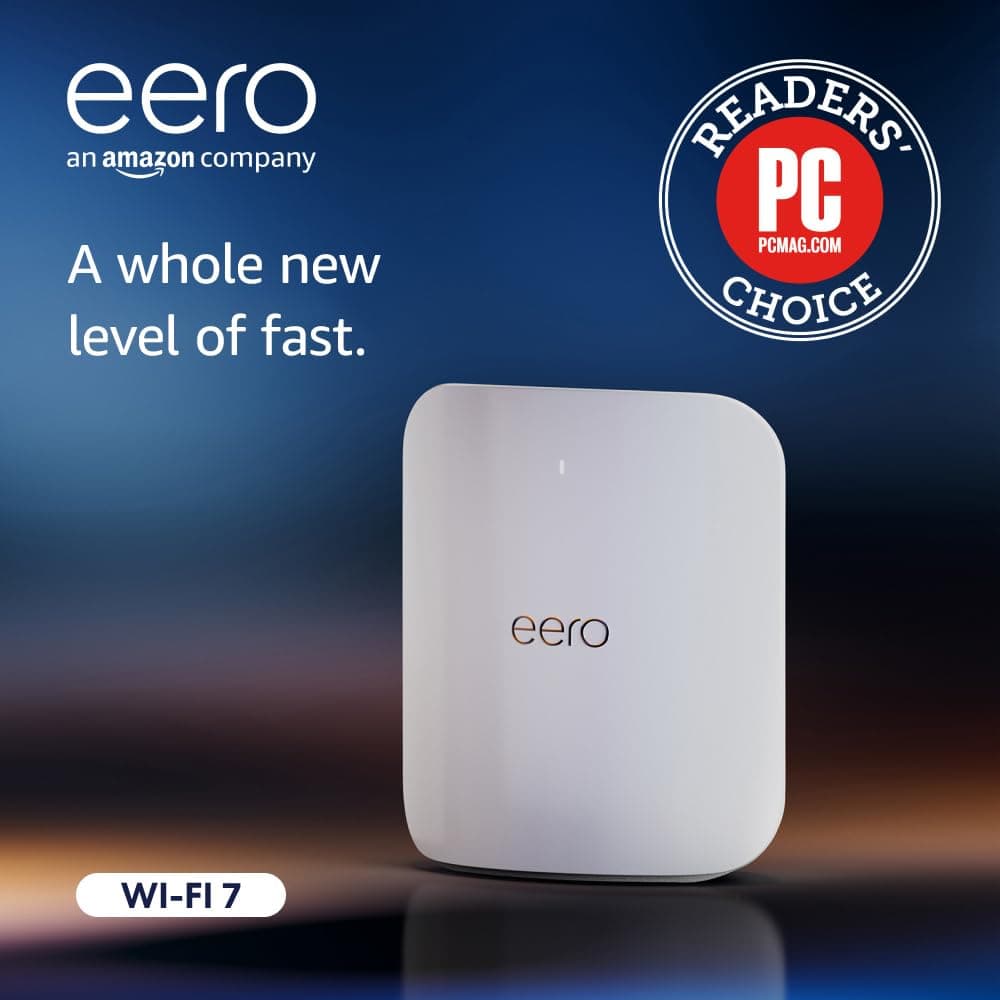
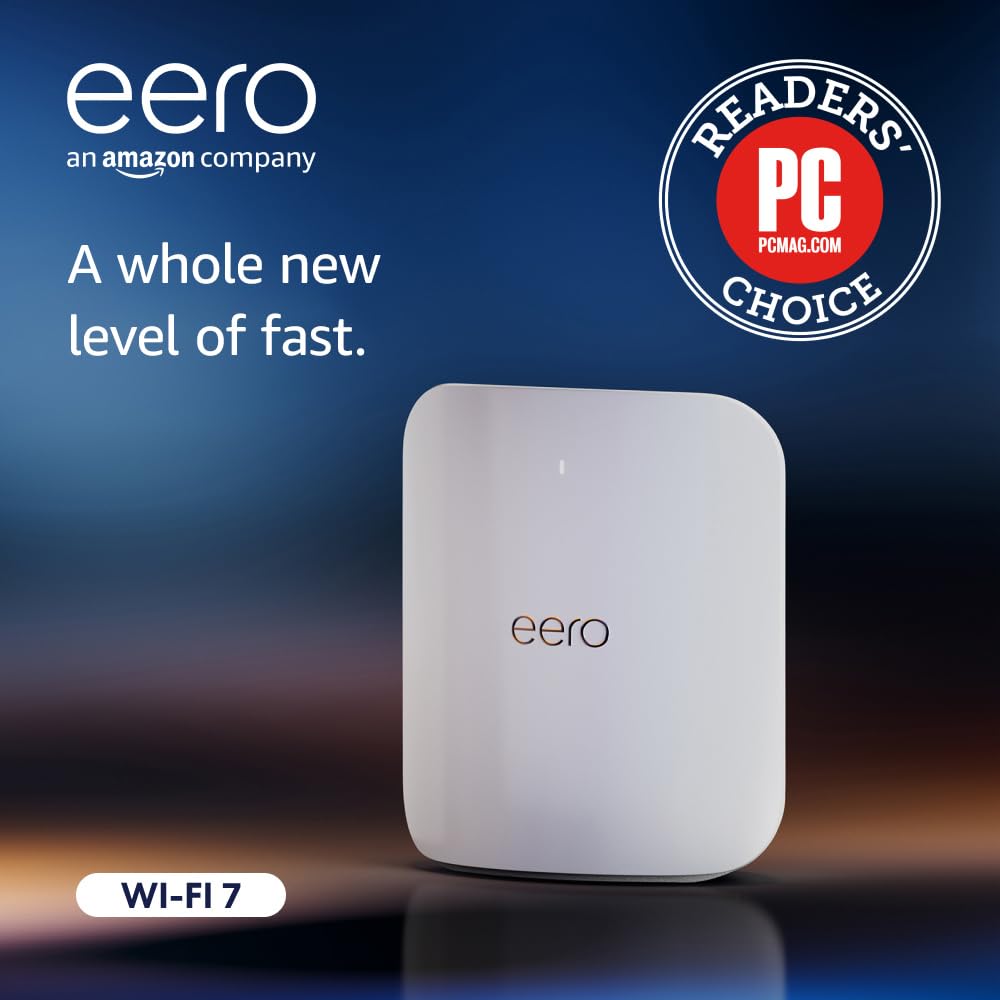
If your primary priority is frictionless day-to-day operation and clean integration with emerging smart home standards, the Amazon eero Max 7 is the most refined mesh node on the market. Eero transitioned from its previous compact puck designs to a larger, passively cooled tower for the Max 7, delivering wireless speeds up to 4.3 Gbps and wired throughput up to 9.4 Gbps.
Built-In Smart Home Controller
The eero Max 7 does not just route internet traffic—it acts as an integrated smart home bridge. Packed inside each node are radios for Zigbee, Thread (acting as a Thread Border Router), and direct controller support for the cross-platform Matter standard. This eliminates the need for standalone third-party bridges plugged into your wall sockets. Smart lighting, motion sensors, and smart blinds pair directly through the eero interface and bridge straight into Apple Home, Amazon Alexa, or Google Home ecosystems.
Dynamic TrueMesh Routing
While the eero Max 7 is a tri-band rather than a quad-band unit, it compensates with Amazon's proprietary TrueMesh algorithm. TrueMesh constantly assesses wireless traffic patterns, client signal attenuation, and environmental interference, dynamically shifting client devices between the 2.4 GHz, 5 GHz, and 6 GHz spectrums in real time. Each unit covers up to 230 m² (roughly an 8.5-metre omnidirectional radius) and supports over 250 concurrent clients without buffer degradation.
The Subscription Trade-Off
The main caveat with the eero ecosystem remains its software paywall. While basic management, Matter/Thread smart-home routing, and network scheduling are included for free, premium capabilities like network-level ad blocking, historical bandwidth analytics, dynamic DNS, and automated cellular failover require an ongoing eero Plus subscription. If you want a zero-maintenance mesh system that runs itself seamlessly in the background, the eero Max 7 is unbeatable, provided you accept the software model.
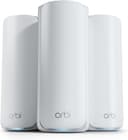
3. Netgear Orbi 970 Series (RBE973) – The Raw Wireless Performance Champion
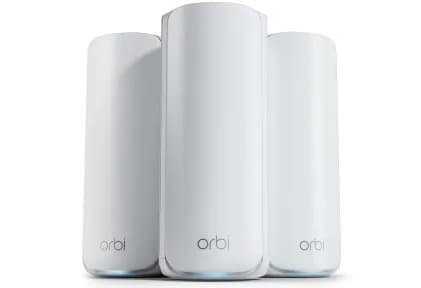
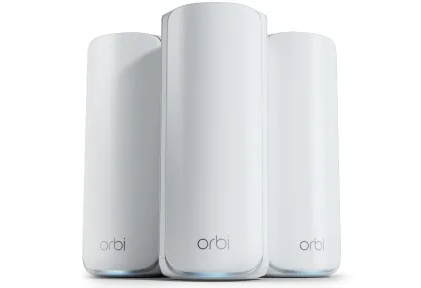
For palatial homes, estates, or multi-wing properties where running Ethernet cables between floors is impossible, the Netgear Orbi 970 Series (RBE973) represents the ultimate brute-force wireless solution. Packing a router and two satellite units, the RBE973 package claims coverage up to 8,200 square feet and supports up to 200 simultaneous high-demand devices with aggregate speeds reaching up to 27 Gbps.
Enhanced Dedicated Backhaul
The standout engineering feature of the Orbi 970 is Netgear's patented Quad-Band architecture with Enhanced Dedicated Backhaul. While standard mesh systems force client devices and satellite backhaul traffic to fight over the same wireless bandwidth, the Orbi 970 reserves a dedicated multi-gigabit wireless channel exclusively for communication between the base station and satellites. By combining 5 GHz and 6 GHz bands using MLO for its dedicated backhaul pipeline, remote satellites deliver near-wired speeds to connected laptops and streaming devices even across significant physical distances.
Port Array and Hardware Build
The hardware on the Orbi 970 is expansive. The main router features a 10-Gigabit Internet WAN port alongside one 10-Gigabit LAN and four 2.5-Gigabit LAN ports, while each satellite carries one 10-Gigabit LAN and two 2.5-Gigabit LAN connections. This ensures you can place a satellite in a remote home office or media room and connect a high-end desktop, gaming rig, or local server at full 10-Gigabit wired rates.
The Luxury Price Tag
The biggest barrier is price. The Orbi 970 sits firmly in the ultra-luxury pricing bracket, costing significantly more than competing systems. Like eero, Netgear also prompts users for an annual Netgear Armor cybersecurity subscription after the initial trial period expires. However, if your goal is maximum wireless throughput across an enormous footprint with zero speed degradation at the perimeter, nothing matches the raw wireless punch of the Orbi 970.
Key Smart Home Buying Criteria: How to Choose
1. Dedicated Backhaul vs Dynamic Spectrum Sharing
If your home is not wired for Ethernet and you must rely entirely on wireless communication between mesh nodes, look closely at how the system handles backhaul traffic. Quad-band systems like the ASUS ZenWiFi BQ16 Pro and Netgear Orbi 970 reserve dedicated high-frequency wireless channels to shuttle data between nodes, keeping client-facing bands clean. Tri-band systems like the Amazon eero Max 7 dynamically share bands, which works brilliantly for medium-to-large layouts but can experience throughput reduction at extreme range compared to dedicated quad-band arrays.
2. IoT Network Isolation & Matter Support
A secure smart home requires isolation. Inexpensive smart plugs and generic smart bulbs frequently lack robust firmware security. Having a mesh system that allows you to easily set up an isolated IoT network keeps rogue smart gadgets separate from your primary devices. If you want to streamline your physical bridges, the built-in Thread and Zigbee radios in the eero Max 7 save space and outlet clutter, whereas the ASUS BQ16 Pro offers superior software-level VLAN isolation.
3. Multi-Gigabit Ethernet Ports
Do not invest in a Wi-Fi 7 system that bottlenecks your wired infrastructure. Ensure your chosen setup includes at least 2.5 GbE or 10 GbE WAN and LAN ports. If your broadband provider delivers 1 Gbps or 2 Gbps fibre, connecting to an older 1 Gbps router port caps your entire home below its true potential.
Alternatives to Consider
If you want top-tier mesh coverage but do not need full Wi-Fi 7 multi-gigabit capabilities or enterprise-grade routing features, consider these targeted alternatives:
- For Budget-Friendly Smart Home Upgrades: A standard high-end Wi-Fi 6E mesh system delivers access to the clean 6 GHz band at roughly half the price of flagship Wi-Fi 7 kits, which is more than enough for streaming 4K video and managing basic smart lighting.
- For Ultra-Simple Single-Node Coverage: If you live in a flat or compact detached property under 150 m², buying a single standalone Amazon eero Max 7 node provides multi-gigabit wired speeds and integrated Thread/Zigbee controller capabilities without the cost of a multi-pack mesh bundle.
Final Verdict & Recommendation
For the vast majority of power users and smart home enthusiasts, the ASUS ZenWiFi BQ16 Pro earns our top overall recommendation. It strikes the absolute best balance between bleeding-edge quad-band Wi-Fi 7 hardware, expansive multi-gigabit port selection (including dual 10 GbE ports), deep IoT network customisation, and completely subscription-free security software.
If you prefer an effortless "set-and-forget" setup that consolidates your smart home bridges into one neat package, pick the Amazon eero Max 7. If you have an expansive multi-story estate with no wired backhaul and require the absolute highest wireless speeds at extreme range, invest in the uncompromising Netgear Orbi 970 Series.