As an Amazon Associate I earn from qualifying purchases. This page contains affiliate links, and I may earn a commission at no extra cost to you.
Paying £100 a session for clinical LED light therapy at a dermatology clinic adds up ridiculously fast. That simple financial reality is why high-output at-home red light masks have exploded in popularity. But as the market matures, choosing between masks has shifted from basic "does red light work?" to navigating vastly different hardware approaches.
On one side, you have pure clinical-wavelength purists like the CurrentBody Skin LED Light Therapy Mask Series 2, which focuses entirely on flexible fit, high irradiance, and deep near-infrared wavelengths. On the other, newer hybrid devices like the Shark CryoGlow Under-Eye Cooling & LED Face Mask mix LED phototherapy with active peltier cold plates to instantly target puffiness. Meanwhile, rigid classics like the Dr. Dennis Gross DRx SpectraLite FaceWare Pro trade soft silicone for a fast 3-minute treatment time and targeted blue light for breakout control.
If you're ready to invest £300 to £450 into an at-home skincare device, you need to know which specs directly translate to smoother skin and collagen production—and which features are clever marketing fluff that add bulk without results. Below is a detailed breakdown of how these three heavyweights stack up based on published clinical data, hardware ergonomics, and long-term user feedback.
Understanding the Specs: What Actually Works in At-Home LED
Before comparing individual hardware, it helps to understand why certain LED masks deliver visible skin smoothing while others do virtually nothing. Red light therapy relies on photobiomodulation—the process where specific wavelengths of light stimulate mitochondrial activity in skin cells, triggering collagen synthesis and reducing systemic inflammation.
Three core metrics dictate whether a mask is worth buying:
- Wavelength Precision: The clinical gold standards for anti-ageing are 633nm (red light for superficial collagen stimulation) and 830nm (near-infrared for deeper dermal penetration). Newer premium masks also introduce 1072nm wavelengths, which penetrate even deeper into subcutaneous tissue.
- Irradiance & Dose (mW/cm²): Light output matters just as much as wavelength. Too low, and the mask won't deliver enough optical energy during a 10-minute session; too high without proper thermal controls, and it risks skin sensitivity or hyperpigmentation.
- Contour & Skin Contact: Light intensity follows the inverse-square law—meaning every millimeter of gap between an LED diode and your skin drastically reduces the light dose absorbed. Flexible silicone masks generally hold LEDs flush against the face, whereas rigid plastic masks rely on a universal mold that rarely fits every facial structure perfectly.
1. CurrentBody Skin LED Light Therapy Mask Series 2: The Gold Standard Flexible Mask
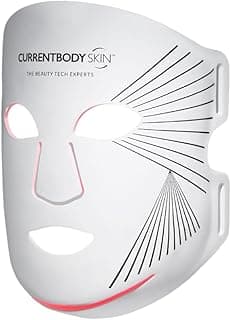
The original CurrentBody mask established flexible silicone as the default standard for at-home phototherapy. The CurrentBody Skin LED Light Therapy Mask Series 2 builds on that foundation by refining its physical ergonomics and introducing deeper light spectrums.
Design and Skin Coverage
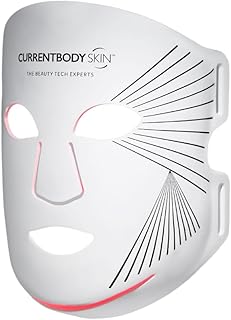
Unlike rigid plastic shields, the Series 2 utilizes surgical-grade liquid silicone that contours closely across the forehead, cheeks, jawline, and chin. CurrentBody redesigned the strap system on the Series 2, utilizing a multi-point harness that prevents the mask from sliding down the face during sitting or upright use. A built-in silicone chin cushion helps anchor the bottom edge, preventing light bleed around the lower mouth.
Because flexible silicone presses directly against the skin tissue, distance attenuation is minimized. Every LED bulb is recessed under a smooth protective lens, making it effortless to wipe clean after sessions.
Wavelength Specs and Clinical Focus
Where the Series 2 differentiates itself from generic flexible masks is its light architecture. It combines three distinct wavelengths:
- 633nm Red Light: Targets the epidermal layer to smooth fine lines and even skin tone.
- 830nm Near-Infrared: Penetrates into the dermal layer to stimulate fibroblast activity and structural collagen.
- 1072nm Deep Near-Infrared: Reaches deeper subdermal layers to target stubborn signs of structural skin laxity.
In practice, reviewers and long-term users frequently note that consistent 10-minute daily sessions yield a noticeable "glow" within three to four weeks, followed by gradual softening of crow's feet and smile lines over two to three months. The controller is rechargeable via USB and simple to operate with a single button start and automatic 10-minute shut-off timer.
Verdict on Value: Retailing in the premium £350–£400 price band, the Series 2 isn't cheap. However, for buyers whose primary goal is general facial rejuvenation, collagen renewal, and maximum skin contact comfort, it remains the benchmark option.
2. Shark CryoGlow Under-Eye Cooling & LED Face Mask: The Hybrid Innovator
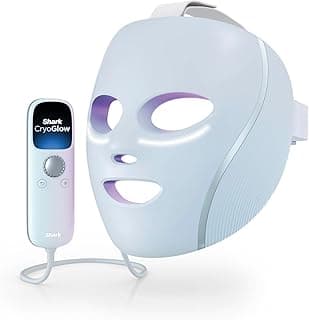
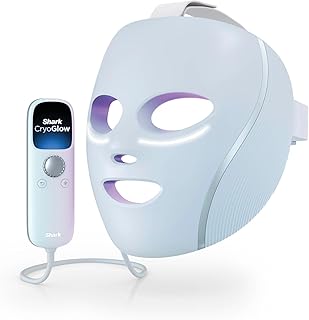
Shark entered the beauty tech market with a clear mission: solve a problem traditional LED masks ignore. While red light takes weeks of consistent use to build collagen, morning under-eye puffiness requires immediate relief. The Shark CryoGlow Under-Eye Cooling & LED Face Mask solves this by combining full-face LED arrays with active thermo-electric under-eye cooling plates.
How the Cryo Technology Works
The standout feature here is the integrated under-eye cold therapy. Rather than relying on gel packs stored in the freezer, the CryoGlow uses electronic Peltier chilling plates directly built into the mask frame. At the push of a button, these plates cool down to roughly 12°C–16°C in under 15 seconds.
The device offers flexible routine modes:
- Under-Eye De-puffing (Cryo Only): A rapid 5-minute cold therapy session to constrict blood vessels and drain excess fluid.
- Full Face LED Routine: Red and near-infrared light for anti-ageing, or blue light for skin clarity.
- Combined Routine: Simultaneous under-eye cooling while the full-face LED array runs its cycle.
Build, Fit, and Practical Trade-offs
Because the CryoGlow incorporates chilling electronics, heatsinks, and a rigid-frame structure, it is physically bulkier and heavier than a soft silicone mask like the CurrentBody Series 2. It sits on the face like an oversized visor with cushioned eye surrounds and an adjustable headband.
While the cold therapy provides genuine, immediate visible reduction in under-eye bags—a massive benefit for early mornings—the rigid structure means the LED panel doesn't press uniformly against every curve of your skin. If you have deep-set eyes or a particularly narrow face shape, the distance between the LEDs and your outer cheeks or forehead may be wider than with a flexible mask.
Verdict on Value: Sitting in the mid-to-premium £300–£380 price band, the Shark CryoGlow is an outstanding all-in-one morning device for anyone struggling with dark circles, fluid retention, and fine lines around the delicate eye contour.
3. Dr. Dennis Gross DRx SpectraLite FaceWare Pro: The Speedy Dual-Action Classic
For years, the Dr. Dennis Gross DRx SpectraLite FaceWare Pro has been a staple in high-end skincare routines. Its primary selling points are dual-spectrum light (red + blue) and an ultra-fast treatment duration.
3-Minute Treatments & Dual Spectrum (Red + Blue)
While most flexible LED masks demand 10 minutes of still time, the FaceWare Pro delivers its full light dosage in just 3 minutes. For busy morning routines, that 7-minute difference often dictates whether a mask gets used daily or sits forgotten in a drawer.
It features three light setting modes:
- Red Light Mode (100 Red LEDs): Focuses on collagen stimulation, fine lines, and redness.
- Blue Light Mode (62 Blue LEDs): Operates at ~415nm to target acne-causing bacteria (P. acnes) and regulate sebum production.
- Combined Red + Blue Mode: Simultaneously treats active acne breakouts while soothing inflammation and reducing post-acne scarring.
Fit Considerations and Ergonomics
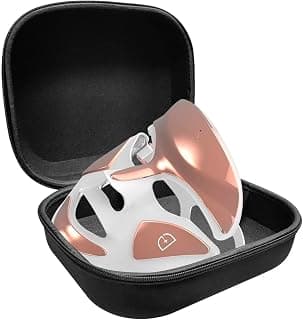
The FaceWare Pro uses a rigid shell structure lined with soft silicone nose pads and a silicone head strap. Because it does not flex, face shape compatibility is hit-or-miss. Users with higher cheekbones or wider jawlines may experience pressure points on the nose bridge or wider gaps around the temple area.
However, the convenience factor of a 3-minute cycle with hands-free operation makes it exceptionally easy to stick to long term. In terms of durability, the hard shell construction cleans effortlessly and holds up well over years of daily use.
Verdict on Value: Normally priced around £400 to £460, it sits at the high end of the price spectrum. It is best suited for buyers dealing with acne-prone skin alongside ageing concerns who value maximum speed above all else.
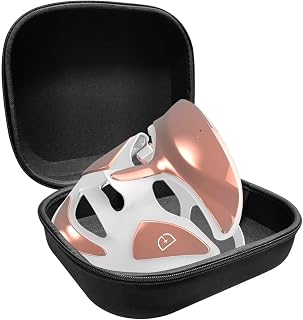
Side-by-Side Comparison
Here is how the three lead contenders compare across specs, session speeds, and ideal skin concerns:
| Product | Key Wavelengths / Tech | Session Time | Price Band | Best For | Buy Link |
|---|---|---|---|---|---|
| CurrentBody Series 2 | 633nm Red, 830nm NIR, 1072nm Deep NIR (Flexible Silicone) | 10 Mins | Premium (£350–£400) | Overall anti-ageing & maximum skin contact | View on Amazon |
| Shark CryoGlow | Red, NIR, Blue LED + Peltier Active Under-Eye Cryo | 5–10 Mins | Mid-Premium (£300–£380) | Morning under-eye puffiness & dark circles | View on Amazon |
| Dr. Dennis Gross SpectraLite | 100 Red LEDs + 62 Blue LEDs (Rigid Shell) | 3 Mins | Premium (£400–£460) | Blemish-prone skin & fast 3-min routines | View on Amazon |
Key Factors to Consider Before Buying
1. Skin Contact vs. Face Shape Flexibility
Light intensity diminishes rapidly over distance. A soft, flexible silicone mask like the CurrentBody Series 2 rests directly against your epidermis, providing higher average light absorption across the entire face. Rigid masks like the Dr. Dennis Gross FaceWare Pro or Shark CryoGlow sit slightly off the skin, which is more hygienic and cooler to wear, but can result in inconsistent distance across different facial bone structures.
2. Do You Need Blue Light or Cryo?
If your primary skin concern is purely wrinkles, fine lines, and collagen density, you do not need blue light or cold plates—you want maximum red and near-infrared coverage. However, if morning fluid retention and eye bags are your biggest cosmetic frustration, the active chilling on the Shark CryoGlow provides instant gratification that no standard LED light can match. Conversely, if you experience adult acne breakouts alongside fine lines, the blue light mode on the Dr. Dennis Gross FaceWare Pro is essential.
3. Real-World Consistency (3 Mins vs 10 Mins)
An LED mask only works if you actually use it four to five times a week. Be honest with your daily habits. If finding a uninterrupted 10-minute block feels like a chore, the 3-minute treatment time on the Dr. Dennis Gross mask dramatically increases your likelihood of sticking with the routine long enough to see clinical collagen growth.
Final Verdict & Bottom Line
For most skincare enthusiasts looking for pure anti-ageing efficacy, comfortable skin contact, and proven deep near-infrared wavelengths, the CurrentBody Skin LED Light Therapy Mask Series 2 remains our top overall recommendation. Its soft liquid silicone mold ensures uniform optical energy delivery across every inch of the face without harsh pressure points.
If your daily battle is under-eye puffiness, tiredness, and dark circles alongside general aging, the Shark CryoGlow is a game-changer that introduces genuinely useful chilling hardware. And if you are pressed for time or fighting active blemishes, the Dr. Dennis Gross DRx SpectraLite FaceWare Pro justifies its price tag with lightning-fast 3-minute routines and effective targeted blue light therapy.