As an Amazon Associate I earn from qualifying purchases. This page contains affiliate links, and I may earn a commission at no extra cost to you.
Buying a first drone for a teenager or tech-enthusiastic child used to mean making an annoying compromise. You either bought a cheap plastic toy that drifted into the kitchen cabinets the second someone opened a door, or you spent hundreds of pounds on an intimidating piece of photography gear that required careful manual piloting, expensive replacement props, and strict outdoor spaces. For years, educators and parents leaned toward indoor coding quads, but flying tech has evolved rapidly.
The arrival of the DJI Neo changes the equation. Weighing a mere 135g and designed to launch straight from the palm of your hand without a traditional controller, it bridges the gap between accessible electronic toy and genuine content-creation tool. Yet it is not the only option on the market. Depending on whether your recipient wants to learn manual flight mechanics on a pocket money budget, capture sweeping outdoor holiday footage, or run autonomous tracking shots for social media, different aircraft deliver wildly different value.
This guide compares four distinct beginner-friendly options currently available in the UK, analysing real-world flight characteristics, durability, regulatory implications, and safety features so you can pick the right aerial tech gift with zero buyer's remorse.
At a Glance: Starter Drone Comparison
Before examining each craft in depth, the table below provides a quick reference comparing flight weight, camera capability, primary control method, and estimated price band across our four featured models.
| Drone Model | Weight | Camera Quality | Control Style | Price Band | Amazon Link |
|---|---|---|---|---|---|
| DJI Neo | 135g | 4K Stabilised / 12MP | Palm / Phone / Voice / RC | Mid-range (£170–£200) | Check today's price on Amazon |
| Potensic ATOM SE | <249g | 4K EIS / Sony Sensor | Dedicated Remote Controller | Mid-range (~£220) | Check today's price on Amazon |
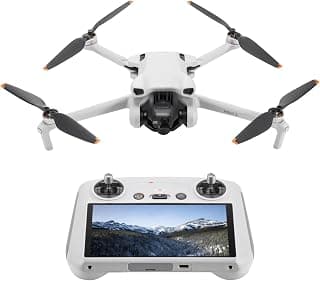
| DJI Mini 3 | <249g | 4K HDR / 3-Axis Gimbal | Dedicated Remote Controller | Premium (~£350–£380) | Check today's price on Amazon |
| Syma X20 | <50g | None (Line of Sight) | Compact Gamepad Controller | Budget (<£35) | Currently unavailable on Amazon |
The Shift in Starter Drones: Autonomous AI vs Manual Skill
For most young flyers, the traditional learning curve of a remote-controlled aircraft presents a major barrier. Traditional quadcopters require dual-stick coordination: throttle and yaw on the left stick, pitch and roll on the right. Lose your spatial orientation for a split second when the craft turns to face you, and your inputs suddenly become reversed. Many beginner drones end up trapped in high branches or cracked against a patio wall within twenty minutes of unboxing on Christmas morning.
Modern starter craft tackle this issue in two radically opposing ways. Budget training toys like the Syma X20 Currently unavailable on Amazon lean into raw mechanical simplicity, giving young pilots an inexpensive, ultra-light airframe with altitude hold so they can crash, bounce, and rebuild muscle memory without risking significant cash. Meanwhile, sophisticated consumer craft like the DJI Neo remove stick controls almost entirely. By relying on onboard vision positioning, infrared sensing, and AI facial algorithms, the Neo treats the drone as an autonomous flying selfie camera that tracks a subject automatically.
Understanding what your young pilot actually wants from the experience is vital. If they aspire to master piloting skills, line-of-sight quadcopters or manual GPS drones provide authentic flight training. If they dream of producing dynamic skate videos, cycling clips, or TikTok vlogs with their friends, manual flying is simply an obstacle standing between them and the footage they want to capture.
UK Drone Regulations: What Parents Need to Know
UK drone laws enforced by the Civil Aviation Authority (CAA) divide aircraft by weight and risk. Understanding how these thresholds apply to starter drones prevents legal headaches and ensures safe family flying.
All four models featured in this guide fall comfortably beneath the critical 250-gram ceiling. Under CAA regulations, flying an aircraft weighing under 250g gives you substantial operational freedom compared to larger commercial craft. You can fly closer to uninvolved people (though never directly over crowds) and avoid onerous distance buffers.
However, there is an essential nuance regarding cameras. Any drone equipped with a camera or sensor capable of recording personal data—regardless of whether it weighs under 250g—requires the adult responsible for it to register for an Operator ID with the CAA. This costs a nominal annual fee (currently around £11) and requires an online application. Children under 18 cannot hold an Operator ID, meaning a parent or guardian must register and label the aircraft with that registration number.
The flyer themselves must take the free online CAA education test to acquire a Flyer ID if the drone is not legally classified as a purely certified toy. Here is how our four options compare legally:
- Syma X20: Has no camera and weighs well under 250g. It requires no registration, no CAA Flyer ID, and no Operator ID. You can fly it indoors or in your back garden immediately.
- DJI Neo (135g): Contains a 4K camera. A parent must obtain an Operator ID and affix the number to the frame. The flyer should take the short, free CAA online test for a Flyer ID before outdoor flight.
- Potensic ATOM SE (245g): Contains a 4K camera. Requires an adult Operator ID and a Flyer ID.
- DJI Mini 3 (248g): Contains a 4K camera. Requires an adult Operator ID and a Flyer ID.
None of these sub-250g craft require formal commercial licensing or difficult pilot certifications for recreational use, making them highly approachable tech gifts so long as standard safety protocols are observed.
Top Pick: DJI Neo — The Intelligent Modern Starter
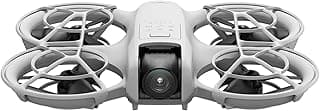
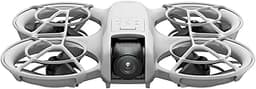
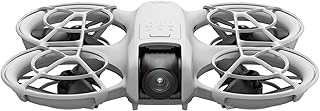
The DJI Neo represents a genuine shift in how novice flyers interact with an unmanned aerial vehicle. Weighing just 135 grams, it sits somewhere between your mobile phone and an apple in your pocket. The most compelling feature for parents and younger flyers is its complete lack of intimidation.
Unlike traditional quads that demand an elaborate setup ritual—unfolding arms, pairing an expansive remote, calibrating compasses—the Neo operates right out of the box with zero external accessories required. Press the mode button on the craft's top shell to cycle between shooting profiles (such as Follow, Dronie, Circle, or Spotlight), place the aircraft flat on the palm of your outstretched hand, and look straight at the camera. Within seconds, the rotors spin up, the craft scans your face, lifts gently into the air, and locks onto you as you move.
For teenagers who want dynamic footage while riding a bicycle, playing football, or hanging out in the local park, this subject tracking is remarkably polished. DJI uses onboard AI computer vision rather than relying on an active GPS tether from your phone, allowing the craft to follow the designated subject smoothly through gentle changes in speed and direction. When finished, you simply place your hand flat beneath the drone; infrared bottom sensors detect your palm, cut power, and drop the craft gently into your hand.
Safety is addressed through built-in, full-coverage propeller guards. The plastic cages encompass the blades from both top and bottom, meaning a clumsy indoor collision against a hallway wall or an inadvertent brush against tree branches merely knocks the craft away rather than slicing fingers, denting furniture, or shredding plastic props. While DJI rates the aircraft for Level-4 wind resistance (roughly 18 mph), its tiny 135g mass will wobble in gusty weather. It handles calm afternoons in the park admirably, capturing stabilised 4K footage that looks surprisingly professional for a pocket-sized aircraft.
The compromises? Battery life sits around 15–17 minutes per charge in practical conditions, and internal storage is fixed at 22GB without a microSD card slot. Furthermore, if you do decide to take manual control, using virtual joysticks on a smartphone screen via Wi-Fi limits your control range to roughly 50 metres. To fly long distances or high into the sky, you have to purchase a separate DJI RC-N3 controller or compatible FPV goggles. Yet as an intuitive, social, and safe entry point into the skies, the Neo stands alone.
Traditional Pilot Trainer: Potensic ATOM SE
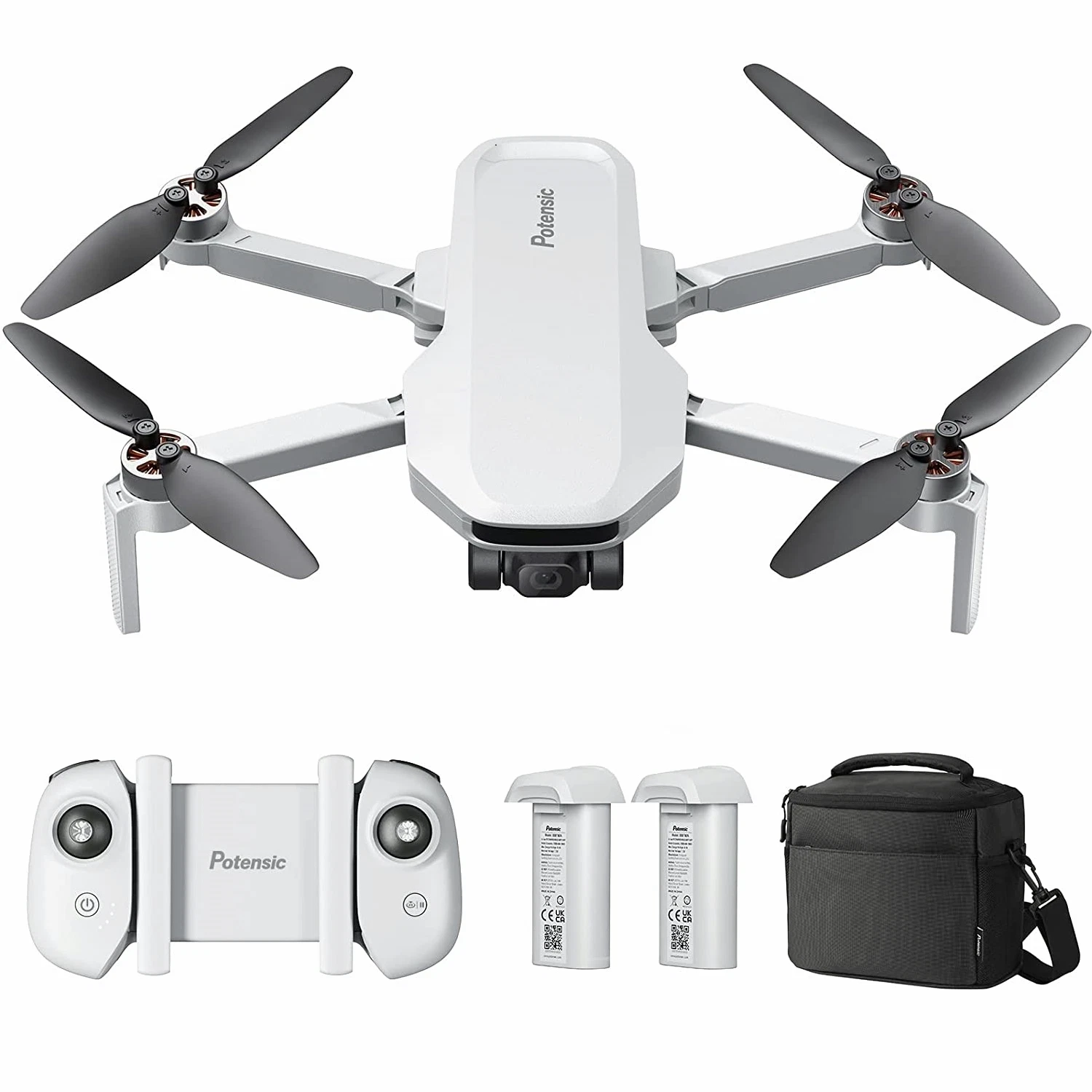
If you are buying for an older teenager who actively wants to learn the craft of manual piloting—navigating by stick inputs, flying long circuits across open countryside, and managing altitude across broad fields—the Potensic ATOM SE offers an exceptional alternative to DJI's ecosystem.
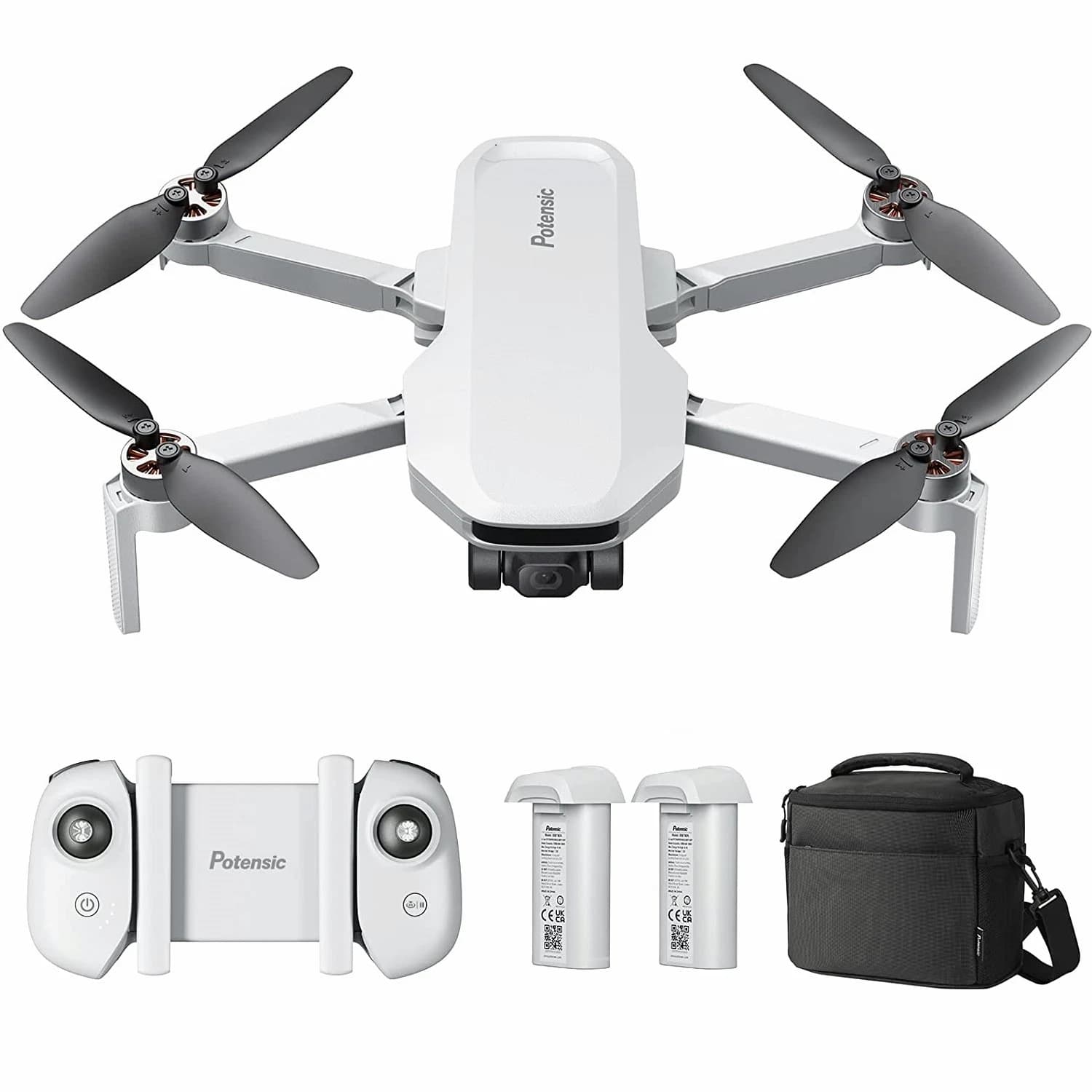
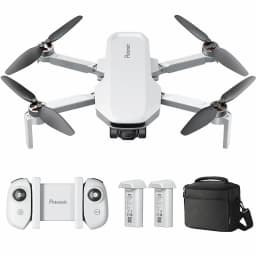
Where the Neo leans into autonomous personal tracking, the ATOM SE is engineered as a traditional folding GPS drone. Weighing less than 249 grams, it folds down neatly to pack into a compact carry bag alongside a dedicated smartphone clamp controller. Powered by brushless motors and Potensic's SurgeFly flight control architecture, this craft offers genuine speed: in Sport Mode, it reaches velocities up to 16 metres per second, handling stiff breezes up to Level 5 wind resistance that would blow the tiny DJI Neo off course.
The optical system features a 1/3-inch Sony CMOS sensor capable of capturing 12MP stills and 4K video at 30 frames per second. Unlike full mechanical gimbals that tilt and roll physically, the ATOM SE uses Potensic's ShakeVanish electronic image stabilisation (EIS) coupled with a single-axis vertical tilt mechanism (+20° to -90°). While EIS smooths out major atmospheric jitters, it cannot quite match the cinematic glass-smooth quality of a true 3-axis mechanical gimbal in aggressive turns. However, for a beginner learning how to frame landscape photography, it is more than adequate.
The defining strength of the ATOM SE package is endurance. Many retail configurations ship with three 2500mAh smart batteries and a parallel charging hub, yielding a theoretical total flight time exceeding 90 minutes (roughly 25–28 minutes per pack in field tests). Furthermore, Potensic's Pixsync 2.0 digital transmission maintains an ultra-low latency video feed back to the smartphone screen over distances up to 4 kilometres. For a youngster who wants to explore wide-open coastal landscapes or rural parklands from an aerial perspective, the ATOM SE feels like a serious piece of exploratory aviation gear rather than a toy.
The Cinematic Upgrade: DJI Mini 3
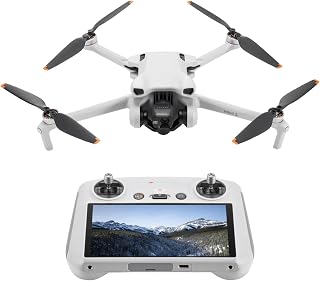
For parents buying for a creative teen who is genuinely serious about photography, videography, or building a portfolio for GCSE Media studies, jumping up to the DJI Mini 3 represents the gold standard in sub-250g aerial image capture.
The hardware leap here is defined by its mechanical 3-axis gimbal. Where the Neo and the Potensic rely heavily on software cropping (EIS) to smooth out camera shake, the Mini 3 suspends its camera physically on precision brushless motors. No matter how aggressively the aircraft tilts to fight off 38 km/h wind gusts, the horizon remains perfectly level and the video remains completely free of digital jitter or corner distortion.
The camera itself features a 1/1.3-inch sensor with Dual Native ISO Fusion and an f/1.7 aperture. This means the Mini 3 gathers significantly more light in dusk or overcast British weather than entry-level rivals. It also introduces True Vertical Shooting: with a tap on the controller, the camera module physically rotates 90 degrees inside the gimbal housing. Instead of shooting horizontal 16:9 video and cropping the edges away for social media, it captures native, uncompressed vertical 4K HDR footage primed directly for Instagram Reels, YouTube Shorts, and TikTok.
Flight characteristics are remarkably tranquil. The Mini 3 is quiet, predictable, and boasts a staggering battery endurance of up to 38 minutes on a single pack. Its digital transmission reaches up to 10 kilometres in open conditions, delivering a rock-solid 720p live stream to the controller. The downside is cost: priced in the £350–£380 bracket depending on the controller bundle, it sits well outside the casual impulse-buy category. Propeller guards are not included as standard, leaving the delicate folding carbon-infused arms and spinning blades exposed. Consequently, the Mini 3 is strictly an outdoor tool for responsible older teenagers and adults, completely unsuitable for indoor living room antics.
The Budget Pocket Trainer: Syma X20
Not every tech gift needs a multi-hundred-pound budget, a smartphone interface, or regulatory paperwork. If you are shopping for an 8- to 12-year-old who has never piloted an electronic aircraft before, handing them an expensive camera drone is a recipe for tears. The Syma X20 Currently unavailable on Amazon represents the classic, zero-stress indoor micro-drone.
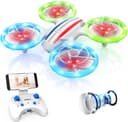
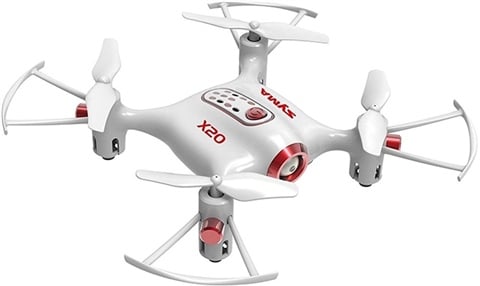
Measuring barely 10 centimetres across and weighing under 50 grams, this palm-sized quadcopter is engineered specifically to survive indoor domestic environments. It features integrated prop guards, a flexible ABS plastic chassis, and a miniature gamepad-style 2.4GHz remote control. Because it carries no camera and weighs virtually nothing, there are zero CAA regulatory hurdles, no Operator ID fees, and no privacy concerns from neighbours.
Despite its pocket-money price tag (often available for less than £35), the X20 includes essential flight assistance features that make learning manageable. Chief among these is altitude hold: an onboard barometric pressure sensor keeps the craft suspended at a steady height when the pilot lets go of the throttle stick. This allows a young child to focus on steering left, right, forward, and backwards without constantly panicking about the craft shooting into the ceiling or plummeting into the rug. It also offers a One-Key Takeoff and Landing button, as well as a 360-degree stunt roll trigger that executes clean aerial flips at the touch of a bumper.
The trade-offs are obvious. Flight time is limited to roughly 5–6 minutes per charge from its internal battery, and because the battery is typically hardwired, you must plug the entire drone into a USB port for 45 minutes between play sessions. It cannot fly outdoors in anything beyond a dead-calm breeze, and it lacks any video recording capability. However, as an indestructible mechanical teacher that instils genuine hand-eye coordination before graduating to a multi-hundred-pound camera platform, the Syma X20 remains an unbeatable low-stakes stocking filler.
Durability and Crash Survivability: Which Drone Lasts?
When giving a drone to a younger pilot, resilience matters just as much as camera resolution. A drone that snaps a motor arm on its third flight provides zero educational or creative value.
The DJI Neo scores exceptionally high in structural protection. DJI built the propeller ducts directly into the main upper and lower fuselage lattice. Because the propellers are fully enclosed in plastic barriers, bouncing off door frames, dining room chairs, or tree trunks rarely stops the motors. The craft simply deflects, recalibrates its downward sensors, and continues hovering. For indoor flights and tight backyard spaces, this design makes it far more forgiving than traditional open-blade quadcopters.
In contrast, both the Potensic ATOM SE and the DJI Mini 3 feature folding arms with open, exposed propellers. These arms are designed to absorb aerodynamic drag and fold neatly for transport, but a high-speed collision with a brick wall or a heavy branch can crack the folding hinge or strip the internal gearing of a brushless motor. If you purchase either of these larger craft for a beginner, insist that all flights occur in wide, open grassy parks well away from vertical obstructions until manual confidence is established.
The miniature Syma X20 Currently unavailable on Amazon sits in its own category of crash resilience simply due to basic physics: light things bounce. Because it weighs only around 40 to 50 grams, its kinetic energy upon impact is negligible. It can hit drywall at full speed, tumble down a flight of stairs, land on a hardwood floor, and take off again immediately without a scratch.
Control Schemes: Hand Gestures vs Smartphone Apps vs Gamepad Remotes
How your recipient interacts with the drone dictates how frequently they will actually pick it up and use it.
1. Palm Launch and Voice Control
The DJI Neo is currently unique in its price class for offering true controller-free operation. For social outings, walks with the dog, or casual sports practice, taking along a bulky plastic remote controller is inconvenient. The Neo can be operated entirely via top-mounted physical buttons, audio voice commands through your smartphone or wireless earbuds, or simple hand-tracking. The sheer immediacy of pulling it from a jacket pocket, pushing one button, and having it track you down a path is something traditional RC flyers cannot match.
2. Smartphone Virtual Joysticks
Both the DJI Neo and many consumer camera craft can connect directly to iOS and Android smartphones via Wi-Fi. While this removes the need to carry a remote, flying via on-screen touchscreen glass remains ergonomically awkward. There is no physical tactile feedback, making precise micro-adjustments difficult. Furthermore, mobile Wi-Fi signals suffer from strict range limits (typically 30–50 metres) and are prone to interference in dense suburban neighbourhoods.
3. Dedicated Long-Range Physical Remotes
For authentic piloting, nothing matches a dual-stick spring-loaded physical controller. The Potensic ATOM SE and the DJI Mini 3 come bundled with high-performance physical controllers that cradle your smartphone as a dedicated monitor. The physical sticks provide progressive tension, allowing young pilots to execute slow, panning turns, gentle ascents, and high-speed directional runs with precision. If developing true spatial piloting ability is the goal, physical sticks remain mandatory.
Noise and Disturbance: Flying in Back Gardens
One aspect rarely mentioned in manufacturer marketing is acoustic signature. Starter drones with small, high-RPM propellers generate a high-pitched buzz that can quickly irritate neighbours if flown persistently in compact suburban back gardens.
The DJI Neo uses small, guarded props spinning at very high speeds. While it is quiet compared to commercial cinema drones, its acoustic pitch is distinctly shrill—resembling a large, angry hornet. If flown in an enclosed garden, anyone sitting nearby will definitely hear it. Fortunately, because its tracking shots and QuickShots are typically captured in short 30-to-60-second bursts, it rarely stays in the air long enough to cause a genuine community nuisance.
The DJI Mini 3, by contrast, uses larger, aerodynamically contoured, low-noise flexible blades rotating on powerful brushless motors. It produces a surprisingly low-frequency, muffled hum that blends effortlessly into outdoor background ambient noise. At an altitude of 30 metres, it is virtually inaudible from the ground, making it far more discreet for parkland exploration.
The Syma X20 Currently unavailable on Amazon produces almost no noticeable sound beyond a gentle, harmless whirr, making it completely acceptable for indoor living spaces while other family members are reading or watching television in the next room.
Alternatives to Consider
While the models covered above span the primary entry points for beginners, two specific alternative paths exist depending on whether your priority is budget-conscious battery longevity or high-end imaging capability.
The Budget Battery Champion: Potensic ATOM SE Combo
If you love the concept of the Potensic ATOM SE but worry about cutting flight sessions short, consider the multi-battery bundle. Standard starter drones often leave kids waiting around for hours while single packs recharge. The ATOM SE bundle, which pairs three quick-swap intelligent batteries with a simultaneous multi-bay parallel charging hub, lets young flyers log well over an hour of real flight time in a single afternoon session without breaking the bank.
The Dedicated Creative Platform: DJI Mini 3 Fly More Combo
If buying for an older, mature teen who intends to publish landscape photography, short films, or high-production travel content, purchasing the standard single-battery drone kit is rarely enough. The DJI Mini 3 Fly More package adds two additional 38-minute batteries, a two-way charging hub that doubles as a power bank, spare low-noise propellers, and a tailored shoulder bag that keeps the delicate gimbal safe in transit.
Buying Advice: Matching the Drone to the Flyer
To avoid spending money on features your child will never use, match the craft directly to their age, patience, and primary interests:
- For ages 8 to 11 (First-Time Indoor Pilots): Choose the Syma X20 Currently unavailable on Amazon. It is inexpensive, requires zero mobile apps or registration, cannot damage living room fixtures, and teaches fundamental manual stick coordination through pure, low-stakes play.
- For ages 12 to 17 (Vloggers, Athletes, and Social Creators): Choose the DJI Neo. Its push-button palm takeoff, enclosed protective cage, and automated AI subject-following deliver instant creative satisfaction without requiring weeks of piloting practice.
- For teens who love aviation, RC mechanics, and open-field flight: Choose the Potensic ATOM SE. It provides a proper GPS-assisted physical flight experience, excellent wind tolerance, multi-battery endurance, and long transmission range at a fair price.
- For dedicated young cinematographers and content creators: Choose the DJI Mini 3. Its mechanically stabilised 4K sensor, true vertical video orientation, and whisper-quiet flight make it a genuine filmmaking tool rather than a toy.
Final Verdict
When selecting a modern starter drone as a tech gift, the DJI Neo is our top recommendation for the vast majority of recipients. It bypasses the frustrating, crash-prone learning curve of traditional RC aircraft through brilliant AI subject tracking, robust full-coverage propeller guards, and effortless palm launch capabilities—all while remaining comfortably sub-250g and accessible on a realistic mid-range budget. Unless your young pilot specifically demands long-range manual exploration or professional mechanical gimbal stabilisation, the Neo provides the most entertaining, frustration-free aerial experience available today.