As an Amazon Associate I earn from qualifying purchases. This page contains affiliate links, and I may earn a commission at no extra cost to you.
Handing an unshielded quadcopter to an eight-year-old inside a typical British living room is an invitation to disaster. Spinning polycarbonate blades chew into wallpaper, slice through ficus leaves, and worst of all, twist irreversibly into long hair within seconds of lift-off. Most cheap drones make this worse by lacking hover stabilization, turning your living space into a pinball machine where the ceiling and the rug take turns abusing the chassis.
Finding a genuine toy drone under £50 that survives boxing day without sending someone to minor injuries comes down to three non-negotiable features: fully ducted propeller shields, reliable altitude hold, and a modular battery system. The DEERC D70 Mini Drone Currently unavailable on Amazon has emerged as the benchmark in this price bracket, combining full cage protection with predictable indoor flying physics.
The Core Danger Zones of Indoor Drones Under £50
Before looking at flight modes or stunt buttons, you need to understand where sub-£50 drones systematically fail. Most budget models cut costs on basic structural safety and internal sensors, leaving parents with broken toys and scuffed baseboards before lunchtime.
1. Open Blades vs True Ducted Cages
Many low-cost drones include snap-on blade guards that only wrap around the outer perimeter. These ring guards are practically useless indoors. When the drone bumps into a curtain or hits the corner of a coffee table, the flexible plastic bends inward, forcing the high-speed blade into the guard itself and sending the drone plummeting. Worse, they leave the top and bottom of the rotor completely exposed to fingers and hair.
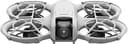
True indoor safety requires a 360-degree ducted shell. The propellers must sit fully enclosed inside cylindrical plastic funnels with protective grilles above and below. If a child catches the drone mid-air or crashes it into a sofa cushion, zero moving parts make physical contact with skin or fabric.
2. The Throttle Problem (Altitude Hold)
Traditional radio-controlled quadcopters demand constant, millimetre-precise throttle adjustments. Push the left stick a fraction too far forward and the drone smacks the plaster ceiling; ease off slightly and it drops like a stone. Children do not have the fine motor control to balance analog throttle while steering.
Altitude hold uses an onboard barometric pressure sensor to lock the drone at a fixed height above the floor automatically. When a child releases the controls, the craft simply hovers in place. Without this single feature, an indoor drone under £50 will spend more time rebounding off furniture than flying.
3. Delicate Battery Wires vs Enclosed Packs
The third common failure point is the power connection. Sub-£30 micro drones routinely use loose lithium-polymer cells with frail, paper-thin wires and fiddly white JST plugs. Children inevitably tug the wires rather than the plastic connector, stripping the lead or causing a short circuit after three or four swaps. A modern indoor drone needs a rigid, slide-in modular battery casing with internal pins that eliminate loose wiring entirely.
Deep Dive: DEERC D70 Mini Drone
Weighing in at a featherlight 24.3g (0.73oz), the DEERC D70 Mini Drone Currently unavailable on Amazon is engineered specifically for confined domestic spaces. Because it weighs well under the UK Civil Aviation Authority's 250g threshold, it requires zero legal registration or flyer ID to operate in your home or garden, giving gift-buyers immediate peace of mind.
Build Quality and Crash Resilience
The D70 discards traditional propeller arms in favour of a single unibody plastic cage. The four rotors are recessed deep inside durable ABS ducting. Verified owner feedback consistently highlights how well this frame absorbs impacts: when the drone drifts into a painted door or bookcase, it bounces off harmlessly without marking paintwork or cracking its own chassis.
At just over 24 grams, the drone does not carry enough kinetic energy to break a television screen or knock over drinking glasses during a standard low-speed collision. The lightweight design also means the tiny coreless motors face minimal strain when recovering from an accidental wall tap.
Flight Characteristics and Hover Stability
Altitude hold on the D70 is remarkably steady for a sub-£50 model. Once calibrated via the one-touch take-off button, the drone climbs to roughly one metre off the floor and sits quietly in a hands-free hover. This eliminates the frantic thumb-work that causes beginners to panic.
Control input is managed via a compact 2.4GHz remote controller sized sensibly for smaller hands. It features three distinct speed modes: low speed dampens the pitch and yaw sensitivity so first-time flyers can practice navigating hallways without over-correcting, while high speed unlocks enough tilt authority to handle light room drafts from open windows or radiators.
Stunt Features and User Assistance
To keep young pilots engaged after mastering basic navigation, the handset includes dedicated buttons for automated 3D flips, high-speed circle rotation, and headless mode. Headless mode is particularly valuable for younger children: regardless of which direction the drone's nose is pointing, pushing the right stick forward moves the craft directly away from the pilot, removing the spatial disorientation that usually leads to wall collisions.
Battery Architecture and Safe Charging Protocols
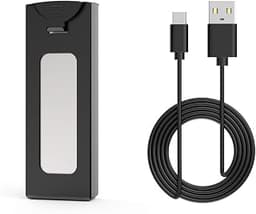
The drone runs on a 3.7V 800mAh (2.96Wh) rechargeable lithium-polymer intelligent battery. Unlike bare hobby cells, this pack includes built-in circuitry for overcharging and over-discharging protection. Real-world flight time lands between 7 and 9 minutes per charge depending on whether stunts and full LED lighting are running continuously.
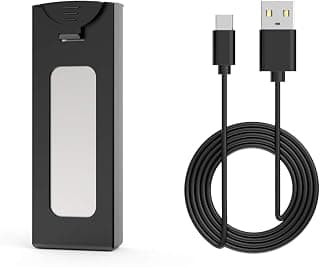
The manufacturer includes strict guidelines that every parent should note: always use the supplied USB charging cable, avoid leaving the battery flat for months at a time to prevent cell bloating, and allow the battery five minutes to cool down after flight before plugging it into a charger. Following these basic rules prevents premature battery degradation.
Indoor Drone Comparison: What Your Budget Buys
| Model | Frame Design | Weight | Hover Mechanism | Price Band | Action |
|---|---|---|---|---|---|
| DEERC D70 Mini Drone | Fully Enclosed Ducts | 24.3g | Barometric Auto-Hover | Budget (Under £50) | Currently unavailable on Amazon |
Maintenance and Avoiding Common Pitfalls
Even the most durable budget quadcopter requires sensible handling to last beyond the initial novelty phase. The number one mechanical failure on ducted mini drones is hair accumulation. Microscopic carpet fibres and stray pet hair wrap tightly around the steel motor shafts beneath the tiny propellers, slowly binding the motors until one side stops spinning.
If you notice the drone drifting aggressively in one direction or failing to take off evenly, do not immediately assume a broken motor. Inspect the gap between the rotor base and the motor housing. A gentle tug with tweezers to clear hair strands will resolve the issue nine times out of ten. Keeping indoor flights over hard flooring or short-pile rugs rather than shaggy carpets dramatically extends the drone's operating lifespan.
Who Should Buy the DEERC D70 (and Who Shouldn't)?
Ideal for:
- Parents looking for a safe, non-destructive first drone for children aged 8 to 14 to fly in bedrooms and sitting rooms.
- Gift-buyers who want a complete, ready-to-fly electronic toy under £50 that doesn't require extra UK drone registration.
- Beginners who need automatic altitude hold and headless mode to build hand-eye coordination without crashing constantly.
Not recommended for:
- Outdoor enthusiasts: at 24.3g, even a gentle 5mph outdoor breeze will carry the D70 away over garden fences.
- Aspiring aerial photographers: this model is focused purely on flight mechanics and safety rather than high-definition camera capture.
- Impatient pilots who want continuous 30-minute flight sessions without pausing to recharge.
Alternatives to Consider
If you want a drone strictly for outdoor park use or aerial videography, entry-level indoor models under £50 will leave you frustrated. For open fields, you will need a substantially heavier quadcopter with GPS stabilization and brushless motors, which routinely push past the £150 to £250 mark and bring UK CAA registration obligations into play.
However, for purely domestic flying where furniture safety and child-friendly controls are paramount, spending more than £50 is usually unnecessary. Micro-drones in the sub-£50 tier offer the sweet spot between structural durability and low replacement costs.
The Bottom Line
The DEERC D70 Mini Drone Currently unavailable on Amazon provides exactly what parents need from an indoor electronic toy: a fully enclosed duct frame that cannot damage paintwork or skin, rock-solid barometric altitude hold, and modular battery protection at a price well under the £50 ceiling. It removes the frustration and hazard from beginner indoor flying, making it a reliable, high-value choice for any young pilot.
Currently unavailable on Amazon