As an Amazon Associate I earn from qualifying purchases. This page contains affiliate links, and I may earn a commission at no extra cost to you.
It’s August 2026, and if you’re trying to foster critical thinking and problem-solving skills in young girls, you know that finding engaging, screen-free activities can be a real challenge. That's where educational board games step in, proving that learning logic and spatial reasoning can be genuinely fun. Two brands consistently stand out in this space: ThinkFun and SmartGames. Both offer brilliant single-player puzzle games designed to stretch young minds, but they each have their own distinctive flair and focus.
We’re going to dig into some of their most popular offerings, evaluating how they stack up in terms of design, educational value, and sheer playability. Whether you’re looking to inspire a future engineer or just want a clever way to keep young brains sharp, understanding the nuances between these brands and their top games will help you make the perfect choice.
ThinkFun: Cultivating Serious Logic with Playful Concepts
ThinkFun has long been a heavyweight in the world of logic games, renowned for their innovative concepts that often mask complex problem-solving in incredibly accessible packages. Their games aren't just about finding the right answer; they're about the journey of deduction, experimentation, and persistence. Many of their titles involve physical manipulation of pieces to achieve a goal, building spatial awareness and fine motor skills alongside cognitive ones. They're excellent for girls who thrive on clear objectives and enjoy the satisfaction of cracking a tough puzzle through sequential thinking.
ThinkFun Rush Hour Traffic Jam Logic Game
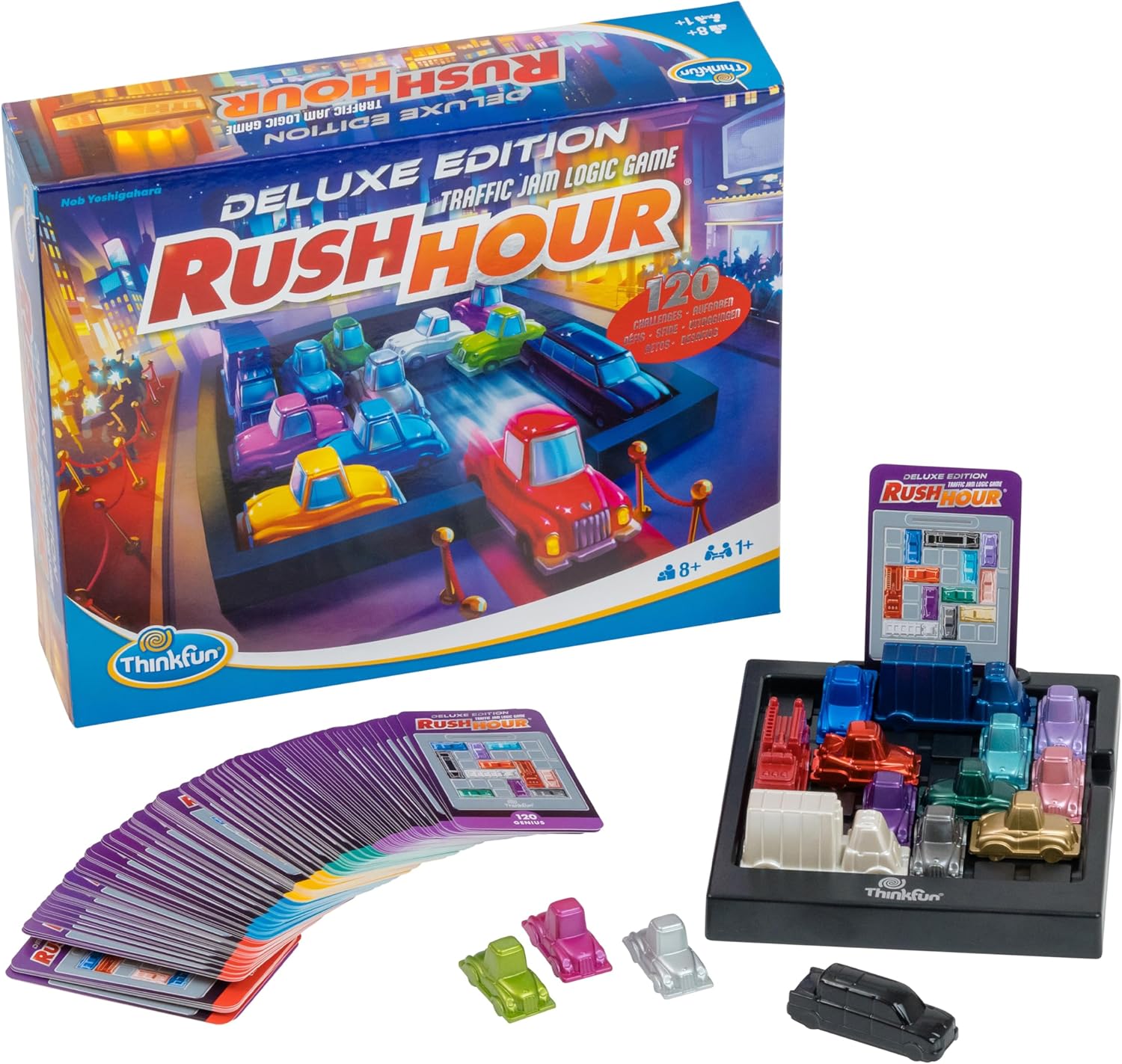
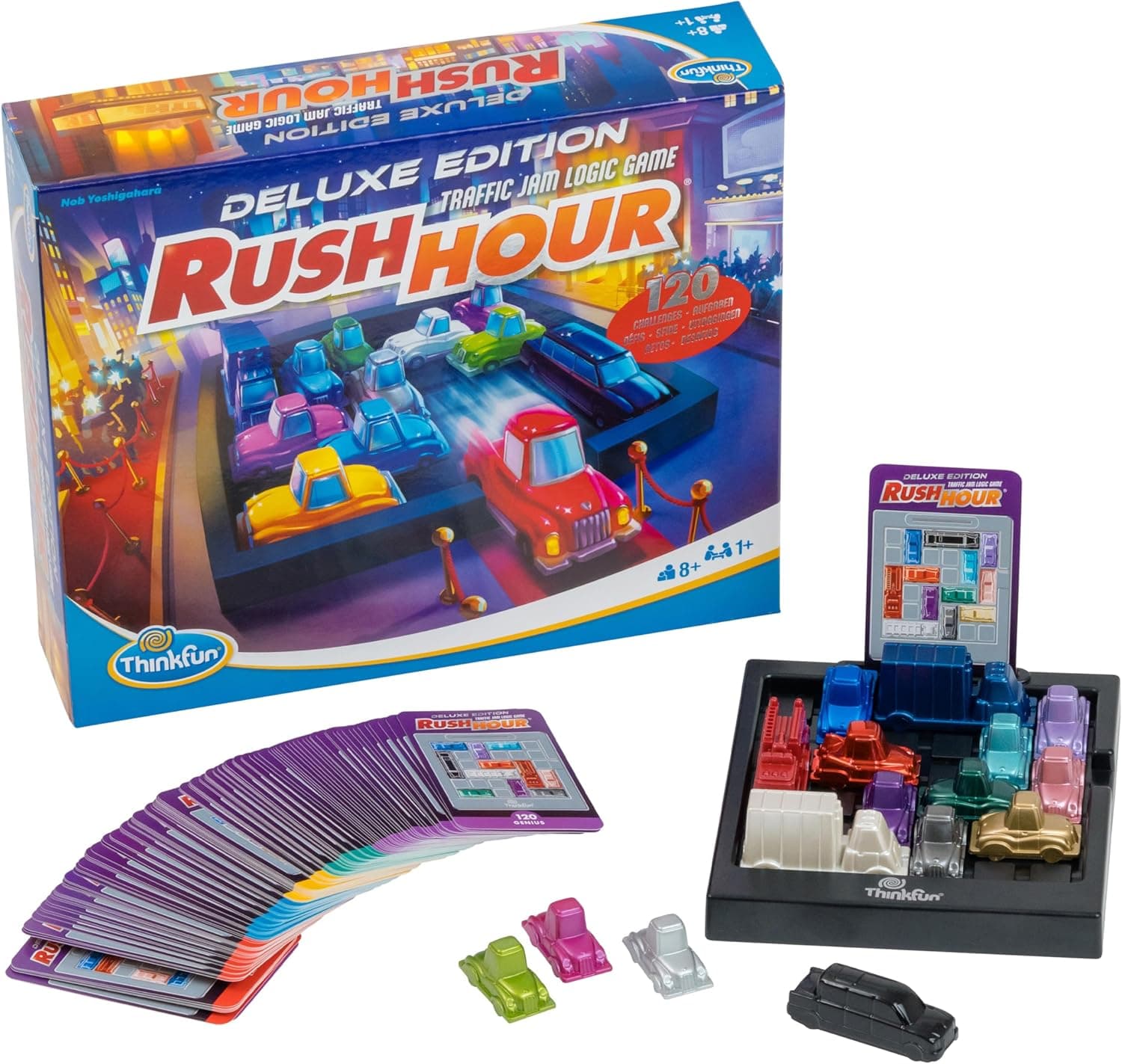
The ThinkFun Rush Hour Traffic Jam Logic Game is an absolute classic for a reason. Its premise is simple: you're stuck in a traffic jam and need to get your red car out. This seemingly straightforward task quickly escalates as you progress through 40 challenge cards, each presenting a different grid of vehicles to navigate. Players slide blocking cars and trucks forward and backward, meticulously planning their moves to create a clear path.
- Design & Build: The game board is sturdy, and the plastic cars are durable enough to withstand years of enthusiastic play. The challenge cards are well-illustrated and easy to understand. It's a highly tactile experience.
- Key Features: Features 40 challenge cards ranging from beginner to expert, a game grid, 16 blocking vehicles, and a carrying bag. The sliding mechanism of the cars is incredibly satisfying.
- Performance: Based on the published specs and verified owner feedback, Rush Hour excels at teaching sequential reasoning and problem-solving. Each challenge requires careful planning and foresight. It’s incredibly scalable, making it suitable for a wide age range from about 8 years old up through adulthood.
- Value: For its replayability and educational impact, Rush Hour offers fantastic value for money, often costing roughly £20-£25. It's a game that gets pulled out repeatedly.
- Pros: Engaging, builds sequential logic and planning skills, high replayability with increasing difficulty, durable components, travel-friendly.
- Cons: Can sometimes feel frustrating on expert levels if a child is prone to giving up easily (though persistence is part of the lesson).
ThinkFun Gravity Maze Marble Run Logic Game
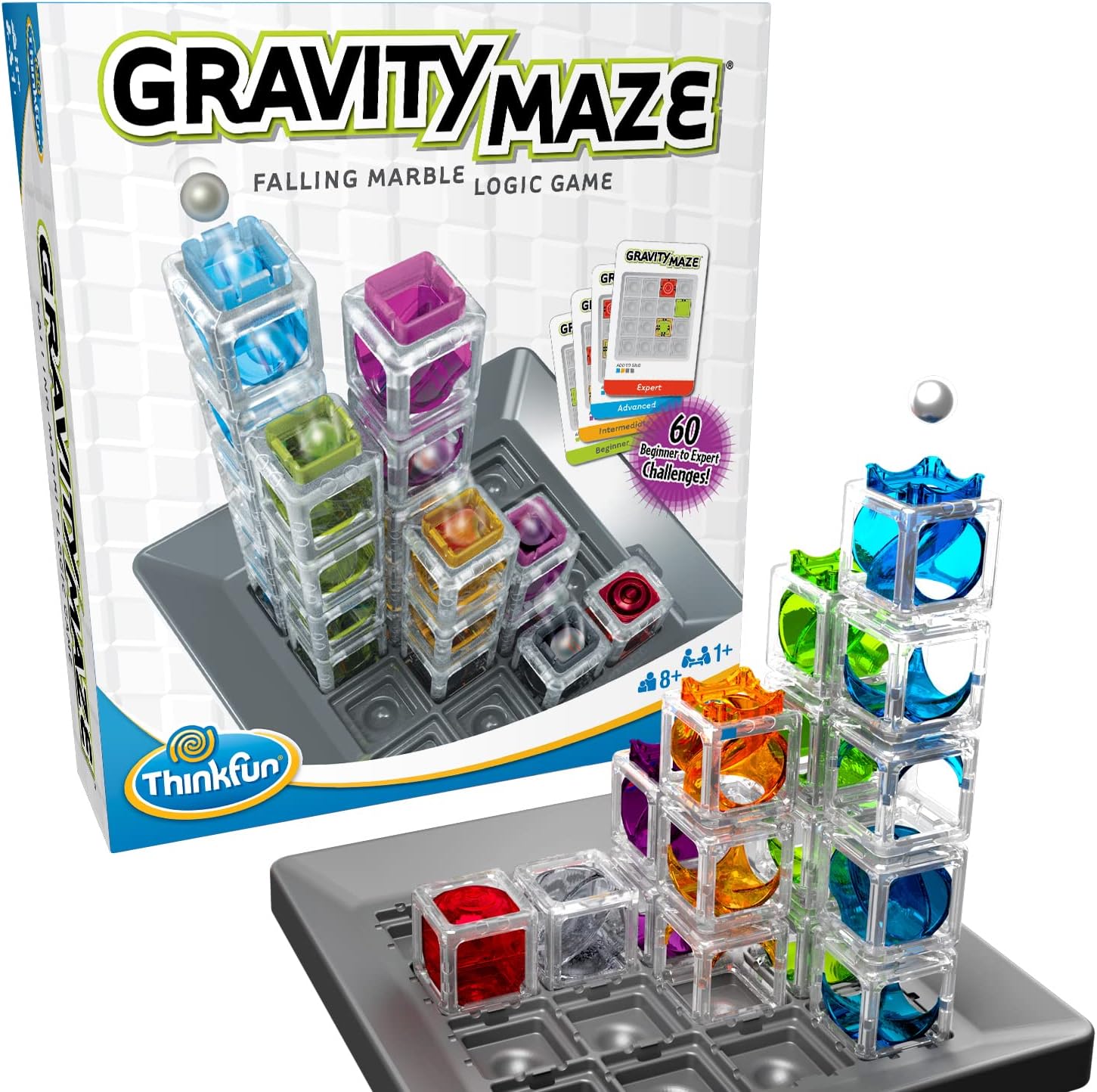
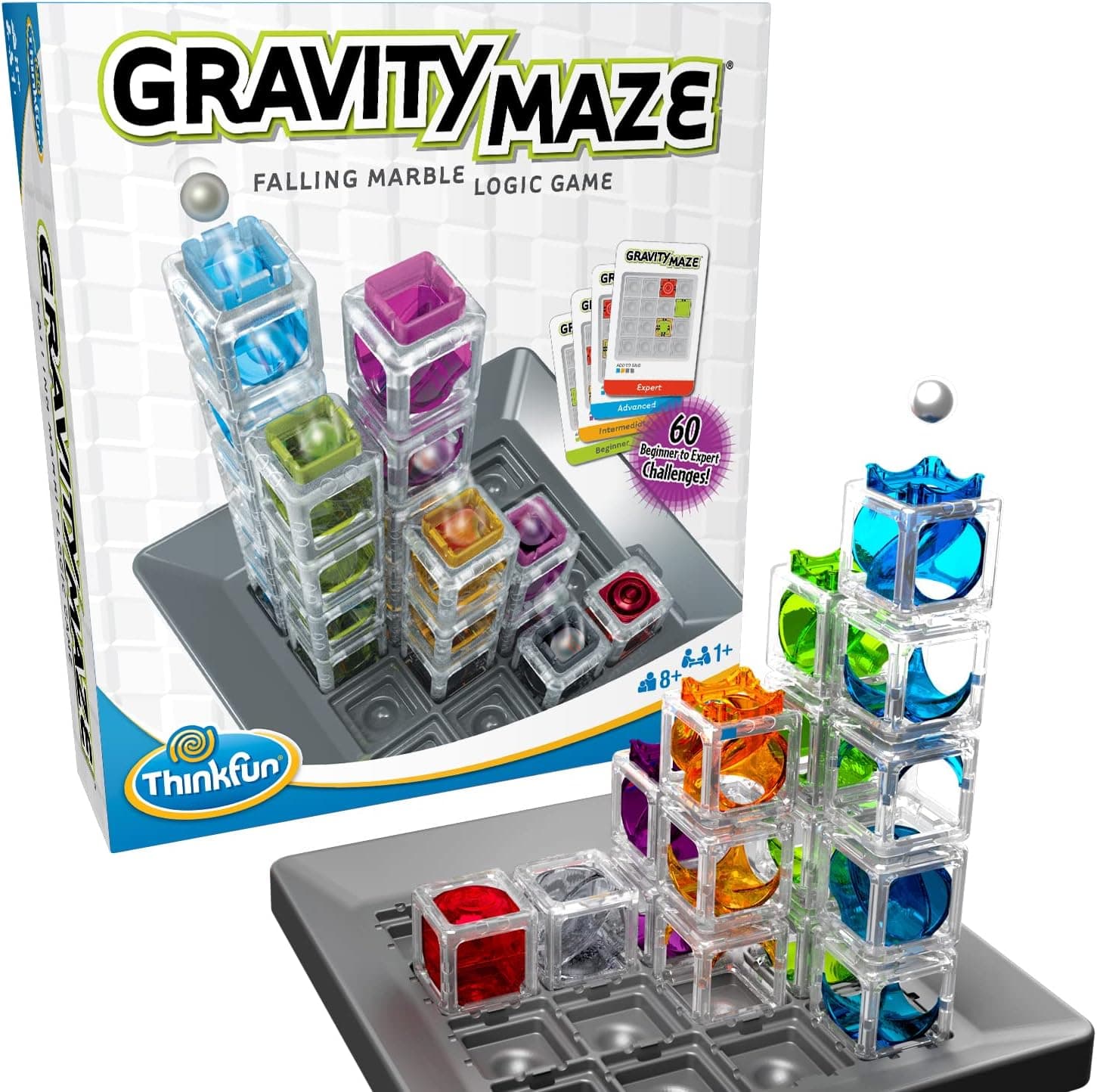
The ThinkFun Gravity Maze Marble Run Logic Game adds a fascinating third dimension to logic puzzles. Here, you're not just sliding pieces; you're building a path for a marble to fall from a start tower to a target tower. The game combines a marble run with a logic puzzle, requiring players to think spatially and predict the trajectory of the marble through various translucent towers.
- Design & Build: The pieces are colourful, well-machined plastic towers that fit together securely. The base grid provides a stable foundation, and the challenge cards are clear. It feels robust and high-quality.
- Key Features: Includes a game grid, 9 towers, 1 target tower, 3 marbles, and 60 challenge cards (ranging from beginner to expert). The visual feedback of the marble successfully reaching its destination is very rewarding.
- Performance: Reviewers and owners commonly report that Gravity Maze is outstanding for developing spatial reasoning, engineering principles, and critical thinking. It demands players visualise complex 3D structures and their interactions. It's a great choice for girls who enjoy building and hands-on construction.
- Value: Priced in the mid-range for a board game, usually around £25-£30. Given the innovative gameplay and the number of challenges, it delivers excellent value, especially for kids who love STEM activities.
- Pros: Excellent for 3D spatial reasoning, teaches engineering principles, highly engaging and visually appealing, varied challenge levels, durable components.
- Cons: Can sometimes be tricky to reset between challenges if pieces are tightly nested, marbles can be easily lost if not careful.
ThinkFun Laser Maze Logic Game
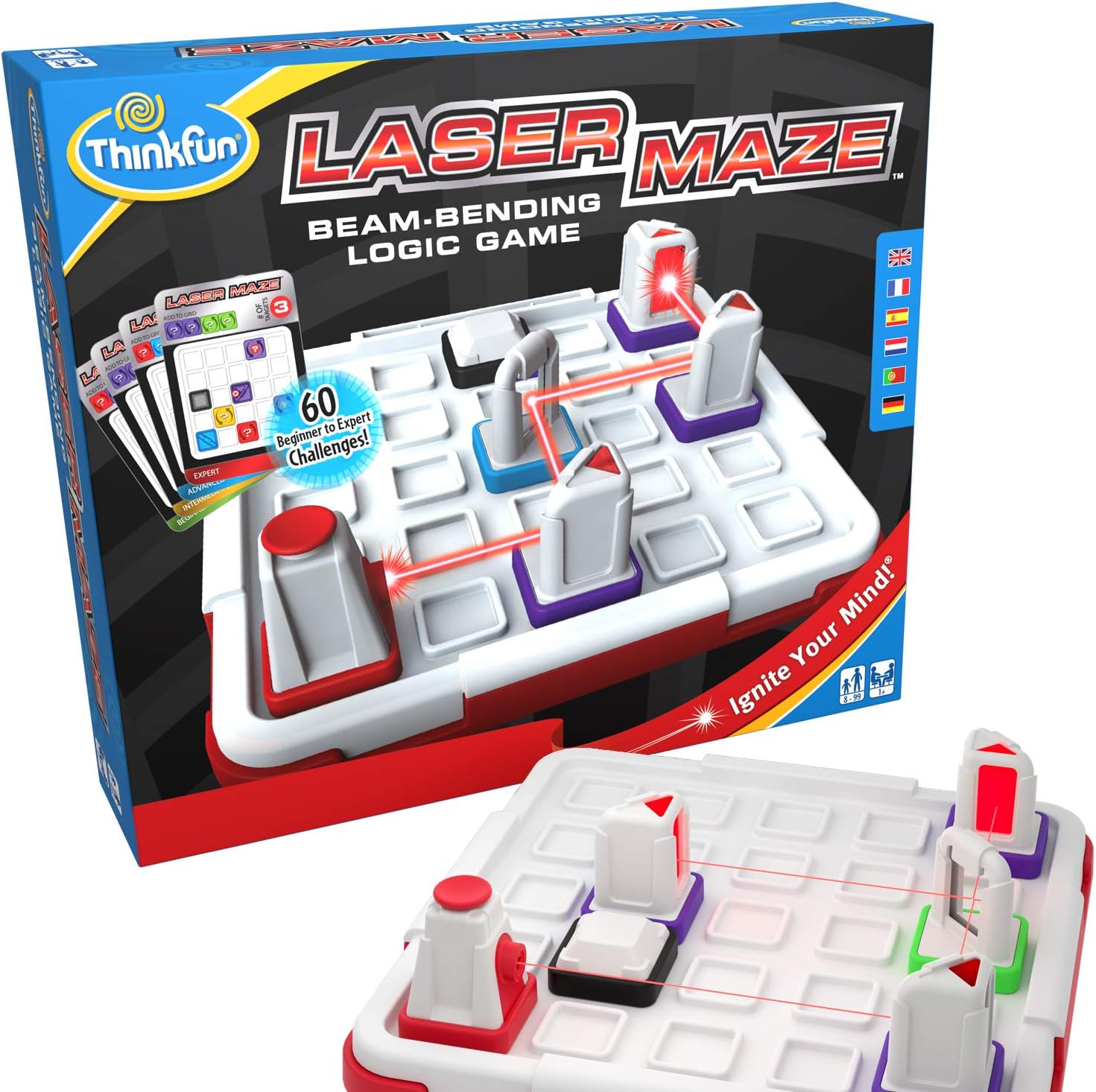
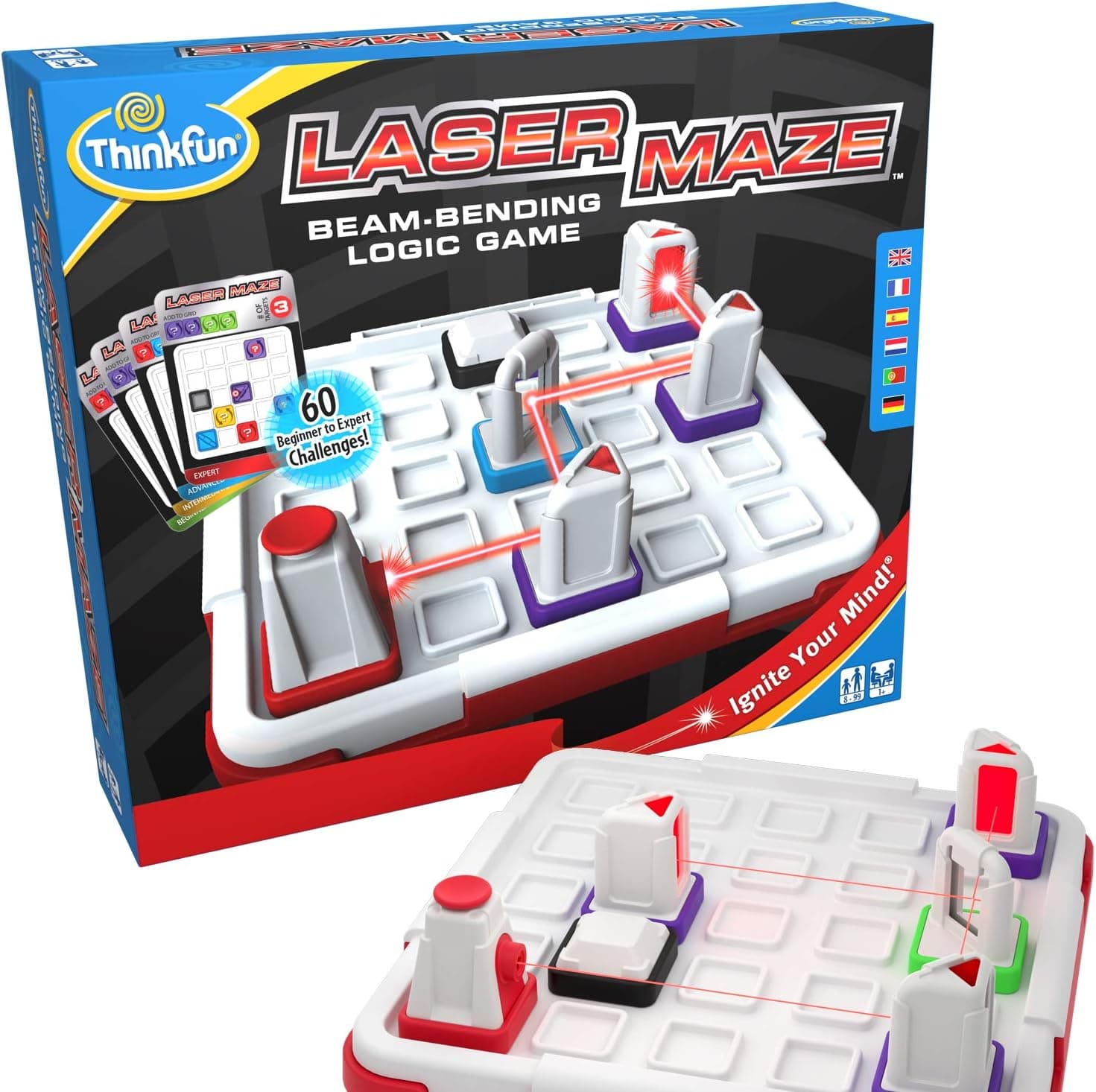
For a dose of sci-fi cool, the ThinkFun Laser Maze Logic Game really shines. This game challenges players to arrange mirrors and beam-splitters on a grid to guide a laser beam from a starting point to a target. It's an imaginative way to teach the principles of light reflection and refraction while solving increasingly difficult puzzles.
- Design & Build: The game board and pieces are well-made. The laser itself is a small, safe Class 1 laser that emits a clear red beam. The translucent pieces and targets add to the futuristic aesthetic.
- Key Features: Comes with a game grid, laser, 11 game tokens (including targets, mirrors, and beam-splitters), and 60 challenge cards. The satisfaction of seeing the laser hit its mark is a huge draw.
- Performance: Based on verified owner feedback, Laser Maze is fantastic for teaching optical physics concepts, geometric reasoning, and logical deduction. It requires players to mentally trace paths and understand how angles affect light. It's particularly appealing for older girls (ages 8+) who enjoy a bit more of a scientific bent to their puzzles.
- Value: Typically found in the £30-£35 price range, positioning it as a premium logic game. The unique laser mechanic justifies the cost for those seeking a truly different puzzle experience.
- Pros: Unique laser-based gameplay, teaches optical physics and geometry, highly engaging and visually dynamic, broad range of challenge levels, solid build quality.
- Cons: Requires batteries for the laser (usually included for initial play but will need replacing), can be slightly less forgiving if pieces aren't perfectly aligned.
SmartGames: Compact Creativity and Diverse Challenges
SmartGames often focuses on highly portable, compact logic puzzles that are perfect for travel or individual play. Their games typically feature multi-level challenges, encouraging players to think in different dimensions and approaches. They excel at offering a wide variety of puzzle mechanics, from 2D placement to 3D construction, often with beautifully sculpted pieces that invite interaction. They're ideal for girls who enjoy quick, satisfying puzzles and appreciate games that can be played anywhere.
SmartGames IQ Puzzler Pro
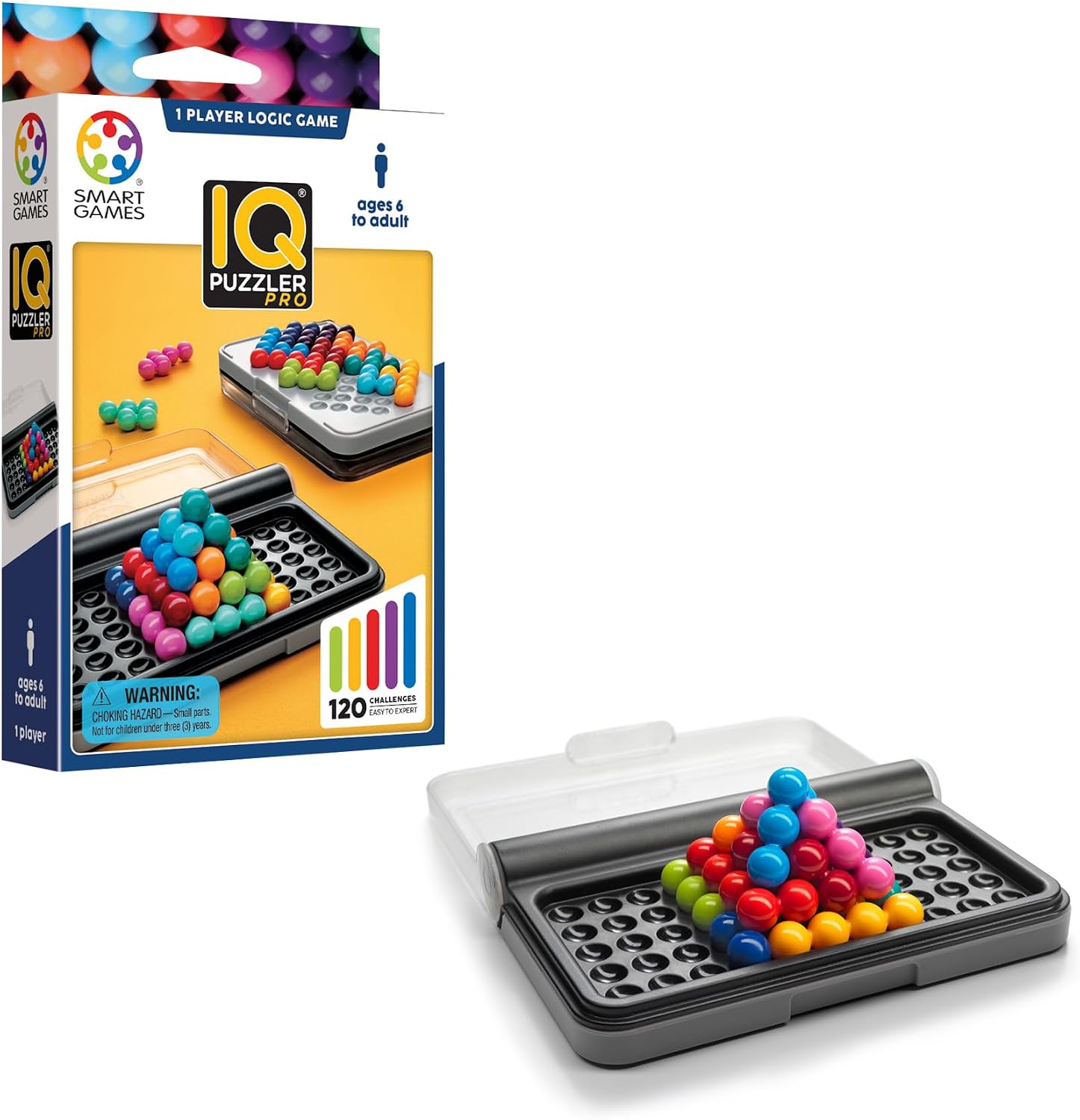
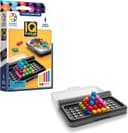
The SmartGames IQ Puzzler Pro is a prime example of SmartGames' genius for compact, multi-faceted puzzles. This single game packs in 120 challenges across three distinct playing modes: 2D puzzles, 3D pyramids, and 3D diagonal pyramids. Players use colourful, chunky pieces to fill grids or build structures according to the given challenge, developing spatial orientation and pattern recognition.
- Design & Build: The game comes in a robust, hinged plastic case that acts as the game board, making it supremely portable. The puzzle pieces are bright, tactile, and fit together satisfyingly.
- Key Features: 120 challenges across 3 game modes, 12 colourful puzzle pieces, and a clear instruction booklet. The compact design means it’s perfect for journeys.
- Performance: The manufacturer states and owners confirm that IQ Puzzler Pro is brilliant for developing spatial reasoning, logical deduction, and fine motor skills. The three distinct modes offer incredible variety and keep the brain working in different ways. It’s suitable for ages 6 and up, with challenges ranging from easy to extremely hard.
- Value: At around £10-£15, it's an incredibly budget-friendly option given the vast number of challenges and the game’s portability. It’s hard to beat for sheer bang for your buck.
- Pros: Extremely portable, 3 different game modes for huge variety, excellent value, builds spatial and logical skills, durable travel case.
- Cons: Small pieces could be lost, solutions can sometimes feel less intuitive than ThinkFun's more narrative-driven games.
SmartGames Parking Puzzler
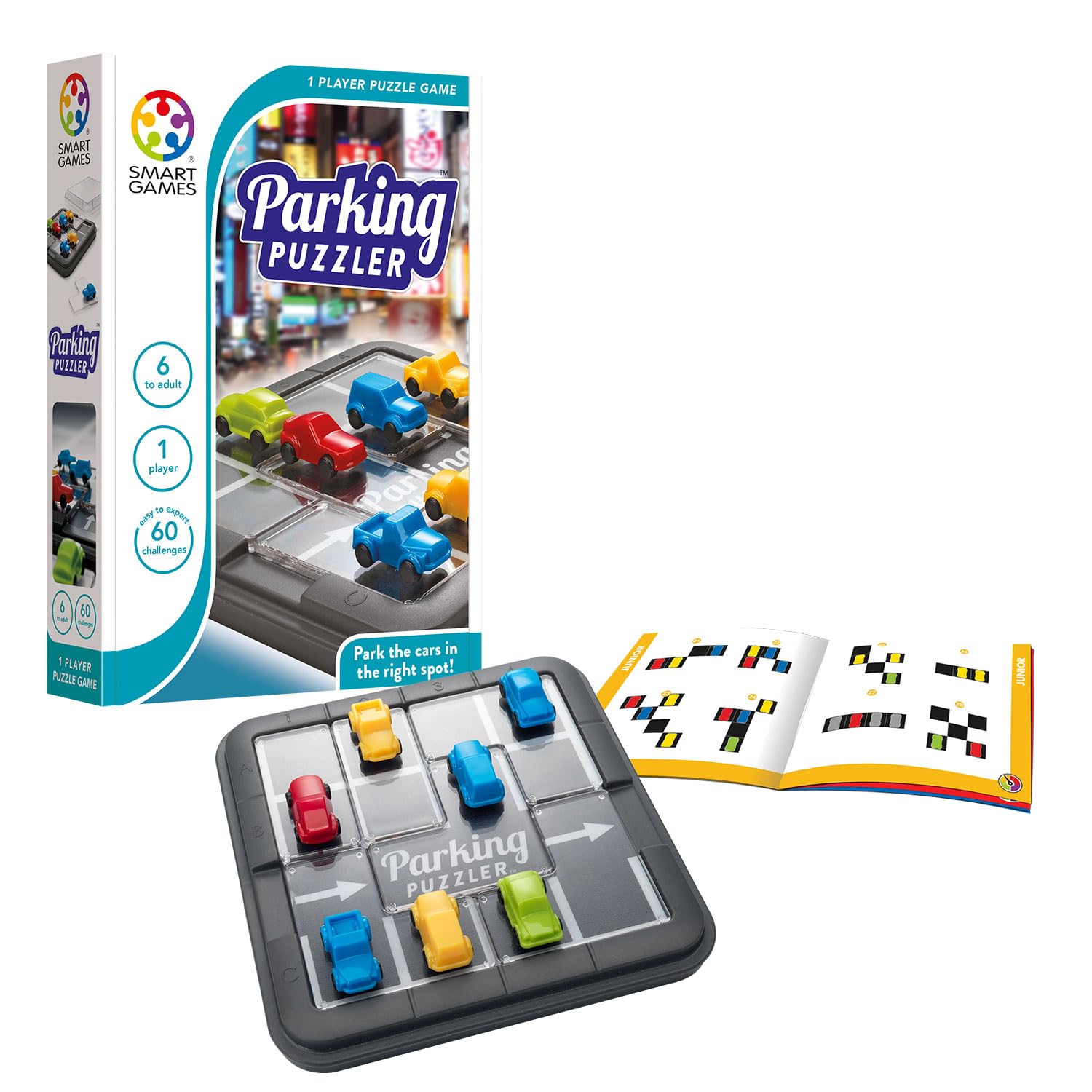
Taking a page from the traffic jam genre but adding its own unique twist, SmartGames Parking Puzzler tasks players with parking all four cars on the game board as indicated by the challenge card. The catch? Each car must fit perfectly, and sometimes there are obstacles or specific starting positions that dictate the flow. It's a clever puzzle for developing planning and spatial orientation.
- Design & Build: Comes in a sturdy, compact plastic case with a transparent lid that doubles as the game board. The little cars are well-moulded and fit snugly.
- Key Features: Includes 60 challenges, 4 mini cars, 1 game board, and a booklet with challenges and solutions. The challenges depict both the cars to be parked and any obstacles.
- Performance: Based on manufacturer claims and owner reviews, Parking Puzzler is excellent for fostering spatial reasoning, logical placement, and planning. It’s a good introduction to grid-based logic for younger players (ages 6+) and offers satisfying challenges for older kids too.
- Value: Usually in the £15-£20 range, offering solid value for its portability and numerous challenges. It’s a great 'on-the-go' logic game.
- Pros: Highly portable, engaging theme for vehicle lovers, builds spatial planning and logical placement, sturdy components, clear challenge cards.
- Cons: Only 4 cars can feel limiting after a while compared to Rush Hour's more numerous blockers, the theme might not appeal to everyone.
SmartGames Camelot Jr.
For a slightly younger audience or those who enjoy a more fairytale-like aesthetic, SmartGames Camelot Jr. is a charming and effective logic game. Players must build a path for a knight to reach a princess (or vice versa) using a series of wooden blocks. The challenges range from simple connections to complex multi-level structures, building up engineering and problem-solving skills.
- Design & Build: Features beautifully crafted wooden blocks for the castle towers and bridges, and two wooden figures (knight and princess). The game board is sturdy. It has a delightful, tactile quality.
- Key Features: 48 challenges, 8 wooden puzzle pieces, a game board, and wooden knight and princess figures. The pieces are large and easy for small hands to manipulate.
- Performance: Reviewers and parents consistently praise Camelot Jr. for its ability to teach planning, spatial reasoning, and problem-solving to children as young as 4. The progressive challenges gradually introduce more complex architectural concepts.
- Value: Typically found around £20-£25, which is fair for a game with high-quality wooden components and significant educational value.
- Pros: Excellent for younger children (ages 4+), beautiful wooden components, builds early engineering and spatial skills, progressive difficulty, charming theme.
- Cons: Younger age range means it might be outgrown sooner by very advanced children; relies entirely on the 'path building' mechanic.
Comparison: ThinkFun vs SmartGames
| Product | Primary Skill Focus | Typical Age Range | Price Band | Verdict | Buy |
|---|---|---|---|---|---|
| ThinkFun Rush Hour Traffic Jam Logic Game | Sequential logic, planning | 8+ | Mid-range (£20-£25) | Classic and highly engaging for step-by-step problem-solving. | Check today's price on Amazon |
| ThinkFun Gravity Maze Marble Run Logic Game | 3D spatial reasoning, engineering | 8+ | Mid-range (£25-£30) | Excellent for visualising and building complex 3D structures. | Check today's price on Amazon |
| ThinkFun Laser Maze Logic Game | Geometric reasoning, optical physics | 8+ | Premium (£30-£35) | Unique laser mechanic for advanced geometric and physics puzzles. | Check today's price on Amazon |
| SmartGames IQ Puzzler Pro | 2D/3D spatial orientation, pattern matching | 6+ | Budget (£10-£15) | Incredibly versatile and portable with multiple game modes. | Check today's price on Amazon |
| SmartGames Parking Puzzler | Spatial planning, logical placement | 6+ | Budget (£15-£20) | Fun, compact car-themed puzzle ideal for travel. | Check today's price on Amazon |
| SmartGames Camelot Jr. | Early engineering, 3D path building | 4+ | Mid-range (£20-£25) | Charming wooden puzzle for younger children to build paths. | Check today's price on Amazon |
Key Differences & Who Should Buy Which
Complexity and Age Range
ThinkFun games, especially the likes of Rush Hour and Laser Maze, tend to lean into a slightly older starting age (8+) with challenges that quickly ramp up to genuinely mind-bending levels. Their focus is often on deeper, more extended problem-solving sessions. SmartGames, while offering challenges for all ages, has a broader range that often includes fantastic options for younger children (like Camelot Jr. for 4+) and highly portable, quicker-to-solve puzzles such as IQ Puzzler Pro that are great for shorter bursts of play across various age groups.
Theme and Engagement
ThinkFun frequently uses more narrative or 'situational' themes, like being stuck in a traffic jam or navigating a laser beam. This can make the puzzles feel more like a mini-adventure. SmartGames, on the other hand, often focuses on abstract spatial manipulation, like fitting polyominoes into a grid, or more direct 'build-a-path' mechanics. While both are incredibly engaging, girls who love a story or a clear objective might gravitate more towards ThinkFun's thematic approach, whereas those who enjoy pure abstract spatial challenge might prefer SmartGames' variety of puzzle types.
Portability vs. Tabletop Experience
This is where SmartGames truly shines for families on the move. Many of their titles, especially the IQ series and Parking Puzzler, are designed as self-contained units that are perfect for car journeys, restaurant waits, or quiet time away from home. ThinkFun games like Rush Hour or Laser Maze are more geared towards a dedicated tabletop experience, though Rush Hour does come with a bag for its pieces, making it reasonably transportable. If you need something to slip into a backpack for a day out, a SmartGame is often your best bet.
Skill Development Focus
Both brands are phenomenal for developing core logical and spatial reasoning skills. ThinkFun often pushes heavily into sequential logic (Rush Hour), multi-step planning (Gravity Maze), and geometric/physical principles (Laser Maze). SmartGames offers similar benefits but often with a wider array of visual-spatial challenges, including 2D and 3D pattern recognition (IQ Puzzler Pro), and early engineering concepts (Camelot Jr.). For developing a diverse set of cognitive skills, having a mix from both brands could be ideal.
Alternatives to Consider
While the ThinkFun Rush Hour Traffic Jam Logic Game stands out as a top-tier choice for its classic appeal and excellent sequential logic development, sometimes you want a different kind of brain-teaser. If the traffic jam theme isn't quite right, or if you're looking for something that encourages a different approach to problem-solving, there are other fantastic options right within these same product lines.
Consider the SmartGames IQ Puzzler Pro for a truly versatile and compact puzzle experience. With its three distinct game modes – 2D grid puzzles, 3D pyramids, and diagonal pyramids – it offers a massive amount of replayability and challenges a different kind of spatial reasoning. It’s also incredibly portable, making it perfect for travel or just keeping busy on the go. It's a fantastic value for the sheer volume of brain-bending fun it provides.
For a more visually striking and technically oriented challenge, the ThinkFun Laser Maze Logic Game is an excellent choice. It introduces real-world physics concepts like reflection and refraction, requiring players to logically arrange mirrors and other elements to guide a laser beam to a target. It's a slightly more premium offering, but the unique play experience and the way it teaches geometric reasoning is truly engaging for girls who love a touch of science with their puzzles.
Verdict
For fostering critical thinking, spatial reasoning, and persistence in girls, both ThinkFun and SmartGames offer exceptional, genuinely useful educational board games that will stand the test of time and provide countless hours of engaging mental workouts. While SmartGames often excels in portability and offering diverse, compact puzzle types across a broad age range, ThinkFun generally provides a more focused, often narrative-driven, deep-dive into specific logical challenges.
If I had to pick one game that offers the best blend of engagement, challenge, and broad appeal, it would be the ThinkFun Rush Hour Traffic Jam Logic Game. It’s a classic for a reason: incredibly fun, progressively challenging, and brilliant for sequential thinking. It's an investment in developing essential cognitive skills wrapped in a genuinely enjoyable activity that will be revisited countless times.