As an Amazon Associate I earn from qualifying purchases. This page contains affiliate links, and I may earn a commission at no extra cost to you.
Dangling a 12V power cord down your centre console looks messy, and prying off A-pillar trim to route a cable around side-curtain airbags gives plenty of car owners genuine pause. Vehicle warranty concerns, broken plastic clips, and rattles are valid reasons to hesitate. That friction is precisely why integrated, vehicle-specific dash cams have exploded in popularity.
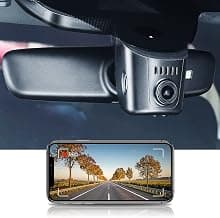
Instead of sticking a generic suction cup to your windscreen and splicing into the cabin fuse box, cameras like the Fitcamx 4K Integrated Dash Cam replace an existing plastic trim housing around your rearview mirror or rain sensor. They tap into factory power using a custom Y-splitter harness, yielding a factory-look installation with zero exposed wires. But does the convenience and clean aesthetic justify the model-specific limitations? Here is an objective breakdown of how OEM-integrated units stack up against established standalone units.
How OEM-Integrated Mirror Harness Cameras Work
Most modern vehicles house electronics behind the interior rearview mirror—typically rain sensors, auto-dimming mirror circuits, or forward-facing camera arrays for lane-keep assist. A plug-and-play integrated camera is designed with a replacement clamshell housing made from PC+ABS plastic that matches the texture and contour of your vehicle's factory trim. Inside that custom shell sits an integrated lens, image sensor, and processor.
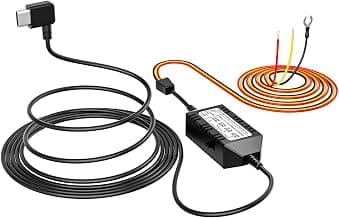
Power delivery is the core selling point. Instead of running a four-metre lead down to the footwell or fuse panel, you unclip the factory power lead to the rain sensor or mirror, plug in an intermediary Y-cable, and route one end back to the sensor and the other to the dash cam. Power switches on and off with the ignition, leaving your 12V auxiliary sockets and USB ports completely free.
Key Models Compared
| Product | Key Specs | Form Factor / Power Method | Verdict | Buy |
|---|---|---|---|---|
| Fitcamx 4K Integrated Dash Cam | 4K UHD (3840x2160 @ 30fps), f/1.6 aperture, Wi-Fi, 64GB card included | OEM-matched replacement trim; mirror/rain sensor Y-harness | Unbeatable zero-wire cabin aesthetics for supported vehicle models. | Check price on Amazon |
| Nextbase 622GW Dash Cam | 4K @ 30fps, image stabilisation, rotating polarising filter, What3Words | Standard windscreen mount; 12V cigarette lighter / fuse hardwire | Superb video clarity and emergency features, but bulkier footprint. | Check price on Amazon |
| VIOFO A119 Mini 2 Dash Cam | 2K Quad HD @ 60fps, Sony STARVIS 2 sensor, voice control | Compact wedge mount; optional fuse tap hardwire kit (HK4) | Class-leading low-light sensor quality in an unobtrusive wedge body. | Check price on Amazon |
| Garmin Dash Cam Mini 2 | 1080p Full HD, 140° FOV, Garmin Clarity polariser, voice control | Ultra-compact key fob size; USB/12V lead with dual routing | Tiny footprint that hides behind any mirror, universal fit. | Check price on Amazon |
Detailed Product Breakdowns
1. Fitcamx 4K Integrated Dash Cam — The Factory OEM Look
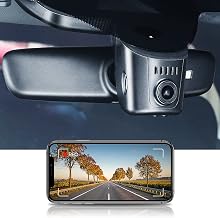
The Fitcamx 4K Integrated Dash Cam is engineered for drivers who prioritise cabin aesthetics above all else. Because the housing is moulded specifically to match designated trim shapes—such as Audi, BMW, Toyota, Volvo, and Ford housings—the camera looks like standard factory equipment rather than an aftermarket gadget stuck to the glass.
Design and Installation: Installation requires popping off the factory plastic shroud behind your rearview mirror with a plastic pry tool, clipping the Fitcamx replacement piece in its place, and seating the inline Y-harness between the car's rain sensor and the original wiring loom. There are no cables to tuck into headliners, no trim removal along the A-pillar where side airbags reside, and no fuse box tapping required. The shell uses heat-resistant PC+ABS composite that closely blends into standard vehicle interior plastics.
Imaging and Performance: Video capture is handled at 3840x2160 (4K) at 30 frames per second through a bright f/1.6 aperture lens. License plates and road signs in daylight are rendered crisply. The unit features built-in Wi-Fi to link directly to the Fitcamx companion app on iOS and Android for video playback and export, and ships with a 64GB micro-SD card pre-installed (with support up to 256GB). A built-in G-sensor automatically locks clips in the event of hard braking or impact.
Trade-offs: The biggest drawback is transferability. When you change vehicles, an integrated housing made for a specific model year cannot simply be moved to your next car. Furthermore, because it draws switched ignition power from the rain sensor, standard 24/7 parking mode recording is not supported without purchasing a separate, dedicated fuse-box hardwire cable.
2. Nextbase 622GW Dash Cam — Feature-Packed Universal Powerhouse
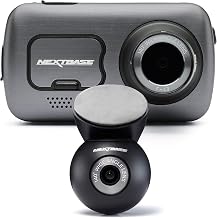
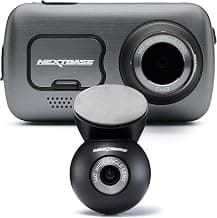
If your vehicle is not supported by custom-moulded housings or you want advanced safety telematics, the Nextbase 622GW Dash Cam is a top-tier universal alternative.
Features and Usability: Capturing true 4K at 30fps or 1080p at 120fps for high-speed playback, the 622GW incorporates a built-in rotating polarising filter to cut through windscreen glare and digital image stabilisation to absorb chassis vibration. It also features a 3-inch IPS touchscreen, 10Hz GPS data-logging, What3Words emergency location sharing, and Emergency SOS capability that can alert emergency services if the driver is unresponsive after a severe crash.
The Catch: It is visibly present on your windscreen. While the Click-and-Go magnetic mount is practical, routing the 4-metre power cable to a 12V socket or fuse box takes time and patience, and the camera body is clearly visible to passersby.
3. VIOFO A119 Mini 2 Dash Cam — Discreet High-Performance Wedge
For drivers who want exceptional sensor performance in a universal format that tucks neatly out of sight, the VIOFO A119 Mini 2 Dash Cam provides a compelling mid-range solution.
Low-Light Excellence: While it records at 2K Quad HD rather than native 4K, its Sony STARVIS 2 sensor offers dynamic range and night-time clarity that routinely punches above its weight class. It handles headlight glare and dimly lit backroads with impressive control.
Wiring Considerations: The A119 Mini 2 uses a low-profile wedge mount that fits behind most rearview mirrors. For parking protection, it relies on an optional HK4 hardwire cable with adjustable low-voltage cut-off protection, which requires connecting two fuse taps (ACC and constant live) into your vehicle's fuse board.
4. Garmin Dash Cam Mini 2 — The Ultra-Compact Universal Alternative
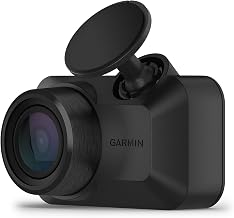
If you love the unobtrusive nature of the Fitcamx but drive a car without a compatible mirror shroud, the Garmin Dash Cam Mini 2 is the next best thing.
Tiny Footprint: Roughly the size of a standard car key fob, the Mini 2 has no screen and mounts directly to the glass behind your rearview mirror. It captures 1080p HDR footage across a 140-degree field of view with an integrated polariser to reduce reflection. Voice control allows you to save video or toggle audio hands-free.
Trade-offs: It still requires a long USB cable to be routed around the headliner, but its physical footprint on the windscreen is barely noticeable from the driver's seat.
Vehicle Compatibility and Practical Installation Advice
Before purchasing an OEM-style unit like the Fitcamx, verifying your exact rearview mirror stem and rain sensor housing configuration is essential. Manufacturers frequently alter interior sensor shrouds between model facelifts or trim levels (e.g., standard mirror vs. digital display mirror). Always inspect the shape of your current plastic casing against the product photos before ordering.
When unclipping factory plastics, use a non-marring nylon pry tool rather than a metal screwdriver to prevent scoring soft-touch dash materials. The Y-harness draws negligible current—typically 0.3A to 0.5A—which operates well within the tolerances of OEM rain sensor circuits without triggering CAN bus fault codes or dashboard warning lights.
Alternatives to Consider
If you prefer a full ecosystem with modular rear cameras or built-in touchscreens, consider the following options:
- For Maximum Safety Tech: The Nextbase 622GW Dash Cam provides integrated GPS, polarising glare reduction, and Emergency SOS dispatch.
- For Budget Discretion: The Garmin Dash Cam Mini 2 hides seamlessly behind universal mirrors while offering hands-free voice commands.
- For Night-Time Plate Readability: The VIOFO A119 Mini 2 Dash Cam offers industry-leading low-light imaging via its STARVIS 2 sensor.
Verdict: Are Integrated Mirror Harness Cameras Worth It?
For drivers whose primary goal is a spotless, cable-free interior without the hassle of prying open A-pillars or splicing into fuse boxes, the Fitcamx 4K Integrated Dash Cam is thoroughly worth the investment. It eliminates the aesthetic compromises of traditional dash cams while delivering dependable 4K daylight footage and straightforward plug-and-play installation.
However, if you switch cars frequently, require advanced parking surveillance without routing extra wires, or demand dedicated physical buttons and touchscreens, a universal alternative like the Nextbase 622GW or VIOFO A119 Mini 2 remains the more flexible route.