
As an Amazon Associate I earn from qualifying purchases. This page contains affiliate links, and I may earn a commission at no extra cost to you.
It's August 2026, and if your child has an interest in photography, even a nascent one, you've probably considered getting them their own camera. But the world of kids' digital cameras can be tricky. Do you go for something incredibly robust and simple for a younger child, or something with a bit more photographic substance for an older, more serious budding shutterbug? That's the core question when you're looking at popular models like the VTech KidiZoom Duo FX and the Oaxis myFirst Camera 3.
These two cameras represent different philosophies in kids' tech. One is a fortress of fun, built to withstand anything a toddler can throw at it (or throw it at), while the other aims for a more genuine photography experience in a kid-friendly package. Let's break down where each excels and which one is genuinely the best fit for your family.
VTech KidiZoom Duo FX: The Indestructible Introduction
Design and Build: Built Like a Tank, with Kid-Friendly Grips
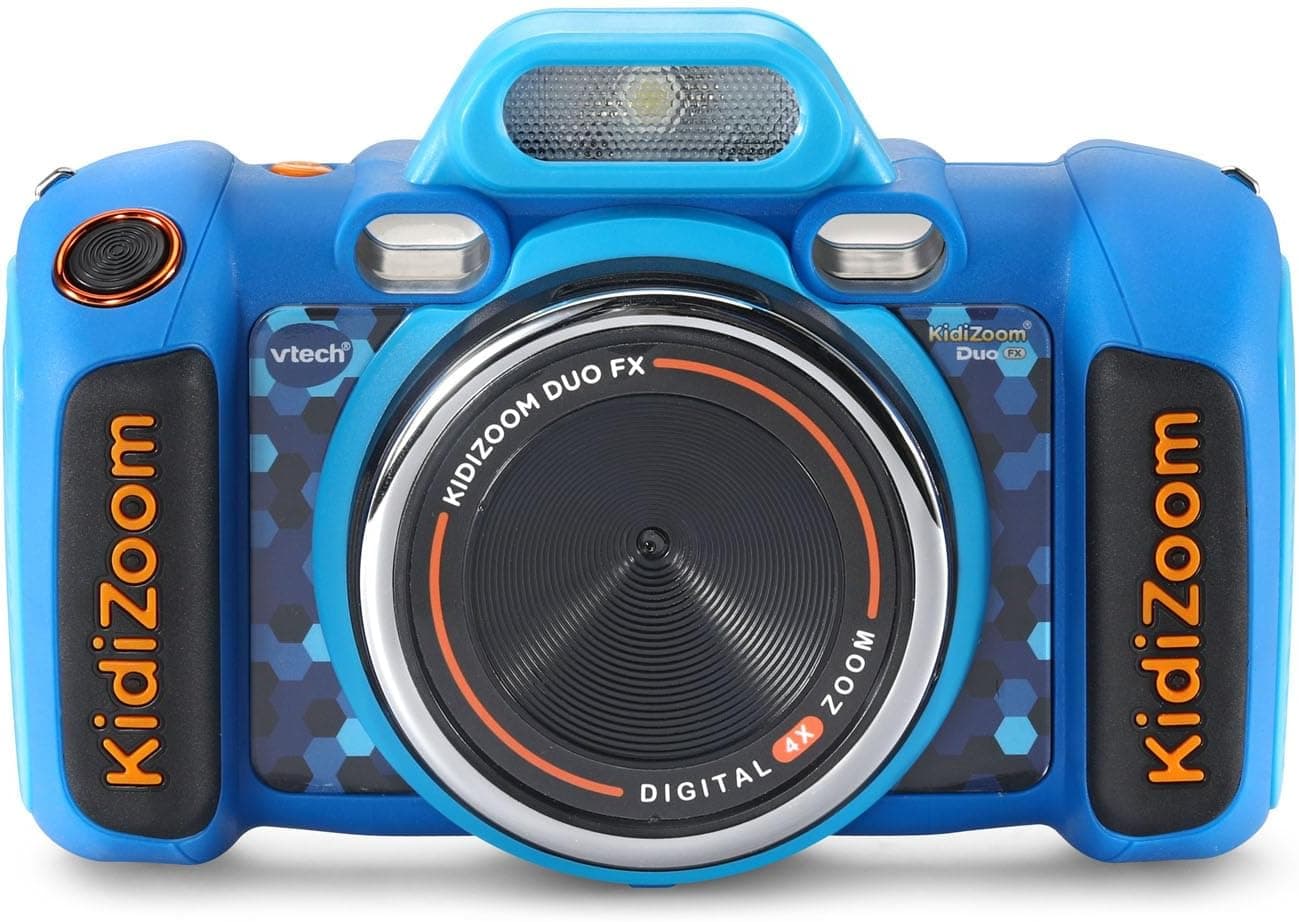
The VTech KidiZoom Duo FX is a chunky, colourful beast, and I mean that in the best possible way. It’s designed from the ground up for small hands and accidental drops. The rubberised bumpers are significant, wrapping around the entire device, which is crucial for those inevitable tumbles off the sofa or kitchen table. Its oversized buttons are easy to press, even for little fingers still developing fine motor skills. The most distinctive design feature is its dual-lens system: one lens for forward-facing shots and a second one on the back for selfies. This might seem like a gimmick, but for younger kids who love to snap photos of themselves or their friends, it's genuinely intuitive and eliminates the frustration of trying to turn the camera around.
Key Features: More Than Just Photos
While it is a camera, the Duo FX also functions as a mini multimedia device. It captures basic photos and videos, but it’s loaded with creative features like fun frames, stamps, and distortion effects that kids adore. There are also five built-in games, a voice recorder with silly voice-changing effects, and a simple photo editor. Storage comes in the form of a small internal memory, expandable via a microSD card slot. The screens are generally small and of lower resolution, perfectly adequate for reviewing silly photos but not for detailed image analysis.
Performance: Setting Realistic Expectations
Let's be clear: this isn't going to win any photography awards. The image quality is, politely put, basic. Think VGA-era smartphone camera, maybe a little better. Photos tend to be a bit soft, and colours aren't always accurate, especially in less-than-ideal lighting. However, for its target audience (ages 3-9), it performs exactly as needed. Kids don't care about pixel peeping; they care about capturing a moment, adding a funny hat, and sharing it with Mum or Dad. The video quality is similarly rudimentary, often jerky and low-res, but again, it gets the job done for playful home movies. Battery life, based on manufacturer specs and owner reports, is decent, often lasting several hours of intermittent play, usually requiring 4 AA batteries.
Value: Affordable Fun and Durability
The VTech KidiZoom Duo FX sits firmly in the budget to mid-range category, typically costing around £40-£60. For that price, you're getting a durable, feature-rich toy that can introduce kids to photography without the worry of them destroying a more expensive device. It’s a great entry point, prioritising robust build quality and entertaining extras over raw photographic prowess.
Oaxis myFirst Camera 3: The Budding Photographer's Friend
Design and Build: Compact, Sleek, and Still Kid-Proof
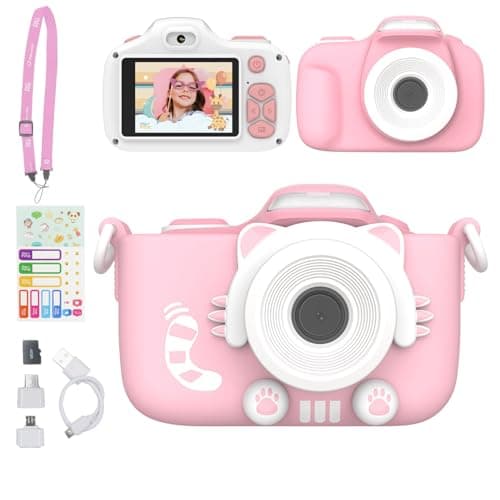
Moving up a notch, the Oaxis myFirst Camera 3 offers a more refined, yet still robust, experience. It's noticeably smaller and lighter than the KidiZoom, designed more like a miniature point-and-shoot camera than a dedicated toy. While it doesn't have the same level of chunky rubberised armour, it typically comes with a durable silicone case that provides good drop protection for everyday bumps. The design is cleaner, often featuring a single large button for shutter release and a simpler navigation pad. It feels more substantial in the hand, signaling a step up in quality without sacrificing kid-friendliness.
Key Features: Focus on Photography
The myFirst Camera 3 is less about games and more about image capture. It boasts a higher resolution sensor (often around 12MP, interpolated from a lower native resolution, but still a significant step up from the VTech's 2MP), offering genuinely better photos. It also records Full HD 1080p video, which is a big leap. Features include various photo frames, colour filters, and sometimes a selfie camera (though often a simpler, fixed-focus lens compared to VTech's dedicated setup). Crucially, it almost always uses a microSD card for storage and has a rechargeable internal battery, typically charged via USB-C.
Performance: A Step Towards Real Photography
Here's where the Oaxis myFirst Camera 3 truly differentiates itself. Images, while still not professional grade, are visibly sharper, more detailed, and have better colour reproduction than those from the KidiZoom. This means kids can actually see the difference their framing and composition make. The 1080p video is a much more enjoyable experience for playback, with clearer audio and smoother motion. Based on owner feedback, the interface is straightforward enough for kids aged 6 and up to master quickly, allowing them to focus on taking pictures rather than navigating complex menus. The rechargeable battery is a huge plus, eliminating the constant need for AA replacements and offering several hours of continuous shooting.
Value: A Premium for Better Quality
Priced typically in the £70-£100 range, the Oaxis myFirst Camera 3 is a more significant investment. However, for that extra cost, you're getting a camera that delivers genuinely superior image and video quality, a more