As an Amazon Associate I earn from qualifying purchases. This page contains affiliate links, and I may earn a commission at no extra cost to you.
Introducing kids to the magic of electronics doesn't just entertain; it builds foundational STEM skills that are genuinely valuable. Finding the right kit can make all the difference, though. You want something engaging, safe, and truly educational. For years, Snap Circuits have been a go-to for parents and educators alike, and for good reason. Their unique 'snap-together' design eliminates tricky wiring, making complex concepts accessible.
Today, we're pitting two of their most popular sets against each other: the compact 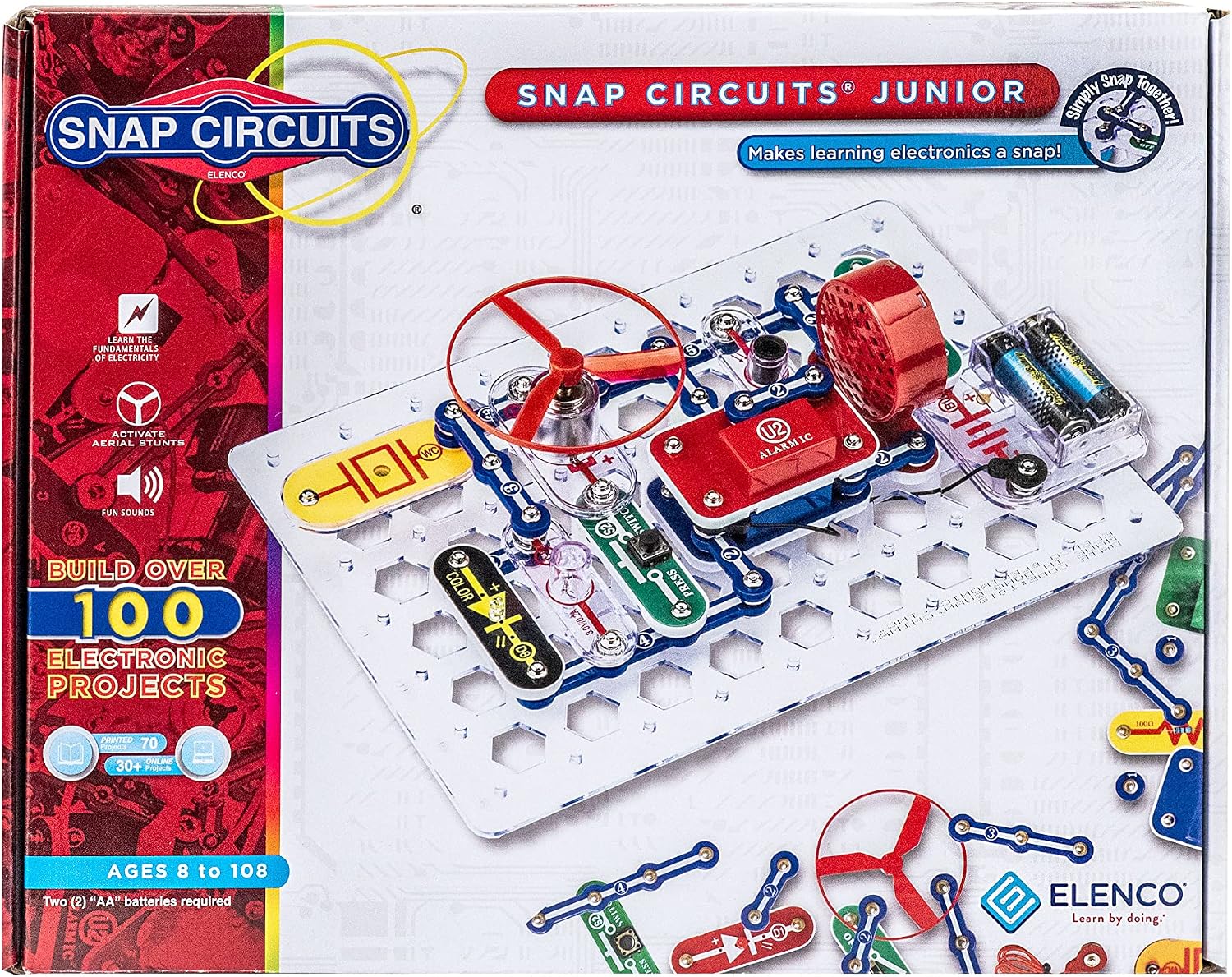
Design and Build Quality: Durability for Little Hands
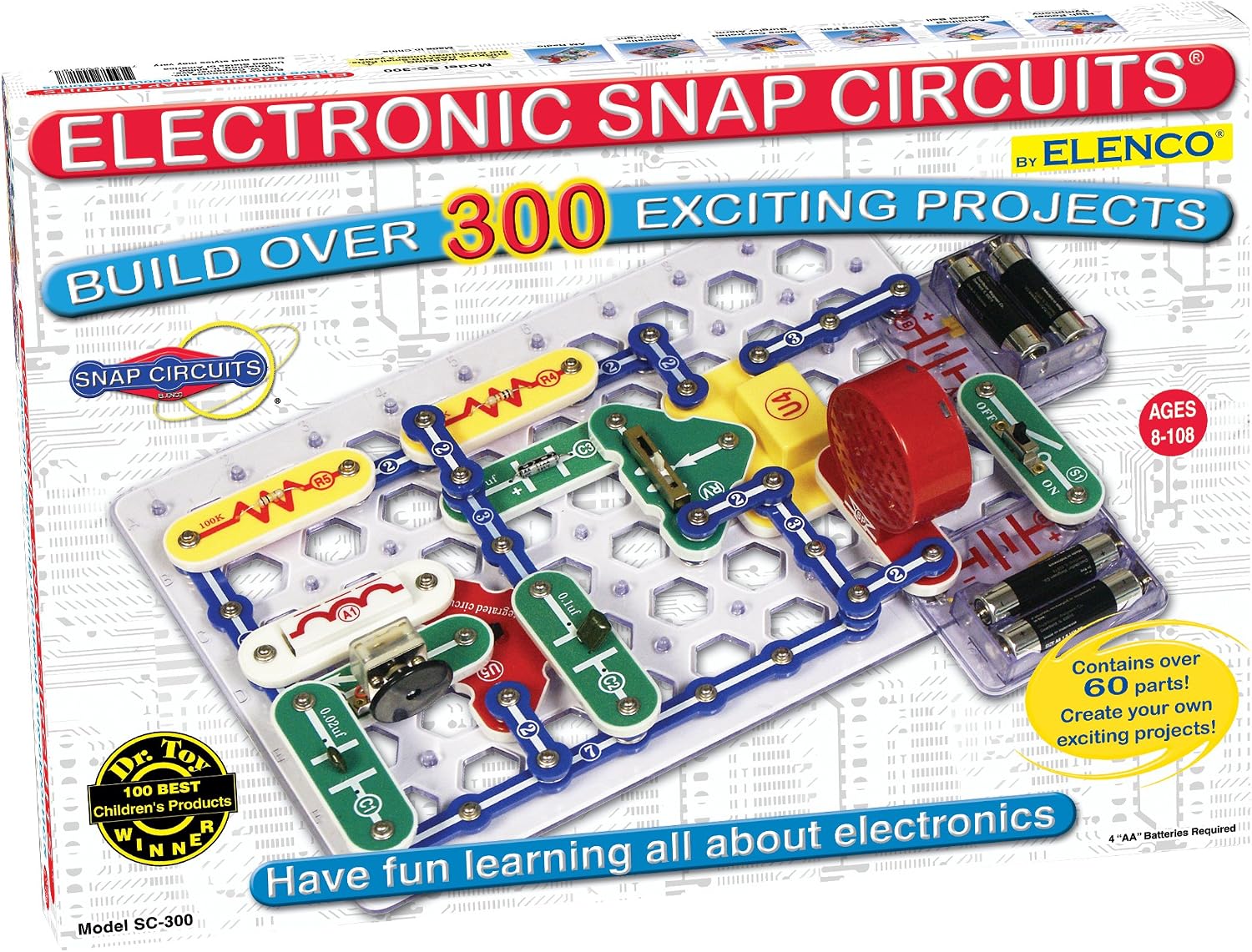
Both the SC-100 and SC-300 share the same fundamental design: colourful, plastic-mounted electronic components that snap together onto a plastic grid. This snap-on system is brilliant, bypassing the need for soldering or fiddly clip leads, which can frustrate younger kids. The components themselves feel robust, designed to withstand the inevitable enthusiastic handling of children. You'll find everything from switches and lights to motors and speakers, all clearly labelled.
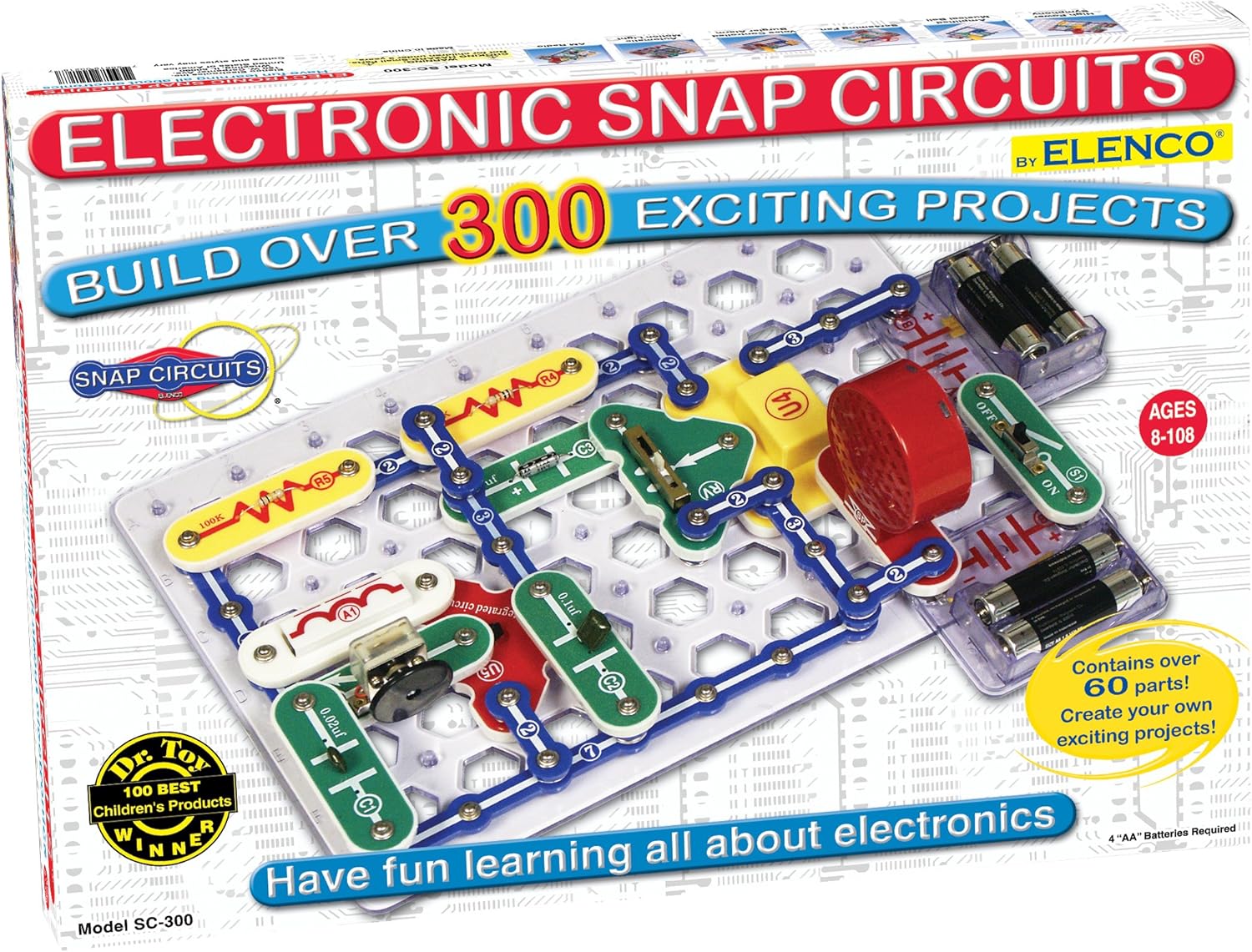
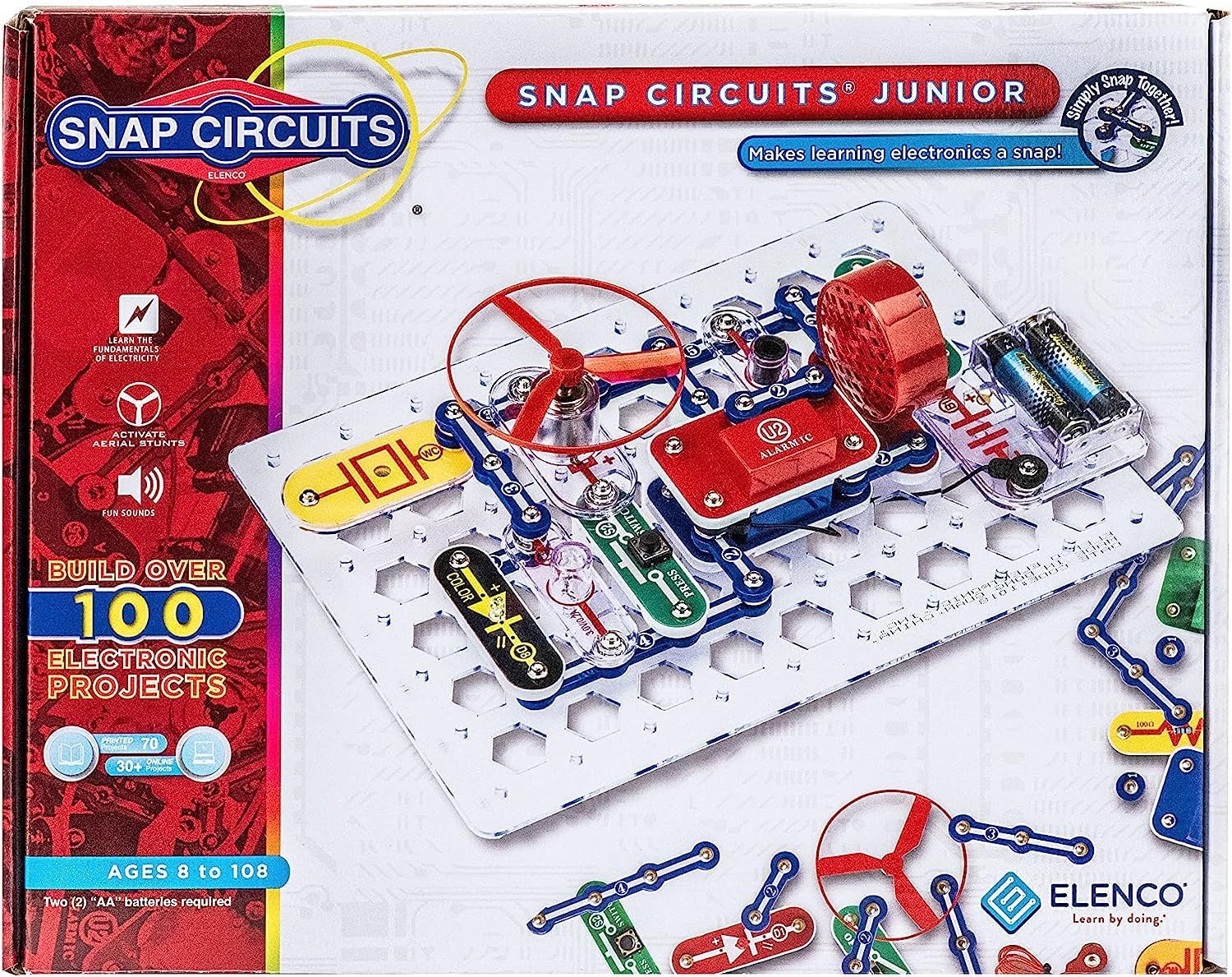
The main difference here isn't quality, it's quantity. The Jr. SC-100No extra cost to you · Check current price & availability on Amazon includes fewer parts, making it less intimidating for a first-timer. The Classic SC-300No extra cost to you · Check current price & availability on Amazon, by contrast, packs in a significantly larger array of components. This means more creative potential but also a larger initial spread of parts to organise and understand.
Key Features and Performance: Projects Galore
The core appeal of any Snap Circuits kit is the sheer number of projects you can build. The Snap Circuits Jr. SC-100No extra cost to you · Check current price & availability on Amazon lives up to its '100' moniker, offering over 100 projects. These start simple – like lighting an LED or spinning a fan – and gradually introduce concepts like resistance, series and parallel circuits, and basic logic. It's a fantastic progression that gently guides kids through fundamentals without overwhelming them.
Stepping up to the Snap Circuits Classic SC-300No extra cost to you · Check current price & availability on Amazon, you get over 300 projects. This isn't just a bigger number; it introduces more complex components and circuit variations. Expect to build things like AM radios, flying saucers, and digital voice recorders. The SC-300 expands significantly on the foundational principles, allowing for deeper exploration and more sophisticated builds. Based on owner feedback, both kits perform reliably, with circuits generally working as described in the manuals.
Value for Money: Entry Point vs. Long-Term Potential
Price-wise, the Snap Circuits Jr. SC-100No extra cost to you · Check current price & availability on Amazon usually sits in the budget to mid-range category, making it an excellent impulse-buy gift or a low-risk way to test the waters with a child's interest in electronics. For roughly £30-£40, it delivers a tremendous amount of educational play.
The Snap Circuits Classic SC-300No extra cost to you · Check current price & availability on Amazon typically costs more, often in the premium mid-range, around £50-£70. While a bigger investment, you're getting three times the projects and a more diverse component set, which means longer-lasting engagement and more opportunities for growth. If you know your child is already keen on science or building, the SC-300 offers better long-term value, as they won't quickly outgrow its project book.
Comparison Table
| Product | Key Feature | Price Band | Verdict | Buy |
|---|---|---|---|---|
| Snap Circuits Jr. SC-100 | 100+ projects, compact, great starter set | Budget-Mid-range (~£30-£40) | Excellent entry-level kit for younger kids. | Check today's price on AmazonNo extra cost to you · Check current price & availability on Amazon |
| Snap Circuits Classic SC-300 | 300+ projects, more components, advanced builds | Premium Mid-range (~£50-£70) | Ideal for sustained learning and more complex concepts. | Check today's price on AmazonNo extra cost to you · Check current price & availability on Amazon |
Alternatives to Consider
While we're focusing on the Snap Circuits ecosystem, it's worth noting that your choice between the Jr. SC-100 and the Classic SC-300 often comes down to budget and your child's prior experience. If the Jr. SC-100No extra cost to you · Check current price & availability on Amazon feels a little too basic or your child quickly burns through the initial projects, the Classic SC-300No extra cost to you · Check current price & availability on Amazon is the natural next step, offering a substantial upgrade in project variety and component depth. Conversely, if you're unsure how much interest your child will have, the SC-100 is a fantastic, lower-cost entry point that still delivers a rich learning experience.
Final Verdict: Which Snap Circuits Kit is Right for You?
Both the Snap Circuits Jr. SC-100No extra cost to you · Check current price & availability on Amazon and the Snap Circuits Classic SC-300No extra cost to you · Check current price & availability on Amazon are genuinely excellent electronic kits that deliver on their promise of fun, educational building. For most young inventors starting their journey, the Jr. SC-100 is the clear winner. It's affordable, approachable, and provides a solid introduction to over 100 core concepts. It strikes a fantastic balance between simplicity and educational depth, making it less overwhelming for younger children (typically ages 8+) and those new to electronics. If your child shows a sustained interest, upgrading to the SC-300 or another expansion set is always an option later on.
If you have an older child (say, 10+) who already has a knack for building, or you're confident they'll dive deep into electronics, then the Classic SC-300 offers a richer, more expansive experience right out of the box. But for that crucial first spark of interest, the Jr. SC-100 is the smarter starting point.
Ready to ignite their passion for electronics? Pick up your kit today!