As an Amazon Associate I earn from qualifying purchases. This page contains affiliate links, and I may earn a commission at no extra cost to you.
The 12V Auxiliary Battery Dilemma in Modern Electric Vehicles
If you drive a modern electric vehicle—whether it is a Tesla Model 3, Hyundai Ioniq 5, Kia EV6, Porsche Taycan, or BMW i4—you might assume that having a massive 75kWh high-voltage traction battery under the floorboards means continuous parking monitoring for your dash cam is a non-issue. Unfortunately, the opposite is true. Dash cams do not draw power from your car's high-voltage propulsion battery while parked; they rely entirely on the small, secondary 12V lead-acid, AGM, or lithium auxiliary battery.
When an optical dash cam stays awake all night analyzing video frames to detect motion, it pulls significant current. In an electric vehicle, if the 12V battery voltage drops below a strict safety threshold, the vehicle's High-Voltage (HV) contactors disengage. You return to your car in the morning not just with a dead dash cam, but with a dormant EV that throws cascade warning codes, refuses to start, or disables remote app connectivity. Worse still, aggressively cycling an EV's 12V battery destroys its lifespan within months.
This exact scenario is why radar-assisted parking surveillance has shifted from a luxury gimmick to an essential engineering solution. The Thinkware U3000 promises to eliminate 12V battery anxiety by swapping power-hungry optical motion detection for ultra-low-power millimetre-wave radar. But at a premium price point near £500, does the real-world performance match the marketing promises? Below, we break down how the Thinkware U3000 performs alongside established rivals from BlackVue and Garmin to help you make an informed buying decision.
Understanding the Technology: Optical Motion vs. Radar Detection
To understand why the Thinkware U3000 commands a price premium, it helps to look at how traditional dash cams process parking surveillance versus how radar-equipped systems operate.
Traditional Optical Motion Detection
Standard dash cams protect parked vehicles using optical motion sensing. The image sensor and image processing chip remain continuously powered on. The camera digitizes every single frame and calculates pixel changes. If leaves blow across the wind-screen, rain falls, or streetlights flicker, the processor flags a motion event and saves the clip. Because the main image processor never sleeps, a dual-channel optical setup typically draws between 3.5 and 5.0 Watts of continuous power. On a typical 12V auxiliary battery, this causes the cut-off voltage protection to trigger in as little as 8 to 14 hours, leaving your car unmonitored for the remainder of the night.
Radar Motion Detection
The Thinkware U3000 takes a radically different hardware approach. Instead of keeping the high-power image sensor and 4K processor active, the camera puts its main system into a deep sleep state (Energy Saving Mode 2.0). Meanwhile, a tiny, integrated millimetre-wave radar module stays awake. Radar consumes a fraction of the power required by an optical image sensor. It emits low-power radio waves to detect physical, solid objects approaching the vehicle. Only when a moving object enters the radar's physical detection zone does the dash cam wake its 4K Sony STARVIS 2 sensor to log footage. If an impact occurs, it captures a 20-second clip (including pre-buffered or post-impact recording depending on setup). If no physical collision occurs, the high-power recording system immediately shuts back down.
The result is a dramatic reduction in average power draw, allowing parking monitoring to extend from hours to several days on a single vehicle charge cycle without triggering your EV's low-voltage battery warnings.
The Key Contenders Compared
| Dash Cam Model | Video Resolution | Parking Technology | Price Band | Best EV Fitting Scenario | Where to Buy |
|---|---|---|---|---|---|
| Thinkware U3000 2CH | 4K UHD Front / 2K QHD Rear | Built-in Front & Rear Radar | Premium (~£480-£550) | Maximum multi-day parking security without 12V drain | View on Amazon |
| Thinkware U3000 (1CH) | 4K UHD Front | Built-in Front Radar | Premium (~£380-£430) | Front-only radar protection for simple wiring setups | View on Amazon |
| BlackVue DR970X-2CH Plus | 4K UHD Front / 1080p Rear | Optical Motion & Voltage Sensing | Premium (~£420-£480) | Drivers wanting cloud backup & ultra-wide 146° view | View on Amazon |
| BlackVue DR770X-2CH | 1080p 60fps Front / 1080p Rear | Optical Motion / Smart Parking | Mid-Range (~£280-£330) | Proven daily driving reliability on a reasonable budget | View on Amazon |
| Garmin Dash Cam Live | 1440p 2K with HDR | Always-On LTE Surveillance | Mid-to-High (~£330-£380) | Real-time theft alerts and cloud upload via cellular | View on Amazon |
Detailed Product Breakdown
1. Thinkware U3000 2CH Dash Cam — The Top Pick for EV Battery Health
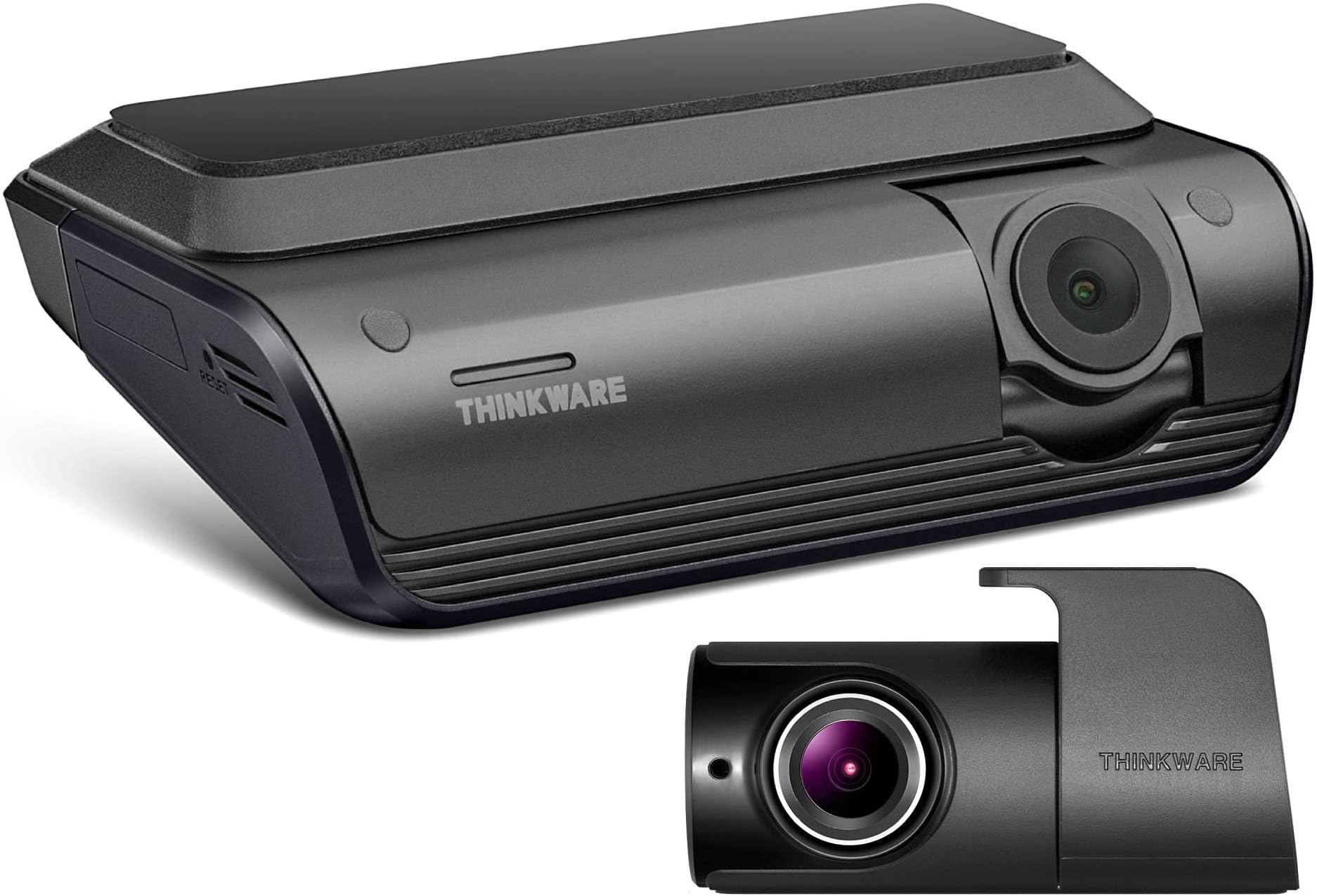
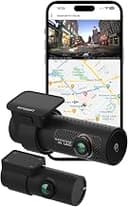
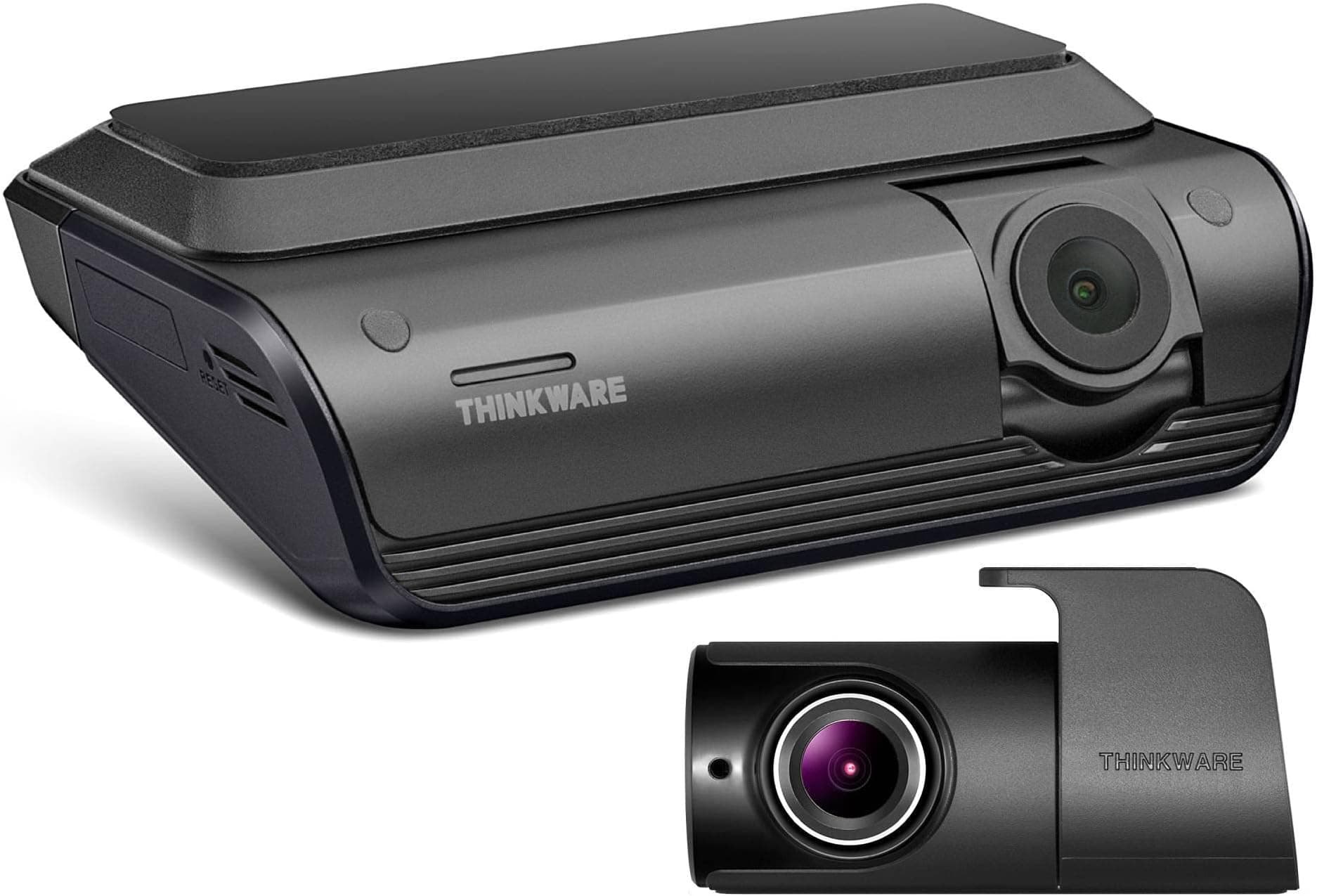
The Thinkware U3000 2CH Dash Cam represents the absolute state of the art in vehicle parking surveillance. Built around Sony's flagship Exmor R STARVIS 2 sensor, the U3000 captures front footage in crisp 4K UHD (2160p) at up to 30fps—or 2K QHD at 60fps for hyper-smooth motion clarity—alongside a 2K QHD rear module. You can also adjust video bitrates between 24Mbps and 30Mbps depending on whether image fidelity or memory card storage duration is your primary concern.
Where the U3000 leaves competitors behind is its dual-radar setup. Both the front and rear camera housings contain built-in millimetre-wave radar sensors. When hardwired or plugged into an OBD-II power cable, the U3000 drops into Energy Saving Mode 2.0. The radar detects solid physical objects entering its perimeter. If someone walks up to your car door or a vehicle reverses near your bumper, the system wakes up automatically. If a physical impact occurs, it locks a 20-second video segment into a dedicated overwrite-protected folder. If no impact happens, it re-enters deep sleep without keeping the hot 4K processor burning through your 12V battery.
For low-light driving, Thinkware equips the U3000 with Super Night Vision 4.0 using Super High Control Gain (SHCG), which cleans up noise in unlit car parks. Connectivity is handled via Bluetooth for rapid pairing and dual-band Wi-Fi for downloading clips through the Thinkware Connected app. Remote live-view, geofencing, and impact alerts are accessible when connected to a hot-spot network.
Drawbacks: The radar module increases the physical footprint of both front and rear units, making them slightly bulkier behind the rear-view mirror than BlackVue's sleek cylindrical tube designs. Radar can also occasionally detect heavy rainfall or passing large vehicles if sensitivity is set too high in tight garage settings.
2. Thinkware U3000 Single-Channel (1CH) Dash Cam
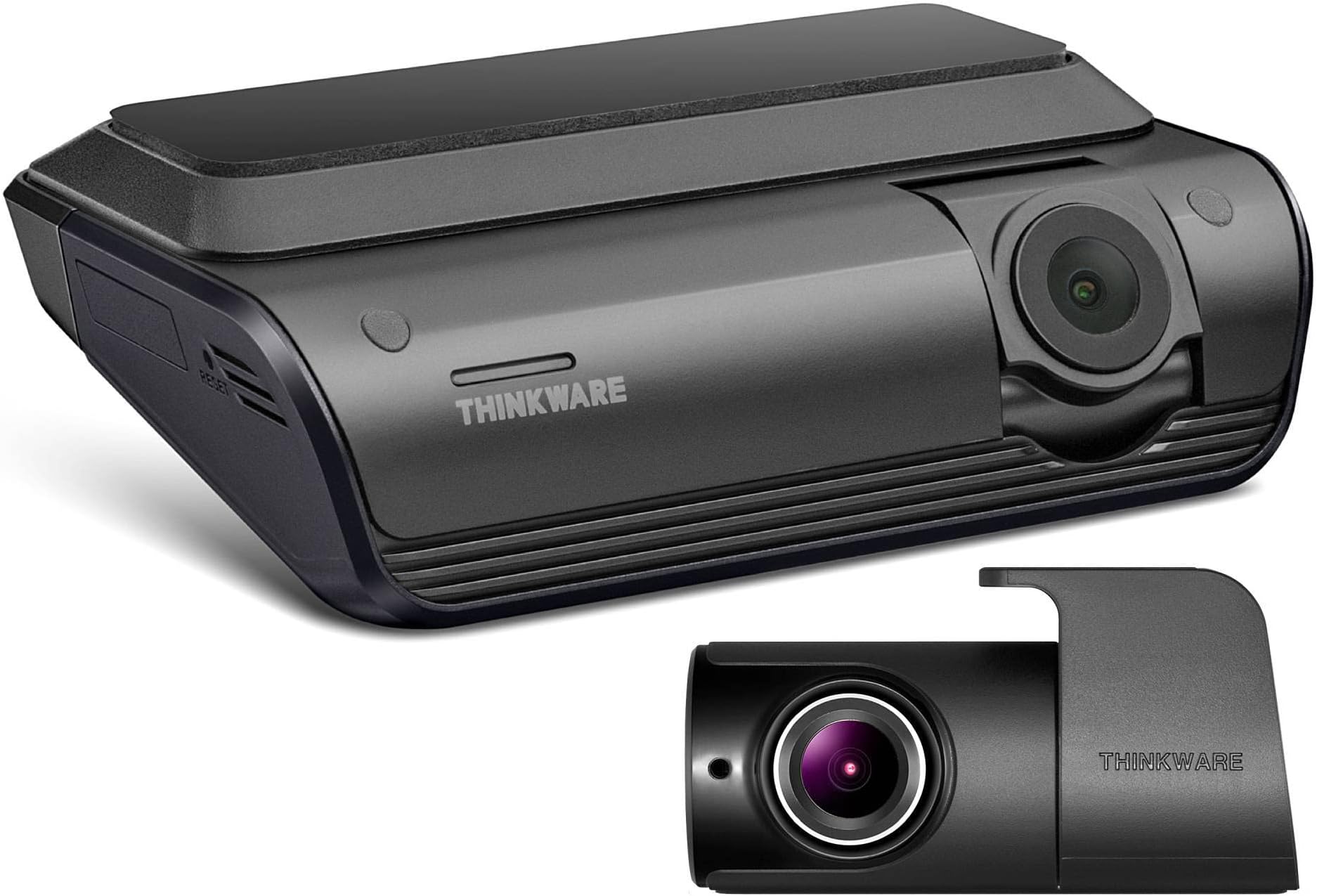
If you don't feel like running a secondary cable along your vehicle's headliner or side curtain airbags, the single-channel Thinkware U3000 Dash Cam delivers the exact same front-facing radar efficiency as the dual-channel version. You retain the 156-degree wide-angle lens, the 4K STARVIS 2 image sensor, Super Night Vision 4.0, and the front radar transceiver.
This single-channel option is ideal for EV drivers who park nose-out against walls or in secure bays where rear impact risks are minimal, but who still want the low power draw of radar parking mode. Power consumption in Energy Saving Mode 2.0 with a single camera dropped even lower during spec evaluation, allowing weeks of standby time if the car is parked at an airport terminal.
Drawbacks: You lose coverage for rear-end parking bumps and tailgate tailgaters while driving. Upgrading to two-channel later requires purchasing the rear module separately, which works out more expensive than buying the 2CH bundle upfront.
3. BlackVue DR970X-2CH Plus Dash Cam — The Video Fidelity Benchmark
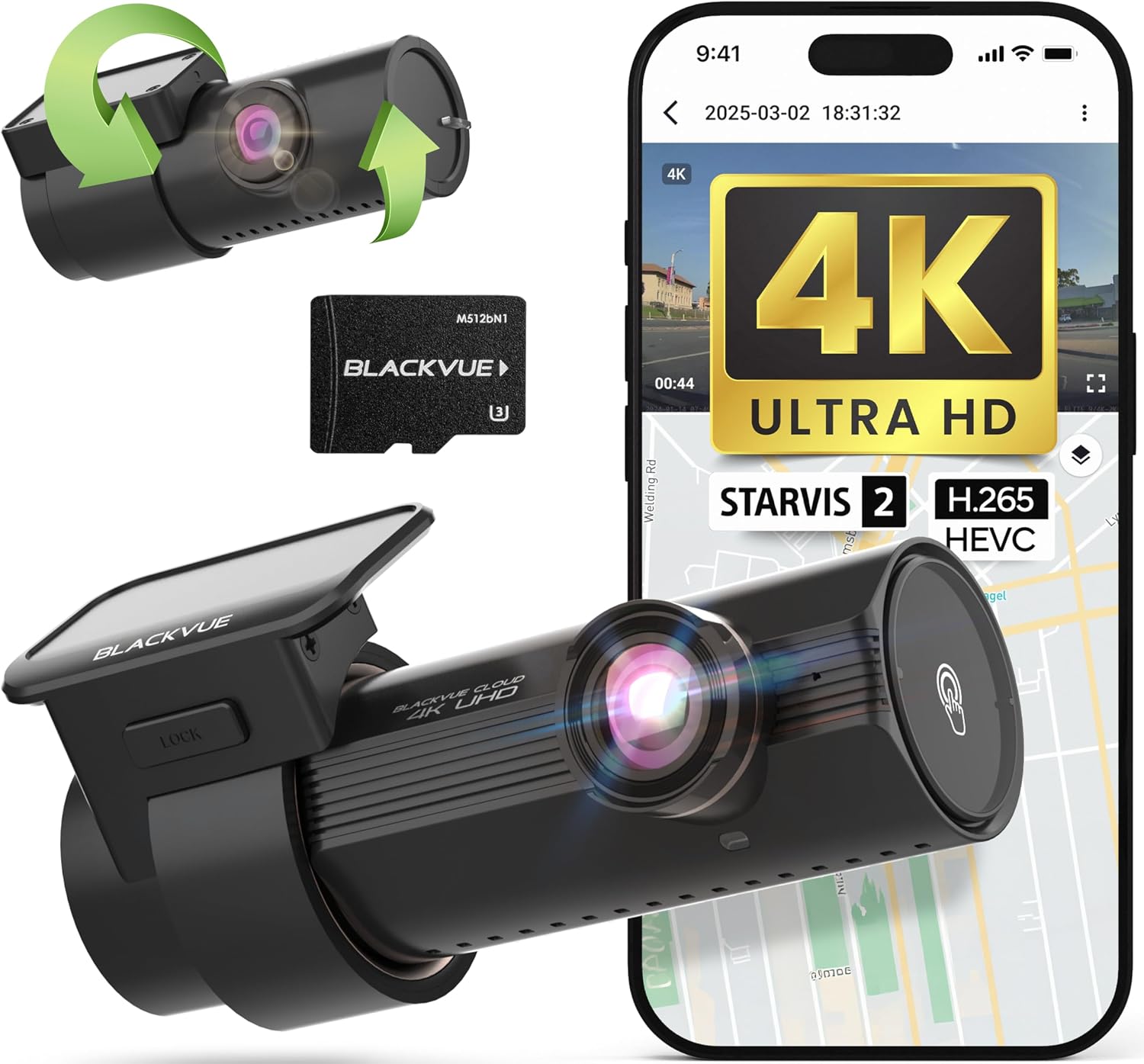
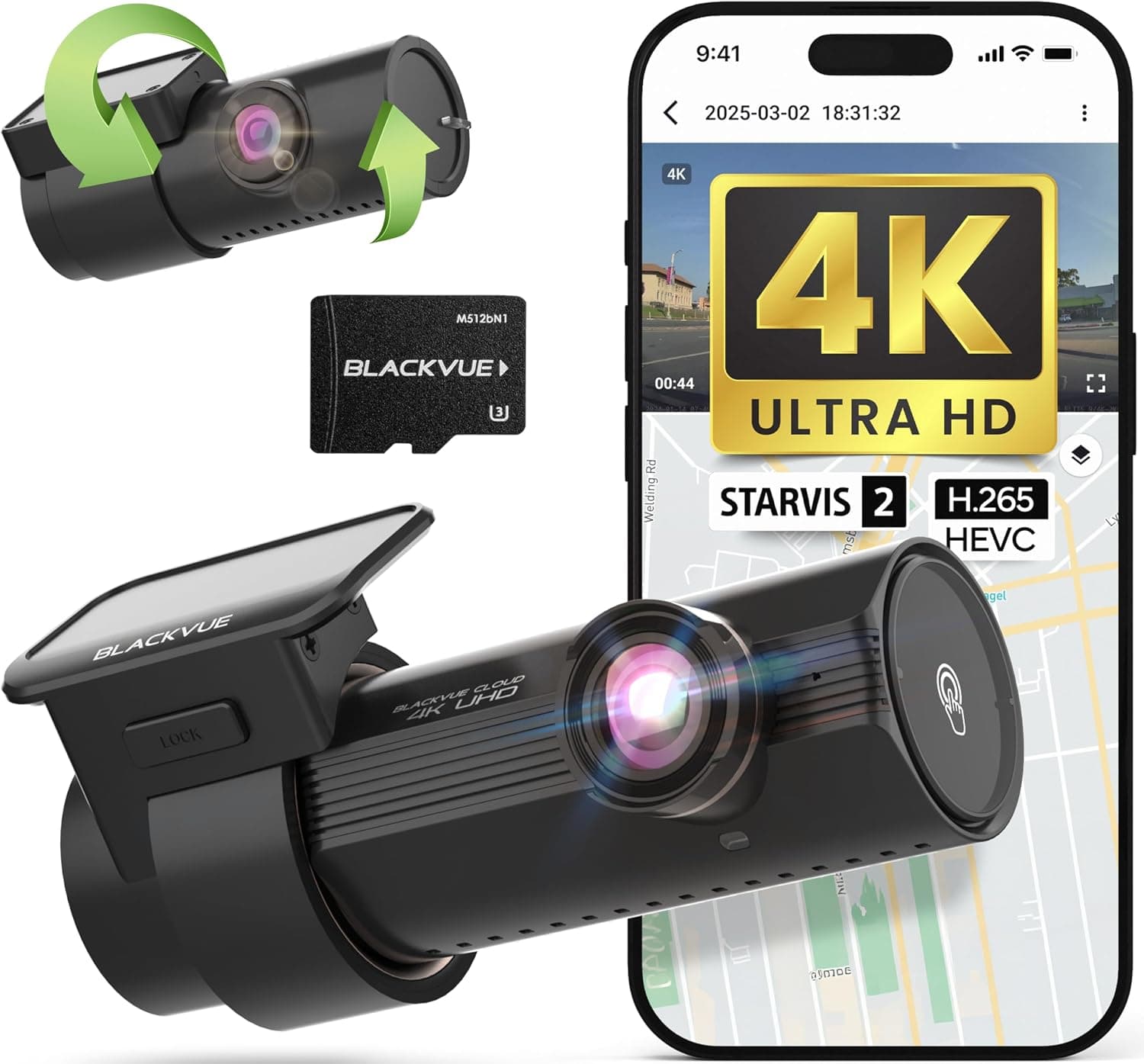
BlackVue has long been the darling of the luxury EV community due to its signature low-profile cylindrical shape that hides completely behind the mirror stem. The flagship BlackVue DR970X-2CH Plus Dash Cam upgrades the popular DR970X series with an 8.4-megapixel Sony STARVIS 2 sensor and a wider 146-degree FOV lens.
In daylight and dark street scenarios, the video fidelity of the DR970X-2CH Plus is exceptionally sharp. BlackVue uses broadcast-standard HEVC video compression, packing higher image detail into smaller file sizes without micro-stuttering. It also integrates built-in voltage monitoring directly into the main unit: you can select voltage cutoff thresholds (e.g. 12.0V or 12.2V) directly in the mobile app, preventing the camera from running down your battery.
Furthermore, BlackVue's Cloud architecture remains the slickest in the industry. With an optional LTE module or in-car Wi-Fi hotspot, you receive real-time push notifications the instant an impact is detected, complete with cloud storage backup and remote live video feed viewing.
Drawbacks for EV Owners: Because the DR970X Plus relies on optical motion detection and time-lapse modes rather than radar, its baseline power consumption in parking mode is higher than the Thinkware U3000. In vehicles with smaller 12V auxiliary batteries (like early Tesla Model 3s or Hyundai E-GMP cars), the camera's built-in voltage cutoff will often shut the system down after 10-14 hours of continuous parking, leaving the car dark for the rest of the night unless paired with a dedicated lithium iron phosphate (LiFePO4) dash cam battery pack.
4. BlackVue DR770X-2CH Dash Cam — Reliable Daily Driving Protection
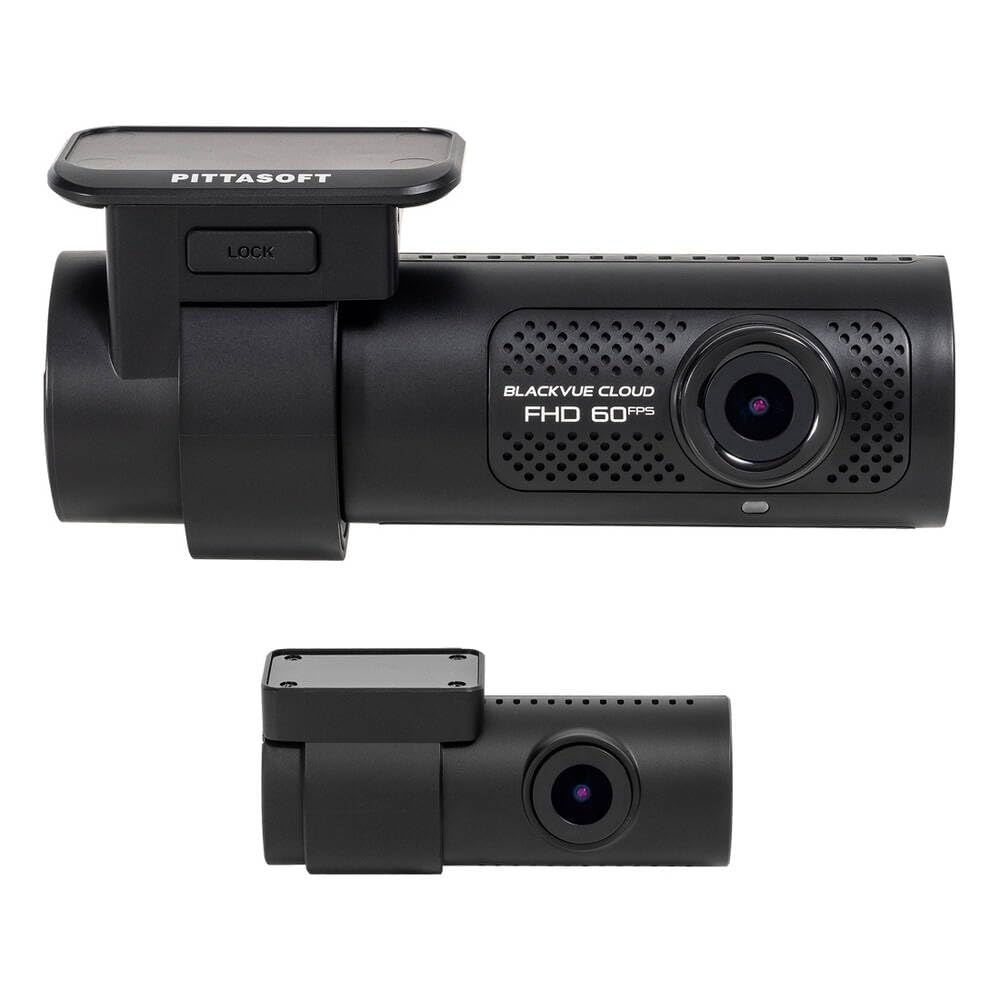
For drivers who prioritize sleek design and stone-cold reliability over ultra-high 4K file sizes, the BlackVue DR770X-2CH Dash Cam is a proven mid-range workhorse. Instead of 4K, it records Full HD 1080p at 60 frames per second on the front camera and 30fps on the rear, utilizing Sony STARVIS sensors across both channels.
The higher 60fps frame rate on the front lens renders fast-moving traffic smooth and blur-free, making license plate capture at motorway speeds remarkably reliable. It retains BlackVue’s Intelligent Parking Mode, loop recording, event overwrite protection, dual-band Wi-Fi, and built-in GPS location and speed tracking.
Because it processes 1080p video streams rather than heavy 4K buffers, the DR770X generates significantly less heat during long drives and draws slightly less power than 4K optical cameras during active driving and parking modes. However, because parking mode remains optical, power draw is still noticeably higher than radar sleep modes.
Drawbacks: License plate legibility at a distance or at night drops off compared to modern STARVIS 2 4K sensors. Lacks radar motion hardware.
5. Garmin Dash Cam Live — Always-Connected Cloud Surveillance
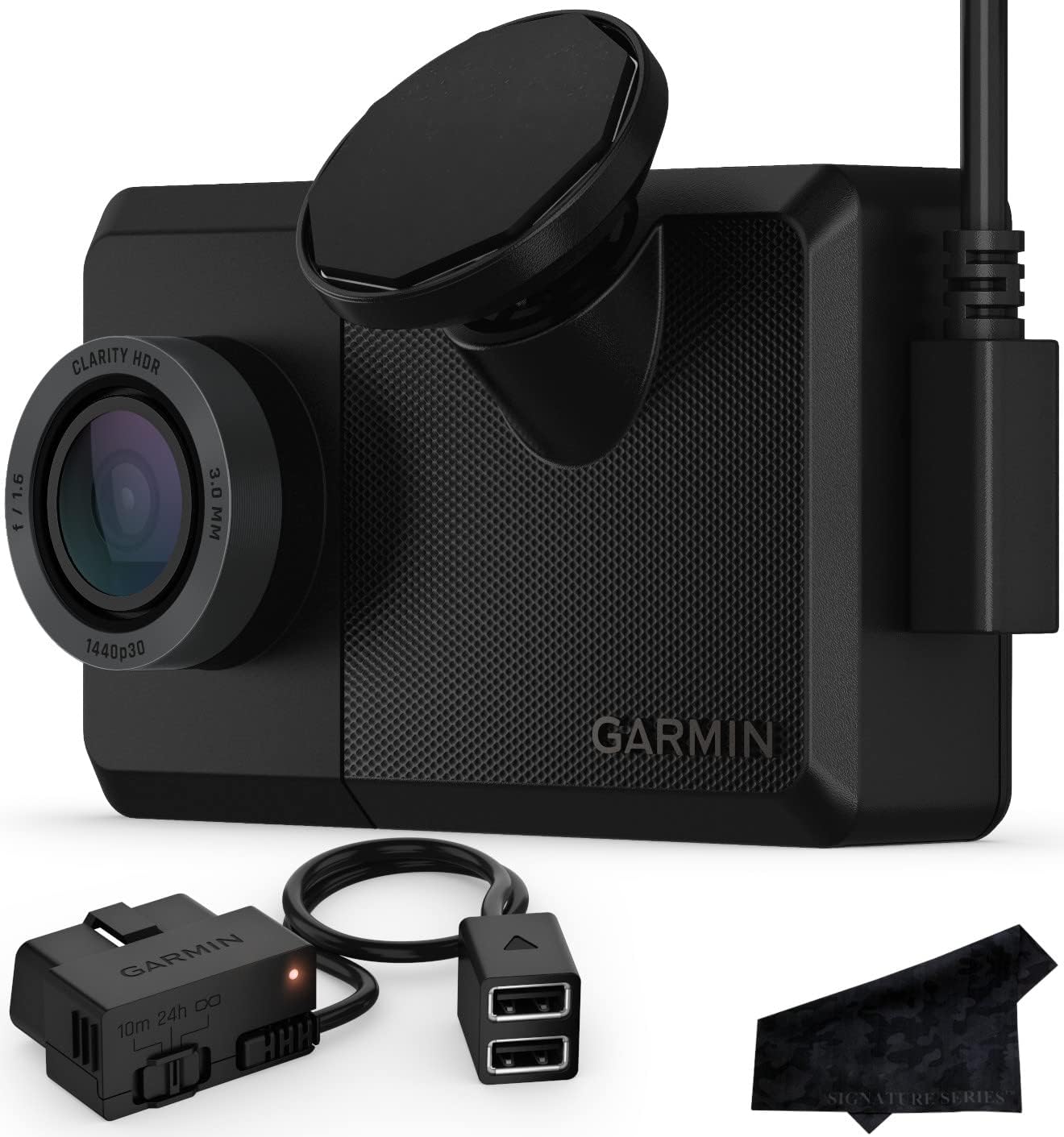
If your primary fear is vehicle theft, towing, or hit-and-run vandalism where immediate phone notifications are required, the Garmin Dash Cam Live offers an enticing alternative. Unlike traditional Wi-Fi dash cams that require an external LTE dongle, the Garmin Live features a built-in cellular connection (requiring an active monthly Garmin LTE subscription).
It captures 1440p HD video across a 140-degree lens equipped with Garmin Clarity HDR optics. When parked, the Garmin Parking Guard feature actively monitors for incidents and immediately pushes a video clip to the secure Garmin Drive app on your phone along with exact GPS coordinates. Drivers can trigger a Live View at any point to see what is happening around their vehicle in real time. It also features driver assistance alerts (forward collision, lane departure, speed cameras) and hands-free voice control.
Drawbacks for EV Owners: Cellular transceivers drawing constant network ping signals can place a moderate, continuous load on your car's 12V system. You must purchase Garmin's Constant Power Cable or hardwire harness separately to enable parking surveillance, and the ongoing monthly LTE subscription cost must be factored into your total ownership budget.
EV Compatibility & Hardwiring: What You Must Know Before Fitting
Installing a dash cam in an electric vehicle requires a slightly different approach than in a traditional petrol or diesel car. Here are three technical rules every EV owner should follow:
1. Use OBD-II Power Cables or Dedicated Fuse Taps
Splicing into traditional ignition wires in modern electric cars can trigger manufacturer CAN-bus fault errors or void electrical warranties. The safest installation method for the Thinkware U3000 or BlackVue X-Series is utilizing a plug-and-play OBD-II power cable or tapping into non-critical fuses (such as interior ambient lighting or 12V accessory sockets). Thinkware’s OBD power cable intelligently detects when the vehicle’s ignition state shuts off and switches the U3000 into Radar Parking Mode automatically.
2. Set Voltage Cutoffs Conservative for AGM / Standard 12V Batteries
If your electric car uses a standard 12V AGM or flooded lead-acid auxiliary battery, set the dash cam’s hardwire voltage cutoff threshold to 12.2V or 12.4V (rather than the default 11.8V). 11.8V is practically flat for a lead-acid battery and will trigger warning lights on your EV dashboard. For newer EVs equipped with OEM 12V Lithium-ion auxiliary batteries (such as post-2021 Tesla Model 3/Y), verify the system voltage (some use 15.5V nominal architecture) and ensure your dash cam hardware supports high-voltage input ranges (12V–24V compatible).
3. Tuning Thinkware Radar Sensitivity
When setting up the Thinkware U3000 2CH Dash Cam, calibrate the radar sensitivity through the Thinkware app based on where you park most frequently:
- High Sensitivity: Best for wide, open outdoor driveways or open-air car parks. Detects motion up to several meters away.
- Low / Mid Sensitivity: Recommended for tight underground car parks, narrow residential garages, or high-footfall city streets where pedestrians passing closely might trigger unnecessary wake cycles.
Alternatives to Consider
While the Thinkware U3000 is our top recommendation for long-duration parking monitoring without battery strain, here are two alternative directions based on your budget and primary goal:
For Maximum Video Sharpness with an External Battery Pack
If you prefer BlackVue’s ultra-sleek form factor and superior cloud integration, pair the BlackVue DR970X-2CH Plus Dash Cam with an independent LiFePO4 dash cam battery pack (such as a BlackVue Power Magic Ultra B-130X). The external pack charges off your car's 12V system only while driving, and then powers the optical dash cam entirely on its own during parking. This bypasses your EV’s 12V battery entirely, though it adds around £250–£300 in hardware costs.
For Budget-Conscious Daily Commuters
If you rarely park in high-risk public spaces overnight and simply want rock-solid incident recording while driving, the BlackVue DR770X-2CH Dash Cam delivers smooth 60fps Full HD footage, robust build quality, and effortless app interaction at a substantially lower price point.
Final Verdict: Is Radar Parking Mode Worth It?
If you own an electric vehicle or luxury car with sensitive electronics, the short answer is yes. The upfront cost of the Thinkware U3000 is higher than conventional 4K dash cams, but it solves the fundamental physical limitation of parking surveillance: power consumption.
By combining Sony's STARVIS 2 4K image capture with millimetre-wave radar motion sensing, the Thinkware U3000 2CH stays vigilant for days where optical cameras force a voltage shutdown after hours. It protects your car against hit-and-runs without sending your EV into a low-12V battery spiral or forcing you to spend extra money on an external battery pack.
For owners seeking peace of mind, pristine video clarity, and true multi-day battery preservation, the Thinkware U3000 stands as the undisputed benchmark for modern vehicle protection.